
Are You Getting Bulk Sublimation Tumblers Right for Your OEM Program?
Buying bulk sublimation tumblers sounds simple. It is not. One wrong call on MOQ tiers, coating quality, or colorways can cost you an entire season.
The short answer is this: successful OEM sublimation tumbler sourcing depends on matching your MOQ tier to the right coating AQL, choosing proven colorways, and understanding the exact specs your decoration partner needs. Get these three things right, and your program runs smoothly. Get them wrong, and you face rejected units, reprints, and missed ship dates.
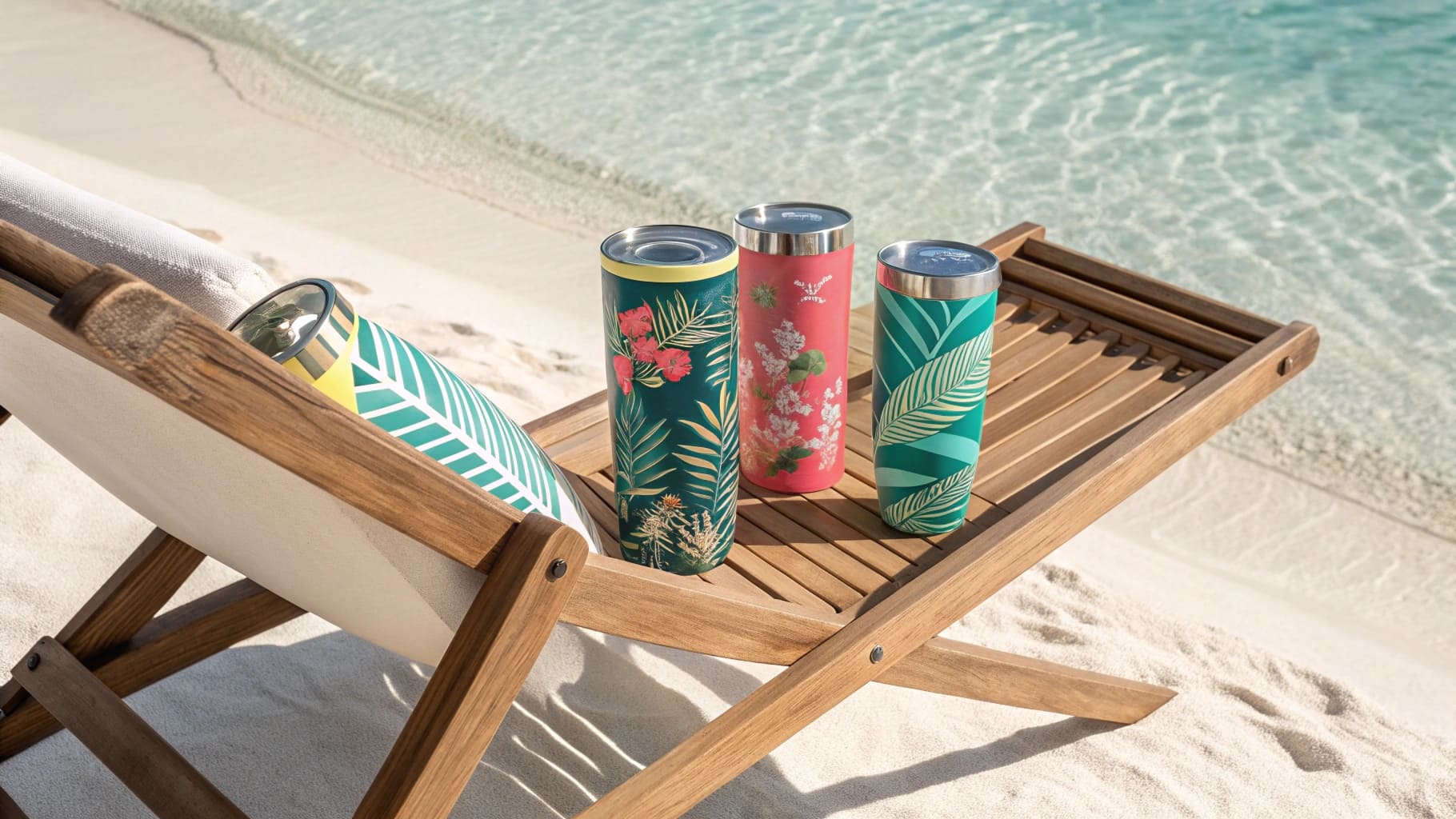
Most buyers I talk to come in focused on price. That is fine. But price without spec knowledge is a trap. The buyers who win are the ones who ask the right technical questions before they place a purchase order. This post breaks down exactly what you need to know, starting with the most popular size on the market right now.
What Size Is a 20oz Sublimation Tumbler?
You have seen the 20oz tumbler everywhere. But do you actually know its dimensions?
If you do not know the exact measurements of the 20oz sublimation tumbler, you cannot confirm fit, verify decoration specs, or hold a factory accountable. That gap costs money.
The standard 20oz sublimation tumbler stands 6.7 inches tall with a base diameter of 2.95 inches.1 The opening diameter typically measures around 3.5 inches. These dimensions make it compatible with most car cup holders in the North American market, which is one major reason this size leads in sales volume.
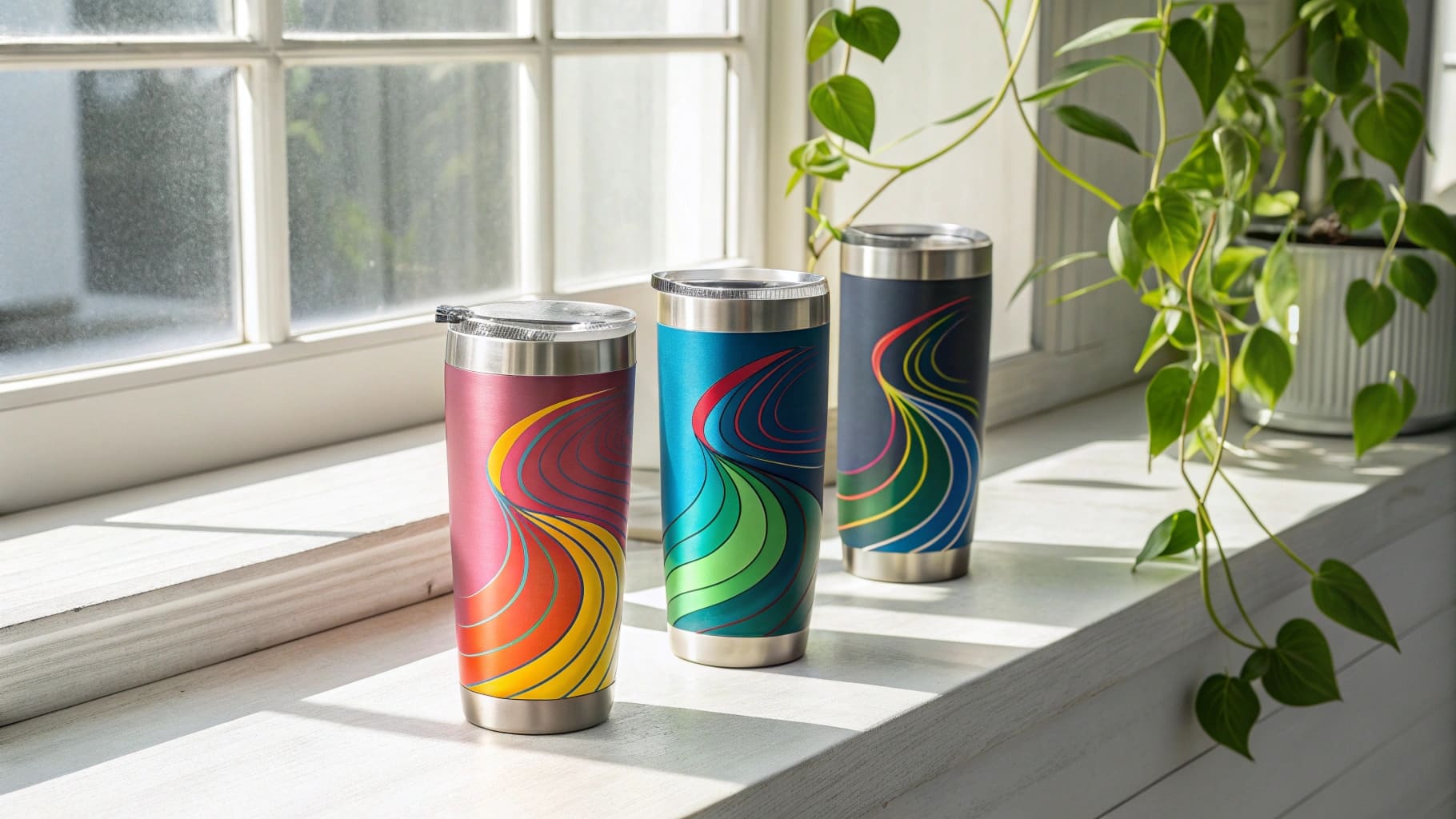
This size has become the dominant SKU in North American drinkware programs2 for a reason. The height-to-diameter ratio creates a large, workable print surface while keeping the product portable and ergonomic. From a manufacturing standpoint, this size also sits in the most efficient production window for most Chinese factories. That means when you commit to higher volumes at the 20oz size, factories can offer better MOQ tier pricing because their tooling and line setup costs are spread across a proven, high-demand format.
Here is a breakdown of how the 20oz compares to other common sizes in the sublimation tumbler category:
| Size | Height | Base Diameter | Print Surface | Cup Holder Fit |
|---|---|---|---|---|
| 12oz | 4.9 in | 2.75 in | Small | Yes |
| 20oz | 6.7 in | 2.95 in | Large | Yes |
| 30oz | 8.0 in | 3.15 in | Extra Large | No (too tall) |
| 40oz | 9.0 in | 3.35 in | Maximum | No (too tall) |
For most OEM programs targeting everyday carry and gifting, the 20oz hits the sweet spot. If your customers commute, they want cup holder compatibility. The 30oz and 40oz sizes serve a different buyer — the gym bag, desk, or outdoor use case. Knowing this upfront helps you plan your colorway and MOQ commitments around the size that actually moves in your distribution channel.
What Is a Flat Edge Sublimation Tumbler?
You may have heard this term and skipped past it. That would be a mistake.
On a standard cylindrical tumbler, images warp during sublimation printing. This means reprints, wasted coated blanks, and delayed orders. A flat edge design solves this directly.
A flat edge sublimation tumbler is a tumbler with one or more flattened vertical panels built into the body. These flat panels eliminate the curvature that causes image distortion during heat transfer3. The result is a clean, accurate print with sharp edges, consistent color, and no warping on logos or text.
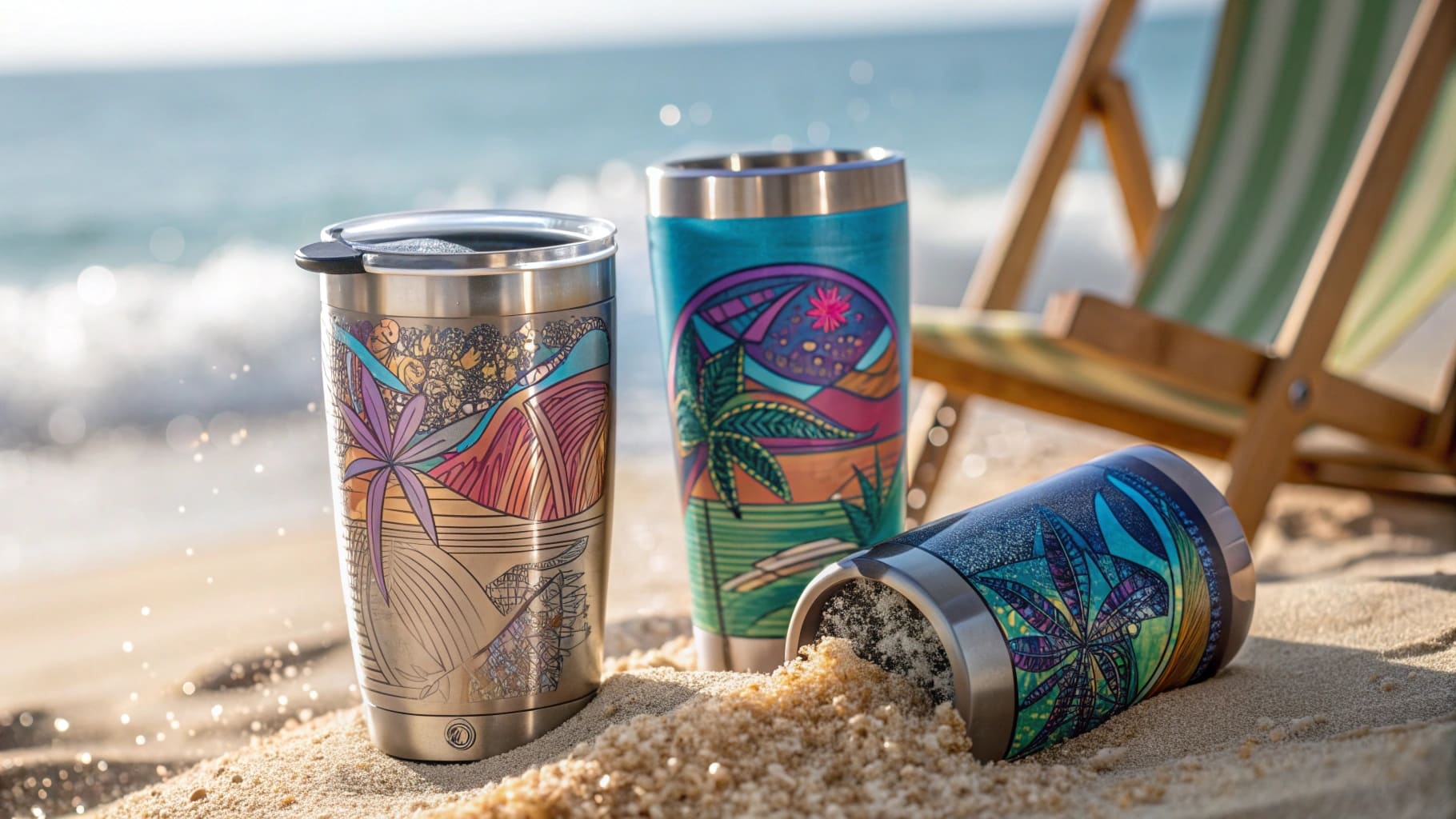
This matters especially for B2B buyers managing brand consistency across large runs. When you order 5,000 units with a client's logo, every single unit needs to look the same. On a fully round tumbler, the heat press must apply consistent pressure across a curved surface4. Even small pressure variations create color inconsistency. On a flat panel, the press contacts the surface evenly. This one design detail can cut your AQL rejection rate significantly.
Here is how flat edge and traditional round designs compare on the factors that matter most in OEM programs:
| Factor | Round Tumbler | Flat Edge Tumbler |
|---|---|---|
| Image distortion risk | High | Low |
| Logo placement accuracy | Moderate | High |
| AQL rejection rate | Higher | Lower |
| Print complexity supported | Limited | Complex graphics, fine text |
| Unit cost | Lower | Slightly higher |
| Brand consistency at scale | Harder to control | Easier to control |
The slightly higher unit cost of flat edge tumblers is almost always justified when you are running a serious OEM program. The reduction in rejects alone makes the math work. I have seen buyers try to save a few cents per unit by going with fully round tumblers, only to eat the cost of a 15% rejection rate on a large order. That is an expensive lesson. If your program involves complex logos, fine text, or photographic graphics, flat edge is not optional — it is the right spec to request from day one.
How Big Should a Decal Be for a 20oz Tumbler?
You found a great supplier, approved your samples, and placed your order. Then your decoration partner asks for artwork dimensions. Do you know the answer?
Wrong artwork sizing means reprints, delays, and unhappy clients. This is one of the most common mistakes I see in first-time OEM orders.
For a 20oz tumbler, the standard full-wrap artwork dimension is 9 inches wide by 8 inches tall. This covers the printable surface from just above the base to just below the rim, with a full 360-degree wrap. For partial wraps or single-panel prints on flat edge tumblers, the artwork typically needs to be sized to the flat panel dimensions provided by the factory.
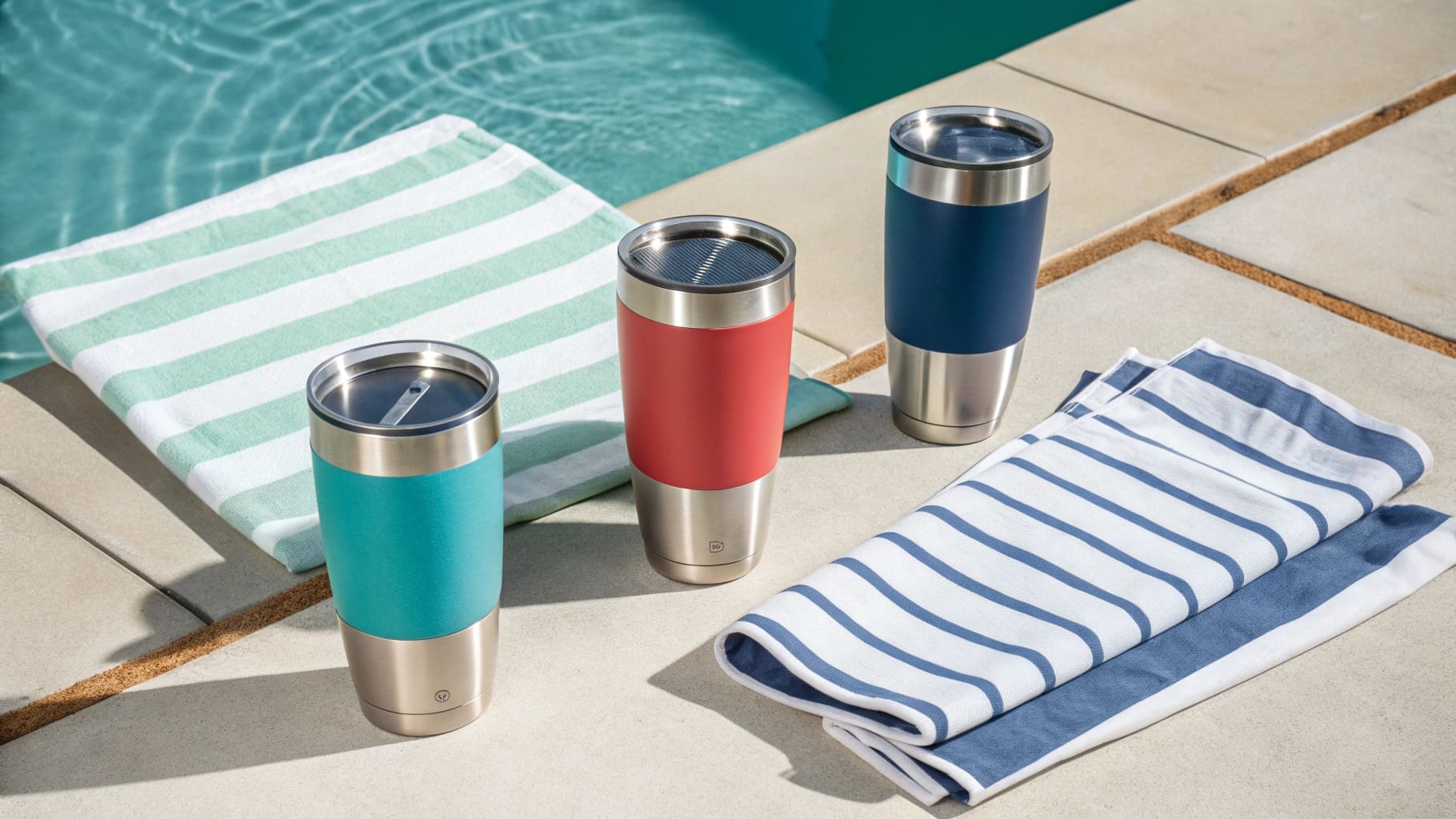
Artwork sizing connects directly to coating AQL. Here is why. Even if your artwork is correctly sized, a coating with high defect rates will produce uneven color transfer. The sublimation process relies on the polymer coating bonding uniformly with the ink under heat and pressure.5 If the coating has thin spots, air pockets, or adhesion failures — all issues that show up when AQL standards are low — your print will look inconsistent even with perfect artwork.
This is the part most buyers miss. They focus on artwork setup and ignore coating quality. But the coating is what your artwork bonds to. One without the other does not work.
Here is a practical guide to coating AQL levels and what they mean for your OEM program:
| AQL Level | Defect Rate Allowed | Suitable For | Risk Level |
|---|---|---|---|
| AQL 4.0 | Up to 4% defects | Promotional, low-cost runs | High |
| AQL 2.5 | Up to 2.5% defects | Standard retail programs | Moderate |
| AQL 1.5 | Up to 1.5% defects | Premium OEM, branded programs | Low |
| AQL 1.0 | Up to 1% defects | High-end, certification-required | Very Low |
For most serious OEM programs, AQL 1.5 is the minimum standard I recommend6. At this level, you get consistent color transfer, scratch resistance, and dishwasher durability. Factories that can hold AQL 1.5 on their sublimation coating are usually the same factories that have proper process controls in place across the board.
MOQ tiers also connect to coating quality in a direct way. When you commit to higher volumes, the factory can justify allocating premium polymer coating to your run. At low MOQs, factories often use whatever coating stock is on hand. At mid to high MOQ tiers — typically starting around 500 to 1,000 units per SKU — you gain enough leverage to specify coating grade and hold the factory to an AQL standard in your purchase order.
There is also the colorway question. White and light-color bases produce the most vibrant sublimation output because the ink shows true color against a light background. Dark bases absorb ink differently and often require specialty coatings. For buyers who want to test multiple colorways within a single MOQ commitment, the most practical approach is to structure your order around a primary color at full MOQ and add secondary colors at a shared, tiered minimum. This lets you test regional preferences without fragmenting your inventory into small, expensive splits.
Conclusion
Know your specs, lock your coating AQL, and match your MOQ tier to the colorways and decoration requirements your program actually needs. That is how you source sublimation tumblers without expensive surprises.
-
"Setup & Sizing for 20oz Sublimation Tumbler Wrap in CANVA EP:1", https://www.youtube.com/watch?v=STR3ASv3PlM. Representative technical specifications for 20-ounce sublimation tumbler blanks list heights and base diameters close to these measurements, supporting the stated dimensional norm for this product class. Evidence role: general_support; source type: other. Supports: A typical 20oz sublimation tumbler is about 6.7 inches tall with a base diameter near 2.95 inches.. Scope note: Dimensional specifications vary by manufacturer and SKU, so the source supports a common industry format rather than a universal standard. ↩
-
"North America Drinkware Market Size | Industry Report, 2033", https://www.grandviewresearch.com/industry-analysis/north-america-drinkware-market-report. Category-level drinkware or promotional-products market data can support the proposition that a particular tumbler capacity is widely used in North American programs, but it would provide market context rather than prove dominance for every distributor. Evidence role: statistic; source type: other. Supports: The 20oz sublimation tumbler has become a dominant SKU in North American drinkware programs.. Scope note: The evidence may not isolate OEM sublimation programs or every North American sales channel. ↩
-
"Stamping Lithography on Arbitrary Surfaces based on Self ... - PMC", https://pmc.ncbi.nlm.nih.gov/articles/PMC12904012/. Technical literature on printing over curved or cylindrical surfaces explains that surface curvature changes image geometry and registration, supporting the mechanism by which a flatter print area reduces distortion. Evidence role: mechanism; source type: paper. Supports: Flat panels reduce image distortion by removing the curvature present on cylindrical tumbler surfaces.. Scope note: The source would support the geometric principle generally and may not test this exact tumbler design. ↩
-
"[PDF] Optimizing Sublimation Transfer Printing - Clemson OPEN", https://open.clemson.edu/cgi/viewcontent.cgi?article=5453&context=all_theses. Heat-transfer printing guidance and textile-printing research identify temperature, dwell time, and pressure uniformity as key variables in transfer quality, supporting the claim that pressure consistency matters on shaped substrates. Evidence role: mechanism; source type: education. Supports: Consistent heat-press pressure is important when printing on curved tumbler surfaces.. Scope note: The evidence may address heat-transfer printing generally rather than stainless-steel sublimation tumblers specifically. ↩
-
"Dye-sublimation printing - Wikipedia", https://en.wikipedia.org/wiki/Dye-sublimation_printing. Materials and printing references describe dye sublimation as a process in which heated dyes diffuse into or bind with polymeric coatings, supporting the stated dependence on a receptive polymer layer. Evidence role: mechanism; source type: paper. Supports: Sublimation printing on tumblers depends on uniform interaction between sublimation dyes and a polymer coating under heat and pressure.. Scope note: The source may describe polymer-coated substrates generally and not the exact coating chemistry used by a given tumbler factory. ↩
-
"Acceptable Quality Level, AQL Sampling Chart and Calculator - QIMA", https://www.qima.com/aql-acceptable-quality-limit. Acceptance-sampling standards and quality-control references show that lower AQL values impose stricter acceptance criteria than higher AQL values, providing context for using AQL 1.5 as a tighter inspection threshold for higher-quality programs. Evidence role: expert_consensus; source type: institution. Supports: AQL 1.5 is a stricter inspection threshold than higher AQL levels and may be appropriate for quality-sensitive programs.. Scope note: The source can support the relative strictness of AQL 1.5 but not the author’s specific commercial recommendation for all OEM tumbler programs. ↩
