
Are You Choosing the Best Insulated Water Bottle Company for Private Label?
You picked a supplier by brand name. The bottles arrived. The colors were off, the logos faded, and your customers complained. That mistake costs more than money.
The best insulated water bottle company for private label work is not the most famous one. It is the one that controls Pantone color accurately, applies logos with precision, and follows strict AQL inspection standards. These three factors decide whether your private label succeeds or fails.
Most buyers search for a big name. I understand that instinct. A recognizable manufacturer feels safe. But brand reputation is built for consumers, not for B2B buyers who need exact color reproduction, durable logo application, and documented quality control. When you shift your focus to these three technical areas, you stop chasing names and start building a real sourcing advantage.
What Is the Best Insulated Water Bottle Company for Private Label Work?
You keep asking suppliers about their brand. They send you samples. The samples look fine. Then your bulk order arrives and nothing matches. The root problem is that you are asking the wrong question.
The best insulated water bottle company for private label is the one that demonstrates mastery of Pantone color matching, logo application methods, and AQL compliance. These are the only three things that directly protect your brand identity and your profit margin.
Why Pantone Color Control Is the First Thing to Check
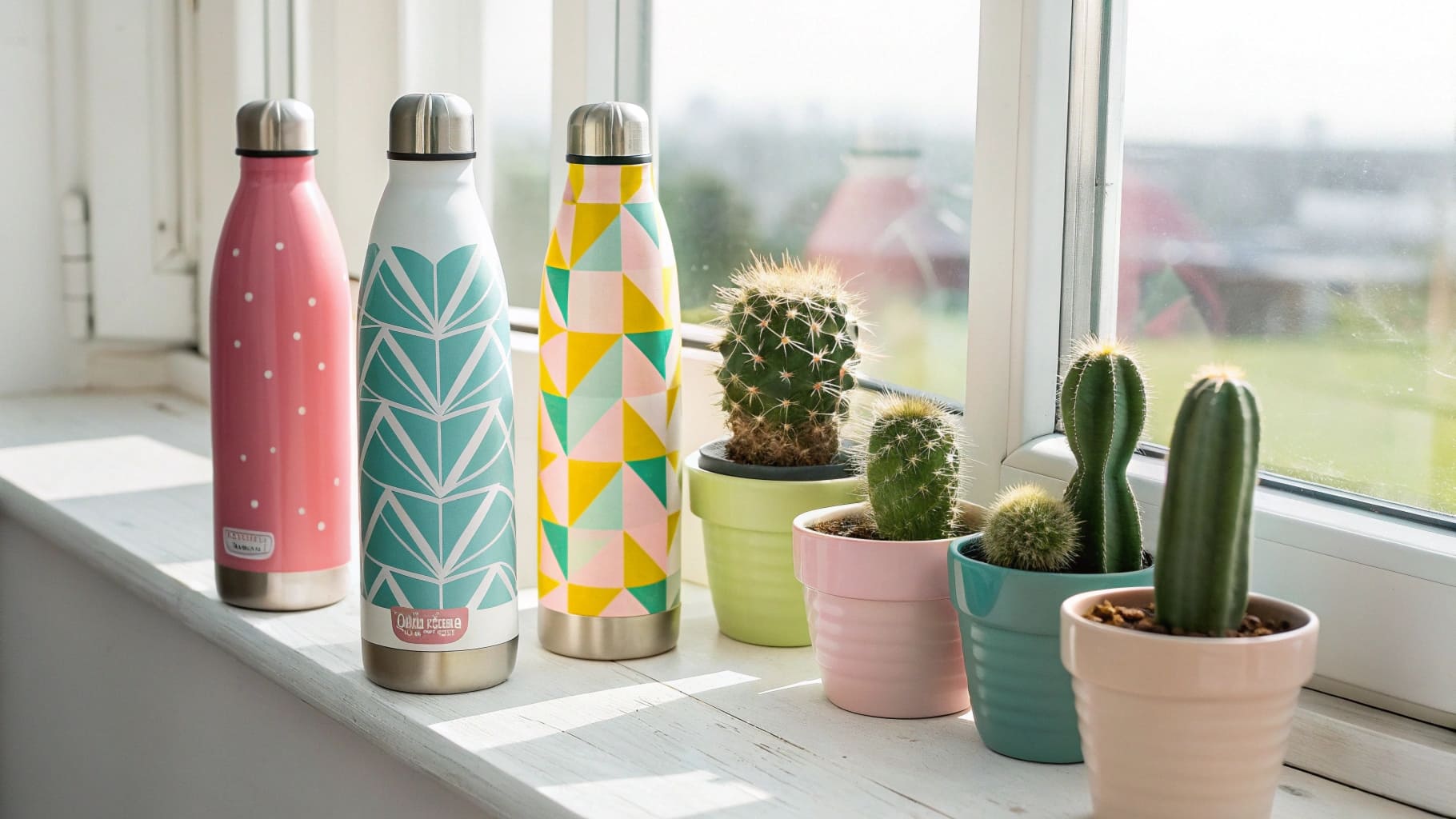
Color consistency is not a small detail. Your brand color is part of your identity. If the bottles from batch one look different from batch two, your retail customers notice. That breaks trust fast.
I always ask suppliers whether they use a spectrophotometer during production. This tool measures color deviation mathematically. The number to watch is called Delta E. A Delta E value below 1.0 means the color difference is invisible to the human eye. Most professional manufacturers can hit this target. Suppliers who cannot measure Delta E at all are a risk you should avoid.
Here is a simple table that shows how Delta E values affect color perception:
| Delta E Value | What It Means |
|---|---|
| 0 – 1.0 | No visible difference, ideal for private label |
| 1.0 – 2.0 | Slight difference, only visible to trained eyes |
| 2.0 – 4.0 | Noticeable difference, risky for brand consistency |
| Above 4.0 | Clear mismatch, unacceptable for branded orders |
Why Logo Application Method Changes Everything
Each logo method has a different cost, durability level, and minimum order quantity.1 Choosing the wrong method for your use case is an expensive mistake.
Here is a breakdown of the most common methods used by serious manufacturers:
| Method | Durability | Best For | MOQ Consideration |
|---|---|---|---|
| Laser Engraving | Very high | Permanent, clean logos | Usually low MOQ |
| Powder Coating | High | Full-body color and design | Medium to high MOQ |
| Heat Transfer | Medium | Complex multi-color logos | Medium MOQ |
| Screen Printing | Medium | Simple one-color logos | Low MOQ |
I recommend laser engraving for most private label buyers. It does not peel, fade, or scratch off under normal use. Powder coating is the right choice when you want the entire bottle to carry your brand color. Heat transfer works well for detailed artwork but requires more care in daily use.
What Is the New Water Bottle Craze That B2B Buyers Should Care About?
Your retail customers want something personal. They want a bottle that feels made for them. If your private label product looks generic, it sits on the shelf while competitors sell out.
The current water bottle trend is the combination of personalization and sustainability.2 Buyers want double-wall vacuum insulation paired with custom colors and branding. This shift means that private label control has become more important than ever before.
How Personalization Has Changed Private Label Sourcing
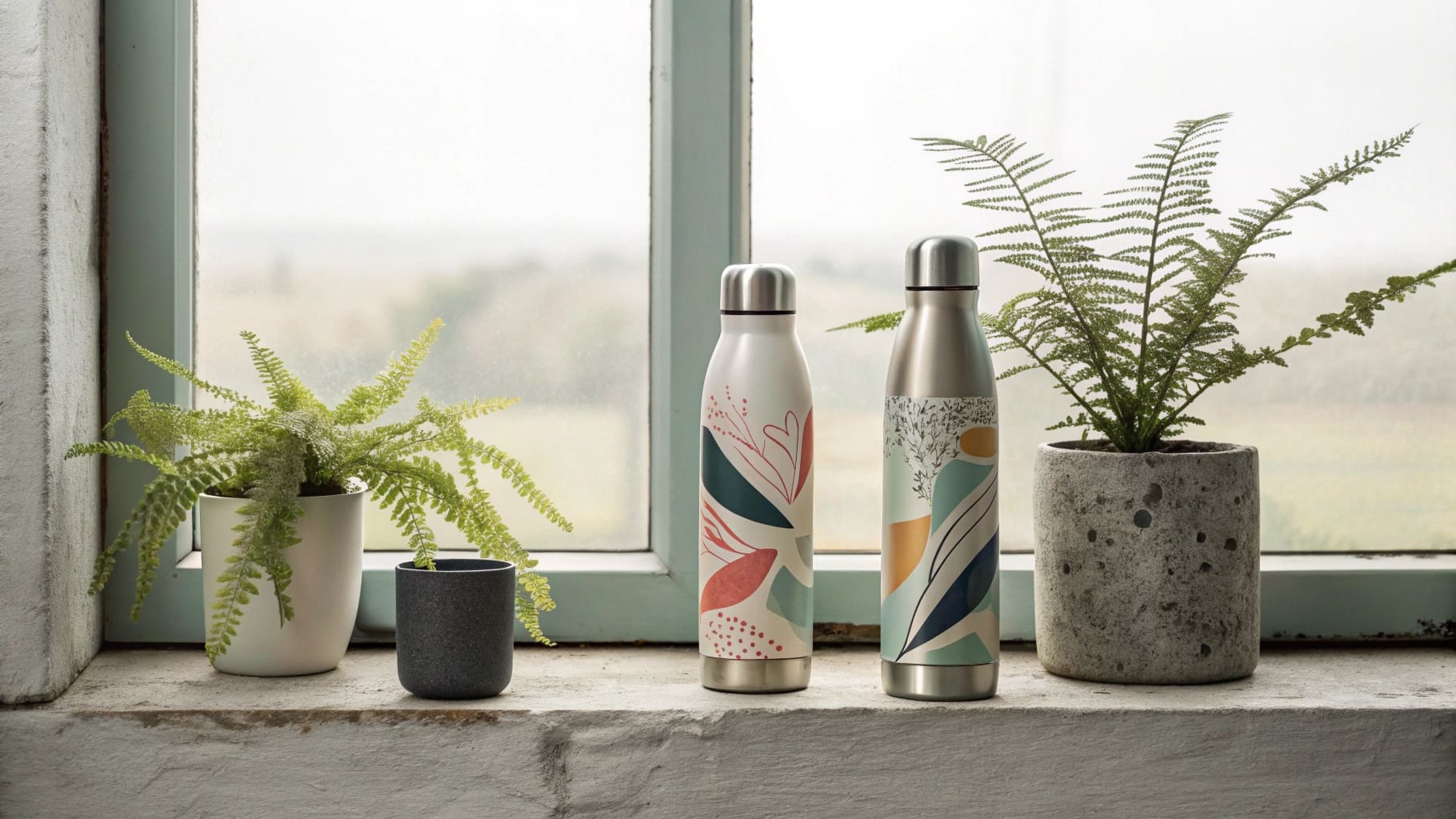
Personalization is no longer just about putting a logo on a bottle. It now includes the color of the body, the lid style, the sleeve material, and even the packaging design. Retail buyers expect every detail to match their brand guidelines.
This trend has pushed manufacturers to invest in better color matching tools and more flexible production lines. Suppliers who still offer only a few standard colors are falling behind. The manufacturers worth working with now offer Pantone-matched color options across their full product range.
Sustainability is moving alongside personalization. Stainless steel water bottles already carry a strong sustainability story because they replace single-use plastic.3 But buyers are now asking for more. They want recyclable packaging, reduced shipping waste, and suppliers who can document their environmental practices.
Here is how the two trends combine in a typical private label brief today:
| Buyer Requirement | How It Connects to Personalization | How It Connects to Sustainability |
|---|---|---|
| Custom Pantone color | Brand identity control | Avoids overproduction through accurate batch matching |
| Laser engraved logo | Long-lasting brand presence | No chemicals or inks needed |
| Stainless steel material | Premium feel and appearance | Replaces plastic, long product lifespan |
| Custom packaging | Unboxing experience | Recyclable materials reduce waste |
The buyers who win in this market are the ones who treat these two trends as one sourcing strategy, not two separate demands. When I work with procurement officers, I always ask them to combine their personalization brief with their sustainability requirements from the start. This saves time and avoids costly revisions later.
What Is the Oldest Water Bottle Company and What Can It Teach B2B Buyers?
You admire brands like Stanley or Hydro Flask. Their reputation feels like proof of quality. But their path to that reputation took decades. You do not have decades to wait.
Stanley is widely recognized as one of the oldest water bottle companies, founded in 1913.4 That history matters for consumer trust. But for B2B buyers building a private label brand, the lesson from these companies is not about their name. It is about their quality systems.
What Long-Standing Brands Actually Built Their Reputation On
Stanley did not become trusted because of marketing alone. The company built its name through consistent manufacturing standards. Every bottle passed the same tests. Every customer received the same product they expected. That consistency is what B2B buyers should copy, not the brand name itself.
You can achieve the same quality standards through third-party AQL inspections. AQL stands for Acceptable Quality Limit. It is a statistical method that tells you how many defects are acceptable in a batch of products. The two most common levels used in water bottle sourcing are AQL 1.5 and AQL 2.5.
Here is a practical comparison:
| AQL Level | Defect Tolerance | Best Used For |
|---|---|---|
| AQL 1.5 | Very low tolerance | High-end private label, premium retail |
| AQL 2.5 | Standard tolerance | Mid-range retail, promotional products |
| AQL 4.0 | Higher tolerance | Low-cost, non-branded bulk orders |
For most of my buyers, I recommend AQL 2.5 as a minimum. If your product targets premium retail channels, move to AQL 1.5. The inspection should cover at least four checkpoints: vacuum seal integrity, leak test under pressure, logo adhesion strength, and color consistency against the approved Pantone reference.
How to Use AQL to Protect Your Private Label Order
A third-party inspection agency visits the factory before shipment. They pull a sample from the production batch based on AQL tables. They test each unit against your approved specifications. If the defect rate exceeds the AQL threshold, the shipment is held until the factory corrects the issue.
This process removes the risk of receiving a full container of defective bottles. It also removes the need to trust a supplier's self-reported quality claims. The inspection report is your proof. Keep it on file for every order.
Conclusion
The best insulated water bottle company for your private label is the one that controls Pantone color, applies logos with care, and passes documented AQL inspections. Names do not protect your brand. Systems do.
-
"Art – Noncredit - SMC Catalog - Santa Monica College", https://catalog.smc.edu/current/degrees-certificates-transfer/art-noncredit.php. Product-marking and manufacturing references distinguish laser marking, screen printing, heat transfer, and coating processes by their materials, process requirements, durability characteristics, and production economics. Evidence role: general_support; source type: education. Supports: Different logo-application methods have different durability, cost, and production constraints.. Scope note: Such sources may compare technical properties but may not provide bottle-specific minimum order quantities, which vary by supplier. ↩
-
"Sustainability has staying power - Deloitte", https://www.deloitte.com/us/en/insights/environmental-social-governance/sustainable-consumption-trends.html. Consumer-goods and packaging research can show growing demand for product personalization and sustainability attributes, providing market context for private-label bottle sourcing. Evidence role: general_support; source type: research. Supports: Personalization and sustainability are important consumer-product trends affecting water bottle sourcing.. Scope note: Broad consumer research may support the trend context but may not measure insulated water bottles specifically. ↩
-
"What You Can Do to Reduce Plastic Waste | US EPA", https://www.epa.gov/plastics/what-you-can-do-reduce-plastic-waste. Environmental agencies and life-cycle studies identify reusable bottles as a waste-reduction alternative to single-use plastic bottles, although the environmental benefit depends on material, production impacts, transport, and reuse frequency. Evidence role: general_support; source type: government. Supports: Reusable stainless steel water bottles can reduce reliance on single-use plastic bottles.. Scope note: Reusable stainless steel bottles can have higher manufacturing impacts than single-use plastic and require repeated use to achieve net environmental benefit. ↩
-
"Stanley (drinkware company) - Wikipedia", https://en.wikipedia.org/wiki/Stanley_(drinkware_company). Historical references on the Stanley vacuum bottle brand record its origin in 1913 and provide context for its long-standing association with vacuum-insulated bottles. Evidence role: historical_context; source type: encyclopedia. Supports: Stanley was founded in 1913 and is a long-established insulated bottle brand.. Scope note: A source can verify the founding date and historical association but may not establish that Stanley is definitively the oldest water bottle company worldwide. ↩
