
Are vacuum-insulated stainless flasks better than titanium for 2026 OEMs?
You are planning your 2026 product line. Material choice feels overwhelming. Titanium sounds premium, but your profit margins are already tight.
For most OEM buyers, vacuum-insulated stainless steel flasks deliver better value than titanium in 2026. Stainless steel costs less, customizes easily, and meets all safety standards1 that your customers expect.
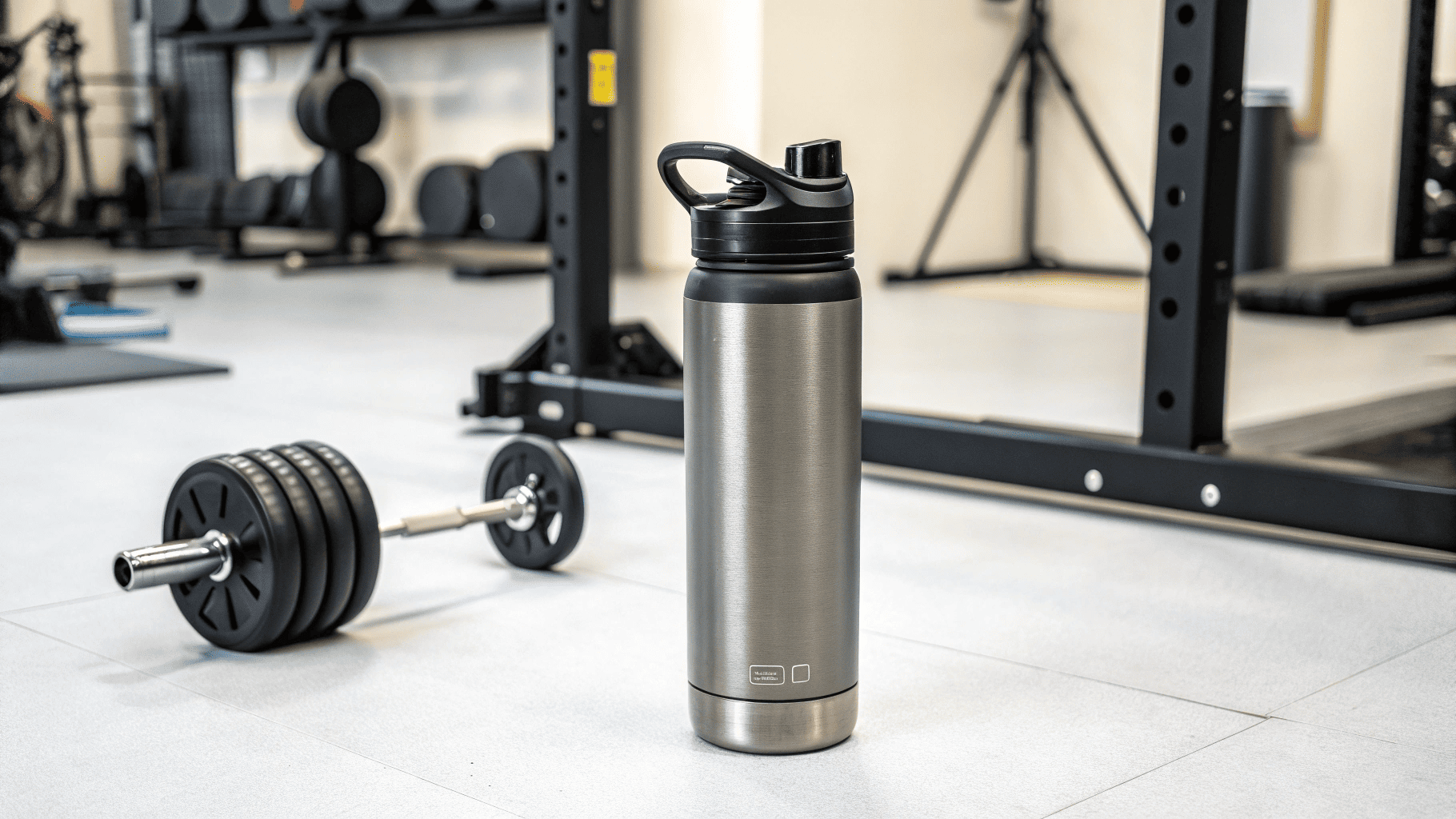
I have been manufacturing stainless steel flasks for years now. I have watched countless buyers struggle with this exact decision. They worry about making the wrong choice. Let me walk you through what really matters for your business.
Which is better titanium or stainless steel thermos?
Your customers want performance and value. Titanium sounds impressive on paper. But does it actually solve your real problems?
Stainless steel thermos bottles outperform titanium for most commercial applications. They cost significantly less, offer proven durability, and provide more customization options2 that your brand needs.
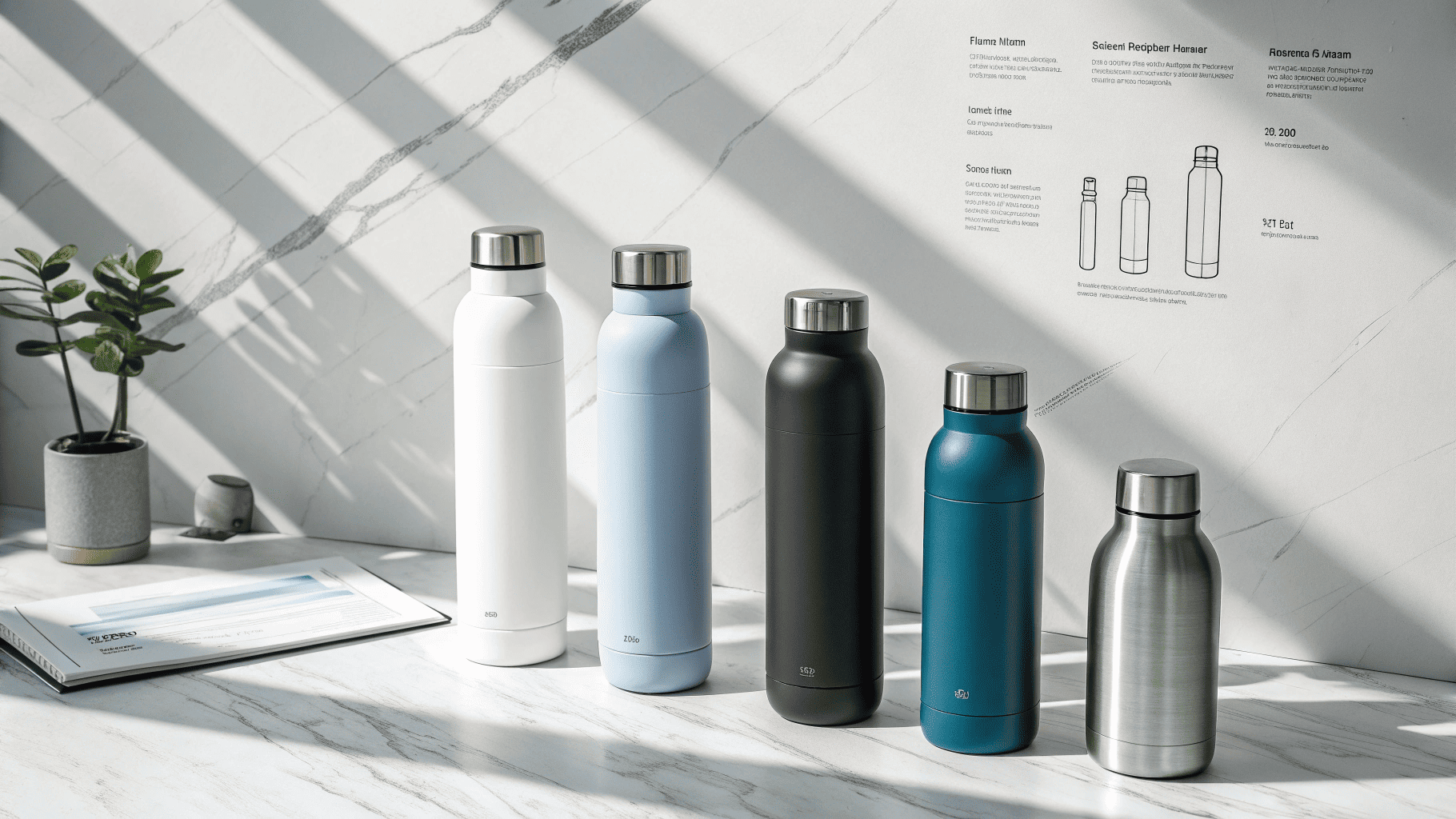
Breaking down the real differences
I need to be honest with you here. The titanium versus stainless steel debate gets clouded by marketing hype. Let me share what I have learned from actual production runs.
Titanium flasks weigh about 40% less than stainless steel. That sounds great until you see the price tag. Titanium material costs run three to five times higher than 304 stainless steel. Your factory minimum order quantities also increase because titanium welding requires specialized equipment.
Stainless steel flasks use vacuum insulation technology3 that has been refined over decades. The temperature retention difference between titanium and stainless steel is minimal in real-world use. Both materials keep drinks hot for 12 hours and cold for 24 hours when properly manufactured.
Here is what really matters for your purchasing decision:
| Factor | Stainless Steel | Titanium |
|---|---|---|
| Material Cost | Baseline | 3-5x higher |
| MOQ Requirements | 500-1000 units | 2000+ units |
| Lead Time | 25-35 days | 45-60 days |
| Customization Options | Extensive | Limited |
| Consumer Recognition | High | Niche market |
I work with buyers who test both materials. They almost always choose stainless steel for their main product lines. Titanium becomes a specialty item for ultra-premium segments.
The weight advantage of titanium matters most for serious hikers and mountaineers. Your typical corporate gift buyer or retail customer does not notice the difference. They care more about the price point and how the logo looks on the bottle.
Which is healthier, stainless steel or titanium?
Safety concerns keep you up at night. You cannot afford a product recall. Your reputation depends on getting this right.
Both 304 stainless steel and titanium are food-safe materials. Stainless steel has decades of proven safety data and universal regulatory acceptance. Titanium offers theoretical advantages but lacks the established testing history.
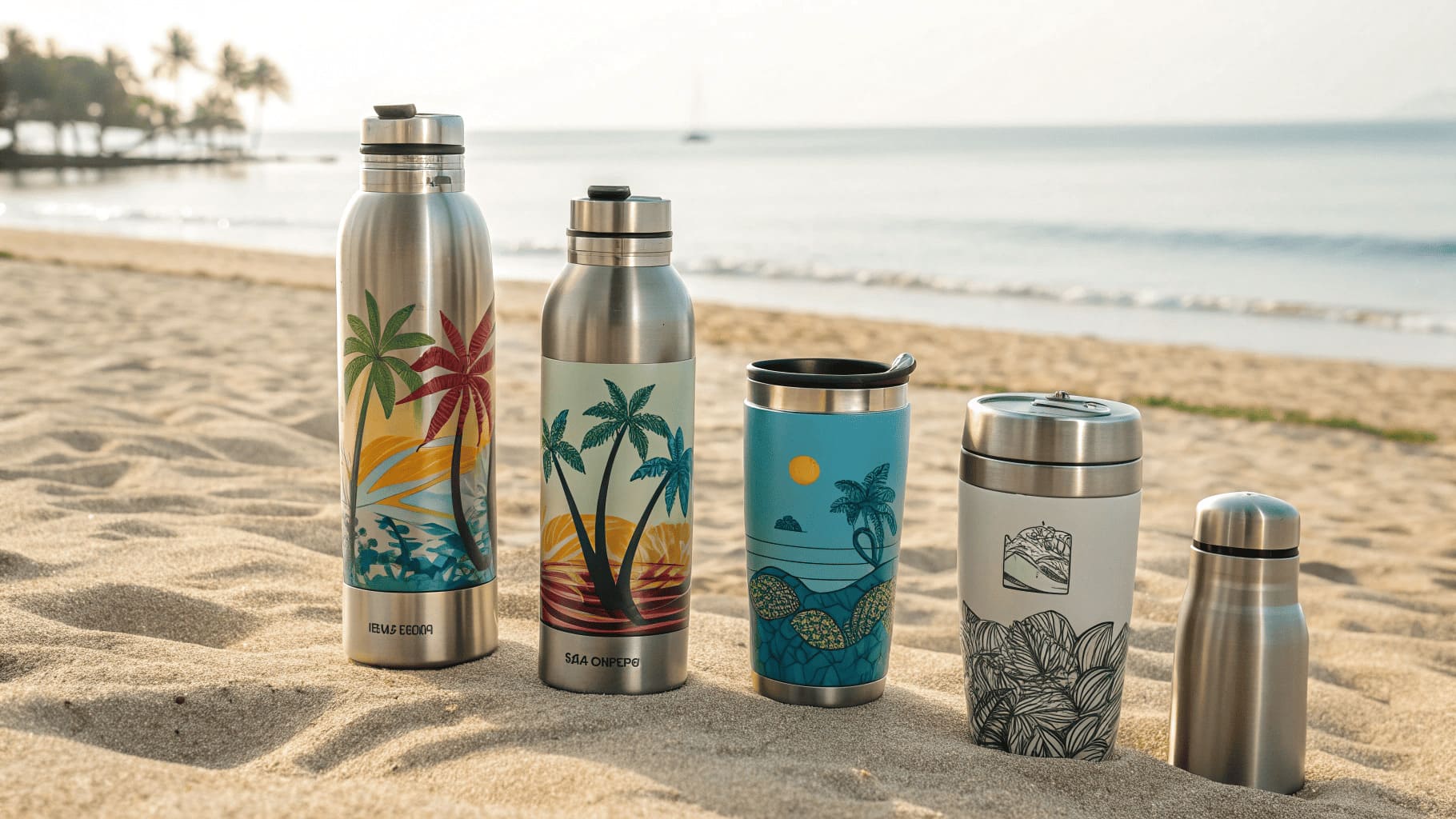
Understanding material safety in practical terms
I want to clear up the confusion around health claims. Marketing teams love to throw around words like biocompatible and hypoallergenic. Let me tell you what actually protects your business.
304 stainless steel contains 18% chromium and 8% nickel. This composition has been tested extensively for food contact applications. The FDA approves it. European regulations accept it. Every major market recognizes it as safe.
The chromium in stainless steel forms a passive layer on the surface. This layer prevents metal ions from leaching into your beverages. The process happens naturally and requires no special treatment.
Titanium is indeed more biocompatible than stainless steel. That matters for medical implants. It matters less for water bottles. Your customers drink from the bottle for a few minutes each day. They are not getting titanium implanted in their bodies.
Some buyers worry about nickel allergies. I understand that concern. The nickel in 304 stainless steel is bound within the alloy structure. It does not transfer to beverages in any meaningful amount. Independent lab tests confirm this repeatedly.
Here is what I recommend based on real certification experience:
You need to focus on actual certifications rather than marketing claims. Get your products tested by recognized labs. FDA approval, LFGB certification, and BPA-free verification matter more than the base material choice4.
I have shipped millions of stainless steel flasks. I have never had a health-related complaint. The material is proven. The safety data is solid. Your legal team will prefer stainless steel because the regulatory pathway is clear.
Which is better, a thermos or a vacuum flask?
This question catches new buyers all the time. The terminology confuses people. Let me simplify this for you.
A thermos and a vacuum flask are the same thing. Both terms describe double-wall containers with vacuum insulation between the walls. The name difference is purely marketing.
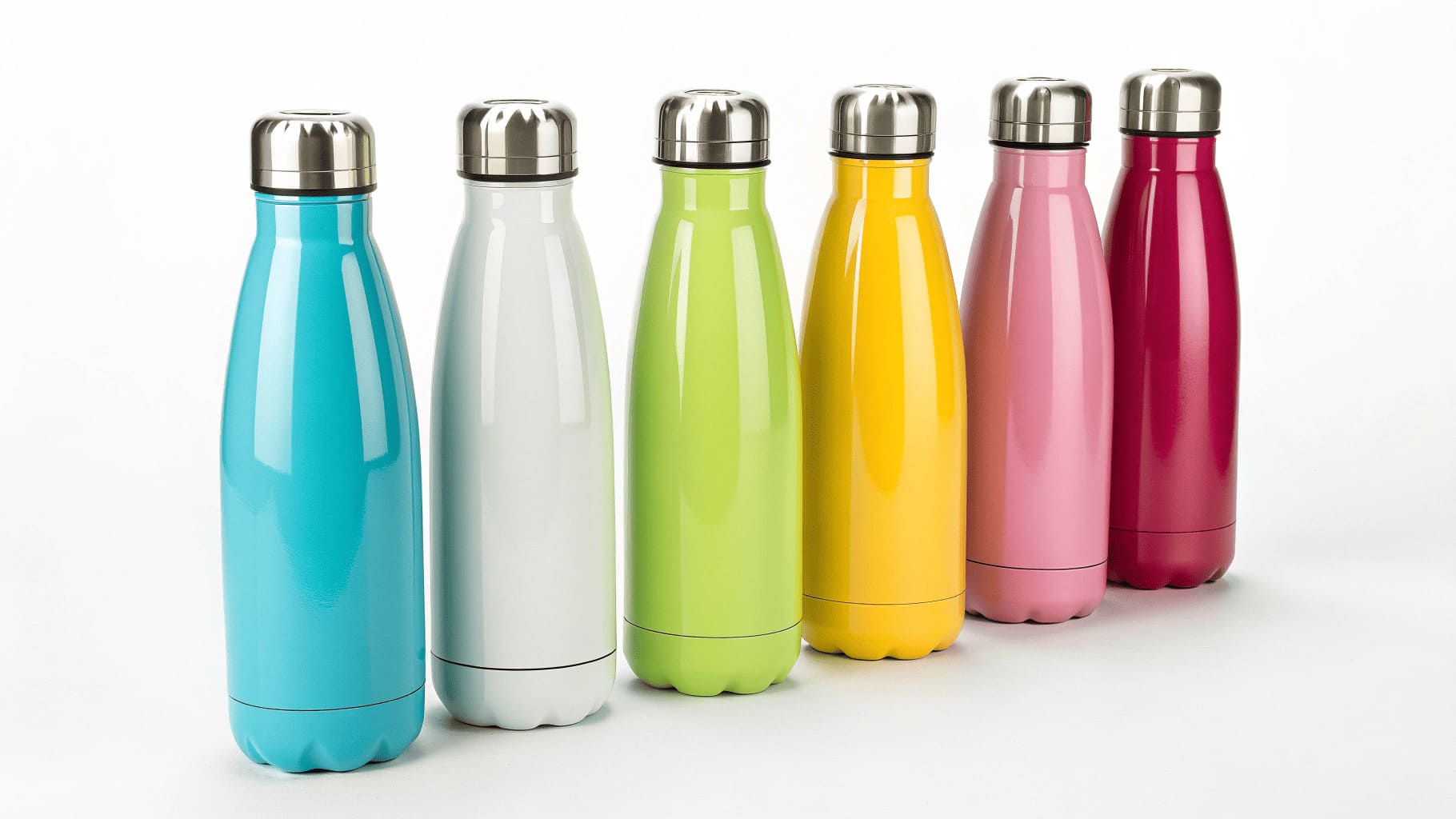
How vacuum insulation actually works
I think many buyers do not really understand what they are purchasing. They hear vacuum insulation and assume it is complicated. The concept is actually straightforward.
A vacuum flask has two walls with empty space between them. We pump out the air from that space during manufacturing. This creates a vacuum layer.
Heat transfers through three methods: conduction, convection, and radiation. The vacuum layer blocks conduction and convection completely. Air molecules cannot transfer heat if they are not there.
The inner and outer walls connect at the rim. We minimize this connection point to reduce heat transfer. Some manufacturers add a copper coating to the vacuum layer. This reduces radiant heat transfer even further.
The vacuum insulation works exactly the same way in stainless steel and titanium flasks. The material of the walls matters less than the quality of the vacuum seal. A well-made stainless steel vacuum flask outperforms a poorly-made titanium one every time.
Single-wall bottles cannot compete with vacuum insulation regardless of material. A single-wall titanium bottle performs worse than a double-wall stainless steel vacuum flask. The vacuum layer makes the difference.
Should you choose stainless steel or titanium for your 2026 orders?
Your budget is finite. Your launch timeline is tight. You need to make a decision that works for your business model.
Choose vacuum-insulated stainless steel for your main product lines. Reserve titanium for small specialty runs targeting premium outdoor enthusiasts. This strategy maximizes your return while testing new markets.
Building your 2026 product strategy
Let me share what I see working for successful buyers right now. Your 2026 planning should start with clear market segmentation.
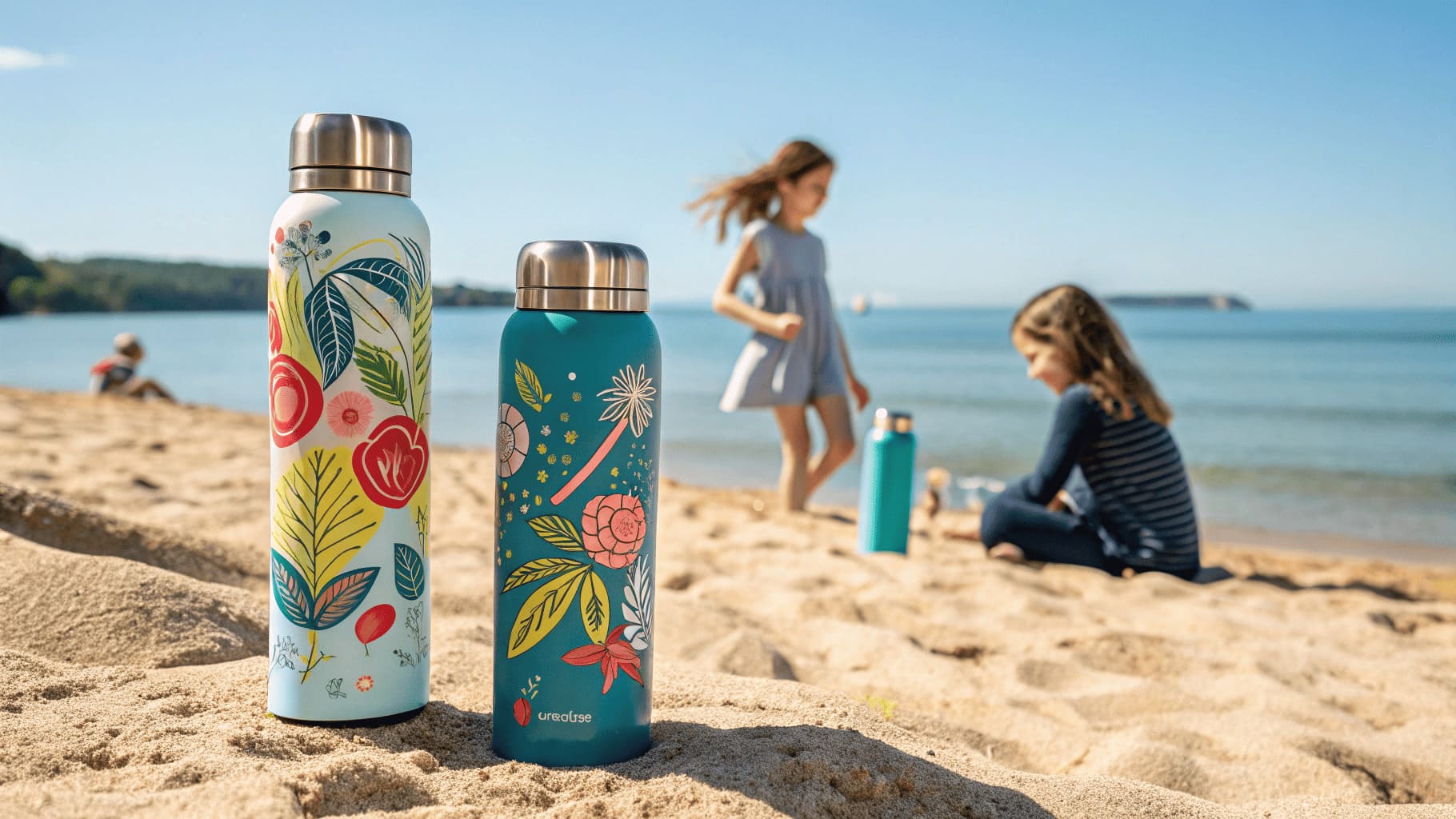
Stainless steel flasks serve your volume business. They hit the price points that corporate buyers expect. They customize easily with powder coating5, laser engraving, and screen printing. Your lead times stay manageable at 25 to 35 days.
I recommend 304 stainless steel as your baseline material. Some suppliers offer 201 stainless steel at lower prices. I advise against this. The quality difference shows up quickly. Your customers will notice. The small cost savings are not worth the risk to your brand.
You can test titanium with a small production run. Start with 2000 units. Target outdoor specialty retailers who serve serious enthusiasts. Price it at premium levels. See if the market responds.
Most of my buyers find that titanium remains a niche product. It works for specific applications. It does not replace stainless steel in their main catalogs.
The supply chain6 for stainless steel is mature and reliable. You can source from multiple factories. You can switch suppliers if quality issues arise. Titanium manufacturing concentrates in fewer hands. Your supplier options become limited.
Consider your customization needs carefully. Stainless steel accepts powder coating in any color. You can match exact Pantone codes. Titanium requires anodizing for color, which limits your palette and increases costs.
Think about your end customers. Corporate gift buyers want affordable prices and quick turnarounds. Retail customers want familiar products at competitive prices. Stainless steel meets both needs better than titanium.
I have watched material trends come and go. Glass bottles had a moment. Copper bottles tried to break through. Titanium appeals to premium segments. But stainless steel remains the workhorse of the industry for good reasons.
Your 2026 success depends on practical choices. Choose materials that support your profit margins. Choose materials that your customers understand. Choose materials that arrive on time.
Conclusion
Vacuum-insulated stainless steel flasks offer better value than titanium for most OEM buyers in 2026. Focus your resources on proven materials that maximize your returns.
-
Get insights into essential safety standards for food-grade materials to ensure compliance. ↩
-
Find out how customization can elevate your brand and meet customer expectations. ↩
-
Explore the mechanics of vacuum insulation technology and its benefits for thermal products. ↩
-
Learn about effective strategies for selecting materials that enhance product quality and profitability. ↩
-
Discover the advantages of powder coating for enhancing product aesthetics and durability. ↩
-
Get tips on effective supply chain management to ensure product availability and quality. ↩