
Are School Program Water Bottles BPA-Free and Dishwasher-Safe Under CPSIA?
A school bottle can look safe, but one weak lid part can put your program, your brand, and your buyer trust at risk.
I treat school program water bottles as CPSIA-ready only when every child-contact part is BPA-free. I do not treat dishwasher safety as automatic. I request lab reports for BPA, CPSIA documents, and separate dishwasher test proof before I approve bulk production.
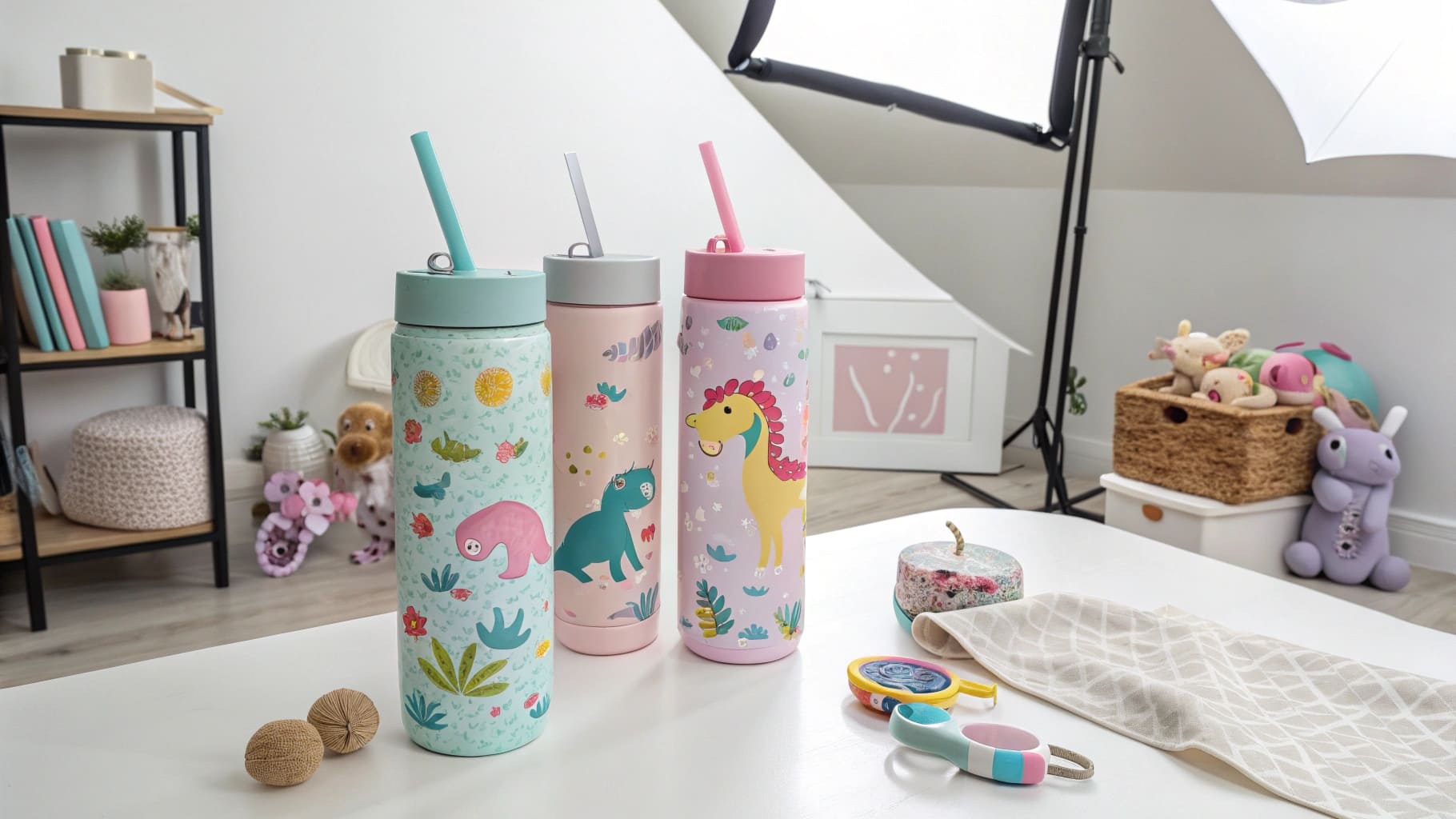
I learned this lesson through real school program orders. A stainless steel bottle body is usually not the problem. The risk often sits in the lid, gasket, straw, paint, logo, or printed label. When I speak with buyers who sell into the American school market, I always separate two questions. The first question is legal safety. The second question is daily cleaning life. A bottle can pass one question and fail the other. That is why I never use “BPA-free” as a shortcut for “dishwasher-safe,” and I never use a good-looking sample as a shortcut for full compliance.
Are BPA-Free Water Bottles Dishwasher Safe?
A BPA-free label feels safe, but it can hide a cleaning problem when heat, detergent, and pressure attack the coating and lid.
I see BPA-free bottles as dishwasher-safe only when the full bottle passes heat and wash testing. Stainless steel usually handles dishwashers well, but powder coating, printed logos, plastic lids, and silicone seals need separate proof.
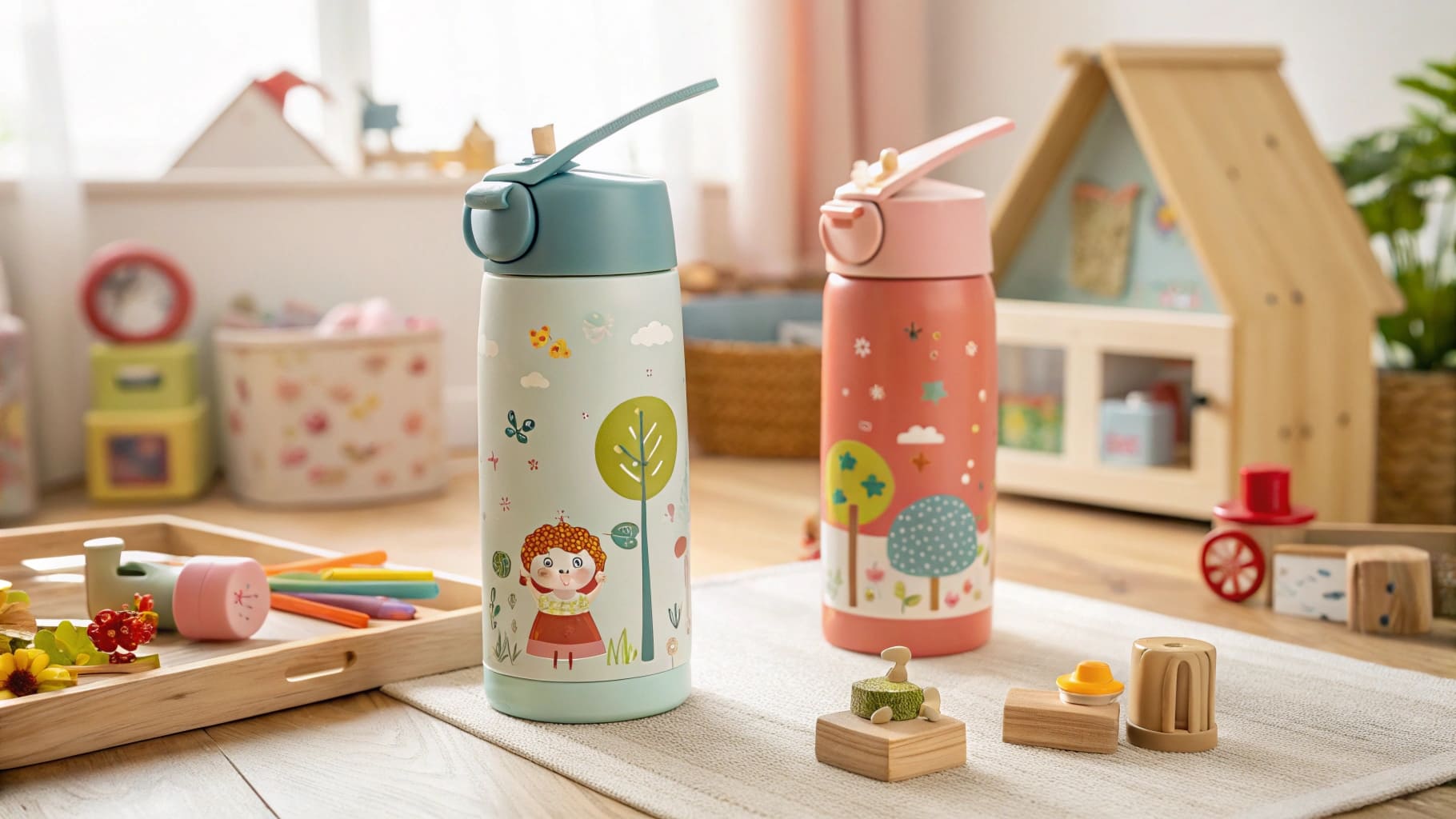
I separate material safety from cleaning durability
I often see buyers mix these two ideas together. BPA-free means the bottle does not use BPA in child-contact parts1. Dishwasher-safe means the bottle can survive repeated washing without damage, shape change, peeling, leaking, or bad smell. These are not the same test. CPSIA focuses on children’s product safety for products made for children under twelve. It does not promise that a bottle will survive school dishwashers.
For school programs, I look at the whole bottle. I do not stop at the steel body. I ask what happens to the lid after hot water. I ask what happens to the silicone ring after detergent. I ask what happens to the logo after repeated cycles. This is important when a buyer puts a school name, sports logo, or sponsor logo on the bottle. If the logo peels, the program looks cheap, even if the bottle is still safe.
| Part I check | BPA-free concern | Dishwasher concern |
|---|---|---|
| Stainless steel body | Very low risk | Usually strong under heat |
| Plastic lid | High need for proof | May warp or crack |
| Silicone gasket | Needs food-grade proof | May loosen or absorb smell |
| Powder coating | Not a BPA issue in most cases | May fade, chip, or peel |
| Printed logo | Needs ink safety review | May rub off in wash cycles |
I ask for clear washing claims
I also read the washing claim very carefully. “Top-rack dishwasher safe” is not the same as “fully dishwasher safe.” A top-rack claim often means the product should stay away from stronger heat near the bottom. For a school or program buyer, that detail matters because staff may wash many bottles at the same time. They may not sort each bottle with care. If the bottle needs special handling, I want the buyer to know that before the order is placed.
How to Tell if Bottle BPA Free?
A supplier may say BPA-free fast, but weak proof can leave you exposed during school review, parent complaints, or customs checks.
I tell if a bottle is BPA-free by checking third-party lab reports, material declarations, molded BPA-free marks on plastic parts, and full component coverage. I do not rely on a catalog sentence or a sales message.
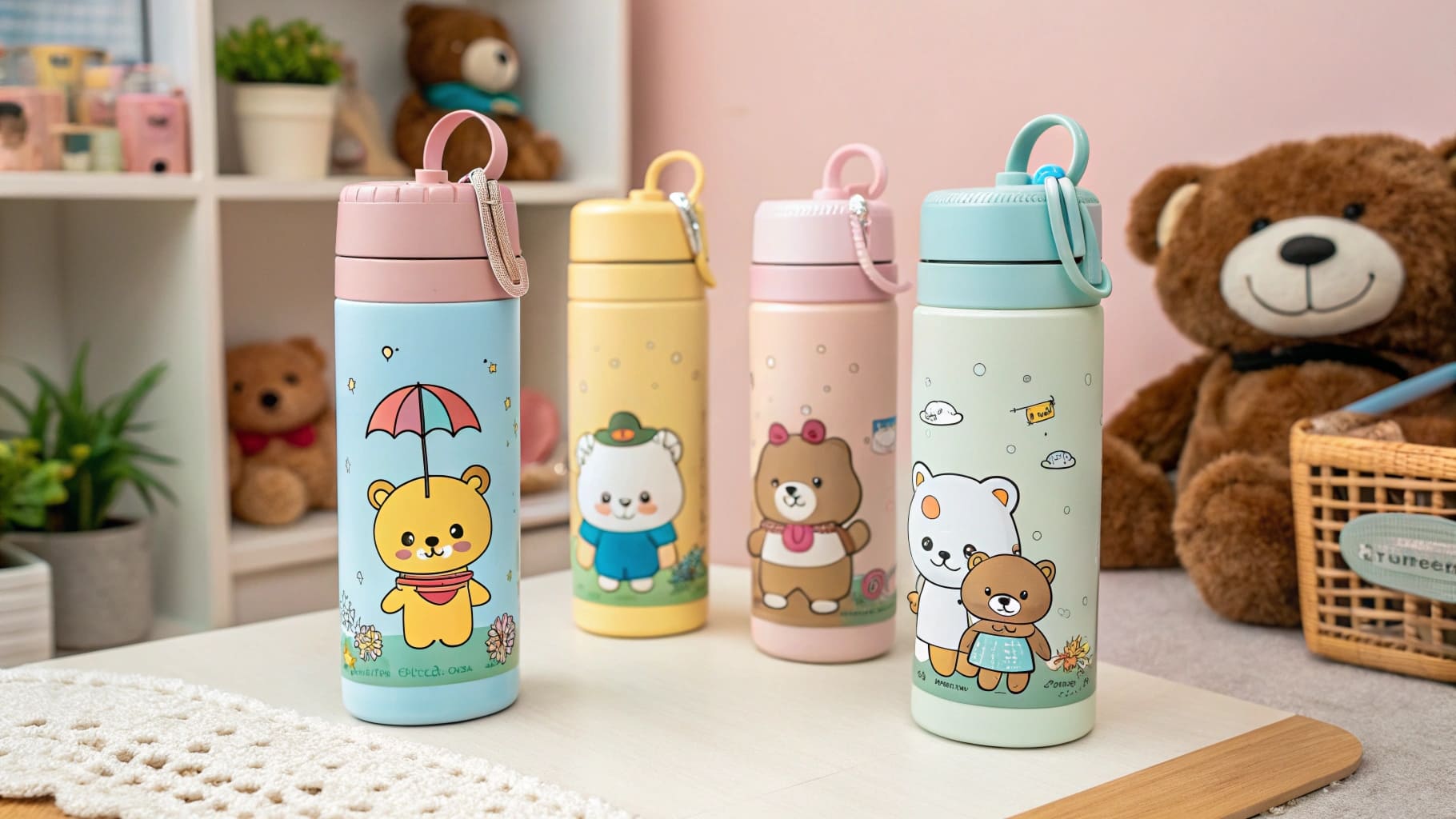
I check the report, not only the claim
When I prepare a school bottle order, I first ask for a recent third-party lab report. I want the report to name the product or the tested material clearly. I also want the report to cover the parts that children touch. A stainless steel body alone is not enough. The lid, spout, straw, gasket, and any mouth-contact part must be included.
I have seen cases where a supplier says “BPA-free” because the body is stainless steel. That answer is incomplete. Stainless steel has no BPA in the way polycarbonate plastic can have BPA, but the bottle is not only steel. If the cap uses plastic, I need to know the plastic type. If the seal uses silicone, I need to know it is food-grade. If the product is for children, I also need CPSIA-related documents, not only a general food-contact statement.
| Proof I request | What I look for | Why I care |
|---|---|---|
| Third-party lab report | BPA test result for each contact part | I need outside proof |
| Material declaration | Clear plastic and silicone names | I need to avoid hidden risk |
| Molded BPA-free mark | Mark on plastic lid or part | I need part-level clarity |
| CPSIA document | Children’s product safety support | I need school market readiness |
| Sample check | Same parts as mass order | I need proof to match production |
I compare the sample with the final order
I also compare the approved sample with the final production plan. This step looks simple, but it prevents many mistakes. Sometimes a factory makes a sample with one lid and later uses another lid for mass production because of stock or cost. That change can break the proof chain. I always tell buyers to keep the sample, packing photo, part list, and report together.
For customized bottles, I pay extra attention to logos and colors. A logo may use ink, coating, or laser engraving. Laser engraving is usually stronger for dishwashers because it does not add a printed layer2. Screen printing can work well, but it needs ink safety and wash testing. I do not reject printing by default. I just ask for proof that matches the real order.
Which Water Bottles Do Not Contain BPA?
Many bottles claim safe materials, but one low-grade plastic lid can turn a good steel bottle into a risky school product.
I choose bottles that avoid BPA by using stainless steel bodies, food-grade silicone seals3, and BPA-free plastic lids such as polypropylene or Tritan. I still verify every part with lab reports because the main body is not the whole product.
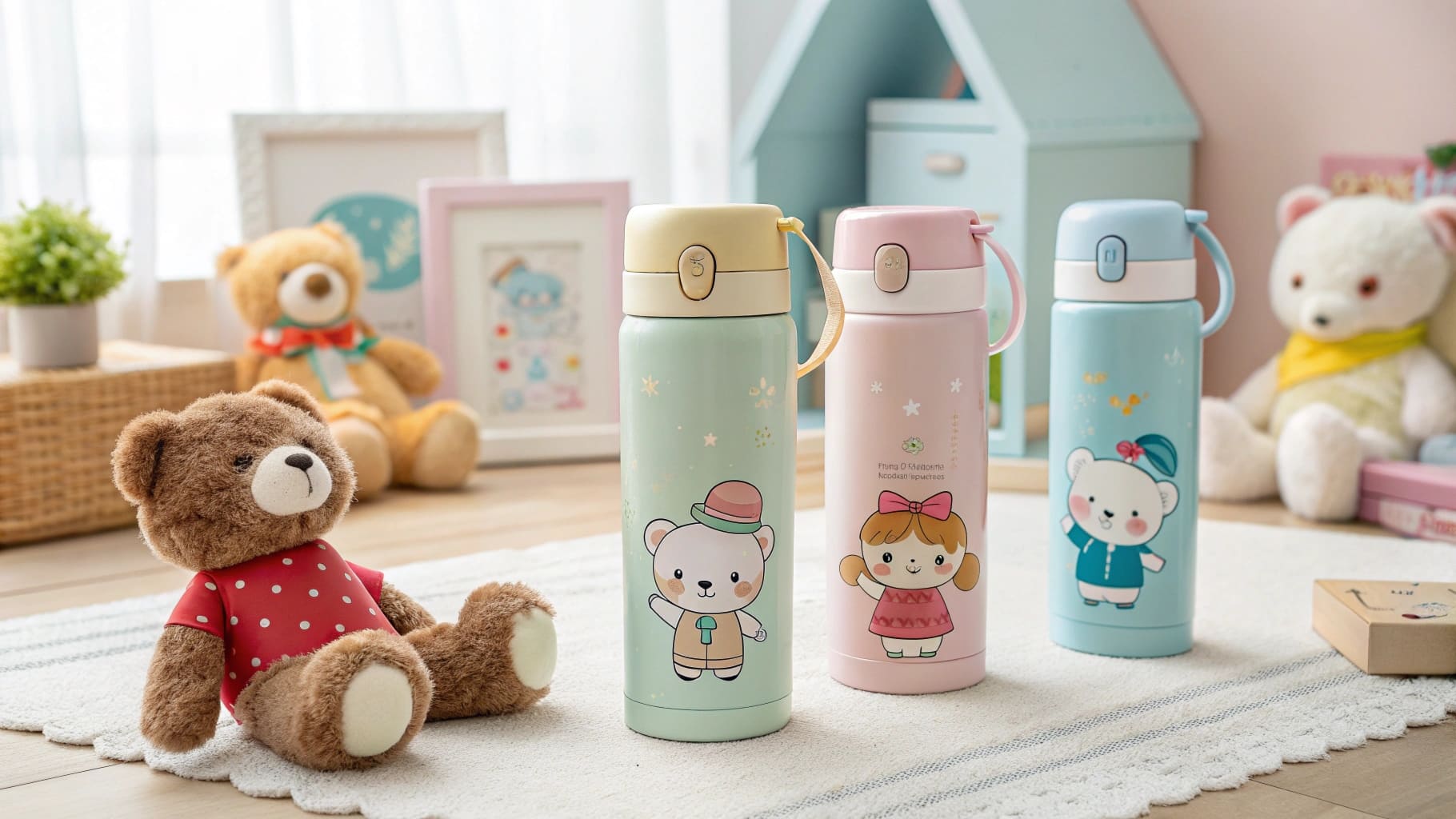
I prefer stainless steel for school programs
For school program sourcing, I usually prefer stainless steel water bottles. Stainless steel does not use BPA like some older hard plastics4. It also feels strong, clean, and suitable for a branded program. This is why many school buyers, distributors, and company owners choose stainless steel when they want a safer product image.
But I still do not say that every stainless steel bottle is automatically ready for children. The product must be checked as a complete set. A bottle with a steel body and a poor plastic cap still has risk. A bottle with a good cap and weak paint can still create after-sale trouble. A bottle with a pretty logo and no test report can still fail a procurement review. I treat each component as part of the safety promise.
| Bottle type | BPA risk | My buying view |
|---|---|---|
| Stainless steel bottle | Very low in body | Strong choice if all parts are tested |
| Glass bottle | Very low in body | Less ideal for younger school use |
| Aluminum bottle with liner | Depends on liner | I need liner proof |
| Polypropylene bottle | Usually BPA-free | I still need material proof |
| Tritan bottle | Usually BPA-free | I still need full test proof |
| Polycarbonate bottle | Higher concern | I avoid it for school programs |
I match material choice with school use
I also match the bottle material with the real school setting. A school bottle is carried in backpacks. It falls on the floor. It sits in warm cars. It is washed again and again. It may be used by younger children who bite spouts or drop lids. This use is harder than a normal gift bottle order.
That is why I like stainless steel with a simple lid structure for school programs. Fewer small parts mean fewer failure points. A wide mouth bottle can be easier to clean. A silicone boot can reduce dents. A paracord handle can make carrying easier, but I still check whether it fits the age group and cleaning plan. If the buyer needs dishwasher strength, I suggest laser logos or finishes that have better wash life. If the buyer needs bright colors, I ask for coating test support before final approval.
I ask suppliers the questions that matter
When I work on a school order, I do not ask only, “Is it BPA-free?” I ask better questions. I ask which parts were tested. I ask which lab tested them. I ask whether the lid material changed. I ask whether the logo will survive washing. I ask whether the bottle is top-rack only or fully dishwasher-safe. These questions save time because they turn a loose claim into a clear sourcing decision.
Conclusion
I treat CPSIA, BPA-free proof, and dishwasher testing as one buying package, because safe bottles must also survive daily school cleaning.
-
"Bisphenol A (BPA): Use in Food Contact Application", https://www.fda.gov/food/food-packaging-other-substances-come-contact-food-information-consumers/bisphenol-bpa-use-food-contact-application. Bisphenol A (BPA) is an industrial chemical used in certain plastics and resins; 'BPA-free' designations indicate the absence of this compound in a material but do not constitute a comprehensive safety or durability certification (U.S. Food and Drug Administration, Bisphenol A overview). Evidence role: definition; source type: government. Supports: That BPA-free refers specifically to the absence of bisphenol A in materials, not to broader product performance characteristics. Scope note: FDA guidance addresses BPA in food-contact materials broadly and does not specifically define 'BPA-free' labeling standards for children's drinkware. ↩
-
"Laser Engraved vs. Screen Printed Drinkware: Which Decoration ...", https://www.customink.com/blog/drinkware-decoration-methods/. Laser marking on stainless steel produces permanent surface modification through localized oxidation or ablation without depositing an additional material layer, resulting in markings that are inherently resistant to chemical and mechanical removal; by contrast, screen-printed inks rely on adhesion between the ink layer and substrate, which can be compromised by repeated exposure to alkaline detergents and thermal cycling (Ion, Laser Processing of Engineering Materials, 2005). Evidence role: mechanism; source type: research. Supports: That laser engraving creates a permanent surface modification without an added material layer, resulting in greater resistance to washing and abrasion compared to applied ink or coating methods. Scope note: Comparative wash durability data specific to branded drinkware applications is limited in the peer-reviewed literature; this citation supports the underlying mechanism rather than direct product performance testing. ↩
-
"Report Name:National Food Safety Standard for Silicone ...", https://apps.fas.usda.gov/newgainapi/api/Report/DownloadReportByFileName?fileName=National%20Food%20Safety%20Standard%20for%20Silicone%20Rubber%20Materials%20and%20Products%20for%20Food%20Contact%20Use%20Notified%20to%20WTO_Beijing_China%20-%20People%27s%20Republic%20of_CH2023-0168. The U.S. Food and Drug Administration recognizes certain silicone polymers as generally regarded as safe (GRAS) or approved for food-contact use under 21 CFR, provided they meet specified purity and composition requirements; food-grade silicone does not incorporate bisphenol A in its polymer structure (FDA, 21 CFR Part 177). Evidence role: definition; source type: government. Supports: That food-grade silicone is recognized under applicable regulations as safe for food and beverage contact applications and does not contain BPA. Scope note: FDA approval applies to silicone meeting specific compositional standards; not all silicone products marketed as food-grade have been independently verified to meet these criteria. ↩
-
"Food Packaging and Chemical Migration: A Food Safety Perspective", https://pmc.ncbi.nlm.nih.gov/articles/PMC12096275/. Stainless steel is not manufactured using bisphenol A and is recognized by food safety authorities as a suitable material for food and beverage contact applications, with migration concerns centered on metals such as nickel and chromium rather than BPA (European Food Safety Authority, metal migration guidance). Evidence role: general_support; source type: government. Supports: That stainless steel food-contact materials do not contain bisphenol A and present a different chemical migration profile than polycarbonate plastics. Scope note: This citation addresses stainless steel broadly; the safety of a complete stainless steel bottle depends on all component materials, including non-steel parts such as lids and seals. ↩