
Are Paracord Handles and Cloth Bags Worth Adding to Your Stainless Steel Water Bottle Order in 2026?
Buyers are asking for more than just bottles now. They want adventure-ready add-ons. If you skip the quality checks on paracord handles and cloth bags, you will pay for it later.
Paracord handles and cloth bags are value-added accessories that make stainless steel water bottles more appealing to outdoor and promotional markets.1 To source them safely, you need to check stitch strength, fit accuracy, and minimum order quantities before placing any bulk order.
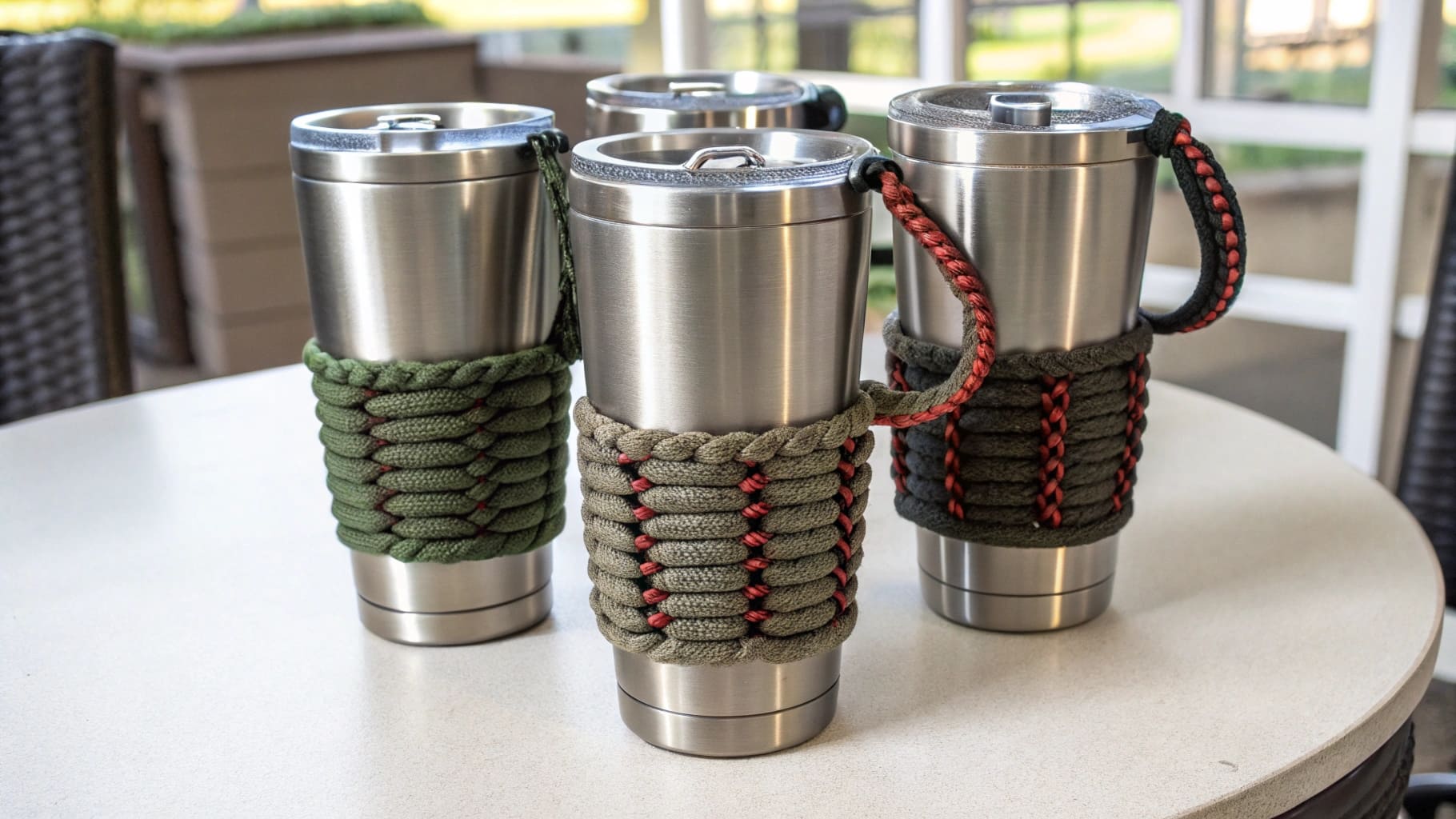
I have seen too many buyers rush through the accessory selection process. They focus all their attention on the bottle itself, then treat the handle and the bag as afterthoughts. That is a mistake. The handle is what the end user grabs first. The bag is what they carry every day. If either one fails, the whole product gets a bad review—and the bottle gets blamed too.
How Much Paracord Do You Need for a Handle Wrap?
You found a paracord style you like, but you have no idea how much cord the factory actually uses. Get this wrong, and your handle looks thin, weak, or unfinished.
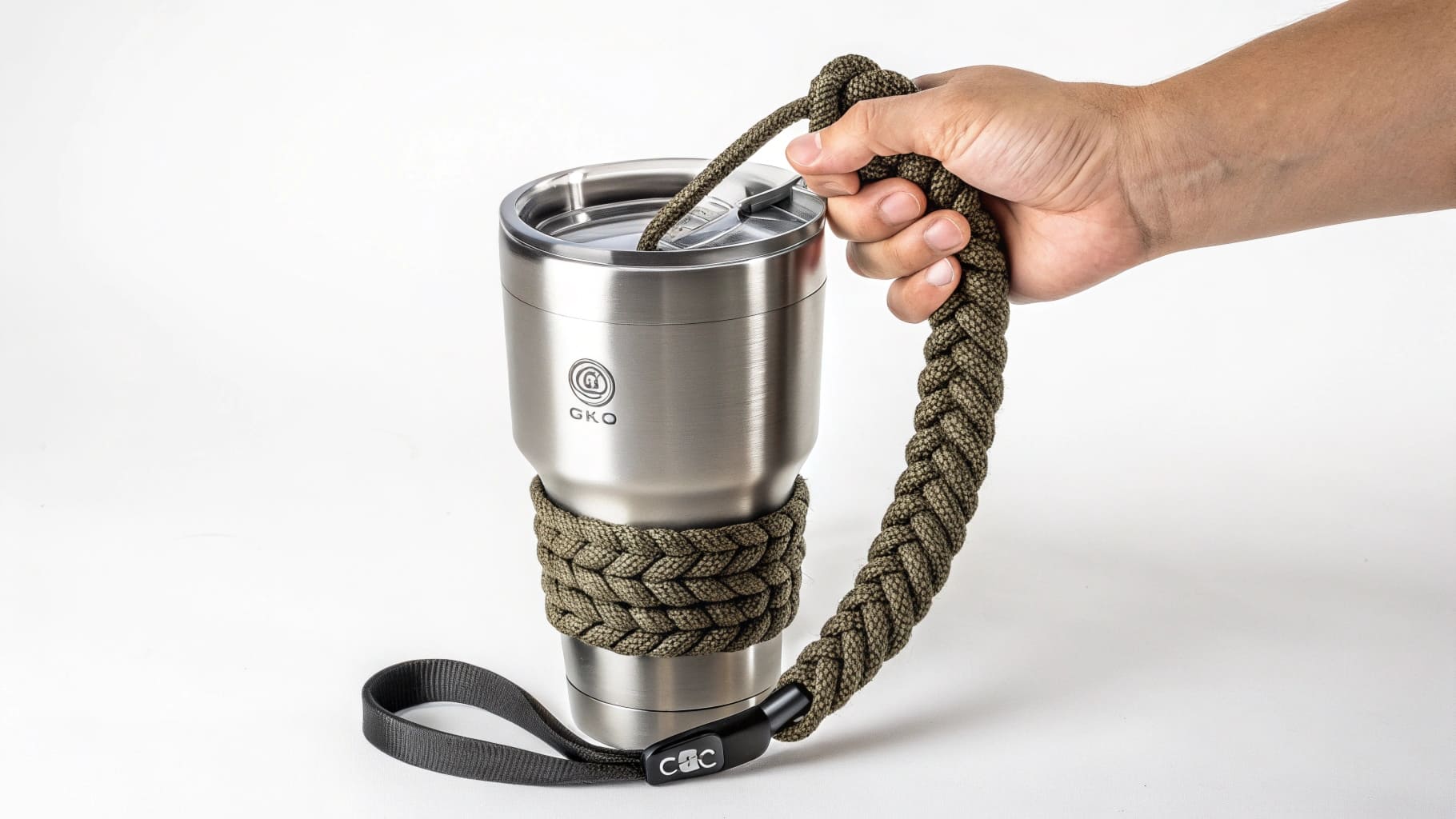
For a standard handle wrap on a bottle with a 2.5 to 3 inch neck diameter, you need roughly 3 to 4 feet of 550 paracord. This applies to the most common wrap styles used on stainless steel water bottles in B2B orders.
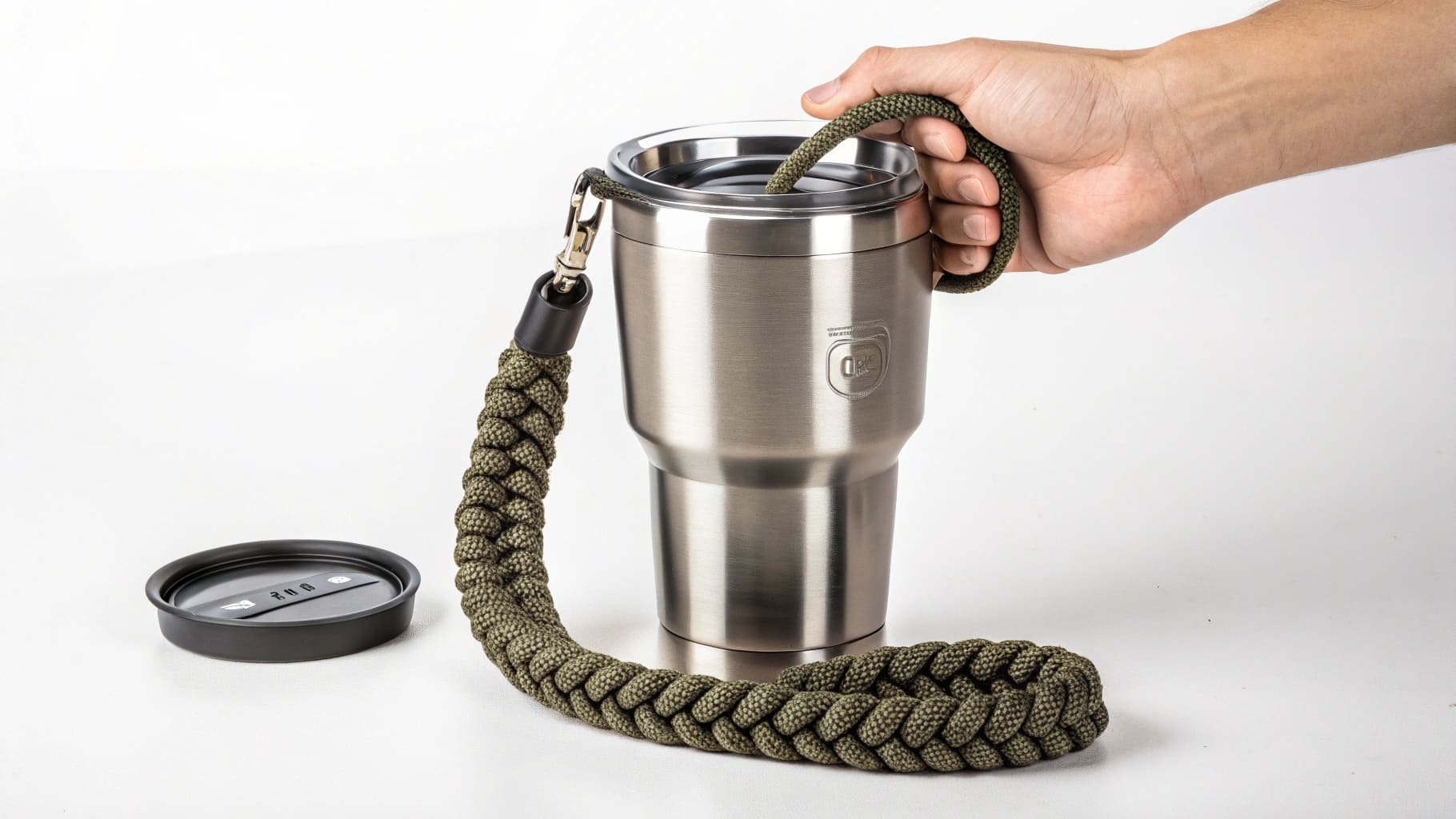
The number changes based on the wrapping style and the bottle size. That is where most buyers get confused. Let me break this down so you can communicate clearly with your supplier.
What Changes the Amount of Paracord You Need?
Three things directly affect how much cord goes into one handle: the bottle neck diameter, the wrap style, and the number of passes.
| Variable | Low End | High End |
|---|---|---|
| Bottle neck diameter | 2.5 inches | 3 inches |
| Cord per handle (simple wrap) | 3 feet | 4 feet |
| Cord per handle (cobra weave) | 6 feet | 8 feet |
| Cord per handle (king cobra) | 10 feet | 14 feet |
A simple wrap-and-knot style uses the least material and costs less in labor. A cobra weave uses more cord and takes more time to tie, so the unit price goes up. A king cobra is the thickest and most premium-looking option, but it requires nearly four times the cord of a basic wrap.2
When you ask your supplier for a quote, always specify the wrap style by name. If you just say "paracord handle," you will get the cheapest option by default. That may not match the quality level your customers expect.
How Much Paracord Do You Need for a Go Bag Setup?
You want a full kit—bottle, handle, and carry bag. But you are not sure how much cord goes into a complete go bag setup versus just the handle wrap.
A go bag setup that includes a full bottle carry system typically uses 10 to 20 feet of 550 paracord in total, depending on whether the bag itself has paracord lashing, handles, or drawstring reinforcement built in.
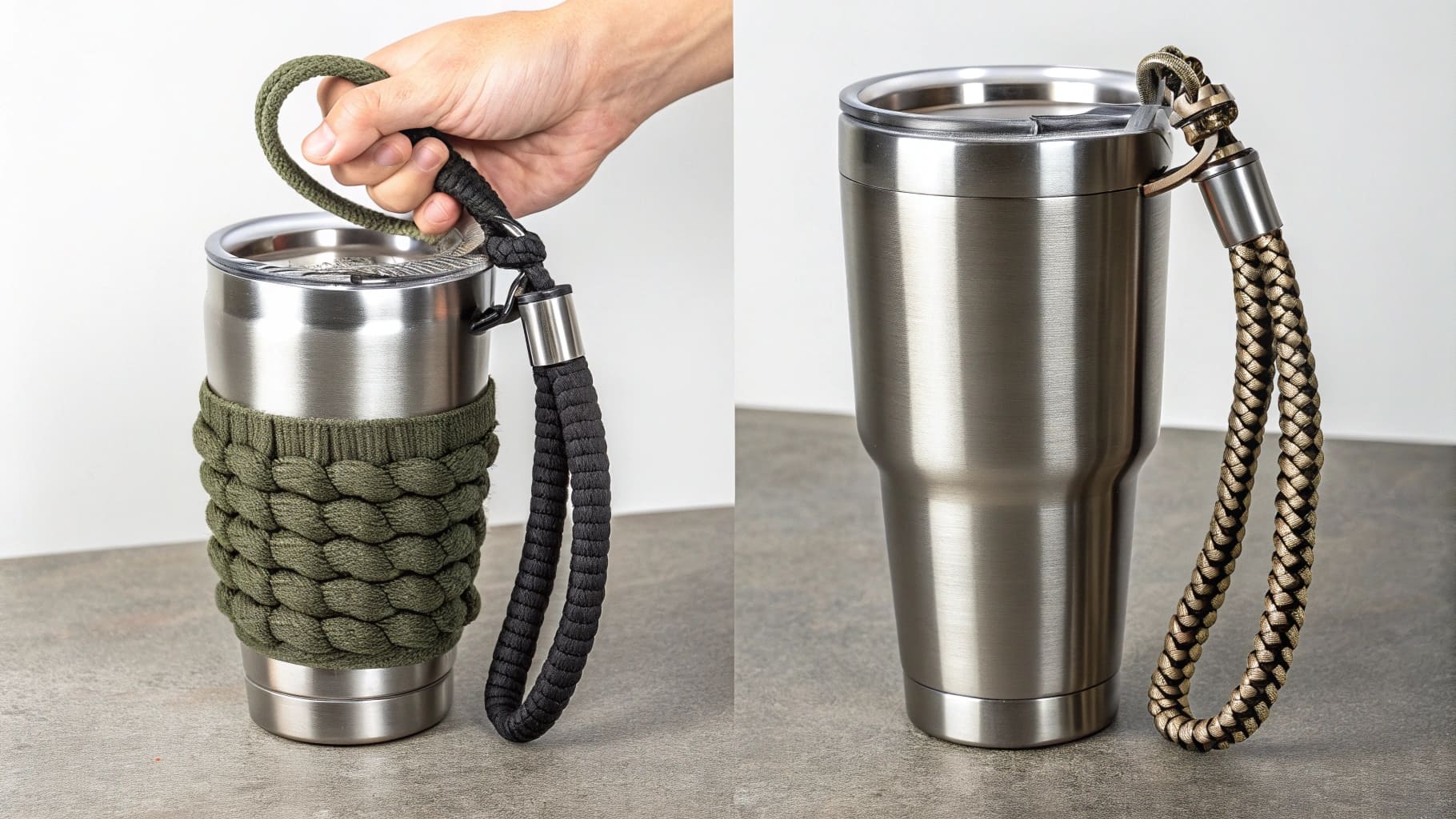
A go bag is more than a soft pouch. In outdoor and emergency preparedness markets, a go bag is a functional carry system. Buyers in the promotional products space often underestimate how much cord engineering goes into a complete kit.
Breaking Down the Cord Use in a Go Bag Kit
Here is how the paracord gets distributed across a typical kit that includes a cloth carry bag and a wrapped bottle handle:
| Component | Paracord Use | Purpose |
|---|---|---|
| Bottle handle wrap | 3 to 14 feet | Grip and identification |
| Bag carry handles | 2 to 4 feet | Structural support |
| Drawstring closure | 1 to 2 feet | Top closure |
| External lashing loops | 2 to 6 feet | Attachment points for gear |
| Decorative accent | 1 to 2 feet | Branding or color coding |
If your customer sells into the hiking, camping, or emergency preparedness space, they will notice missing lashing loops or a cheap drawstring. These are signals of a low-effort design.
I always recommend asking your supplier to send you a sample kit with all components attached. Look at every cord end. Check that each knot is tight and symmetrical. A loose knot on a sample means loose knots in bulk.
How Do You Tie Paracord for a Bottle Handle?
Your supplier shows you a handle in photos, but you cannot tell if the knot is actually secure. You need to know what a proper tie looks like before you approve production.
The three most common paracord handle tie methods for stainless steel water bottles are the simple wrap-and-knot, the cobra weave, and the king cobra. Each one has a different knot structure, durability level, and labor cost.
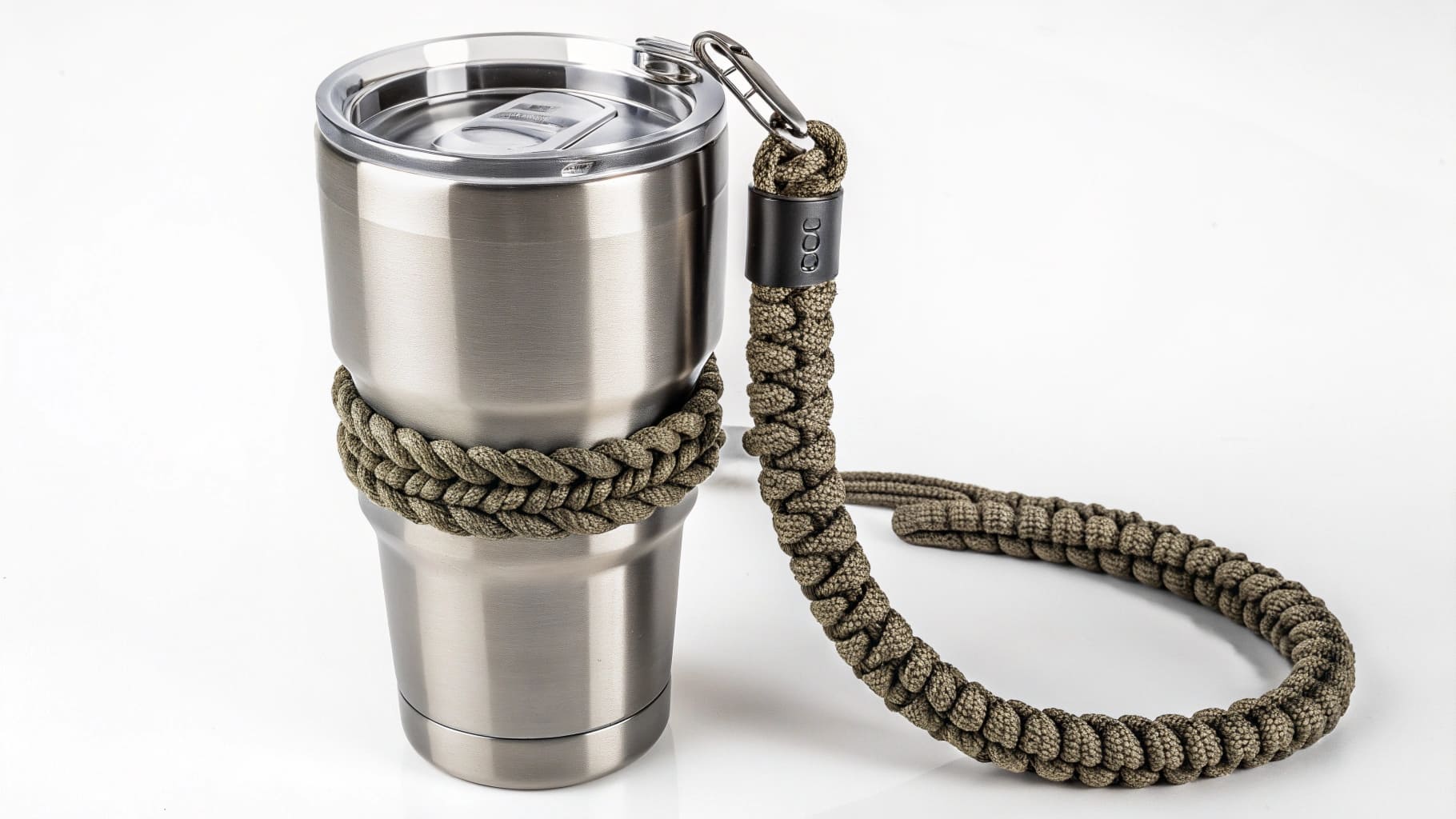
Knot quality is one of the hardest things to verify from a photo. This is why I always request a physical pre-production sample before approving any paracord accessory order. A photo can be taken at any angle. A sample tells you the truth.
Comparing the Three Main Tying Methods
| Method | Cord Used | Labor Level | Load Resistance | Best For |
|---|---|---|---|---|
| Simple wrap-and-knot | 3 to 4 feet | Low | Basic | Budget orders, short production runs |
| Cobra weave | 6 to 8 feet | Medium | Strong | Mid-range promotional products |
| King cobra | 10 to 14 feet | High | Very strong | Premium outdoor or gift sets |
The simple wrap-and-knot is fast to produce and costs less per unit. It works fine for light daily use, but it will not hold up under repeated stress loads.
The cobra weave is the most popular choice in B2B orders I have seen. It looks clean, holds well, and the price is reasonable. Most buyers in the outdoor product space land here.
The king cobra is thick, heavy, and built for buyers who want a premium look. If your customer is selling in a retail channel where the product sits on a shelf next to outdoor gear brands, this is the one to choose.
One more thing: always ask your supplier which knot finish they use at the cord ends. A melted end is clean and permanent. A taped end is a sign of a rushed production process.
What MOQs Should You Expect for Custom Paracord Handles and Cloth Bags in 2026?
You want a custom color or your customer's logo on the bag. But you do not know if the order size makes sense. Setting the wrong MOQ expectation will slow your deal down or kill it.
For 2026, most suppliers in Asia set MOQs at 500 to 1,000 units for custom paracord colors or branded cloth bags3. Stock options with no customization may start as low as 100 to 300 units.
MOQ is not just a number the factory picks at random. It is tied directly to setup costs, material minimums, and dye lot sizes. If you understand why the number exists, you can have a more productive conversation with your supplier.
MOQ Ranges by Customization Level
| Customization Type | Typical MOQ Range | Lead Time Impact |
|---|---|---|
| Stock paracord color, no logo bag | 100 to 300 units | Shortest |
| Custom paracord color only | 300 to 500 units | Moderate |
| Custom bag with printed or embroidered logo | 500 to 1,000 units | Longer |
| Full custom kit (color + logo + wrap style) | 1,000 units and up | Longest |
Buyers who push for lower MOQs on fully custom orders usually get one of two outcomes. Either the supplier agrees and spreads the setup cost across fewer units, which raises the unit price significantly, or the supplier declines and the buyer loses time looking for alternatives.
My advice is to match your customization requests to your order volume honestly. If you are testing a new market with a small first order, choose stock colors and a plain bag. Once the product proves itself in your channel, then move to full custom on a larger reorder.
Also, always request a pre-production sample that shows the actual knot security and the bag stitching before you release the bulk order. Return rates in retail are directly connected to how well these details hold up over time. A $30 sample request can save you thousands in returns.
Conclusion
Paracord handles and cloth bags add real value to your bottle orders, but only if you check stitch strength, fit, tying method, and MOQs before committing to bulk production.
-
"Reusable Water Bottle Market Size | Industry Report, 2030", https://www.grandviewresearch.com/industry-analysis/reusable-water-bottle-market. Outdoor recreation and promotional-products research identifies reusable drinkware and carry accessories as common product categories, supporting the contextual claim that bottle accessories can add market appeal. Evidence role: general_support; source type: institution. Supports: Paracord handles and cloth bags can increase the appeal of stainless steel water bottles in outdoor and promotional markets.. Scope note: Such sources can support market context, but they may not directly measure the incremental value of paracord handles or cloth bags specifically. ↩
-
"How to make the King Cobra Paracord Bracelet - YouTube", https://www.youtube.com/watch?v=5EN5AmdIZBM. Paracord pattern guides describe the king cobra as a second cobra layer tied over an existing cobra weave, supporting the claim that it is thicker and uses substantially more cord than a single simple wrap. Evidence role: mechanism; source type: other. Supports: A king cobra weave is thicker and requires substantially more cord than a basic paracord wrap.. Scope note: The phrase 'premium-looking' is a design judgment; external evidence can support thickness and additional cord use more directly than consumer perception. ↩
-
"Intertextile Shanghai Apparel Fabrics on Instagram: "Secure your ...", https://www.instagram.com/reel/DPlZ09eACaZ/. Sourcing and manufacturing references commonly link customized textile or accessory production to minimum order quantities in the hundreds or thousands, providing contextual support for the stated MOQ range. Evidence role: general_support; source type: institution. Supports: Custom paracord colors or branded cloth bags commonly require MOQs around 500–1,000 units from Asian suppliers.. Scope note: MOQ levels vary by supplier, country, season, and customization process; neutral sources may support the general scale but not prove 'most suppliers in Asia' use this exact range in 2026. ↩