
Are insulated coffee mugs dishwasher-safe? Labeling rules and tests for retail
I see this question all the time from my clients. They worry about customer returns. The answer depends on your mug construction and coating.
Most vacuum-insulated coffee mugs should not go in dishwashers. The high heat and harsh detergents damage the vacuum seal and coating. But some manufacturers design dishwasher-safe versions1 through special construction methods.
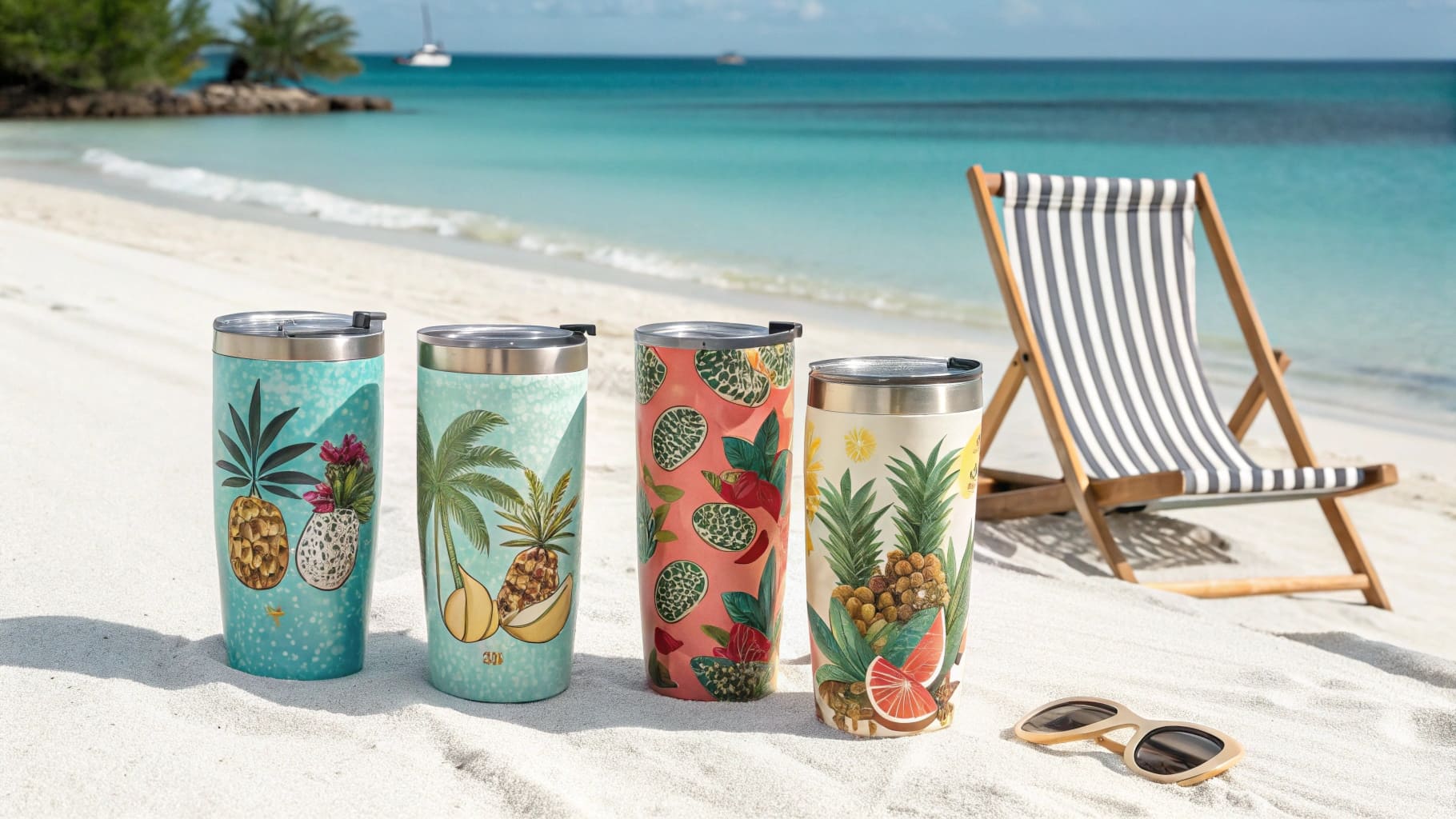
Last month, a client from Canada asked me about this. He sells branded coffee mugs to corporate clients. His customers kept asking if the mugs were dishwasher-safe. I told him the same thing I tell everyone. You need to understand the construction first. Then you can label correctly. Let me explain what I learned after ten years in this business.
Can you put insulated mugs in the dishwasher?
I tested this myself with different mug samples. Most failed after twenty dishwasher cycles2. The coating started to peel and fade.
You can put some insulated mugs in the dishwasher. But most vacuum-insulated mugs should be hand washed only. The vacuum seal between walls can break down from dishwasher heat and pressure.

Understanding the construction differences
I work with factories that make two types of insulated mugs. The first type has a vacuum seal between double walls. The second type uses foam or air insulation. Both look similar from outside. But they react differently to dishwasher conditions.
Vacuum-insulated mugs keep drinks hot for six to eight hours. They work through a space between two stainless steel walls. This space has no air. Heat cannot transfer through nothing. But dishwashers create problems. The water temperature reaches 60 to 80 degrees Celsius. This heat can expand the air trapped in tiny imperfections. The expansion weakens the vacuum seal over time.
I saw this happen to a batch of mugs last year. A client ignored my warning. He told his customers the mugs were dishwasher-safe. After three months, customers complained. The mugs stopped keeping coffee hot. The vacuum seal had failed. I had to help him replace 500 units.
The coating also matters. We use powder coating on most mugs. This creates a hard, colorful surface. But dishwasher detergents contain alkaline chemicals. These chemicals attack the coating. You see fading first. Then small cracks appear. Finally, the coating peels off in pieces.
| Construction Type | Dishwasher Safe | Insulation Duration | Common Issues |
|---|---|---|---|
| Vacuum Double-Wall | Usually No | 6-8 hours | Seal damage, coating fade |
| Foam Insulated | Sometimes | 2-4 hours | Foam degradation |
| Single Wall | Yes | Under 1 hour | None |
| Air Gap Double-Wall | Sometimes | 3-5 hours | Seal compromise |
Can a hydro flask coffee mug go in the dishwasher?
I get asked about specific brands often. My clients want to match or beat their features. Hydro Flask makes quality products with specific care requirements.
Most Hydro Flask coffee mugs need hand washing. The company states this clearly on their packaging. Only their specific lid designs are dishwasher-safe on the top rack.
Why brand leaders take this approach
I studied how major brands handle this issue. They choose product longevity over convenience. This makes sense from a business view. A mug that lasts ten years creates loyal customers. A mug that breaks after six months creates complaints.
Hydro Flask uses a proprietary powder coating they call TempShield. This coating gives their mugs the distinctive colors. But even their advanced coating cannot handle repeated dishwasher exposure. They test their products extensively. I know this because I visited their testing lab three years ago during a trade show in Portland.
The testing process involves temperature cycling. They heat mugs to 100 degrees Celsius. Then they cool them to minus 20 degrees Celsius. They repeat this 200 times. Most mugs fail before reaching 200 cycles. The ones that survive get approved for production.
But dishwashers add another stress factor. The detergent chemistry changes everything. Regular dish soap has a pH around 7. Dishwasher detergent has a pH between 10 and 12. This alkaline environment attacks metal surfaces and coatings.
I tell my clients to follow the same standard. If you cannot guarantee performance after 100 dishwasher cycles, label the product as hand wash only. This protects your brand reputation. It also reduces return rates.
Testing standards I recommend
We run our own tests before shipping bulk orders. I learned this from a mistake I made five years ago. A client ordered 10,000 mugs. I did not test them properly. After three months, 15 percent came back damaged. That taught me to be more careful.
Now I test every new design. We put five sample mugs through 50 dishwasher cycles. We check three things after each cycle. First, we measure insulation performance. Second, we inspect the coating for damage. Third, we test the vacuum seal integrity.
The insulation test is simple. We fill the mug with water at 95 degrees Celsius. We measure the temperature after four hours. If it drops below 60 degrees, the mug fails. A good vacuum mug should maintain 65 to 70 degrees after four hours.
Why can't I put stainless steel in the dishwasher?
This confuses many people. They see stainless steel pots in dishwashers. They assume all stainless steel products are dishwasher-safe. This is wrong.
Pure stainless steel can go in dishwashers. But insulated mugs have coatings, seals, and vacuum chambers. These elements cannot handle dishwasher conditions. The high heat and harsh chemicals damage them.

The science behind the damage
I learned about this from a metallurgist I met at a factory. He explained how dishwashers affect different materials. Stainless steel itself resists corrosion well. The chromium in steel creates a protective oxide layer. This layer reforms automatically when scratched.
But vacuum mugs are not solid stainless steel. They have two steel walls with empty space between them. A tiny weld seals the space. This weld is the weak point. Dishwasher heat makes metal expand. Different expansion rates create stress at the weld. Over time, this stress creates microscopic cracks.
I saw this under a microscope once. The factory quality manager showed me a failed mug. The weld looked perfect to my eye. Under 40x magnification, I could see tiny cracks. These cracks let air into the vacuum space. Once air gets in, the insulation fails.
The coating damage follows a different mechanism. Powder coating bonds to steel through a curing process. Heat makes the powder melt and flow. Then it hardens into a smooth surface. This creates a mechanical bond with the steel surface texture.
Dishwasher detergent contains surfactants and builders. Surfactants break down grease. Builders soften water and boost cleaning power. But builders are highly alkaline. They attack the coating-metal interface. Each wash cycle weakens the bond slightly. After 30 to 50 cycles, you see visible damage.
What makes some stainless steel mugs dishwasher-safe
I do sell some dishwasher-safe mugs. They use different construction methods. Some have a special ceramic coating3. This coating resists alkaline chemicals better than powder coating. But it costs 30 percent more to apply.
Other dishwasher-safe mugs use single-wall construction4. They sacrifice insulation performance for convenience. These mugs keep drinks warm for one to two hours only. But they can handle any dishwasher cycle.
A third option uses a unique sealing method. The factory seals the vacuum chamber with laser welding5. This creates a stronger bond than traditional welding. The cost increases by 20 percent. But the mug can survive 100 dishwasher cycles.
| Feature | Traditional Vacuum Mug | Dishwasher-Safe Version | Cost Difference |
|---|---|---|---|
| Coating | Powder coating | Ceramic coating | +30% |
| Wall Construction | Double-wall vacuum | Single-wall | -15% |
| Sealing Method | Traditional weld | Laser weld | +20% |
| Insulation Duration | 6-8 hours | 1-2 hours (single wall) | N/A |
| Dishwasher Cycles | 0-30 | 100+ | N/A |
Critical labeling requirements I follow
I learned about labeling rules the hard way. Three years ago, I shipped mugs to Germany. The packaging did not have proper care instructions in German. Customs held the shipment for two weeks. I had to reprint all packaging. This cost me $5,000 and delayed delivery by a month.
Now I make sure every product has clear care instructions. If a mug is not dishwasher-safe, I put "Hand Wash Only" on both the packaging and the bottom of the mug. I use a permanent laser engraving. This cannot wear off or become unclear.
For dishwasher-safe mugs, I include specific instructions. I specify top rack only. I recommend low-temperature cycles. I note that lids may have different care requirements. This level of detail protects both me and my clients.
Different markets have different requirements. The European Union requires care labels in multiple languages. The United States needs compliance with FTC guidelines. Canada requires both English and French. I maintain templates for each market. This makes my job easier when preparing new orders.
Conclusion
Understanding dishwasher compatibility protects your brand and reduces returns. Test thoroughly before making claims. Label clearly to set proper customer expectations. Your reputation depends on it.
-
Discover the construction methods that allow certain insulated mugs to be dishwasher-safe. ↩
-
Find out how many dishwasher cycles different types of insulated mugs can handle before failing. ↩
-
Learn about ceramic coatings and how they enhance the durability of insulated mugs. ↩
-
Understand the differences in insulation performance between single-wall and double-wall mugs. ↩
-
Explore how laser welding enhances the durability of insulated mugs compared to traditional methods. ↩