
How to avoid 304 or 201 mix-ups in bottle lines: PMI, mill certs, and audits?
A hidden steel swap looks small. It can rust, fail inspection, and hurt a brand. I prevent it with PMI, mill certs, and audits.
I avoid 304 or 201 mix-ups by checking material before, during, and after production. I use PMI testing to confirm elements, original mill certificates to match heat numbers, and supplier audits to check storage, labels, and traceability.

I learned this lesson while preparing a stainless steel bottle project for a North American customer. The sample looked correct. The surface was bright. The price was attractive. But I still asked my team to run a PMI check before mass production. The reading did not match the purchase order. That small test stopped a much larger problem. Since then, I have treated material proof as a system, not as a promise. I use several checks because each one catches a different weak point. I want every shipment to survive inspection, shipping, and real use in the market.
What is the difference between SS304 and 201?
A bottle can look premium and still use weak steel. I get worried when a supplier avoids clear material details and only talks about price.
I see the main difference in nickel and corrosion resistance. SS304 usually has about 8-10% nickel1 and works well for food-grade bottles2. SS201 uses much less nickel and more manganese3, so it costs less but resists rust poorly in moisture, salt, or acid.

How I compare the alloy content
I do not judge stainless steel only by shine. SS304 and SS201 can look similar to the eye, especially after polishing4. I check the chemistry because the chemistry decides how the bottle behaves after months of use. Nickel helps SS304 keep stable corrosion resistance5. Manganese helps SS201 reduce cost, but it does not give the same long-term protection in wet or acidic conditions.
| What I check | What I expect from SS304 | What I worry about in SS201 |
|---|---|---|
| Nickel level | I expect higher nickel content | I expect much lower nickel content |
| Rust resistance | I expect stronger daily performance | I expect higher risk in wet use |
| Food-contact use | I treat it as the normal choice for bottles | I treat it as risky for bottle interiors |
| Buyer risk | I see lower complaint risk | I see higher return and brand risk |
How I verify the grade before production
I ask for a PMI test before cutting, forming, or welding. A handheld PMI device reads key elements and shows whether the batch is close to SS304 or not. I also ask for the original mill certificate. I do not treat a certificate as proof by itself. I match the heat number on the certificate with the steel coil tag, warehouse label, and production record. If one detail does not match, I pause the order. I prefer a short delay at the factory over a long fight after arrival. I also check how the supplier stores steel. If SS304 and SS201 are placed together without clear labels, I see a real mix-up risk even when the supplier has no bad intent.
What is 201 stainless steel good for?
Cheap steel is not always bad. It becomes bad when I use it in the wrong place and then expect 304 performance.
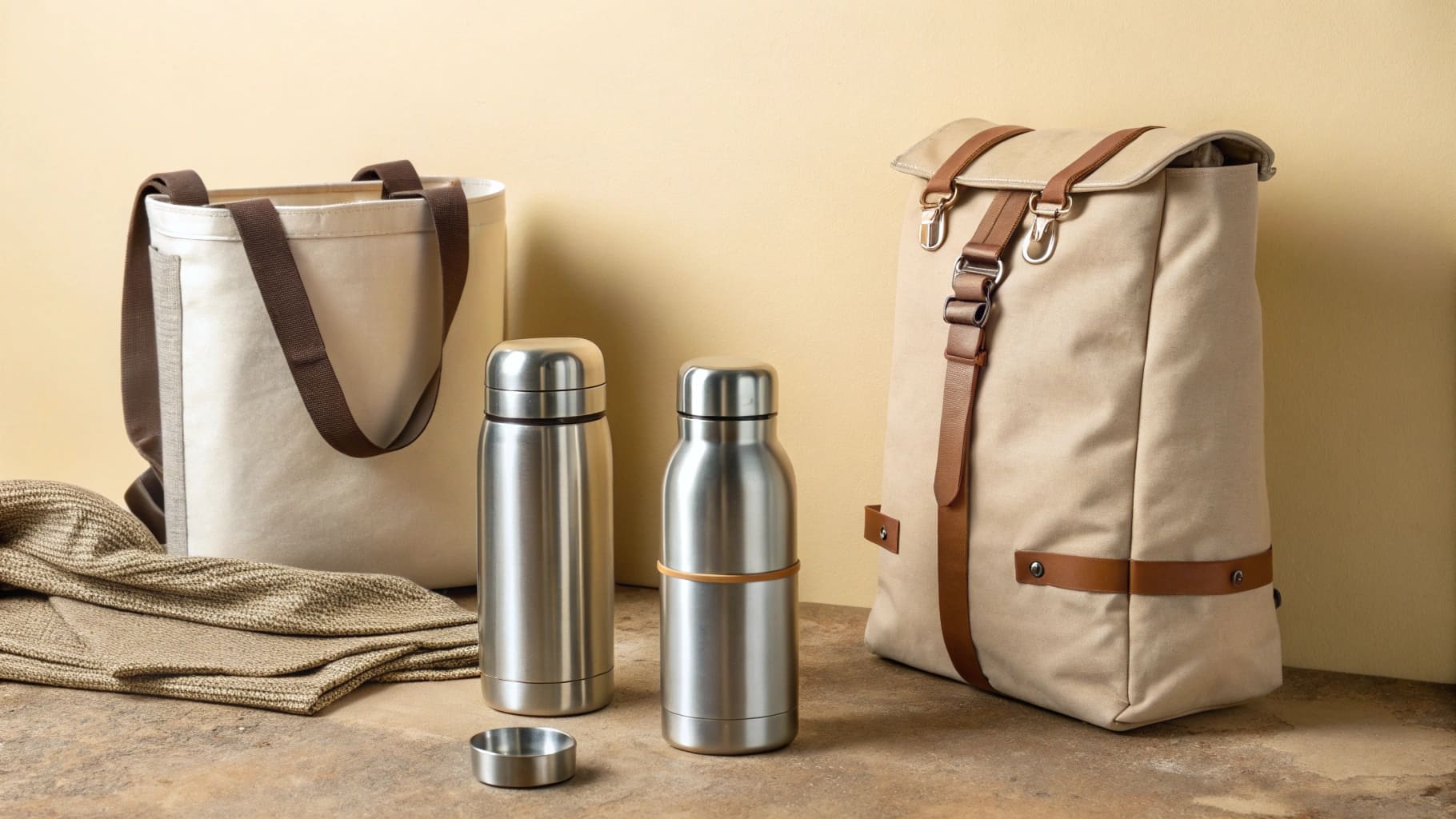
I use 201 stainless steel only for low-risk parts or non-food items with limited moisture exposure. It can fit display items, some outer shells, or dry accessories, but I do not choose it for bottle interiors, food-contact surfaces, or long-term drinkware.
Where I may accept SS201
I do not reject SS201 in every case. I reject unclear use of SS201. If a customer asks for a non-food part, a display item, or a product used in dry indoor conditions, I may discuss SS201 as a cost option. I still mark it clearly in the quotation, drawing, and production file. I do not hide it behind vague words like “stainless steel.” I want the buyer to understand what is being purchased.
| Product area | How I view SS201 | My condition before approval |
|---|---|---|
| Dry display parts | I may accept it | I need clear labeling |
| Decorative outer parts | I may discuss it | I need market approval |
| Bottle interior | I do not choose it | I use SS304 instead |
| Food-contact surface | I avoid it | I protect compliance |
| Moisture-heavy use | I treat it as high risk | I change the material |
Why I keep SS201 away from bottle interiors
I know the cost pressure is real. SS201 can be much cheaper than SS304, and that saving can look attractive on a large order. But a stainless steel water bottle is not a dry shelf item. It touches water, tea, coffee, juice, and cleaning agents. It may sit in a bag for hours. It may stay wet near the cap thread or at the weld area. These details matter. A small rust spot can cause a consumer complaint, even if the bottle still holds water. A buyer in Canada, America, or Europe may also face compliance questions when the material claim does not match the actual product. I prefer to save money through better production planning, better packaging design, and stable order scheduling. I do not prefer to save money by lowering the steel grade on the food-contact surface.
How I control declared SS201 use
When I accept SS201 for a suitable part, I still control it like any other material. I put the grade into the bill of materials. I ask the factory to store it away from SS304. I ask for labels on each bundle. I require a PMI check during incoming inspection. I also ask inspectors to check random parts during production. This may sound strict for a cheaper material, but it avoids confusion. If SS201 is allowed in one part of the factory, it must not flow into another part by accident. Clear control protects both sides. It protects my factory from rework. It protects the buyer from surprise. It protects the final brand from a claim that cannot be defended later.
What is the cheapest grade of stainless steel?
The cheapest grade can look like a smart buy. I know it can become expensive when claims, returns, and delays arrive together.
I usually see SS201 as the lower-cost stainless option used against SS304 in bottle sourcing. Some lower or less suitable grades may cost less, but SS201 is the common cheap substitute in drinkware discussions because it can look similar while saving material cost.
Why I do not buy by grade name alone
I do not answer the cheapest-grade question with one fixed grade in every market. Stainless steel cost changes with nickel price, chromium price, thickness, finish, coil width, and order size. In many bottle projects, SS201 is the cheap substitute that creates the most risk because it can be polished to look close to SS304. In some dry hardware or appliance parts, other grades may be cheaper or more common. But for bottle sourcing, the real question is not “Which grade is cheapest?” The better question is “Which grade can meet the claim on the sales package and survive the target market?”
| Grade or option I may see | Why it looks attractive | Why I stay careful |
|---|---|---|
| SS304 | It supports food-grade bottle claims | It costs more |
| SS201 | It can reduce material cost | It has weaker rust resistance |
| SS430 | It can be low cost in some uses | It is not my first choice for bottle interiors |
| Unclear “stainless steel” | It hides the grade | It creates the highest risk |
I have seen buyers focus on unit price and miss the cost behind the unit price. A stainless steel bottle order can fail in many quiet ways. Rust complaints can start slowly. A distributor may receive returns after the sales season. A customs or customer inspection may ask for proof. A fake or mismatched certificate can stop trust fast. A late discovery can also delay shipment, and a delayed shipment can miss summer, back-to-school, or holiday sales. That lost timing can cost more than the material saving.
I treat SS304 as a necessary investment for serious drinkware programs. I do not treat it as a luxury upgrade. If a supplier quotes far below the market, I ask what changed. I ask whether the wall thickness changed. I ask whether the grade changed. I ask whether the finish, lid, packing, or inspection plan changed. A low price must have a reason. If the reason is not clear, I slow down before I place the order.
How I use PMI, mill certs, and audits together
I do not rely on one control point. PMI gives me fast material evidence. Mill certificates give me traceability back to the steel source. Audits show whether the factory system can keep material separated in daily work. I need all three because each one has a blind spot. PMI can test a sample, but it may miss an untested bundle. A mill certificate can look proper, but it can be copied or mismatched. An audit can show a good system, but the system still needs random checks.
| Control method | What I use it for | What it cannot do alone |
|---|---|---|
| PMI testing | I confirm elemental composition | I still need batch traceability |
| Mill certificate | I match heat numbers and batches | I still need to check authenticity |
| Factory audit | I check storage, labels, and process | I still need test data |
| Random production check | I catch mid-order mix-ups | I still need records |
What I check during a supplier audit
I walk the material warehouse before I walk the showroom. I look for separated storage zones. I check whether SS304 and SS201 labels are clear. I check whether each coil or sheet bundle has a tag. I ask the production team how material moves from warehouse to cutting, forming, welding, polishing, and packing. I ask whether old labels stay with the material after partial use. I also check whether the factory uses a first-in-first-out system. If mixed leftover material sits near the production line, I see a warning sign.
I also ask direct questions because unclear answers create real risk. I ask who approves material release. I ask who keeps mill certificates. I ask who performs PMI checks. I ask how the factory handles rejected material. I ask whether sales staff can change material grade without written approval. I prefer suppliers who answer in a simple and steady way. Good factories do not need drama to prove quality. They have records, labels, tools, and habits.
Conclusion
I protect bottle programs by treating material control as daily work. I trust SS304 only when PMI, mill certs, and audits tell the same story.
-
"SAE 304 stainless steel", https://en.wikipedia.org/wiki/SAE_304_stainless_steel. Standard metallurgical references define the nickel content range for 304 stainless steel under AISI/ASTM specifications. Evidence role: definition; source type: encyclopedia. Supports: the standard chemical composition ranges for AISI 304 stainless steel, including nickel content. ↩
-
"Stainless Steel (SS) Safety Profile", https://www.fda.gov/media/165146/download. Food safety authorities specify requirements for materials in contact with food, with certain austenitic stainless steel grades generally recognized as suitable for food-contact applications based on composition and corrosion resistance. Evidence role: general_support; source type: government. Supports: regulatory frameworks governing stainless steel materials in food-contact applications. Scope note: Specific requirements vary by jurisdiction and may reference industry standards rather than explicitly listing all acceptable grades. ↩
-
"Stainless Steel – Grade 201", https://www.azom.com/article.aspx?ArticleID=6780. Metallurgical standards describe 201 stainless steel as a manganese-nickel austenitic alloy with reduced nickel content compared to 300-series grades. Evidence role: definition; source type: encyclopedia. Supports: the standard chemical composition of AISI 201 stainless steel, particularly manganese and nickel levels. ↩
-
"Common Ways to Identify Stainless Steel Materials", https://m.sakysteel.com/news/common-ways-to-identify-stainless-steel-materials. Materials identification guides note that austenitic stainless steel grades with similar surface finishes cannot be reliably distinguished by visual inspection alone, requiring analytical testing methods. Evidence role: general_support; source type: education. Supports: the limitations of visual inspection for distinguishing austenitic stainless steel grades. ↩
-
"Austenitic stainless steel", https://en.wikipedia.org/wiki/Austenitic_stainless_steel. Materials science research describes nickel's role in stabilizing the austenitic phase and improving resistance to various corrosive environments in chromium-nickel stainless steels. Evidence role: mechanism; source type: research. Supports: the metallurgical function of nickel in enhancing corrosion resistance in austenitic stainless steels. ↩