
Hip Flask Private Label Programs: How Should I Plan Engraving, Coatings, Gift Boxes, and MOQs?
A flask program can look simple. Then weak coating, unclear MOQ, or late gift boxes can turn a safe order into a peak-season problem.
A hip flask private label program should define the flask size, logo method, coating, gift box, inspection plan, and MOQ before sampling. I match engraving and packaging to the buyer’s channel, then I confirm certificates, lead time, and payment terms before bulk production.
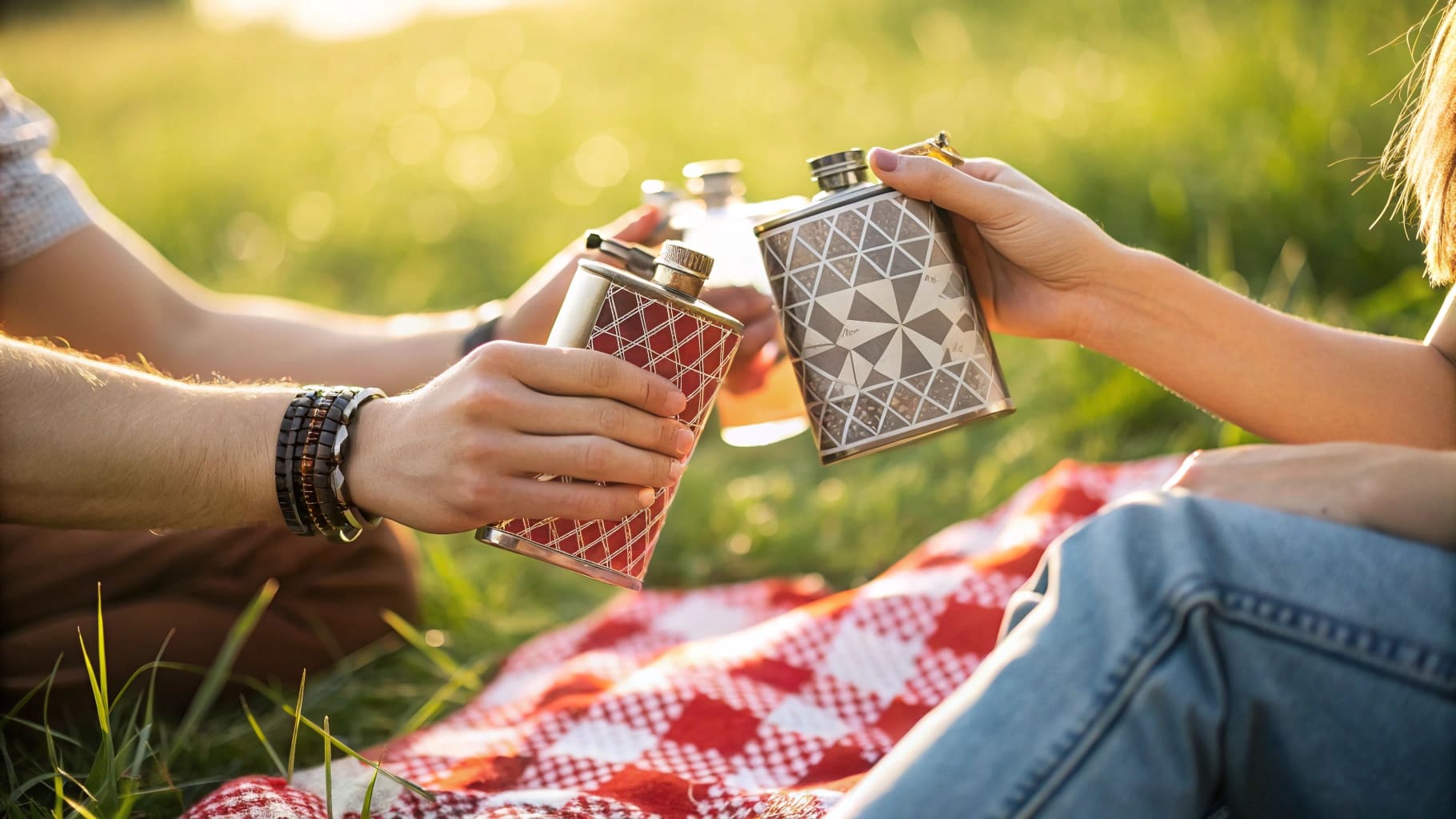
I have worked with buyers who wanted a fast quote first and product details later. I understand that need. A company owner or procurement officer has pressure from sales, cash flow, and delivery dates. I still slow the first step down a little. I ask about the target market, retail price, event date, logo style, and packing method. This small pause often saves the order. A hip flask is not only a metal container. It is a branded gift, a shelf product, or a lifestyle item. When I build a private label program, I treat engraving, coating, gift box, and MOQ as one system. If one part is weak, the customer feels it.
How Many Drinks Are in a Hip Flask?
I see buyers choose a size too fast. Then the product looks wrong for the market, and the selling price becomes hard to defend.
A standard hip flask usually holds six to eight ounces, or about four to five standard shots.1 I choose capacity based on brand position, target buyer, gift use, and landed cost, not only on how many drinks it holds.

What I Check Before I Quote Capacity
I always start with the question behind the question. A buyer asks how many drinks are in a flask, but I hear a market question. A slim six-ounce flask feels classic and formal. It works well for corporate gifts, wedding sets, and executive events. An eight-ounce flask feels more practical. It is common for outdoor, travel, and recreation brands. Larger sizes can work, but they change the look, weight, carton size, and unit cost.
For North American buyers, I often keep ounce language on the selling side. For European buyers, I prepare milliliter language because it feels more natural for their market. This detail looks small, but it affects packaging, product pages, and customer trust.
| Capacity Choice | Best Fit | Cost Effect | Brand Feeling |
|---|---|---|---|
| Six ounces | Corporate gifts and formal sets | Lower material use | Slim and classic |
| Eight ounces | Outdoor and lifestyle brands | Medium material use | Practical and strong |
| Larger capacity | Special retail lines | Higher material use | Bold and less formal |
I also connect capacity to MOQ. A popular mold with a common size can support a lower test order. A special size or custom shape may need a higher MOQ because the factory must plan steel, tooling, packing, and line time. I prefer to explain this early. It helps the buyer compare price in a fair way.
Do People Still Carry Hip Flasks?
Some buyers think the hip flask is old-fashioned. Then they miss a niche product that still sells when design and branding feel current.
Yes, people still carry hip flasks, but the market has changed. I see more demand from corporate gifting, outdoor brands, craft spirits, and private label lifestyle programs that need better design, safer materials, and faster customization.
Where I See Real Demand Today
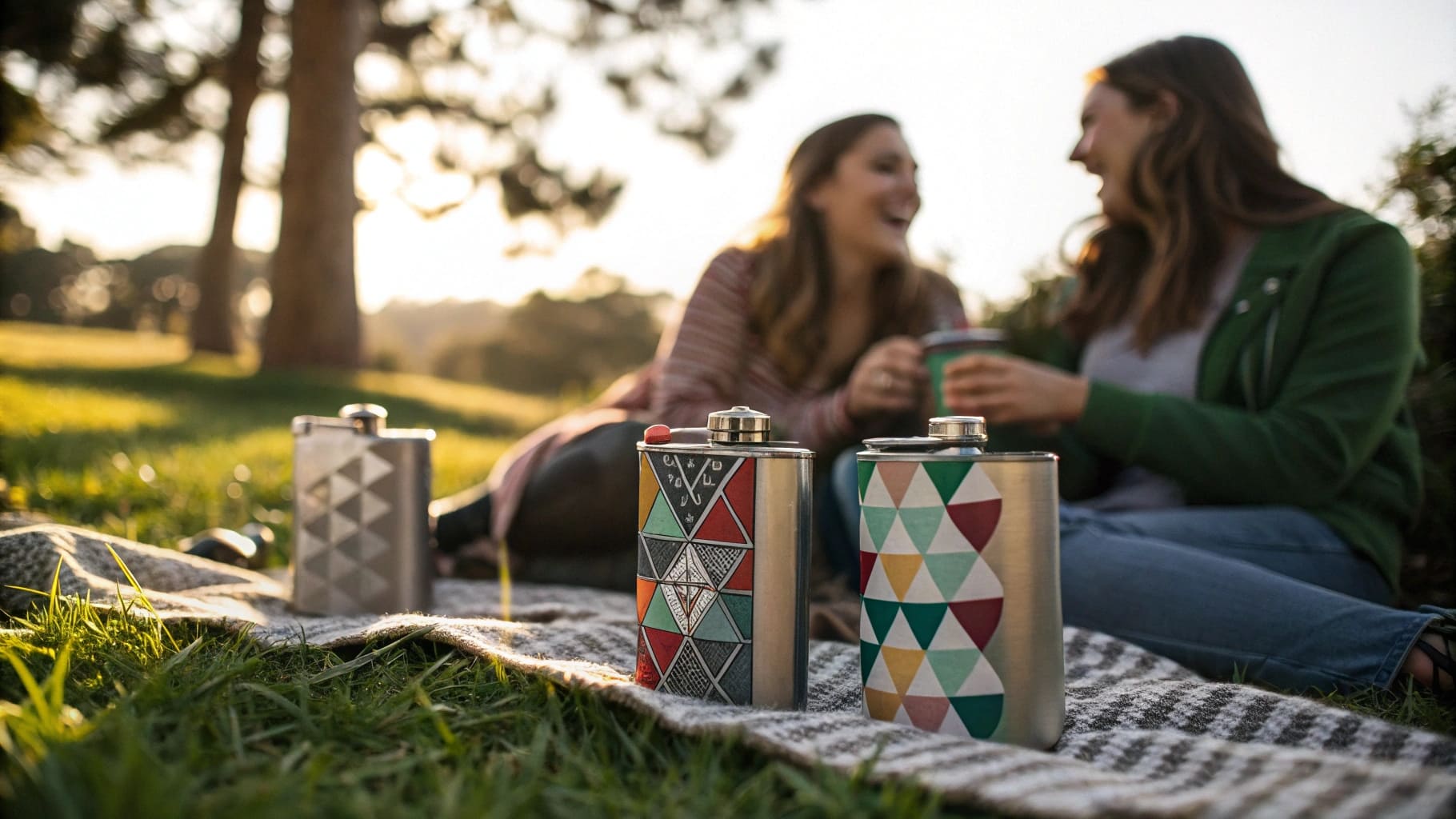
I do not see the hip flask market as a mass daily-use market like water bottles. I see it as a focused gift and lifestyle market. That is why the private label plan matters so much. A plain flask can feel cheap. A well-finished flask with a clean logo, rich coating, and strong gift box can feel like a premium item.
Corporate gifting buyers often want a stable product with clear packaging and fast delivery. They care about logo accuracy and gift presentation. Outdoor brands often care about coating strength and scratch resistance. Craft spirits brands care about brand story, shelf impact, and how the flask looks in photos. Younger buyers also expect more than a simple engraved name. They like matte colors, soft-touch coating, laser logos, and neat box design.
| Buyer Type | Main Need | Best Private Label Choice |
|---|---|---|
| Corporate gift company | Clean logo and presentable box | Laser engraving and rigid gift box |
| Outdoor brand | Durable finish and practical feel | Powder coating and strong carton packing |
| Craft spirits brand | Visual impact and brand memory | Custom color, deep logo, and premium insert |
| Startup brand | Low risk market test | Common mold and flexible MOQ |
I have learned that the buyer does not only buy flasks. The buyer buys a sales tool. If the flask helps a distributor charge a premium after rebranding, the order has real value. This is why I ask where the product will sell before I suggest a coating or box. A shiny mirror finish may work for one brand. A matte black coating may work better for another. The right choice depends on the buyer’s customer, not my preference.
Should You Wash a Hip Flask?
A flask can look fine outside and still fail inside. Bad cleaning experience can create odor, complaints, and repeat order risk.
Yes, I always recommend washing a hip flask before first use and after use. Warm water and mild soap work best for quality stainless steel.2 Good interior finishing also makes cleaning easier and helps prevent odor or flavor retention.
Why Cleaning Is Also a Sourcing Issue
I treat cleaning as part of product quality, not only user care. A high-grade stainless steel flask with a smooth inner wall is easier to rinse. It is less likely to hold smell. It also gives the buyer fewer after-sale problems. Cheaper materials or rough inner finishing can trap residue. That can lead to bad reviews3, even if the outside logo and box look good.
When I help a buyer review a hip flask supplier, I look at the welding area, the mouth opening, the cap fit, and the inner surface. I also ask if the supplier can provide clear material information. For many private label programs, I prefer three oh four stainless steel. For more demanding use, some buyers ask about three sixteen stainless steel. The key point is not only the grade name. The key point is whether the real material, polishing, welding, and inspection match the claim.
| Quality Point | What I Look For | Why It Matters |
|---|---|---|
| Inner surface | Smooth and clean finish | Easier washing and less odor |
| Welding seam | Even and well processed | Lower leakage and residue risk |
| Cap thread | Tight but easy to use | Better sealing and user feel |
| Mouth size | Suitable for filling and rinsing | Less mess and easier care |
| Care card | Simple use and wash guide | Fewer complaints after sale |
I also like to include care instructions inside gift boxes. This small card can protect the brand. It tells the end user not to store liquid too long, not to use harsh cleaners, and to rinse after use. For a B to B buyer, this is not only customer service. It is risk control. A clear care card can reduce complaints and protect the next order.
How I Connect Engraving, Coatings, Gift Boxes, and MOQs?
A buyer may ask for the lowest MOQ first. I ask about the logo, coating, box, and deadline because each choice changes the MOQ.
I connect MOQ to production reality. Simple laser engraving on a common flask can start lower. Custom coatings, special colors, new gift boxes, or special inserts usually need higher MOQ because setup, testing, and packing work increase.
The Program I Usually Build First
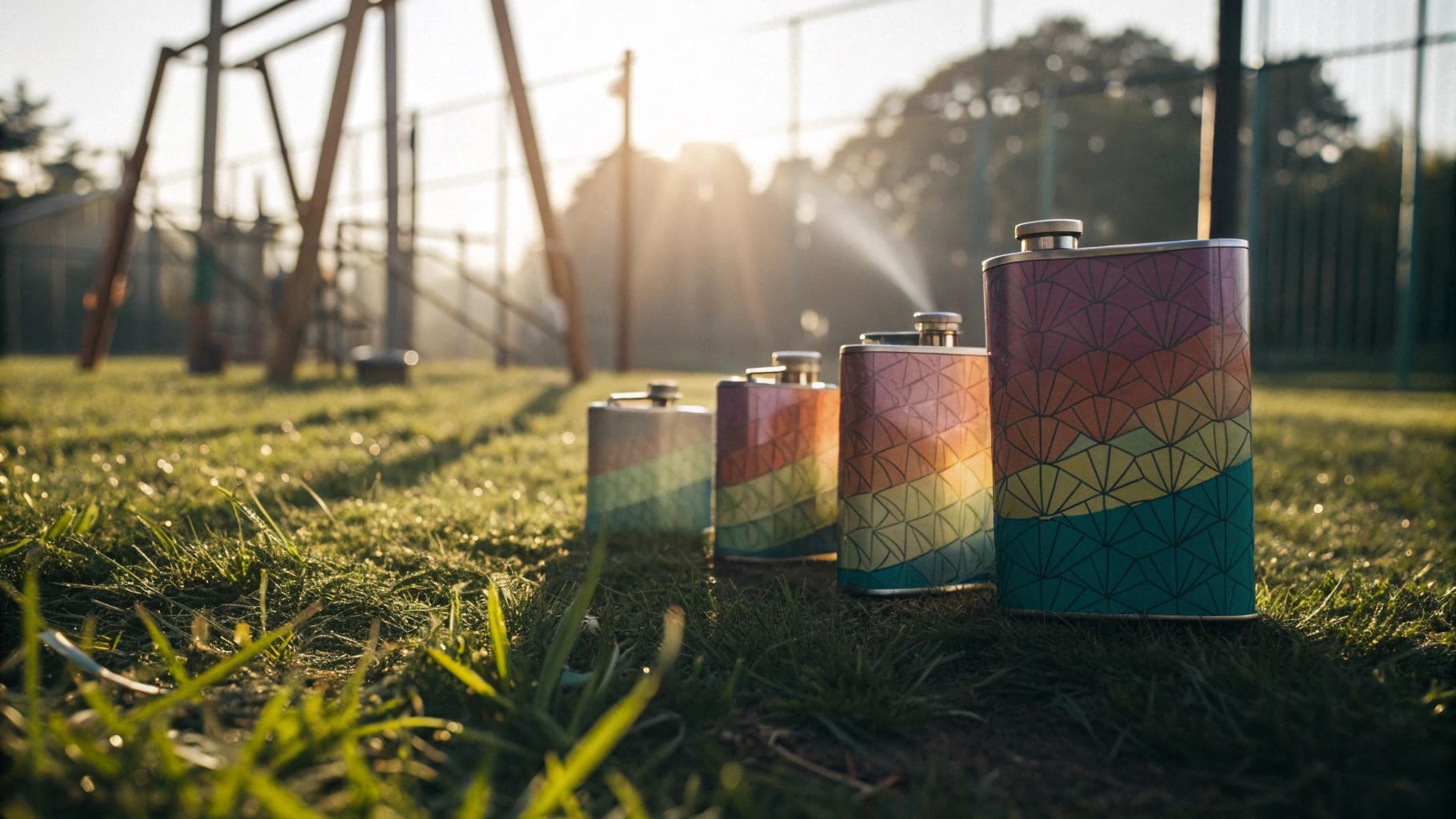
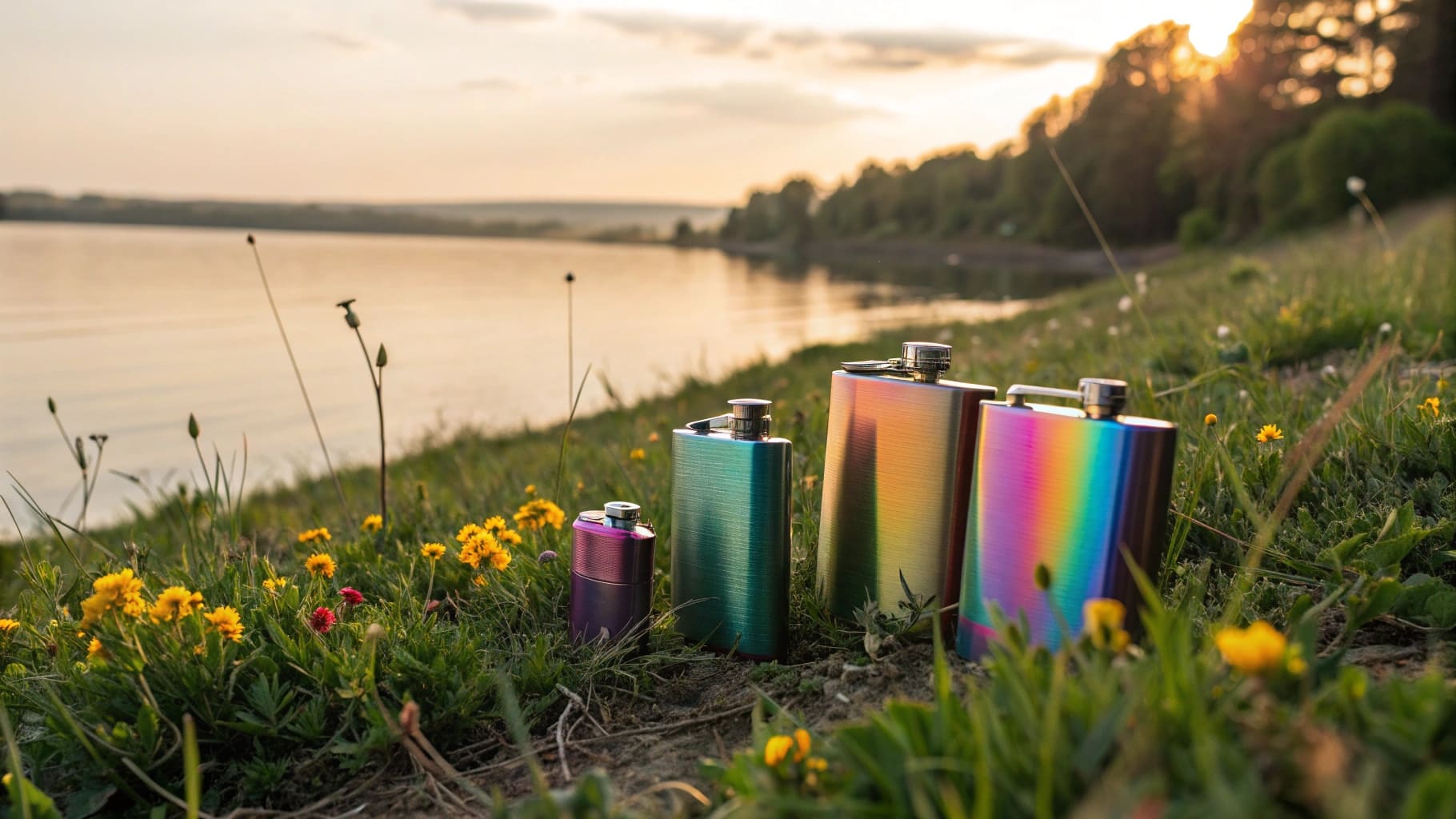
When I build a hip flask private label program, I first divide the project into visible value and hidden risk. Visible value includes engraving, coating, color, gift box, and outer carton design. Hidden risk includes material control, color stability, box lead time, logo accuracy, inspection, and shipping date. A good supplier must manage both sides.
Laser engraving is often the safest logo method for stainless steel. It looks clean and lasts well.4 Screen printing can show color, but it needs stronger control during use and packing.5 Powder coating gives a strong modern look.6 Plating and mirror polishing can look premium, but they need careful handling to avoid scratches.7 Gift boxes can also change the project. A simple paper box is faster. A rigid gift box with foam or paper insert looks better, but it takes more time and planning.
| Program Element | Lower Risk Choice | Higher Custom Choice | MOQ Impact |
|---|---|---|---|
| Logo | Laser engraving | Multi-color print | Custom choice needs more setup |
| Coating | Standard matte color | Matched brand color | Custom color needs testing |
| Gift box | Existing box size | New box structure | New box often raises MOQ |
| Insert | Standard paper insert | Custom foam insert | Custom insert adds cost |
| Carton | Normal export carton | Branded master carton | Branding needs extra planning |
I do not promise a low MOQ without checking these details. That kind of promise creates trouble later. I prefer a tiered plan. The buyer can test the market with a common size and standard color. After sales prove demand, the buyer can move to custom coating, premium box, and larger MOQ. This gives the buyer control over risk and cost.
Conclusion
I build hip flask private label programs by matching size, finish, packaging, MOQ, and inspection to the buyer’s market, deadline, and brand promise.
-
"What Is A Standard Drink?", https://www.niaaa.nih.gov/alcohols-effects-health/what-standard-drink. A standard alcoholic drink in the United States is defined as containing 0.6 fluid ounces of pure alcohol, a benchmark established by the National Institute on Alcohol Abuse and Alcoholism; hip flasks commonly ranging from six to eight fluid ounces would therefore hold approximately four to five such standard drinks depending on beverage alcohol content. Evidence role: definition; source type: encyclopedia. Supports: The typical capacity range of a standard hip flask and its relationship to standard drink volumes.. Scope note: Direct industry standardization for hip flask capacity is not formally codified; the drink-count figure is approximate and varies by beverage type and alcohol concentration. ↩
-
"Keep Food Safe! Food Safety Basics", https://www.fsis.usda.gov/food-safety/safe-food-handling-and-preparation/food-safety-basics/steps-keep-food-safe. Food safety guidance from agencies such as the U.S. Food and Drug Administration and the USDA recommends cleaning food-contact stainless steel surfaces with warm water and approved detergents, as harsh chlorinated or abrasive cleaners can damage the passive oxide layer that confers corrosion resistance. Evidence role: expert_consensus; source type: government. Supports: Recommended cleaning agents and practices for stainless steel food-contact surfaces.. Scope note: Guidance is primarily directed at commercial food service equipment; consumer drinkware recommendations are extrapolated from these principles rather than derived from hip-flask-specific standards. ↩
-
"Cleanability of Metal Surface Finishes Found in Medical ...", https://pmc.ncbi.nlm.nih.gov/articles/PMC9767432/. Research in food engineering and materials science has demonstrated that higher surface roughness values (Ra) on stainless steel food-contact surfaces correlate with increased bacterial adhesion and residue retention, as microscopic surface irregularities provide protected sites that resist hydrodynamic cleaning forces. Evidence role: mechanism; source type: paper. Supports: The relationship between stainless steel surface roughness and the retention of residue, biofilm, or odor-causing compounds.. Scope note: Most published studies address industrial food processing equipment; direct extrapolation to small consumer flasks requires caution, as flow dynamics and cleaning conditions differ substantially. ↩
-
"Why You Can't Laser Engrave Stainless Steel", https://www.laserax.com/blog/laser-engrave-stainless-steel. Laser engraving removes or ablates material from the metal surface to create a permanent mark that is flush with or recessed into the substrate, making it resistant to wear, chemicals, and abrasion in a manner that surface-applied inks or coatings cannot replicate. Evidence role: mechanism; source type: research. Supports: The permanence of laser engraving on stainless steel compared to surface-applied decoration methods such as screen printing.. Scope note: Durability comparisons are context-dependent; laser mark visibility can be reduced by deep scratching or aggressive polishing, and formal standardized wear-testing data specific to hip flasks is not widely published. ↩
-
"UV Printing vs. Silk Screen Printing - XAON", https://xaontech.com/uv-printing-vs-silk-screen-printing/. Screen-printed inks applied to metal substrates rely on mechanical and chemical adhesion to a non-porous surface; adhesion quality is evaluated under standards such as ASTM D3359, and abrasion resistance under ASTM D4060, with performance dependent on ink formulation, pretreatment, and cure conditions. Evidence role: mechanism; source type: research. Supports: The adhesion and abrasion resistance limitations of screen-printed inks on metal surfaces relative to engraved marks.. Scope note: Actual durability in end-use conditions varies substantially by ink type, surface preparation, and usage environment; standardized test results may not predict performance in the specific context of pocket-carried metal flasks. ↩
-
"Review on metal packaging: materials, forms, food applications, safety ...", https://pmc.ncbi.nlm.nih.gov/articles/PMC7270472/. Powder-coated finishes on metal substrates are evaluated for adhesion, hardness, and chemical resistance under standards such as ASTM D3359 and D3363; regulatory bodies including the U.S. Food and Drug Administration address the safety of coatings that may contact food or beverages through indirect food additive regulations. Evidence role: general_support; source type: government. Supports: The durability and food-contact safety considerations of powder-coated finishes on metal consumer products.. Scope note: Specific approval depends on coating formulation; exterior powder coating on a flask does not typically contact the beverage, but interior applications require separate regulatory review. ↩
-
"Tribology of Coated 316L SS by Various Nanoparticles - PMC", https://pmc.ncbi.nlm.nih.gov/articles/PMC10465258/. Mirror polishing produces a highly reflective surface by progressive abrasive refinement but does not increase substrate hardness; electroplated decorative layers such as chrome or nickel, while harder than the base stainless steel in thin-film form, remain susceptible to abrasive scratching because the coating thickness is typically only a few micrometers. Evidence role: mechanism; source type: research. Supports: The relative scratch susceptibility of mirror-polished and plated metal surfaces compared to harder applied coatings.. Scope note: Scratch resistance depends on coating thickness, substrate preparation, and service conditions; no single standardized measure applies universally across all plating processes and metal substrates. ↩