
Which coatings keep coffee mugs stain-free from tea and flavored syrups?
I have seen clean mug samples lose buyer trust fast. Brown tea rings and syrup marks look cheap. That small stain can create big returns.
I choose electropolished stainless steel interiors with food-grade ceramic or glass coating for the best stain resistance. These surfaces are smooth and non-porous, so tea tannins, coffee oils, and flavored syrups have less chance to stick or soak in.
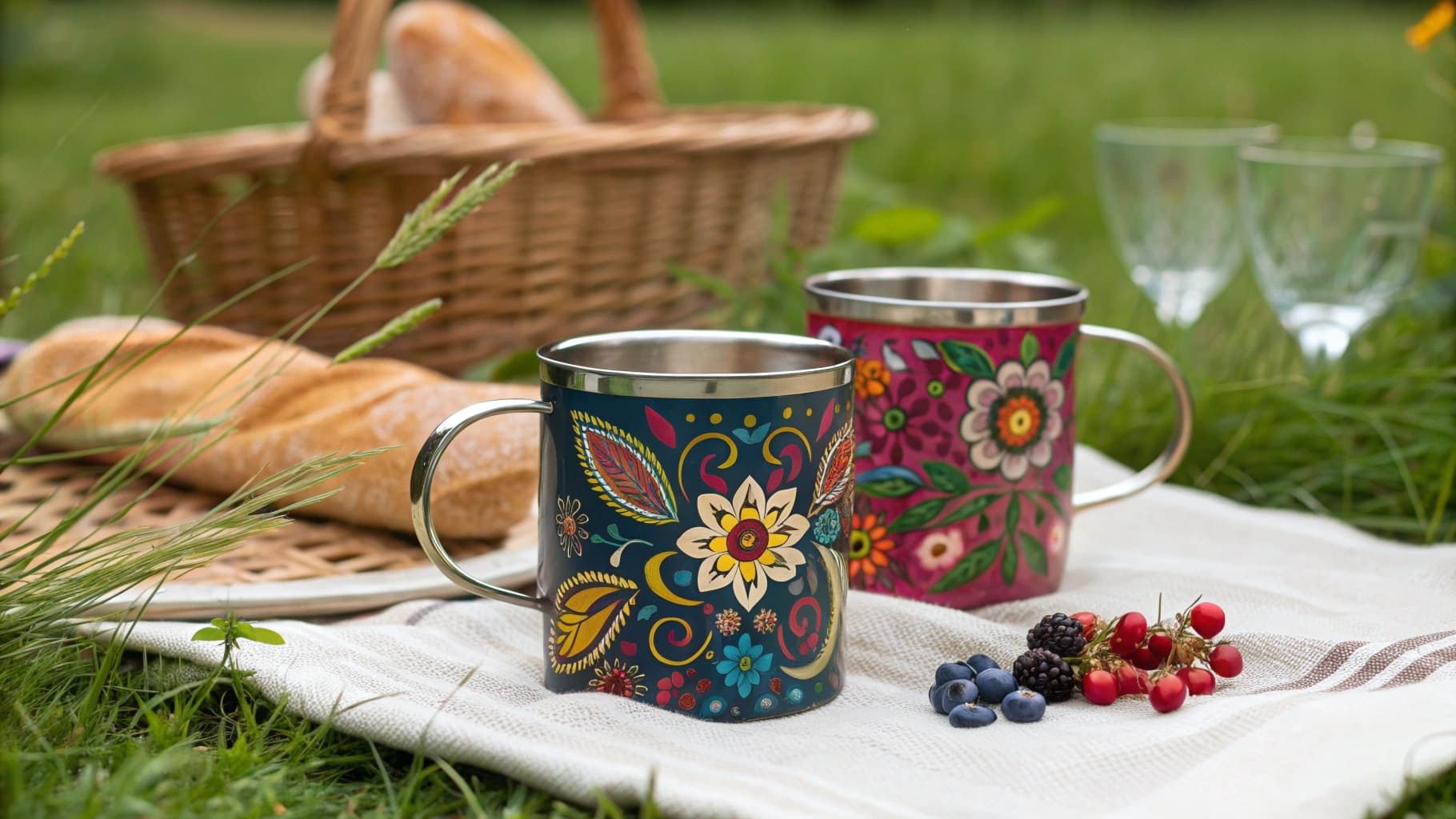
I care about stain resistance because it affects how a mug looks after daily use. When I speak with wholesale buyers, I do not treat stains as a small cosmetic issue. I treat them as a sign of surface quality, coating control, and long-term customer satisfaction. A buyer may approve a sample on day one. The real test comes after weeks of tea, coffee, caramel syrup, vanilla syrup, and dishwashing. If the inside wall turns brown, the end user blames the brand first. That is why I look at coating choice, cleaning behavior, and material structure before I recommend a mug for a B2B order.
Which material is best for a coffee mug?
I see many buyers compare mug materials too late. They focus on shape first. Then stains, breakage, and heat loss create trouble after launch.
I believe double-wall stainless steel with a food-grade ceramic interior coating is the best all-around coffee mug material for wholesale use. It resists stains, keeps drinks hot longer1, handles transport better, and supports custom logos and colors.
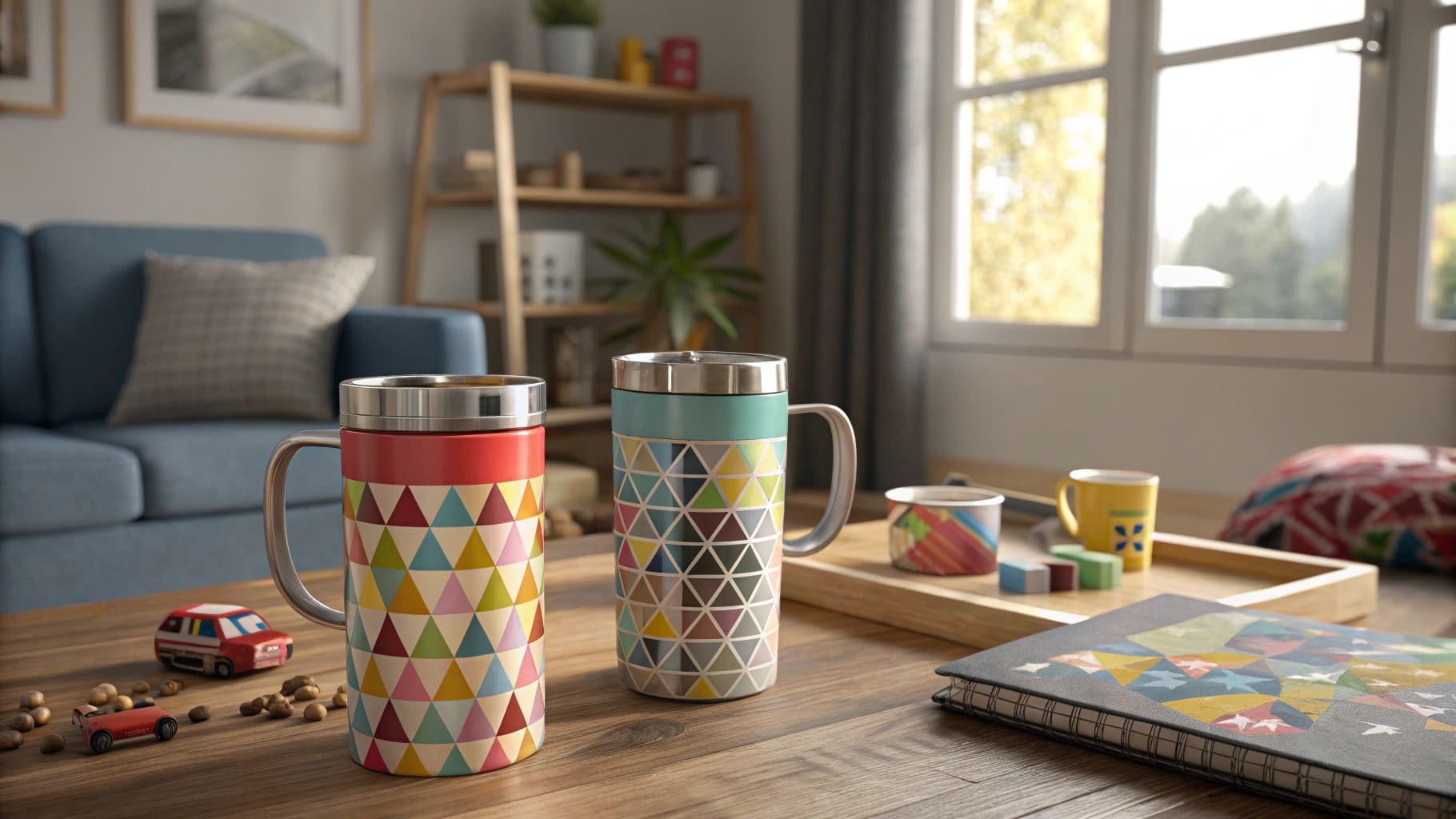
I compare mug materials by real use
I do not ask only which mug looks best on a catalog page. I ask how the mug performs after repeated use. A Canadian buyer once asked me why his rebranded ceramic mugs had a high complaint rate in winter. The outside design looked premium, but some mugs chipped in transport, and some glaze surfaces picked up dark tea marks. That case reminded me that material choice is a business decision, not only a design decision.
Stainless steel works well for wholesale buyers because it is strong, light, and safe for bulk shipping. When I add an electropolished surface and a ceramic inner coating, I get a smoother drinking area. This helps block tannins and syrup color. Porcelain feels refined, and many customers like its clean white look. Yet it can break during handling. Ceramic can look warm and handmade, but glaze quality can vary a lot.
Material comparison for B2B buyers
| Material | Stain resistance | Breakage risk | Heat retention | Best use case |
|---|---|---|---|---|
| Stainless steel with ceramic coating | Very high | Low | High | Premium travel mugs and branded gifts |
| Electropolished stainless steel | High | Low | High | Durable daily coffee mugs |
| Porcelain | Medium | High | Medium | Office mugs and retail gift sets |
| Ceramic | Medium to low | High | Medium | Lifestyle mugs with strong visual design |
| Glass | Medium | Medium to high | Low | Home use and clear drink presentation |
What I check before I approve a material
| Check point | Why I care |
|---|---|
| Interior smoothness | I want fewer places for tea color and syrup to hide |
| Coating adhesion | I want the coating to stay stable after washing |
| Food contact safety | I want the mug to pass buyer and market checks |
| Thermal shock behavior | I want fewer cracks when hot drinks meet cold air |
| Packing strength | I want fewer losses during ocean shipping and local delivery |
I often tell buyers that the best material is not the most expensive one. The best material is the one that matches the sales channel, cleaning habits, and customer promise. For premium B2B programs, I usually guide buyers toward stainless steel with a ceramic or glass-like interior.
How to get tea and coffee stains out of mugs?
I know stains make customers think a mug is dirty, even when it is safe. If cleaning feels hard, customers stop using the product.
I remove tea and coffee stains with warm water, baking soda paste, gentle soaking, or a denture cleaning tablet. I avoid harsh metal tools on coated interiors because scratches can make future stains worse.
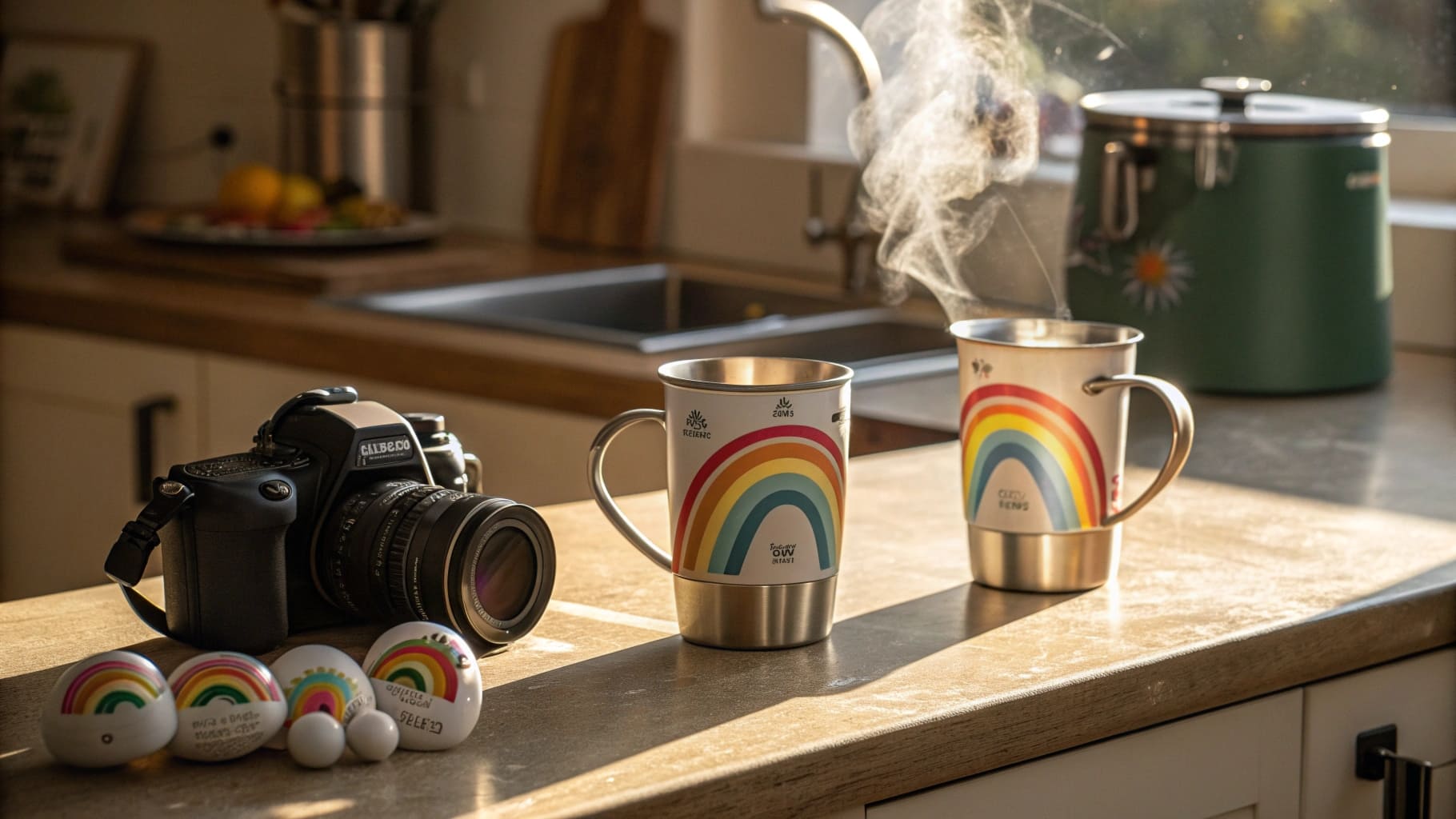
I clean stains based on the surface type
I do not use the same cleaning method for every mug. Stainless steel can handle stronger cleaning than porcelain or ceramic, but coated interiors still need care. If the inside has a ceramic coating, I prefer soft cleaning. I want to remove residue without cutting the coating. A simple baking soda paste often works well. I add a little water, spread the paste on the stained area, wait for a short time, and wipe with a soft sponge.
Tea stains are often caused by tannins2. Coffee stains usually come from coffee oils and dark pigments3. Flavored syrups create another problem. They can leave sugar residue that grabs color and odor. I always tell buyers to test mugs with real drinks before a large order. A clean lab report is useful, but daily use tells another story.
Cleaning method guide
| Stain type | My preferred method | Surface safety note |
|---|---|---|
| Light tea stain | Baking soda paste | Safe for most stainless steel and coated interiors |
| Coffee ring | Warm water soak and soft sponge | Good for daily cleaning |
| Syrup residue | Mild dish soap and warm water | I clean sugar before it hardens |
| Heavy brown stain | Denture tablet soak | I test first on coated samples |
| Odor with stain | Baking soda soak | I rinse well before reuse |
Cleaning tools I avoid
| Tool or chemical | Why I avoid it |
|---|---|
| Steel wool | It can scratch the interior and create stain spots |
| Strong bleach | It can affect coatings and seals |
| Rough powder cleaner | It can dull glossy surfaces |
| Sharp scraper | It can damage ceramic or glass coating |
| Very hard brush | It can leave fine marks over time |
I also care about cleaning from a warranty view. If a mug needs aggressive cleaning after normal tea use, the surface may not be right for the market. In B2B work, easy cleaning lowers complaints. It also helps buyers protect their brand name. I prefer to give end users simple care instructions. I keep those instructions direct. I tell them to rinse after sugary drinks, wash with a soft sponge, and avoid scratching the inside wall.
Are porcelain or ceramic coffee mugs better?
I have seen buyers use porcelain and ceramic as if they mean the same thing. That mistake can lead to wrong pricing and wrong quality checks.
I see porcelain as smoother, harder, and more refined than common ceramic. I see ceramic as more flexible in style but often more variable in glaze quality. For stain control, coating quality matters more than the name.

I separate appearance from performance
I like porcelain for its bright white surface and premium feel. Many office buyers also like it because it looks familiar and clean. Yet porcelain is not always the best option for large programs. It can break in transit, and its glaze can still develop fine wear after repeated washing. When small surface defects appear, tea and coffee color can settle there.
Ceramic mugs give brands more room for shape, color, and handmade style. I see many attractive ceramic mugs in retail. Yet ceramic bodies and glazes can vary from factory to factory. Some glazes are strong. Some glazes are softer. Some colored glazes can show cracks after fast temperature change4. Once that happens, stains become easier to see and harder to remove.
For a procurement officer, the key question is not only porcelain versus ceramic. The key question is how the surface is formed, fired, coated, checked, packed, and used.
Porcelain versus ceramic
| Factor | Porcelain | Ceramic |
|---|---|---|
| Surface feel | Usually smoother | Depends on glaze |
| Visual style | Clean and refined | More varied and creative |
| Stain behavior | Medium to good | Medium to weak if glaze is poor |
| Breakage risk | High | High |
| Cost range | Medium to high | Low to high |
| Bulk shipping risk | Higher than stainless steel | Higher than stainless steel |
What I ask the factory to prove
| Quality point | My reason |
|---|---|
| Glaze smoothness | I want fewer stain points |
| Thermal shock test | I want fewer cracks from hot drinks |
| Dishwasher test | I want to know long-term surface change |
| Color safety | I want safe contact with lips and drinks |
| Packing drop test | I want fewer broken cartons |
I do not say porcelain or ceramic is bad. I say they fit some projects better than others. If the buyer sells lifestyle mugs for home kitchens, porcelain and ceramic can work well. If the buyer sells premium travel mugs or corporate gifts, I prefer stainless steel with a ceramic-coated interior. It gives me a better balance between stain resistance, durability, and temperature retention.
Which coatings actually stop tea tannins and flavored syrups from sticking?
I have seen buyers approve shiny mugs without checking the inner surface. Then tea, coffee, and syrup turn that shine into a complaint.
I trust food-grade ceramic, glass-like, and well-controlled electropolished stainless steel surfaces most. They reduce tiny pores and rough points, so pigments, oils, and sugar residues have less grip inside the mug.

I look for a barrier, not only a coating name
I do not judge a coating by marketing words only. I look at how the coating behaves with real drinks. Tea tannins are strong color compounds. Coffee oils can carry dark pigment. Flavored syrups add sugar, color, and aroma. If the surface has pores, scratches, or weak bonding, these residues stay longer. A good coating works like a barrier. It does not give color many places to hide.
Electropolished stainless steel is helpful because it smooths the metal surface. It removes rough peaks that can hold stains. A ceramic coating adds another layer of protection. A glass-like coating can also give a clean feel and strong stain resistance. Yet the coating must be applied well. Poor coating can peel, crack, or become uneven. That is why I ask for coating thickness control, adhesion checks, and cleaning tests before mass production.
Coating options I consider
| Interior surface | Stain resistance | Buyer benefit |
|---|---|---|
| Electropolished stainless steel | High | Durable and easier to clean |
| Ceramic coating | Very high | Clean taste and strong stain control |
| Glass-like coating | Very high | Smooth feel and low odor retention |
| Untreated stainless steel | Medium | Strong but may discolor over time |
| Low-grade paint coating | Low | Risk of peeling and complaints |
Test items I like before bulk orders
| Test item | What I want to learn |
|---|---|
| Tea soak test | I check brown color pickup |
| Coffee cycle test | I check oil and ring buildup |
| Syrup residue test | I check sticky color retention |
| Dishwasher cycle test | I check surface change |
| Tape adhesion check | I check coating bonding |
| Odor check | I check flavor carryover |
I also care about market rules. If a mug goes to North America or Europe, I need the coating to meet food contact needs. A low-cost coating can look good on a sample, but it can create a serious business risk. I prefer to solve that risk before production, not after the container arrives.
Conclusion
I choose smooth, food-safe ceramic or glass-like coated stainless steel when I need stain-free coffee mugs that protect buyers, users, and brands.
-
"Do stainless steel vacuum coffee mugs have a good heat - transfer rate? - Blog", https://www.waterbottleindustry.com/blog/do-stainless-steel-vacuum-coffee-mugs-have-a-good-heat-transfer-rate-745175.html. Double-wall vacuum insulation dramatically reduces conductive and convective heat transfer; studies of insulated drinkware demonstrate that vacuum-insulated stainless steel containers maintain beverage temperature substantially longer than uninsulated ceramic or glass vessels of equivalent volume. Evidence role: general_support; source type: research. Supports: That double-wall vacuum-insulated stainless steel vessels retain beverage temperature significantly longer than single-wall ceramic or porcelain mugs. Scope note: Specific comparative data for retail coffee mug geometries varies by product; published thermal performance studies often focus on laboratory conditions rather than typical consumer use scenarios. ↩
-
"Tannin-Based Hybrid Materials and Their Applications: A Review - PMC", https://pmc.ncbi.nlm.nih.gov/articles/PMC7660623/. Tea staining is primarily attributed to the adsorption of polyphenolic compounds (tannins) onto surfaces; studies of polyphenol chemistry confirm that these molecules bind readily to porous or rough substrates. Evidence role: mechanism; source type: research. Supports: That tea polyphenols (tannins) adsorb onto surfaces and are responsible for characteristic brown staining. Scope note: Most polyphenol adsorption research focuses on biological or textile surfaces; direct evidence for mug staining specifically may be extrapolated from broader tannin chemistry literature. ↩
-
"Nature of phenolic compounds in coffee melanoidins", https://pubmed.ncbi.nlm.nih.gov/24998624/. Research into coffee chemistry identifies melanoidins, chlorogenic acid derivatives, and lipid components as primary contributors to surface discoloration, with their binding behavior influenced by surface porosity and hydrophobicity. Evidence role: mechanism; source type: research. Supports: That coffee staining results from specific chemical compounds including chlorogenic acids, melanoidins, and lipid fractions present in brewed coffee. Scope note: Most coffee staining research focuses on dental enamel or textile substrates; application to ceramic-coated or stainless steel mug interiors requires extrapolation. ↩
-
"Origin and Evolution of Cracks in the Glaze Surface of a ... - PMC", https://pmc.ncbi.nlm.nih.gov/articles/PMC10456388/. Crazing in ceramic glazes results from a coefficient of thermal expansion mismatch between glaze and body; rapid thermal cycling can propagate microcracks in the glaze layer, which subsequently act as preferential sites for organic stain penetration and retention. Evidence role: mechanism; source type: research. Supports: That mismatches in thermal expansion coefficients between a ceramic glaze and its body can cause crazing (microcracks) when subjected to rapid temperature changes, and that these cracks provide sites for stain accumulation. ↩