
Handled Water Bottle Spec Sheet: Do Threads, Gaskets, and Leak AQL Targets Really Matter?
You order 5,000 handled water bottles. They arrive at your warehouse. Then the complaints start. Leaks, bad smells, returns. Your peak season is already over.
A complete spec sheet for handled stainless steel water bottles must cover three things: thread pitch accuracy within 0.05mm, food-grade silicone gaskets with Shore A hardness of 40 to 601, and a leak AQL target of 1.5 for critical defects. These three elements decide whether your bottles succeed or fail in the market.
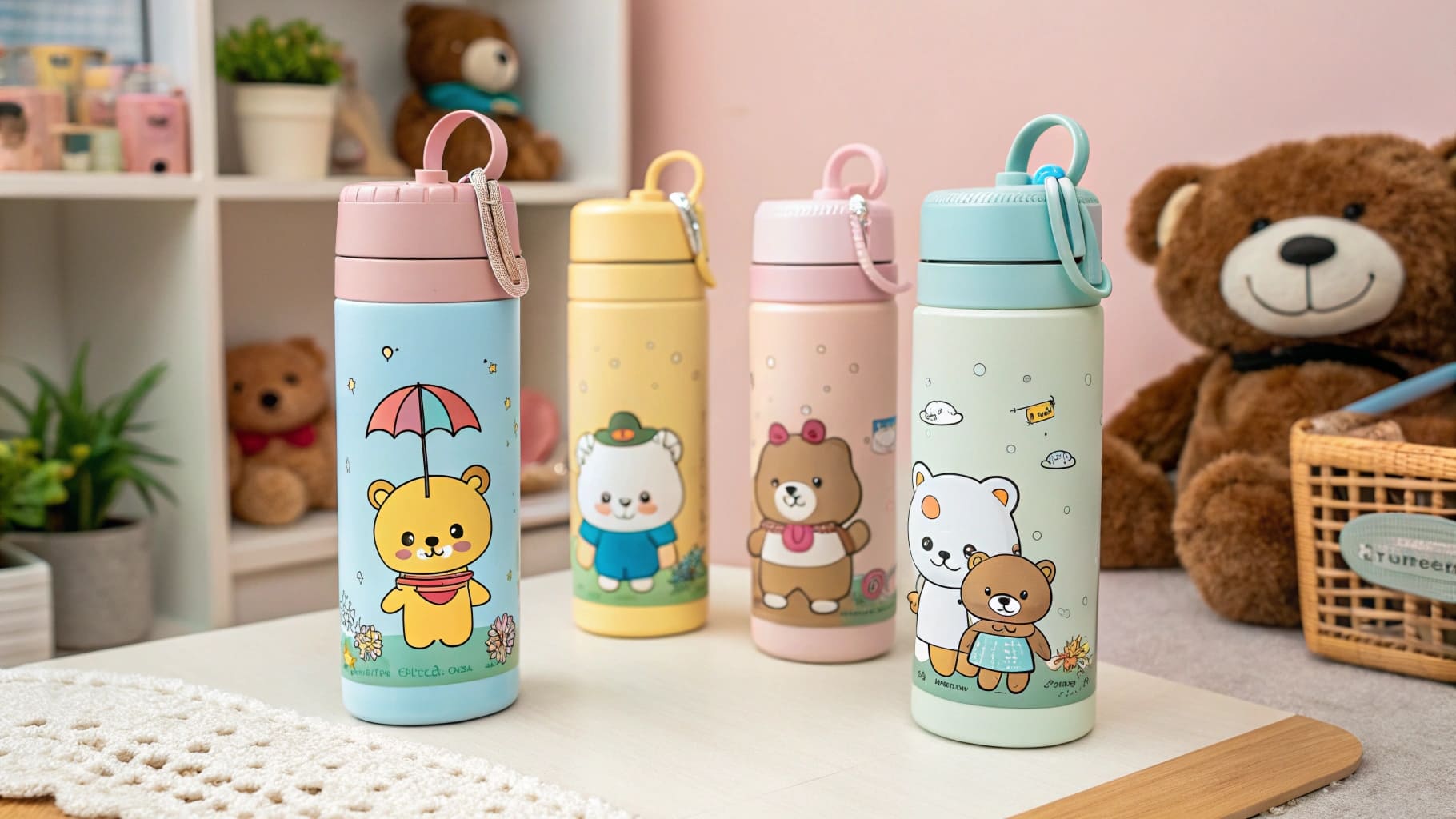
I have worked with procurement buyers from North America for years. The ones who get burned almost always say the same thing after: "The supplier never gave me a full spec sheet." The ones who avoid problems do one thing differently. They ask for every technical detail before they place the order. The rest of this post breaks down what those details are and why each one matters to your bottom line.
How to Clean a Water Bottle With a Handle?
Most buyers focus on leak performance. Very few think about cleaning until customers start leaving one-star reviews about mold and bad smells.
To clean a handled water bottle properly, you need a wide-mouth opening of at least 2 inches, smooth interior surfaces without sharp corners, and a long bottle brush that reaches the bottom. The handle attachment points are the hardest spots to clean and need special attention every time.
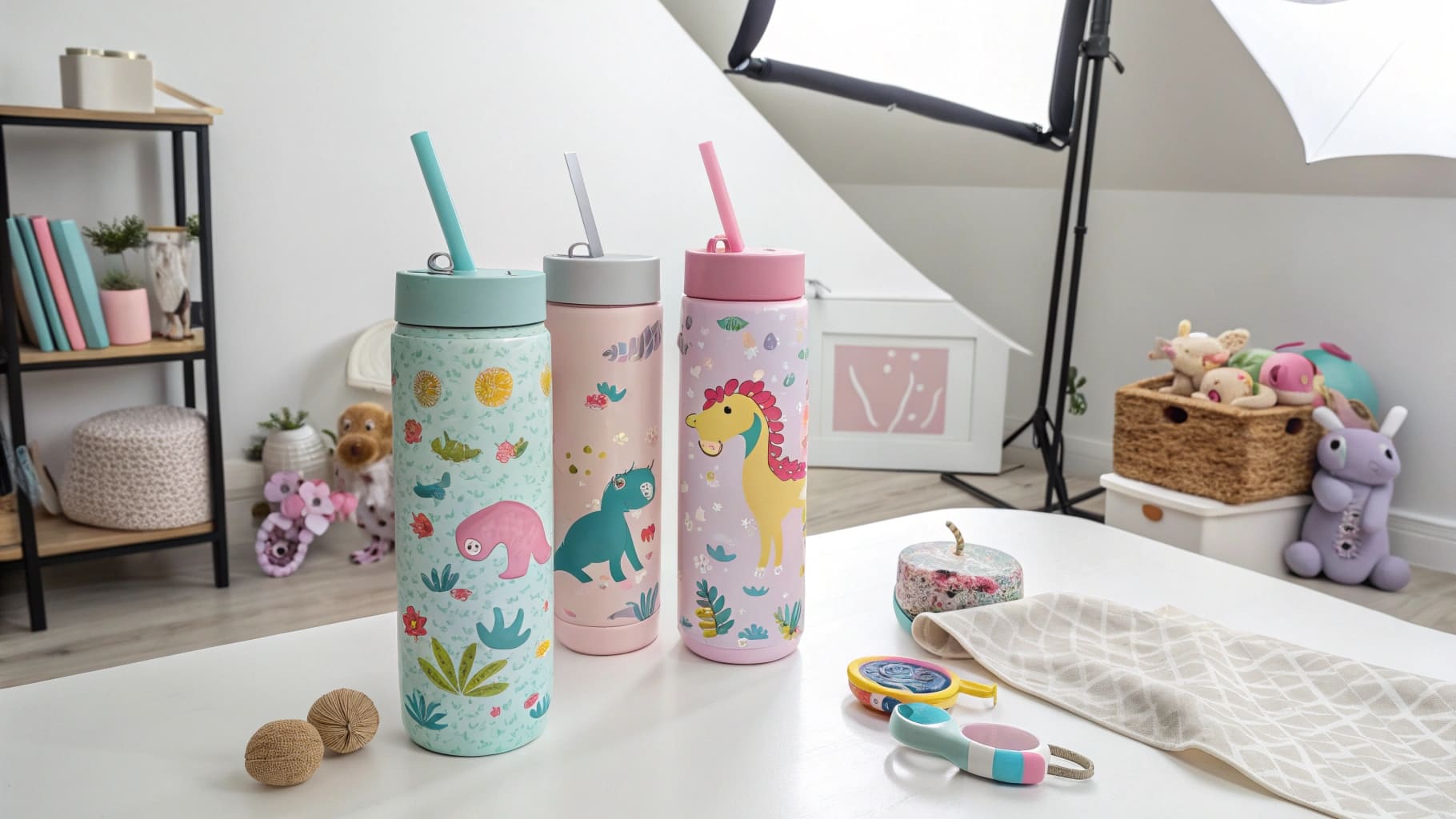
The handle adds grip and convenience for the end user. But it also adds complexity to the cleaning process. Here is why this matters to you as a B2B buyer.
When a handle is permanently welded or riveted to the bottle body, it creates small gaps at the attachment points. Water sits in those gaps. Residue builds up. Standard cleaning does not reach those areas easily. Over time, this becomes a hygiene problem for the consumer and a reputation problem for your brand.
The design choices a manufacturer makes during production directly affect how cleanable the bottle is. The table below shows how different design features affect cleaning difficulty.
| Design Feature | Cleaning Difficulty | Recommended Spec |
|---|---|---|
| Narrow mouth (under 1.5 inches) | High | Avoid for handled designs |
| Wide mouth (2 inches or more) | Low | Required |
| Sharp interior corners | High | Specify smooth radius corners |
| Removable handle | Low | Preferred for health-focused markets |
| Fixed welded handle | Medium to High | Requires detailed gap-free weld spec |
| Dishwasher-safe rating | Low | Request certification from supplier |
When I review spec sheets for handled bottles, I always check whether the manufacturer has addressed handle attachment gaps. A good supplier will specify a flush-weld finish or a sealed attachment point that leaves no open crevice2. If the spec sheet is silent on this, that is a red flag. Ask the supplier directly. If they cannot answer, move on.
For buyers targeting health-conscious markets in North America and Europe, this detail is not optional. It is a market requirement. Your end customers expect clean, safe bottles. The design has to support that from the start.
What Is the Best Leak Proof Water Bottle?
You have seen the word "leak proof" on hundreds of product listings. Most of them mean nothing without test data behind them. So what actually makes a handled water bottle truly leak proof?
The best leak proof water bottle is one built on three measurable specs: thread pitch accuracy held within 0.05mm, a food-grade silicone gasket with Shore A hardness between 40 and 60, and 100% pressure testing at two times normal usage conditions before shipment3, with a documented AQL 1.5 standard for leak defects.
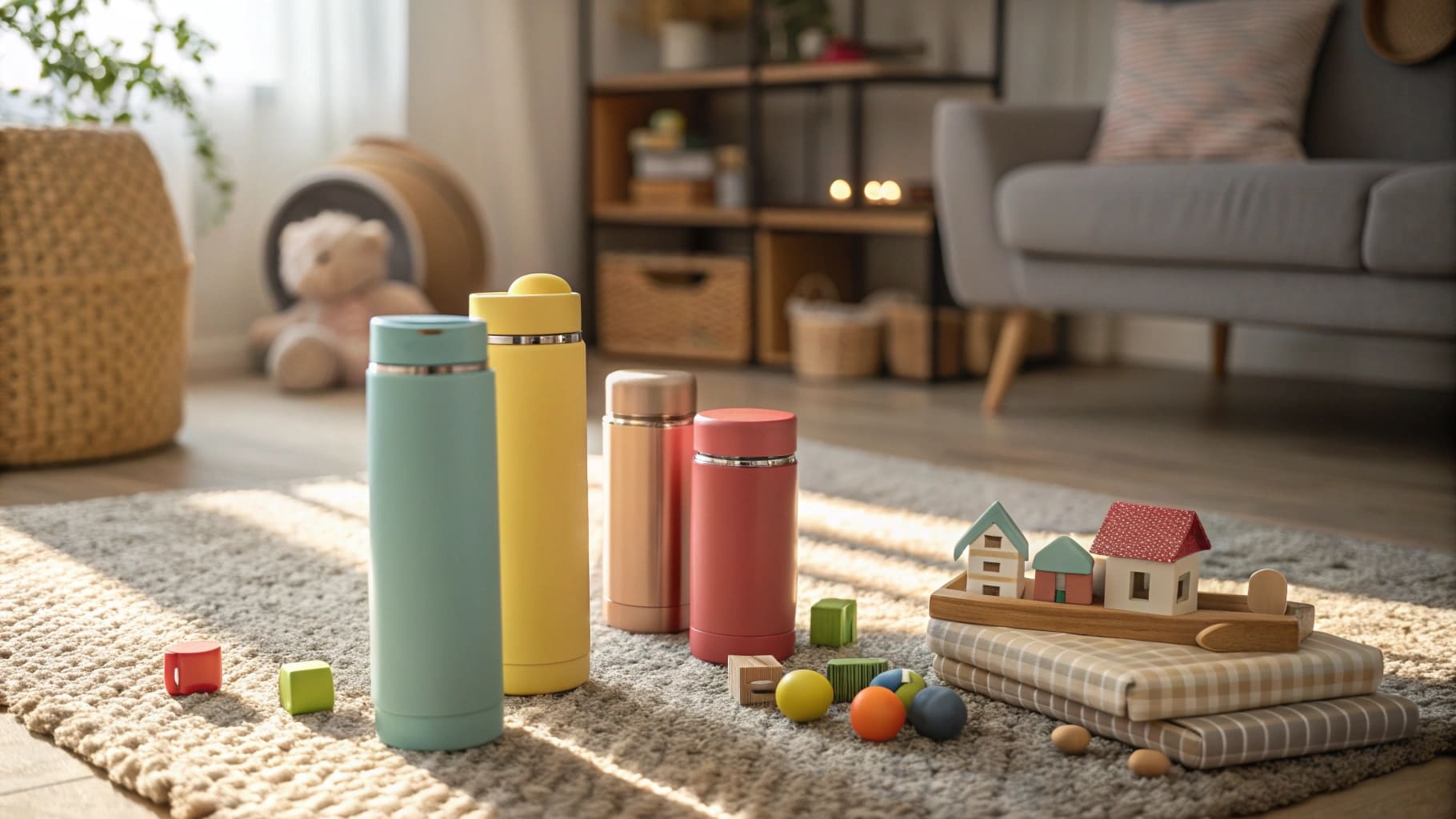
Leak proof performance is not a marketing claim. It is an engineering outcome. It depends on how well three components work together: the threads, the gasket, and the assembly tolerance between them.
Threads
The thread on the lid and the thread on the bottle neck must match precisely. If the pitch is off by even a small amount, the lid will not seat evenly. That uneven seat is where leaks start. A thread pitch accuracy spec of within 0.05mm is the industry standard for premium bottles. If your supplier cannot confirm this number, their quality control on threads is likely inconsistent.
Gaskets
The gasket is the seal between the lid and the bottle. For stainless steel water bottles, food-grade silicone is the standard material4. Shore A hardness between 40 and 60 gives the gasket enough firmness to hold its shape under pressure while remaining soft enough to compress and seal properly5. A gasket that is too hard will not seal. A gasket that is too soft will deform and fail over time.
Always ask your supplier for the gasket material certification. This document confirms the silicone is food-grade and free from harmful substances6. In my experience, suppliers who cannot produce this certificate quickly either do not have it or are using lower-grade materials.
AQL Targets and Pressure Testing
AQL stands for Acceptable Quality Level. It is the standard used to decide how many defects in a batch are acceptable before the whole batch is rejected. For leak defects, the right target is AQL 1.5. This means you accept a very low rate of leaking bottles in any given shipment.
To enforce this, you need 100% pressure testing before shipment. Every single bottle is tested at two times normal usage pressure. Any bottle that fails is pulled from the order. This is not the cheapest approach, but it is the only one that protects your brand.
| Spec Component | Minimum Standard | Premium Standard |
|---|---|---|
| Thread pitch accuracy | Within 0.1mm | Within 0.05mm |
| Gasket material | Food-grade silicone | Certified food-grade silicone with documentation |
| Gasket Shore A hardness | 40 to 60 | 45 to 55 |
| Leak test coverage | Sample-based | 100% of units |
| Test pressure | 1x normal usage | 2x normal usage |
| AQL level for leaks | AQL 2.5 | AQL 1.5 |
When you request a spec sheet from a supplier, these numbers should be in it. If they are not, ask for them in writing. A supplier who meets these standards will have no problem putting them on paper.
What Happens If I Never Wash My Water Bottle?
This question sounds like it belongs on a consumer blog. But it belongs here too. Here is why: the answer directly affects how your product is reviewed online and how many returns you process.
If a water bottle is never washed, bacteria levels inside the bottle can reach levels comparable to a pet bowl within one week of regular use7. The warm, moist environment inside a closed bottle is ideal for bacterial growth, especially when residue from drinks is left behind.
Most end consumers do not think about this until they notice a bad smell or taste. By that point, they are already unhappy with the product. The review they leave will not say "I did not clean my bottle." It will say "This bottle smells terrible after one week."
This is where the connection between cleaning design and your business performance becomes direct. A bottle that is hard to clean will always generate more negative reviews than one that is easy to clean. The design decisions made during manufacturing are the root cause.
Here is what happens step by step when a bottle is not cleaned regularly:
| Time After First Use | What Happens Inside the Bottle |
|---|---|
| Day 1 to 2 | Residue from drinks coats the interior surface |
| Day 3 to 4 | Bacteria begin to multiply in the residue layer |
| Day 5 to 7 | Bacterial levels reach problematic levels, especially near the mouthpiece and handle attachment points |
| Week 2 and beyond | Biofilm starts to form, visible as a slippery coating on interior surfaces8 |
| Month 1 and beyond | Mold may appear, particularly in crevices and under gaskets9 |
The mouthpiece and the gasket are the two highest-risk areas. Both are in direct contact with the user's mouth. Both are also areas where cleaning is often skipped because they are hard to reach.
As a B2B buyer, you have two tools to manage this risk. The first is sourcing bottles with designs that are genuinely easy to clean: wide mouths, smooth interiors, removable gaskets, and dishwasher-safe ratings. The second is requiring your supplier to provide clear cleaning instructions as part of the product packaging. Some buyers also add a small cleaning brush to their product bundle. This small addition reduces complaints and increases perceived product value at the same time.
The brands that win in this market are the ones that think past the initial sale. They ask: what happens after the customer gets the bottle? If the answer is that the bottle becomes a hygiene problem, the brand loses. If the answer is that the bottle stays clean and functional for years, the brand earns repeat buyers and strong reviews. The spec sheet is where that decision gets made.
Conclusion
A complete spec sheet covering threads, gaskets, AQL targets, and cleaning design is the single most important document you can request before placing a handled water bottle order.
-
"Silicone Gaskets - Stockwell Elastomerics", https://www.stockwell.com/silicone-gaskets/. Materials science literature on elastomeric seals indicates that Shore A hardness governs the balance between compression set resistance and conformability to mating surfaces, with softer compounds (lower Shore A) providing better low-load sealing and harder compounds offering greater durability under repeated cycling. Evidence role: mechanism; source type: paper. Supports: The relationship between Shore A hardness and sealing performance in silicone gaskets used for liquid containment. Scope note: Published ranges for optimal gasket hardness vary by application geometry and closure torque; the specific 40–60 range cited in the article should be verified against closure-specific engineering data. ↩
-
"[PDF] usda guidelines for the sanitary design and fabrication of dairy ...", https://www.ams.usda.gov/sites/default/files/media/DairyEquipmentReviewGuidelines.pdf. NSF/ANSI 51 (Food Equipment Materials) and 3-A Sanitary Standards specify that food-contact surfaces must be smooth, free of crevices, and designed to prevent the accumulation of food residues; welds on food-contact equipment are required to be continuous, smooth, and flush with the surrounding surface to eliminate harborage points. Evidence role: expert_consensus; source type: institution. Supports: Weld finish and crevice-free design requirements for food-contact surfaces to support cleanability. Scope note: NSF/ANSI 51 and 3-A standards primarily address commercial food service equipment; their direct applicability to consumer water bottle handle welds depends on whether the manufacturer seeks certification under these frameworks. ↩
-
"[PDF] Standard Test Procedures for Evaluating Leak Detection Methods", https://19january2017snapshot.epa.gov/sites/production/files/2014-03/documents/volum.pdf. ASTM and ISO standards for pressure vessel and container testing specify test pressures as multiples of maximum allowable working pressure; for consumer beverage containers, test protocols typically apply a safety factor above expected use-case pressure to detect seal failures that would not manifest under normal operating conditions. Evidence role: mechanism; source type: institution. Supports: Established pressure test methodologies and multipliers used for leak detection in consumer liquid containers. Scope note: A universally adopted standard specifying exactly 2x pressure for consumer water bottle leak testing was not identified; the multiplier cited in the article may reflect supplier-specific or buyer-specified quality agreements rather than a published standard. ↩
-
"Inventory of Food Contact Substances Listed in 21 CFR - FDA", https://www.fda.gov/food/packaging-food-contact-substances-fcs/inventory-food-contact-substances-listed-21-cfr. The U.S. Food and Drug Administration regulates food-contact materials under 21 CFR, with silicone polymers listed under 21 CFR 177.2600 as acceptable rubber articles intended for repeated use in contact with food, subject to compositional and extractability requirements. Evidence role: definition; source type: government. Supports: Regulatory definition and approval basis for food-grade silicone in food-contact applications. Scope note: FDA listing establishes regulatory acceptability, not a universal industry mandate; EU Regulation (EC) No 1935/2004 and national implementing measures govern food-contact materials in European markets under a separate framework. ↩
-
"[PDF] design and analysis of silicone gasket sealing for waterproof", https://rex.libraries.wsu.edu/view/pdfCoverPage?instCode=01ALLIANCE_WSU&filePid=13338221280001842&download=true. Polymer engineering literature establishes that Shore A durometer hardness governs an elastomer's resistance to indentation and its ability to conform to surface irregularities under compressive load; lower hardness values increase conformability and reduce the seating force required to achieve a seal, while higher values improve resistance to permanent deformation (compression set) over repeated use cycles. Evidence role: mechanism; source type: paper. Supports: The engineering relationship between Shore A hardness, compression behavior, and sealing effectiveness in elastomeric gaskets. Scope note: Optimal hardness for a specific sealing application depends on closure geometry, applied torque, and surface finish of mating parts; the 40–60 range cited in the article is a practical guideline that should be validated against specific bottle and lid dimensions. ↩
-
"Chemistry Recommendations for Submissions of Food Contact ...", https://www.fda.gov/regulatory-information/search-fda-guidance-documents/guidance-industry-preparation-premarket-submissions-food-contact-substances-chemistry. EU Regulation No 10/2011 on plastic materials and articles intended to contact food requires that a Declaration of Compliance accompany food-contact materials through the supply chain, supported by documentation of migration testing demonstrating that substances do not transfer to food at levels hazardous to human health; analogous documentation requirements exist under FDA guidance for food-contact substances in the United States. Evidence role: definition; source type: government. Supports: The regulatory basis and content requirements for food-contact material compliance documentation for silicone. Scope note: Silicone is not fully harmonized under EU Regulation 10/2011, which covers plastics; silicone food-contact compliance in the EU is currently governed by national regulations in member states, meaning certification requirements vary by target market. ↩
-
"Daily Use Water Bottles as a Hub for Microbial Population - PMC", https://pmc.ncbi.nlm.nih.gov/articles/PMC11174293/. Microbiological studies of reusable beverage containers have documented rapid bacterial proliferation on interior surfaces when bottles are not regularly cleaned, with colony-forming unit counts increasing substantially within days of initial use, particularly near mouthpieces and in areas with residual organic matter. Evidence role: statistic; source type: paper. Supports: Bacterial colonization rates in reusable water bottles under normal consumer use conditions. Scope note: The specific comparison to pet bowl contamination levels is a popularized benchmark; peer-reviewed sources may report absolute CFU counts rather than direct pet-bowl comparisons, requiring careful interpretation. ↩
-
"Daily Use Water Bottles as a Hub for Microbial Population - PMC", https://pmc.ncbi.nlm.nih.gov/articles/PMC11174293/. Biofilm is defined as a structured community of microorganisms enclosed in a self-produced polymeric matrix and adherent to a surface; the extracellular polysaccharide matrix gives established biofilms a characteristically slippery texture and confers resistance to mechanical removal and disinfection. Evidence role: mechanism; source type: encyclopedia. Supports: The process and physical characteristics of biofilm formation on surfaces in contact with water. Scope note: General biofilm science applies broadly; the specific timeline for biofilm development inside consumer water bottles depends on variables including water chemistry, drink residue composition, and ambient temperature not controlled in general literature. ↩
-
"Drink water, not mold. Five steps for a cleaner water bottle | UAB News", https://www.uab.edu/news/news-you-can-use/drink-water-not-mold-five-steps-for-a-cleaner-water-bottle. Research on microbial contamination of reusable food-contact surfaces identifies enclosed crevices, gasket interfaces, and areas with persistent moisture as preferential sites for fungal colonization, as these locations combine residual nutrients, reduced airflow, and limited exposure to cleaning agents. Evidence role: mechanism; source type: paper. Supports: Conditions and locations favoring fungal and mold growth in reusable beverage containers. Scope note: The one-month timeline for visible mold appearance cited in the article is an approximation; actual onset depends on ambient humidity, drink type, and cleaning frequency, and may not be directly supported by a single published study. ↩