
Do Hip Flasks for Retail Need Gift Box Specs, Inserts, and Drop Tests in 2026?
If you are sourcing hip flasks for retail and skipping the packaging conversation, you are leaving money on the table. Buyers are walking away from suppliers who cannot deliver complete solutions.
Yes, hip flasks for retail absolutely need gift box specs, inserts, and drop tests in 2026. Retail buyers, especially in North America and Europe, now treat packaging as a non-negotiable part of any order.1 A supplier who cannot provide documented specs and test results will lose the deal to one who can.
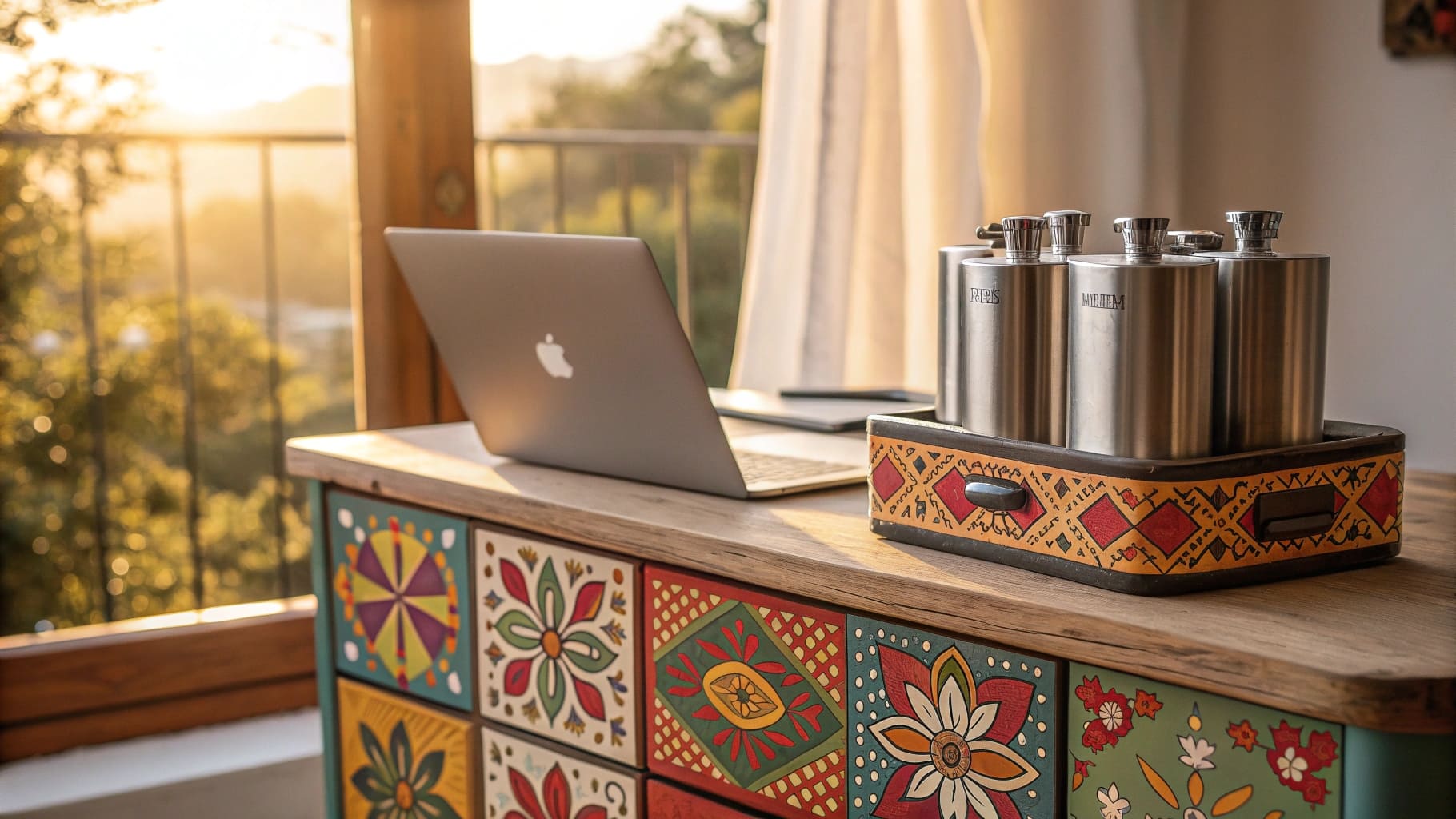
Packaging used to be an afterthought. Today it is a deal-breaker. Retail buyers are under pressure from their own customers to deliver a premium experience from the moment the box is picked up off a shelf2. If you are a B2B buyer evaluating hip flask suppliers right now, you need to understand exactly what to ask for, and why each piece matters. The rest of this article will walk you through that.
How to Store a Hip Flask?
Poor storage habits lead to warranty claims, bad reviews, and lost repeat business. These problems land back on you as the buyer, not just the end customer.
Store a hip flask clean, dry, and with the cap slightly open.3 Keep it in a cool, dry place away from sunlight. Never seal it tightly while moisture is still inside. These three steps prevent most long-term damage to seals, gaskets, and interior surfaces.
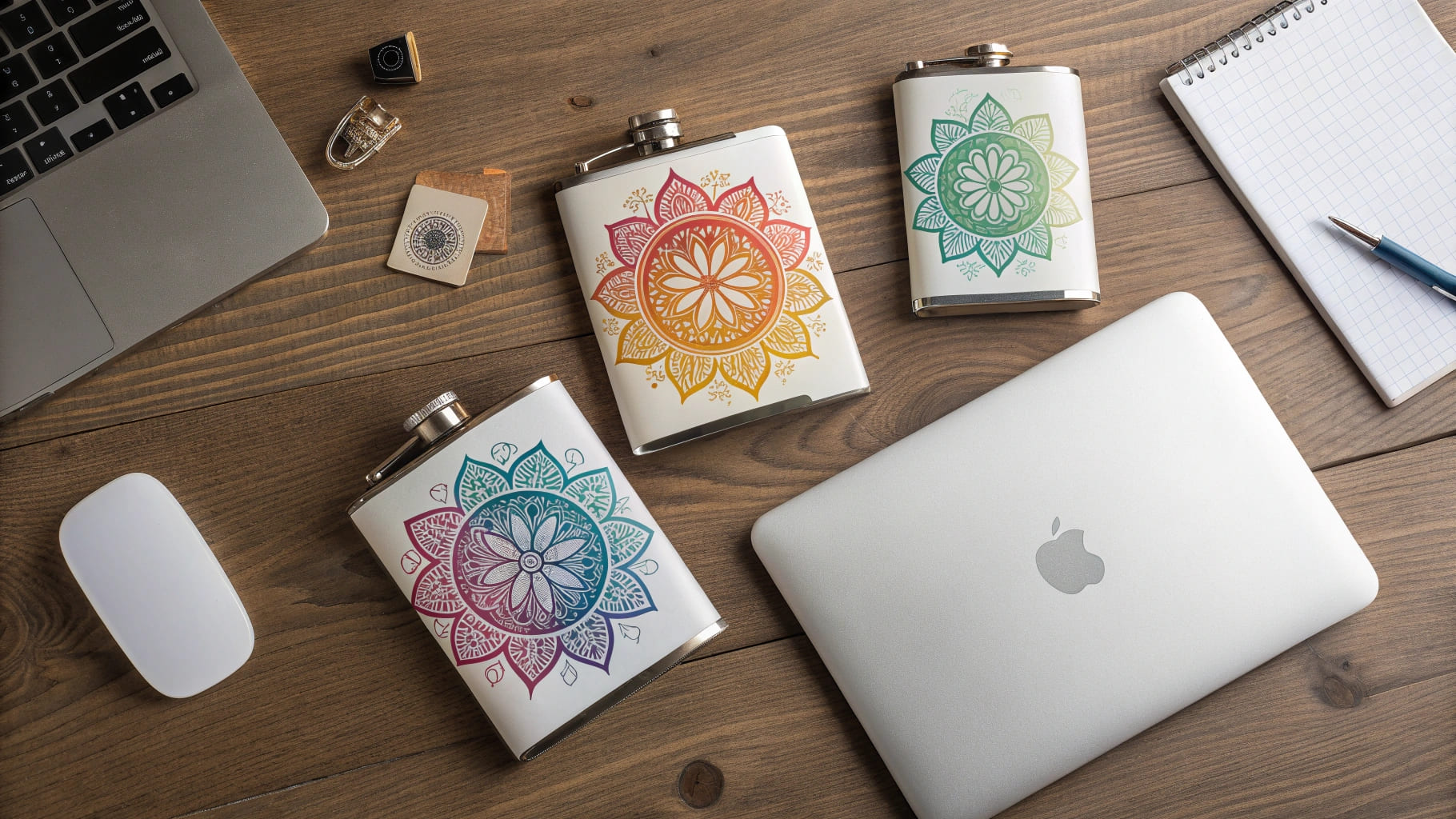
Storage is something most product listings mention in one line, if at all. That is a mistake. When end customers do not store their flasks correctly, the damage looks like a product defect. Returns go up. Your brand takes the hit.
Here is what proper storage actually involves, broken down by situation:
What Happens Inside a Sealed, Damp Flask?
Stainless steel is corrosion-resistant, but it is not immune to problems caused by trapped moisture.4 The weak points are the cap gasket and the interior lip where the cap threads meet the flask body. When moisture sits in these areas, especially in warm conditions, the gasket degrades faster and the seal weakens over time. This leads to leaks, which is one of the most common complaints in hip flask product reviews.
What Should the Storage Instructions Say?
If you are sourcing hip flasks as a brand owner or importer, your product insert or packaging should include clear storage guidance. This reduces inbound customer service questions and lowers your return rate. Here is a simple framework you can adapt:
| Situation | Recommended Action |
|---|---|
| After daily use | Rinse with warm water, dry with cap off |
| After long storage | Check gasket condition before next use |
| Long-term storage | Store in a dry drawer or shelf, cap slightly loose |
| After washing | Do not place in leather pouch until fully dry |
The leather pouch point is worth highlighting. Many hip flask gift sets include a leather or faux-leather carrier. If a customer places a damp flask inside one of these pouches and then seals it, the moisture gets trapped.5 This creates both odor problems and accelerated gasket wear. Including a simple warning in your product instructions costs nothing and prevents a disproportionate number of complaints.
From a supplier evaluation standpoint, I always look at whether a factory has thought through the end-user experience. A supplier who provides ready-made storage instructions in English is a supplier who understands the retail market. That matters when I am deciding who to place a large order with.
How to Prepare a Hip Flask?
A metallic taste on first use is one of the most common complaints about stainless steel flasks. It almost always comes from skipping one simple step before use.
Before using a hip flask for the first time, wash it with warm soapy water, rinse it several times, and let it air dry completely. A baking soda rinse, one tablespoon mixed with warm water left in the flask for a few hours, neutralizes any residual manufacturing odors.6
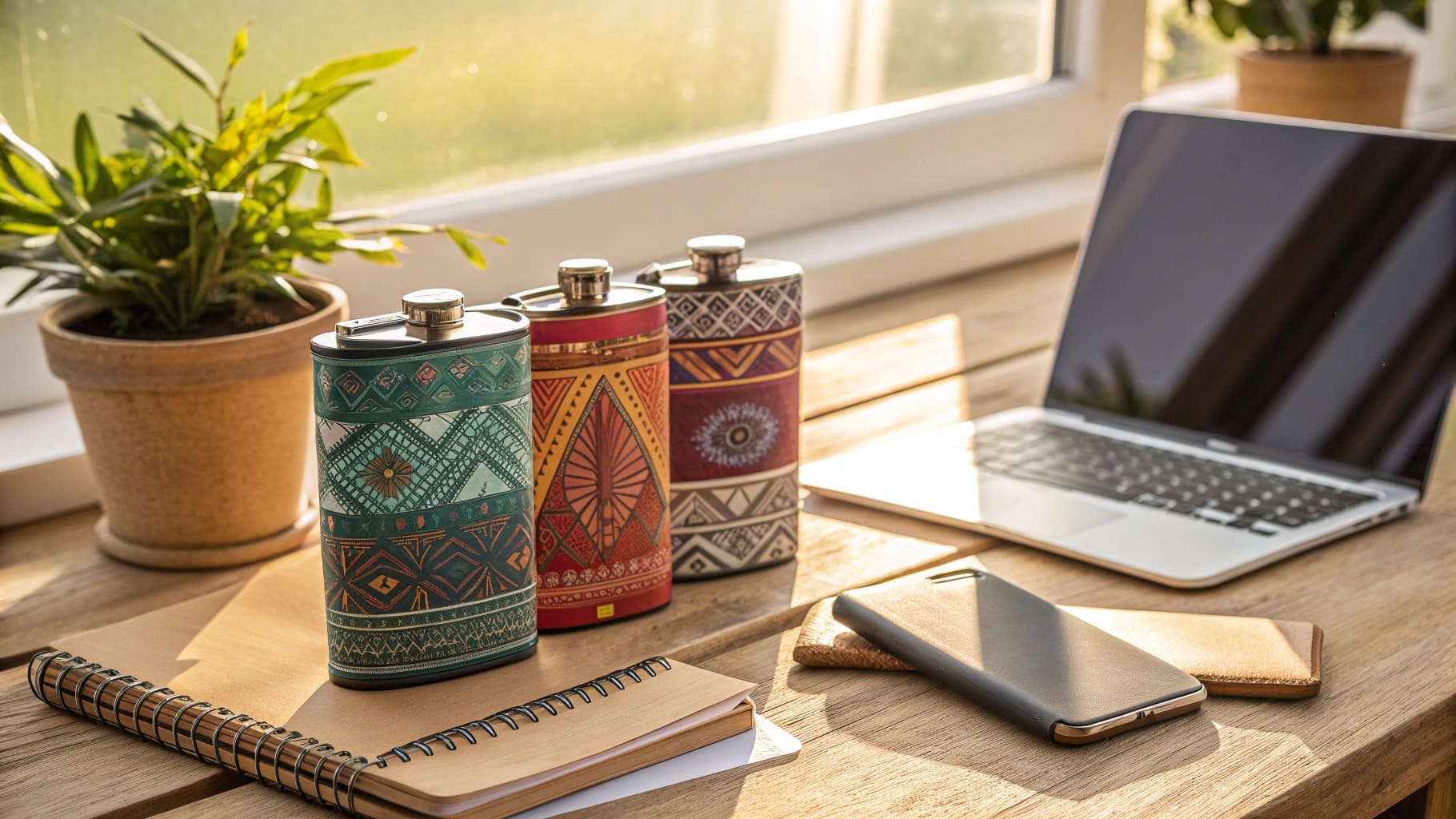
First-use preparation is a known pain point in this product category. The issue is that most manufacturers treat it as the customer's problem. I disagree with that approach. When you are building a brand around hip flasks, especially in the premium gift segment, the first use experience is part of your product. A customer who opens the box, takes their first sip, and notices an off-taste is unlikely to recommend your product to anyone.
Why Does a New Flask Sometimes Taste Metallic?
The answer is usually one of three things:
| Cause | Explanation |
|---|---|
| Protective manufacturing oils | Applied during production to prevent oxidation during storage and shipping |
| Metallic surface residue | Fine particles left from cutting, stamping, or polishing processes |
| Packaging off-gassing | Foam inserts or cardboard can impart odors to the interior of a sealed flask |
All three of these causes are preventable with proper first-use preparation. The key is including those instructions where the customer will actually read them, which is inside the box, not buried in a product manual.
What Is the Seasoning Process and Does It Matter?
Some enthusiasts go a step further than basic washing. They fill the flask with the spirit they plan to use, let it sit for 24 hours, discard the liquid, and rinse. This is called seasoning. It conditions the interior surface and removes any remaining residue that soap and water missed. It is not strictly necessary with a high-quality stainless steel flask, but it is a good practice to mention in premium product documentation.
If you are sourcing flasks for a whisky gift set or a groomsmen package, your target buyer is someone who takes their spirits seriously. Including a seasoning guide in the product insert elevates the perceived quality of the entire package. It signals that you understand the product and the customer. That is the kind of detail that builds brand loyalty and justifies a higher retail price point.
From my experience working with buyers in North America, the ones who put effort into the unboxing and first-use experience see measurably lower return rates and higher reorder volumes. Preparation instructions are a small investment with a clear return.
Why Are Hip Flasks Curved?
A straight-sided hip flask feels awkward in a back pocket and creates an obvious bulge under a jacket. The curve solves both problems, and it does more than that.
Hip flasks are curved to match the natural contour of the human body.7 The shape distributes pressure evenly against the hip, reduces visible bulk when carried in a pocket, and allows the flask to sit flat against the body without sharp edges causing discomfort.
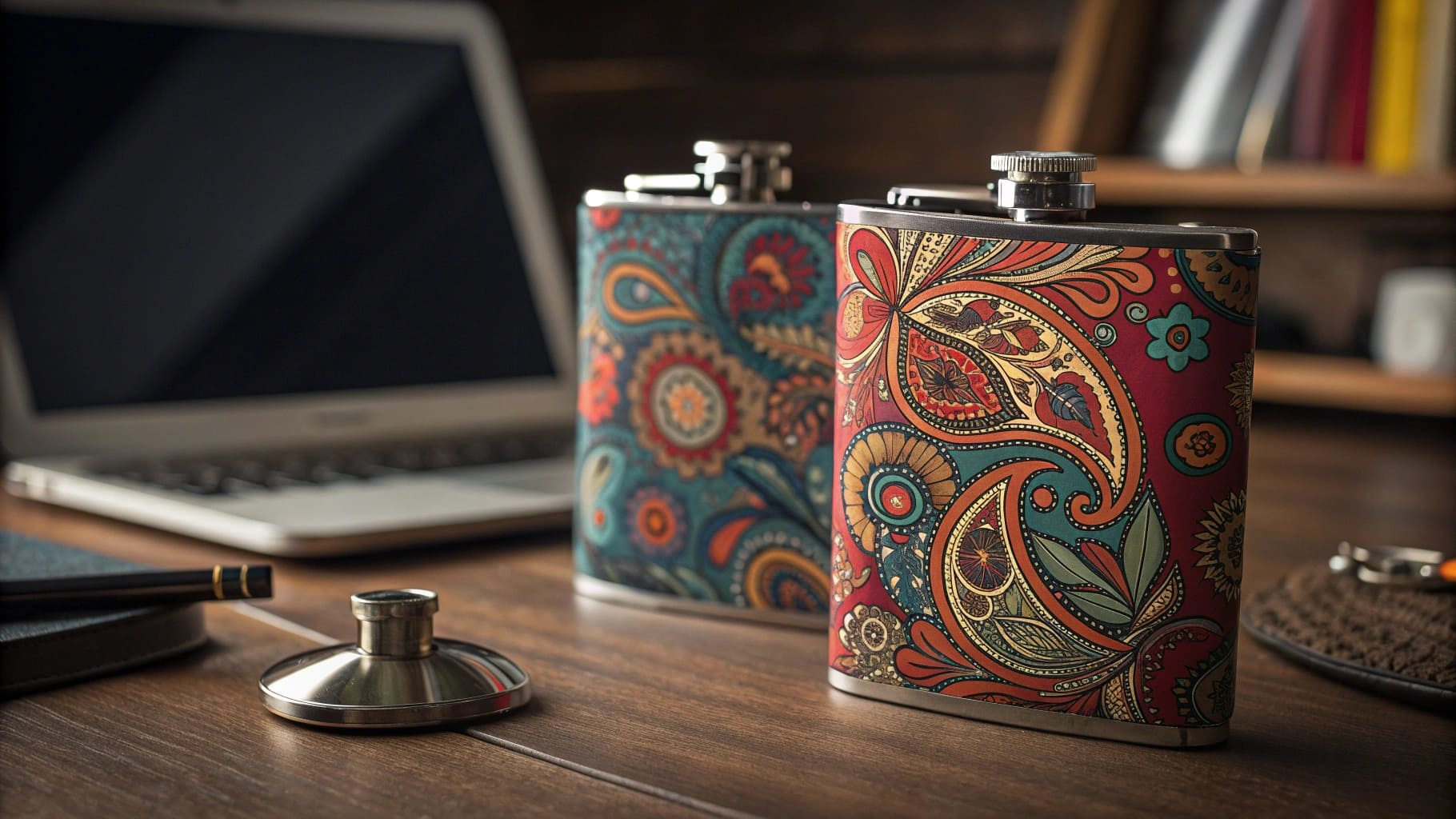
The curve is one of the most recognizable design features in this product category. It is also one of the most misunderstood from a manufacturing and pricing perspective. Understanding why the curve exists, and what it costs to produce, helps B2B buyers make smarter sourcing decisions.
What Does the Curve Actually Do for the User?
The ergonomic benefit is straightforward. A rectangular flask carried in a back trouser pocket creates two pressure points at the corners. After a few hours, this becomes noticeably uncomfortable. A curved flask distributes that pressure across a wider surface area, which is why the design has persisted for over a century without meaningful change.
The second benefit is discretion. A flat, body-conforming shape creates less of a visible outline under clothing than a box-shaped alternative. For the traditional use case of carrying spirits to an outdoor event or formal occasion, this matters.
What Does the Curve Cost to Produce?
This is where things get interesting for buyers. A curved flask requires either multi-stage stamping or hydroforming to achieve the shape accurately without warping the metal or creating weak points at the bend. A straight-sided flask is simpler to produce. Here is a rough comparison:
| Design Type | Production Complexity | Relative Cost | Market Positioning |
|---|---|---|---|
| Curved (classic) | Higher, requires hydroforming or multi-stage press | Higher by roughly 15 to 20 percent | Premium, gift, traditional |
| Straight-sided | Lower, simpler stamping process | Lower baseline cost | Budget, promotional, novelty |
| Combination (flat back, curved front) | Medium | Medium | Mid-range retail |
The 15 to 20 percent cost premium for a curved flask is consistently recoverable at retail. Gift buyers in particular associate the curved shape with quality and tradition. A straight-sided flask in a gift context can feel like a compromise, even if the materials are identical.
How Should B2B Buyers Use This Information?
If you are building a product range for retail distribution in Canada or the United States, offering both designs lets you address two distinct price tiers. The curved flask anchors your premium line. The straight-sided option covers promotional and volume-driven segments. The key is not to treat them as interchangeable but to position them separately with different packaging, price points, and target occasions.
I have seen buyers make the mistake of sourcing only one design and then struggling to compete across price tiers. Knowing the manufacturing difference between the two designs gives you the data you need to justify pricing to your own retail customers without having to guess.
Conclusion
Gift box specs, inserts, drop tests, storage guidance, first-use prep, and curved design logic all feed into one outcome: fewer returns, stronger margins, and repeat orders from retail buyers who trust your product.
-
"CPSC Labeling Requirements Overview", https://www.cpsc.gov/Business--Manufacturing/Business-Education/Business-Guidance/CPSC-Labeling-Requirements-Overview. Government and international packaging frameworks in North America and Europe show that packaging is subject to formal requirements for safety, labeling, waste, and transport performance; this provides contextual support for packaging being a procurement concern, but it does not prove that all retail buyers treat it as non-negotiable. Evidence role: general_support; source type: government. Supports: Retail buyers in North America and Europe increasingly require suppliers to address packaging as part of the order.. Scope note: Contextual support only; buyer behavior varies by retailer, category, and jurisdiction. ↩
-
"Package design as a branding tool in the cosmetic industry - PMC", https://pmc.ncbi.nlm.nih.gov/articles/PMC9123395/. Consumer research on packaging design and product perception indicates that packaging can influence perceived quality, purchase intention, and the initial consumer experience; this supports the claim that packaging contributes to premium positioning, though effects depend on product category and consumer segment. Evidence role: general_support; source type: paper. Supports: Retail packaging affects perceived product quality and the customer’s first impression.. Scope note: Evidence is generally about consumer packaging perception, not specifically hip flasks. ↩
-
"[PDF] Food Storage-‐Will I Use It? - Utah State University Extension", https://extension.usu.edu/employee/files/ez-plug/live_well_utah_newsletters/March_Food_Storage.pdf. Food-contact metal care guidance commonly recommends cleaning, thorough drying, and ventilated storage to limit retained moisture and odor formation; this supports the storage instruction by analogy, although flask-specific clinical or materials testing may be limited. Evidence role: mechanism; source type: education. Supports: Hip flasks should be stored clean, dry, and not tightly sealed while moisture remains inside.. Scope note: General care guidance for food-contact containers, not a controlled study of hip flasks specifically. ↩
-
"Influence of H2S on the pitting corrosion of 316L stainless steel | NIST", https://www.nist.gov/publications/influence-h2s-pitting-corrosion-316l-stainless-steel. Materials references explain that stainless steel corrosion resistance depends on a passive chromium oxide layer and that crevices, chloride contamination, and stagnant moisture can create conditions for localized corrosion; this supports the caution about trapped moisture, with severity depending on alloy and environment. Evidence role: mechanism; source type: education. Supports: Stainless steel resists corrosion but can still be affected by trapped moisture under certain conditions.. Scope note: Applies generally to stainless steel; actual risk in a flask depends on grade, exposure, and cleaning practices. ↩
-
"A Brief Guide to Mold, Moisture and Your Home | US EPA", https://www.epa.gov/mold/brief-guide-mold-moisture-and-your-home. Public health and building-science guidance on porous materials notes that enclosed moisture can promote odor and microbial growth in absorbent materials; this supports the warning about storing a damp flask in a pouch, although it is indirect evidence for leather flask carriers. Evidence role: mechanism; source type: government. Supports: Putting a damp flask into an enclosed leather or faux-leather pouch can trap moisture and contribute to odor problems.. Scope note: Indirect support from moisture and porous-material guidance rather than flask-pouch testing. ↩
-
"[PDF] Baking Soda -- The Everyday Miracle ™", https://oconto.extension.wisc.edu/files/2011/02/Baking-Soda.pdf. Household chemistry and extension sources describe sodium bicarbonate as a mild alkaline compound used to neutralize acidic odors and reduce smells in containers; this supports the deodorizing rationale, but the exact tablespoon-and-soak duration is a practical convention rather than a standardized flask protocol. Evidence role: mechanism; source type: education. Supports: A baking soda rinse can help reduce residual odors in a new flask.. Scope note: Supports baking soda’s deodorizing mechanism, not the precise recipe or timing as an established standard. ↩
-
"Hip flask - Wikipedia", https://en.wikipedia.org/wiki/Hip_flask. Historical and design references describe the hip flask as a small, often curved vessel intended to be carried against the body or in a pocket; this supports the ergonomic explanation of the curved form, although it may not quantify pressure distribution. Evidence role: historical_context; source type: encyclopedia. Supports: The curved shape of a hip flask is intended to fit against the body for pocket carrying.. Scope note: Supports the design rationale historically and descriptively, not through ergonomic measurement data. ↩