
How to Price Insulated Tumblers in 2026: MOQ Tiers, EXW/FOB, and Margins?
You quoted a price. Your customer said no. The deal fell apart before it even started. That is what happens when you skip the math on tumbler pricing.
Getting your tumbler pricing right in 2026 means looking at four things together: material grade, order volume, shipping terms, and your target margin. A standard 20oz insulated stainless steel tumbler runs from $2.50 to $8.00 per unit EXW1, depending on specs and quantity. Miss one piece of this, and your numbers will not work.

I have worked with buyers who came to me with a target price in mind but no idea how they got there. Some were too low. Some were too high. The ones who got it right had done the work before they ever sent me an inquiry. This post walks you through the same process I use when I help buyers build their pricing model from scratch. If you read this all the way through, you will have a working framework you can use immediately.
What Is the Price of a Stainless Steel Tumbler?
You search for a price. You get a range so wide it tells you nothing. That is the most common frustration I hear from buyers who are new to sourcing tumblers from China.
The price of a stainless steel tumbler in 2026 depends on size, wall construction, material grade, order quantity, and customization. For a standard double-wall 20oz tumbler, expect $2.50 to $8.00 per unit EXW. Small orders with custom logos sit near the top. Large plain orders sit near the bottom.
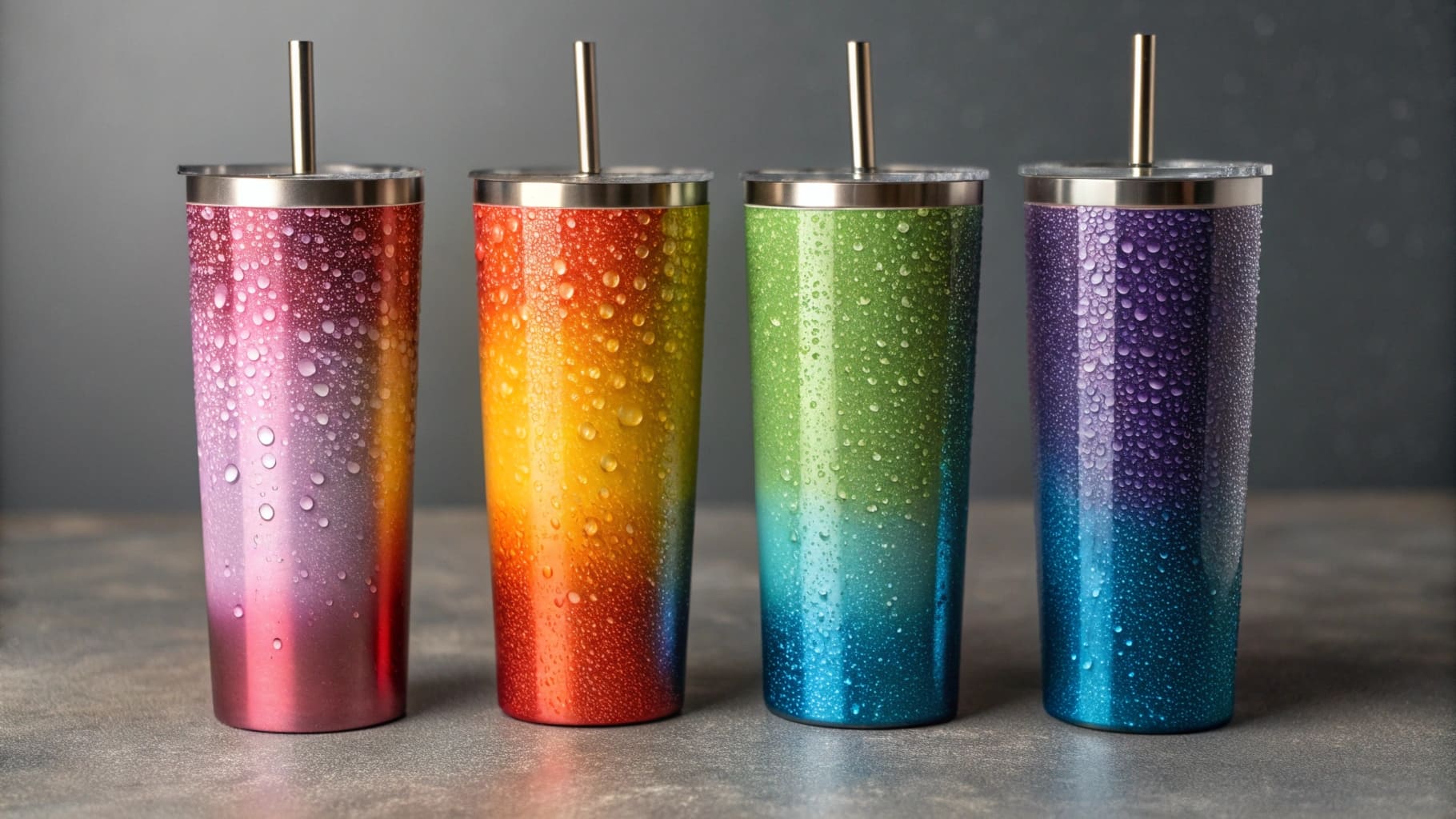
Let me break this down in a way that is actually useful.
The price gap between $2.50 and $8.00 is not random. Every dollar in that range is tied to a specific decision you make. Here is how those decisions stack up:
| Factor | Low End | High End |
|---|---|---|
| Order Quantity | 5,000+ units | 500–999 units |
| Material Grade | 304 stainless | 316 stainless |
| Wall Type | Single wall | Double-wall vacuum |
| Logo/Color | Plain | Full custom color + logo |
| Lid Complexity | Basic screw cap | Multi-piece sliding lid |
When a buyer sends me an inquiry and asks "what is your price," I always ask these five questions first. The answer to each one moves the number. A buyer ordering 5,000 plain 304 tumblers will get a very different quote than a buyer ordering 500 custom-color 316 units with a premium lid.
The other thing that moves the price is the factory you work with. Not all stainless steel factories in China price the same way. Factories with higher automation costs tend to have lower per-unit prices at high volumes but higher setup fees. Smaller factories may offer more flexibility on MOQ but charge more per piece. I always recommend getting at least three quotes before locking in a supplier, and comparing them line by line, not just on the final unit price.
One more thing worth knowing: prices in 2026 are under pressure from two sides. Raw material costs have stayed elevated since the supply chain disruptions of the early 2020s.2 At the same time, more factories are competing for international B2B orders, which keeps the market competitive. The result is that buyers who do their homework can still find strong value, but the days of very low prices with no trade-offs are gone.
What Is the Difference Between 304 and 316 Tumblers?
You see two tumblers that look identical. One costs more. The supplier says it is "better steel." But better how? And does it matter for your use case?
The difference between 304 and 316 stainless steel tumblers comes down to one added element: molybdenum. Grade 316 contains molybdenum, which makes it more resistant to corrosion from chlorides and acidic liquids.3 Grade 304 contains chromium and nickel, which is enough for most everyday beverage use.
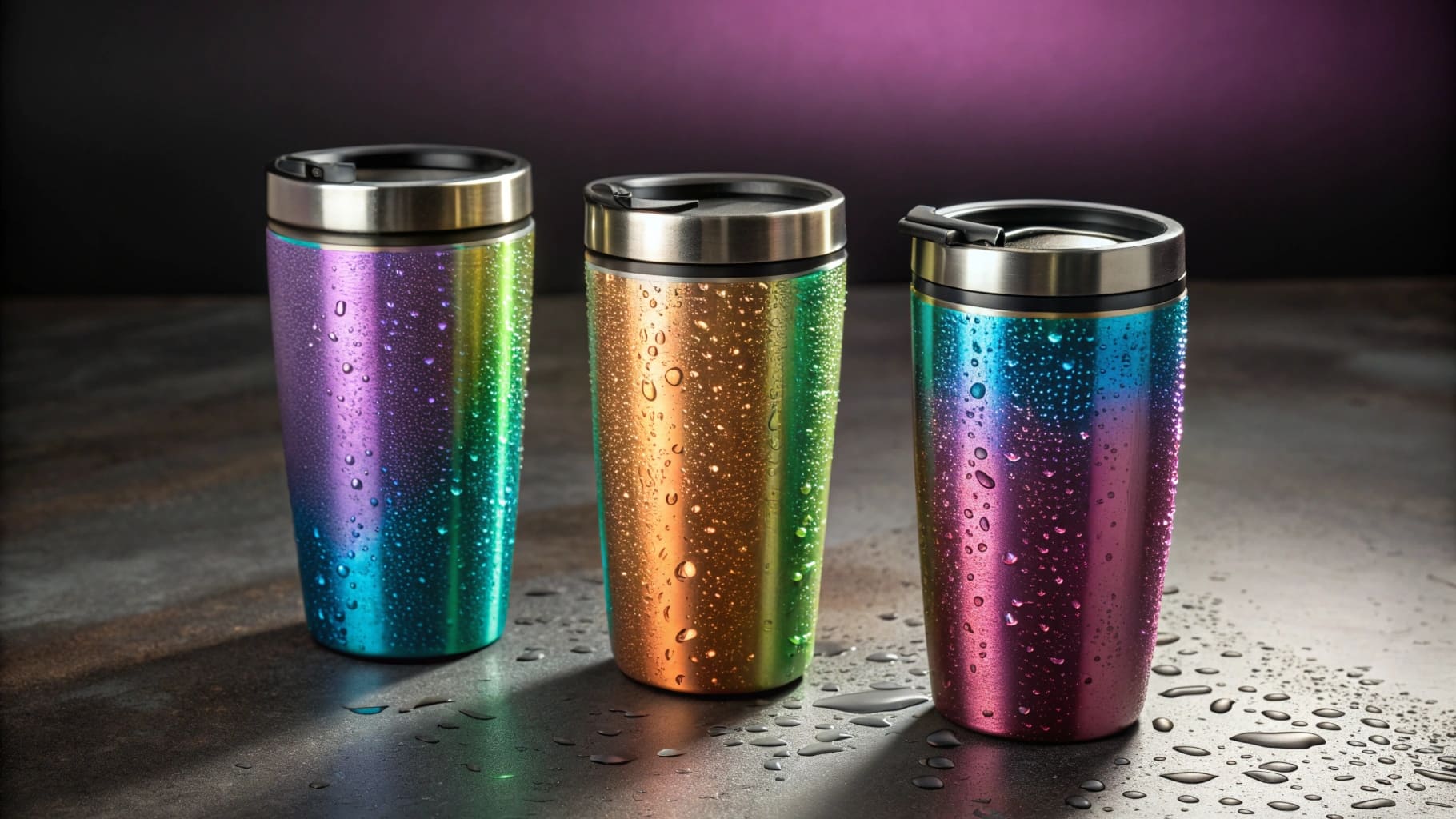
Let me go deeper on this, because I see buyers make the wrong call in both directions.
What 304 gives you
304 is the most widely used grade in food-grade drinkware.4 It meets FDA and European food contact regulations. It handles water, juice, coffee, tea, and most common beverages without any reaction. The surface stays clean and the flavor of your drink stays neutral. For the vast majority of everyday tumbler use cases, 304 is completely sufficient.
What 316 adds
316 adds molybdenum to the alloy. This changes how the steel responds to certain environments. Specifically, 316 holds up better against:
- Salt water and high-humidity coastal environments
- Acidic liquids used frequently over long periods
- Cleaning agents that contain chlorine
If your end customer is using the tumbler near the ocean, or if your brand is positioned around extreme durability, 316 gives you a real, testable performance edge.
How to tell them apart
This is where it gets tricky for buyers who lack a technical background. You cannot tell 304 from 316 just by looking at them.5 Both have the same silver finish. Both feel the same weight for the same wall thickness. The only reliable way to verify the grade is through a material certification from the factory. Specifically, you want a mill test report that traces the steel back to the original coil. I have seen cases where a supplier quotes 316 but ships 304. Always verify before your order ships, not after it arrives.
A comparison of key properties
| Property | 304 | 316 |
|---|---|---|
| Chromium content | ~18% | ~16–18% |
| Nickel content | ~8–10% | ~10–14% |
| Molybdenum content | None | ~2–3% |
| Corrosion resistance | Good | Very good |
| Food safe | Yes | Yes |
| Typical use case | General drinkware | Marine, premium, medical |
The short answer: for most B2B buyers sourcing tumblers for retail or corporate gifting in North America or Europe, 304 is the right choice. It is quality, it is certified, and it keeps your cost structure competitive. If you are building a premium product line with a specific positioning story around toughness or coastal lifestyle, 316 gives you something real to talk about.
What Is Cheaper, 304 or 316 Stainless?
You already know 316 is "better." But you need to know exactly how much more it will cost you, because that difference has to fit inside your margin.
304 stainless steel is cheaper than 316. In raw material form, 316 costs 15–25% more than 304.6 On a finished 20oz tumbler, that translates to roughly $0.40 to $1.20 more per unit, depending on size and wall thickness.

That range matters a lot once you map it to your full cost structure.
Let me walk through the math with a real example.
Say you are sourcing a custom-branded 20oz double-wall tumbler at 3,000 units. Your 304 quote comes in at $3.90 per unit EXW. Your 316 quote for the same product comes in at $4.60 per unit EXW. The difference is $0.70 per unit. At 3,000 units, that is $2,100 more on your total order cost.
Now ask: what does your end customer pay, and what story does $0.70 per unit buy you?
MOQ tier pricing reference for 2026
| Order Quantity | 304 EXW (est.) | 316 EXW (est.) |
|---|---|---|
| 500–999 units | $6.50 | $7.20–$7.70 |
| 1,000–2,999 units | $4.80 | $5.30–$5.80 |
| 3,000–4,999 units | $3.90 | $4.30–$4.80 |
| 5,000+ units | $3.20 | $3.60–$4.10 |
These are estimates based on a standard 20oz double-wall vacuum tumbler with a basic lid and single-color logo. Your actual quotes may vary based on factory, customization level, and current material costs at the time you order.
EXW vs. FOB: the hidden cost you need to add
EXW prices look lower on paper. But EXW means the factory hands over the goods at their gate, and everything after that is your problem.7 You pay for the truck to the port, the export documentation, and the customs clearance in China. That adds roughly $0.15 to $0.35 per unit for a standard tumbler order.
FOB includes all of that. The factory gets your goods to the port, cleared and ready to load.8 The quoted price is higher, but the process is simpler. For buyers without a freight forwarder they already trust, FOB is often the smarter choice. You give up a small amount of control in exchange for less coordination work and the factory's bulk shipping rates, which are usually better than what you can get on your own as a single buyer.
Working backward from your retail price
I always tell buyers to start with the number their end customer will pay and work backward. Here is a simple model:
| Step | Amount |
|---|---|
| Target retail price (20oz custom tumbler) | $25.00 |
| Retailer margin (40–50%) | -$10.00 to -$12.50 |
| Your revenue per unit | $12.50–$15.00 |
| Logistics, customs, ops costs | -$2.00 to -$3.00 |
| Your target margin (25–35%) | -$3.00 to -$4.00 |
| Max landed cost per unit | ~$6.00–$9.00 |
| FOB + freight to arrive landed | subtract $1.50–$2.50 |
| Max FOB unit price you can afford | ~$4.00–$7.00 |
Once you know your maximum FOB price, you can look at the MOQ table and see which tier gets you there. You can also see whether 304 or 316 fits. If 316 pushes you over your cost ceiling, you either need to raise the retail price, reduce your target margin, or go with 304.
The buyers who get this right are the ones who do this math before they send the first inquiry. The ones who skip it end up renegotiating after samples, which wastes everyone's time and damages trust with the supplier.
Conclusion
Price your tumblers by working backward from retail. Know your grade, your tier, and your shipping terms. That is the whole framework.
-
"United States Vacuum flasks/vacuum vessels complete w/cases", https://wits.worldbank.org/trade/comtrade/en/country/USA/year/2024/tradeflow/Imports/partner/ALL/product/961700. Import/export unit-value data for vacuum flasks and stainless-steel drinkware can contextualize the stated EXW range by showing prevailing cross-border transaction values for comparable products from China. Evidence role: statistic; source type: government. Supports: A standard 20oz insulated stainless steel tumbler runs from $2.50 to $8.00 per unit EXW depending on specifications and quantity.. Scope note: Customs data usually reports declared export or import values by HS code and may not isolate 20oz tumblers, EXW terms, customization, or 2026 factory quotations directly. ↩
-
"Commodity Markets - World Bank", https://www.worldbank.org/en/research/commodity-markets. Commodity price datasets from institutions such as the World Bank or IMF document the post-2020 rise and partial persistence of elevated metals prices, providing macroeconomic context for stainless-steel input costs. Evidence role: historical_context; source type: institution. Supports: Raw material costs relevant to stainless-steel products remained elevated after the supply-chain disruptions of the early 2020s.. Scope note: Broad metals-price indexes do not directly measure the exact stainless-steel coil costs paid by tumbler factories in 2026. ↩
-
"Guide to the Selection and Use of High Performance ...", https://www.nrc.gov/docs/ML0334/ML033490048.pdf. Metallurgical references and corrosion studies explain that molybdenum in austenitic stainless steels improves resistance to pitting and crevice corrosion in chloride-containing environments, supporting the claimed performance advantage of 316 over 304. Evidence role: mechanism; source type: paper. Supports: The molybdenum content of 316 stainless steel improves corrosion resistance, especially in chloride or acidic exposure conditions.. Scope note: Resistance depends on concentration, temperature, exposure time, surface finish, and cleaning practices; the source may not address beverage tumblers specifically. ↩
-
"Food Grade Stainless Steel: 304 vs 316 - AZoM", https://www.azom.com/article.aspx?ArticleID=24472. Food-equipment and stainless-steel industry references commonly identify type 304 as the most widely used austenitic stainless steel for food-contact equipment and general corrosion-resistant applications, giving contextual support for its prevalence in drinkware. Evidence role: general_support; source type: institution. Supports: Type 304 stainless steel is widely used in food-contact applications and is commonly used for drinkware.. Scope note: Most neutral sources discuss food-contact equipment or stainless-steel applications broadly rather than quantifying market share specifically for tumblers. ↩
-
"How to Test Stainless Steel: A Guide to Identifying Steel Grades", https://www.azom.com/article.aspx?ArticleID=1234. Materials-identification guidance notes that stainless-steel grades with similar appearance require chemical analysis, spectroscopy, or documentation for grade confirmation, supporting the statement that visual inspection alone is insufficient. Evidence role: mechanism; source type: research. Supports: Visual inspection alone cannot reliably distinguish 304 stainless steel from 316 stainless steel.. Scope note: Some field tests may distinguish grades under certain conditions, but visual appearance by itself is not a reliable method. ↩
-
"Which is More Expensive, 304 or 316 Stainless Steel", https://www.vishwastainless.com/304-vs-316-stainless-steel-price/. Stainless-steel price indexes or procurement datasets comparing 304 and 316 sheet or coil prices can substantiate the typical premium for 316, which is largely linked to its higher nickel and molybdenum content. Evidence role: statistic; source type: other. Supports: Raw 316 stainless steel commonly carries a price premium over 304, often in the range of 15–25%.. Scope note: The exact percentage premium varies by region, product form, alloy surcharge, and date; a source may support a recent range rather than a fixed 2026 premium. ↩
-
"Know Your Incoterms - International Trade Administration", https://www.trade.gov/know-your-incoterms. ICC Incoterms defines Ex Works as delivery when the seller places goods at the buyer's disposal at the seller's premises, with the buyer bearing most transport, clearance, and risk responsibilities thereafter. Evidence role: definition; source type: institution. Supports: Under EXW, the seller's delivery obligation is minimal and the buyer is responsible for most onward logistics from the seller's premises.. Scope note: The precise allocation of export-clearance obligations can vary with contract wording and local practice, so the Incoterms rule should be read with the sales contract. ↩
-
"Know Your Incoterms - International Trade Administration", https://www.trade.gov/know-your-incoterms. ICC Incoterms describes Free On Board as requiring the seller to deliver goods on board the vessel at the named port of shipment and clear them for export, supporting the article's distinction between FOB and EXW responsibilities. Evidence role: definition; source type: institution. Supports: Under FOB, the seller generally handles export clearance and delivery to the named port of shipment up to loading on the vessel.. Scope note: FOB is formally designed for sea and inland-waterway transport and does not include ocean freight, destination customs, or final delivery unless separately contracted. ↩