
How Do You Specify Polish Grades on Stainless Steel Cups?
You ordered 10,000 bottles. They arrived looking nothing like your sample. The finish was wrong. That mistake cost you a full season of sales.
Polish grades on stainless steel cups fall into two main types: brush finish and mirror finish. Brush finish hides fingerprints and scratches.1 Mirror finish looks glossy but shows marks easily.2 Specifying the right grade in your RFQ stops costly errors before production starts.

Getting the finish wrong is one of the most common and expensive mistakes in stainless steel procurement. Most buyers focus on material grade, wall thickness, and lid type. They forget about surface finish. Then the product lands on shelves and customers reject it because it looks cheap or gets dirty too fast. This article breaks down how polish grades work, how to classify them, and what the markings mean so you can spec your next order with confidence.
What Are the Specifications for Stainless Steel Cup Finishes?
A supplier sends you a sample. It looks great in photos. But when the bulk order arrives, the surface looks completely different. This happens more than you think.
Surface finish specifications describe how smooth or textured a stainless steel surface is. The most common measurement is Ra, which stands for roughness average. A lower Ra value means a smoother surface. A mirror finish typically has an Ra below 0.1 micrometers.3 A brush finish usually falls between 0.4 and 1.6 micrometers.

When I started working with buyers in North America and Europe, most of them sent me descriptions like "shiny" or "matte." That created problems every time. The word "shiny" means different things to different factories. One factory's shiny is another factory's semi-gloss. The only way to fix this is to use numbers.
Here is what a proper finish specification looks like in a real RFQ:
| Specification Item | Brush Finish | Mirror Finish |
|---|---|---|
| Ra Value | 0.4 – 1.6 μm | Below 0.1 μm |
| Visual Appearance | Directional grain lines | Highly reflective, glass-like |
| Fingerprint Visibility | Low | High |
| Scratch Visibility | Low | High |
| Typical Use Case | Outdoor, gym, daily carry | Gift sets, premium retail |
| Production Cost Impact | Base price | Adds 15–25% to unit cost |
The Ra value is the most reliable spec you can put in your purchase order. It removes all guesswork. Ask your supplier to confirm the Ra value they use for each finish option. If they cannot give you a number, that is a warning sign.
You should also request a physical reference sample. A sample locked in by both parties before production is the only real protection you have. Keep that sample until the bulk shipment clears inspection.
What Are the Classifications of Stainless Steel Cup Finishes?
You walk into a trade show. Every booth shows bottles. Some look premium. Some look basic. You cannot always tell why. The finish classification is usually the reason.
Stainless steel cup finishes are grouped into four main categories: brush finish, mirror finish, matte coating, and anti-fingerprint finish. Each one serves a different market and a different buyer type.
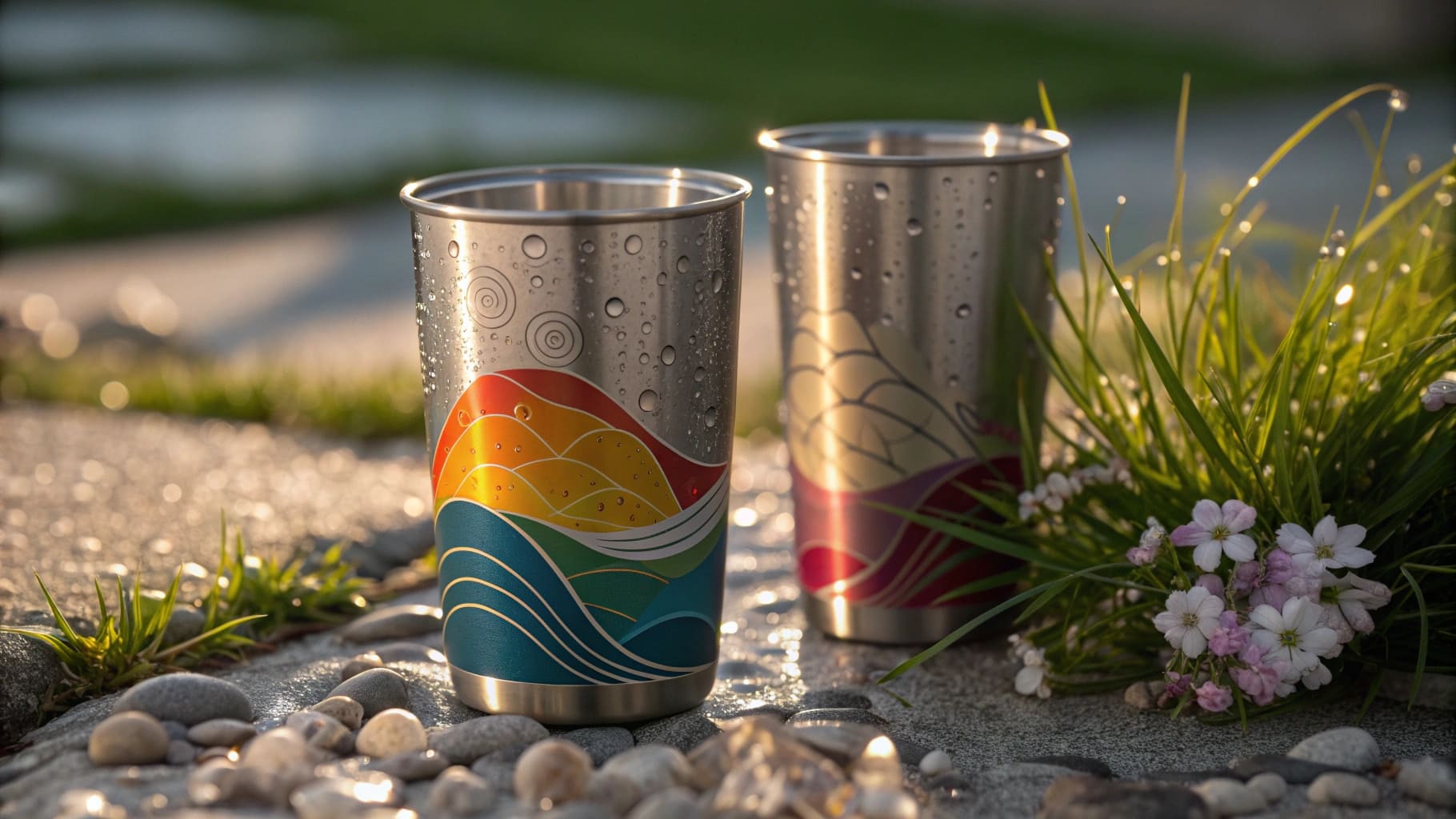
I have seen buyers from Europe almost always request brush finish. Buyers targeting gift markets in North America often go for mirror. Understanding the classification helps you match the finish to your end customer, not just your personal preference.
Here is a breakdown of the four main finish types:
| Finish Type | How It Is Made | Best For | Weakness |
|---|---|---|---|
| Brush Finish | Mechanical abrasion with abrasive belt | Everyday use, outdoor, gym | Less visually dramatic |
| Mirror Finish | Progressive polishing with fine abrasives | Gifts, premium retail | Shows fingerprints easily |
| Matte Coating | Powder coat or paint applied over steel | Color customization, branding | Can chip or peel over time |
| Anti-Fingerprint Nano Coating | Nano-layer applied over mirror base | Food service, corporate gifts | Higher unit cost |
The brush finish is the most popular choice in B2B wholesale.4 It hides daily wear. It looks clean even after many uses. Most buyers ordering for gym brands, outdoor retailers, or corporate giveaways choose brush.
Mirror finish works well when the bottle is the centerpiece. Think gift boxes, luxury lifestyle brands, or premium hotel amenities. The surface looks impressive in packaging. But it needs careful handling in transit and on the shelf.
The anti-fingerprint nano coating is a newer option. It sits on top of a mirror base. The surface stays reflective but resists smudges. This is a good option if your customer wants visual impact without the maintenance problem. It does add cost, so factor that into your pricing model before you commit.
One more thing worth knowing: finish classification also affects lead time. Mirror finish takes longer to produce than brush. If your order timeline is tight, brush finish is the safer choice.
What Are the Marks on a Stainless Steel Cup Called?
You inspect a sample and notice tiny lines or symbols near the base of the bottle. You are not sure what they mean. Some buyers ignore them. That is a mistake.
The marks on a stainless steel cup include the material grade stamp, the manufacturer's code, the capacity mark, and the surface finish notation. Each mark tells you something specific about the product.
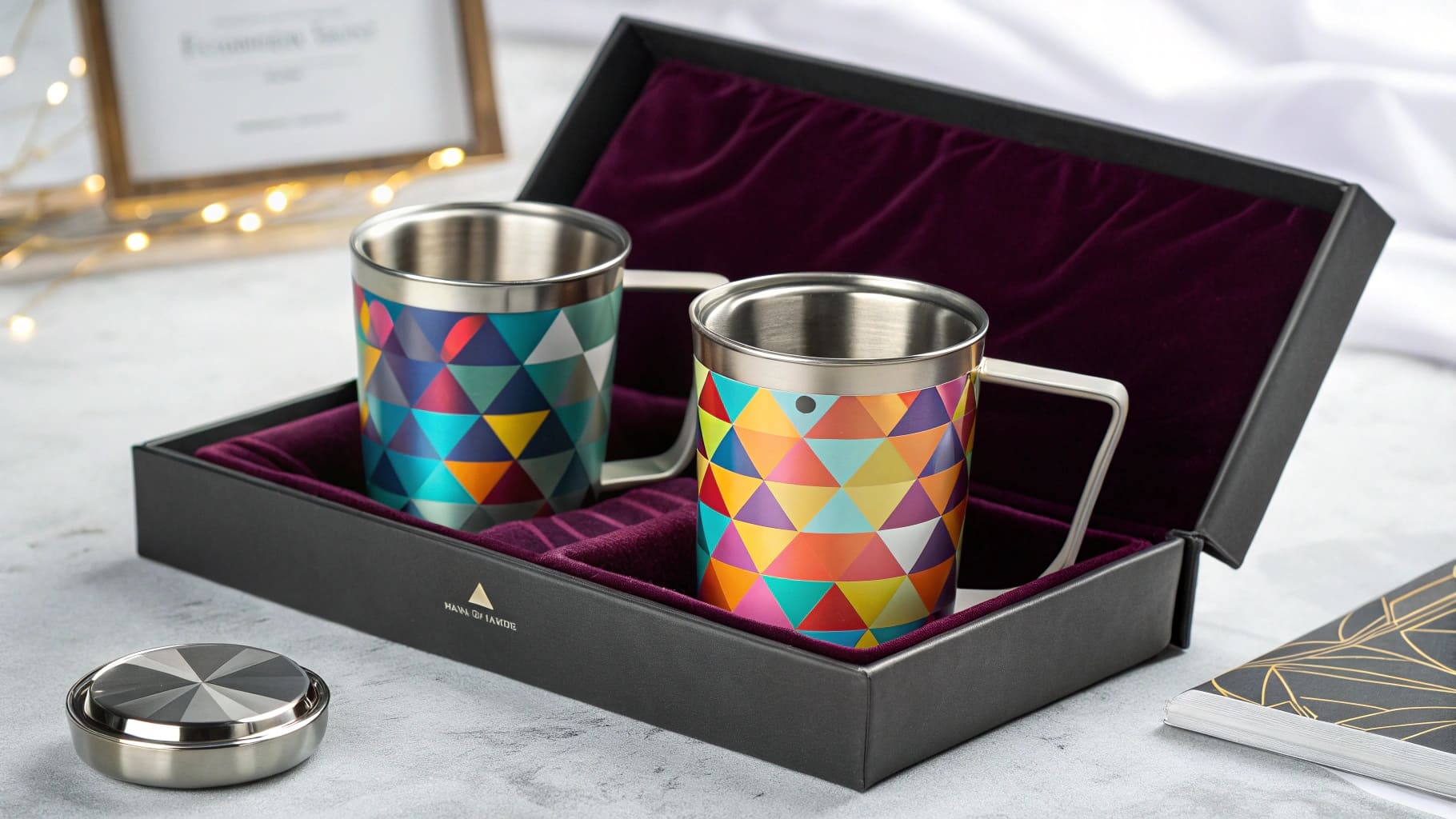
Early in my work with procurement officers, I noticed that many buyers never asked about these marks. They focused on the finish and the price. Then a quality dispute came up and there was no way to verify what had been agreed. The marks on the product are part of your paper trail.
Here is what each mark typically means:
| Mark Type | What It Looks Like | What It Tells You |
|---|---|---|
| Material Grade Stamp | 18/8, 304, 316 | The stainless steel alloy used |
| Capacity Mark | 500ml, 750ml, 1L | The volume the bottle holds |
| Manufacturer Code | Letters and numbers near the base | The factory or batch reference |
| Finish Notation | Sometimes a label or engraving | The surface treatment applied |
| Certification Mark | FDA, LFGB, BPA Free logo | The safety standard the product meets |
The material grade stamp is the most important. If a bottle says 304, it uses 18/8 stainless steel, which means 18% chromium and 8% nickel5. This is food-safe and rust-resistant. If the stamp is missing or vague, ask for a material test report before placing your order.
The finish notation is not always stamped directly on the bottle. Sometimes it lives only in the spec sheet or the purchase order. This is why your documentation needs to be complete. A stamp on the bottle is useful for end-product verification, but your RFQ and signed sample approval are what matter most during disputes.
I always tell buyers: treat the marks as a checklist. If any mark is missing or inconsistent with your spec sheet, flag it before you approve production. Fixing a mark error after 10,000 units are made is expensive. Catching it before production costs nothing.
Conclusion
Specify your polish grade with Ra values. Classify your finish by market need. Verify every mark before you approve production. These three steps protect your order every time.
-
"Effect of Initial Surface Scratches on the Cavitation Erosion ...", https://pmc.ncbi.nlm.nih.gov/articles/PMC9960317/. A materials or stainless-steel finishing source can support that directional brushed textures reduce the visual prominence of fingerprints and minor scratches by scattering reflections along a grain pattern; this is a general optical and surface-finish effect rather than proof for every cup design. Evidence role: mechanism; source type: institution. Supports: Brush finish hides fingerprints and scratches on stainless steel cups.. Scope note: Support is likely contextual because performance varies with grain depth, alloy, coating, and lighting conditions. ↩
-
"Matte vs. Polished: Comparing Scratches and Fingerprints - Senmit", https://senmit.com/blogs/academy/matte-vs-polished-finish?srsltid=AfmBOooBfAXH93gIIGVB8jnGFbFb1JBQJkk3AfuMvqyc-8iSrSm9yvAT. A surface-finishing reference can support that highly polished stainless-steel finishes are more reflective and tend to make fingerprints, smudges, and fine scratches more visible; the source would establish the general behavior of mirror finishes, not a quantified defect rate for cups. Evidence role: mechanism; source type: institution. Supports: Mirror finishes are glossy and tend to show marks more easily than less reflective finishes.. Scope note: The evidence would be general to polished stainless steel and may not account for anti-fingerprint coatings or packaging conditions. ↩
-
"Surface Roughness Explained | Ra Roughness Chart - Get It Made", https://get-it-made.co.uk/resources/surface-roughness-explained. A stainless-steel finishing guide or standards-based reference can support that mirror or highly polished stainless-steel finishes are associated with very low Ra values, often around or below 0.1 μm; this would contextualize the stated threshold rather than prove it for every manufacturer’s mirror grade. Evidence role: general_support; source type: institution. Supports: Mirror-finished stainless steel is typically specified with very low roughness, around below 0.1 μm Ra.. Scope note: Exact Ra limits vary by standard, polishing sequence, and supplier specification. ↩
-
"Daily Use Water Bottles as a Hub for Microbial Population - PMC", https://pmc.ncbi.nlm.nih.gov/articles/PMC11174293/. A trade, industry, or market report could support that brushed stainless-steel finishes are widely used in wholesale drinkware or durable consumer goods; absent direct market-share data, such a source would only contextualize common use rather than prove it is the most popular option. Evidence role: statistic; source type: research. Supports: Brush finish is the most popular finish choice in B2B wholesale stainless-steel cups.. Scope note: Direct B2B wholesale finish-preference data may be limited, and available sources may cover broader stainless-steel products rather than cups specifically. ↩
-
"SAE 304 stainless steel - Wikipedia", https://en.wikipedia.org/wiki/SAE_304_stainless_steel. A metallurgical reference can support that AISI 304 stainless steel is commonly identified as 18/8 stainless steel because its nominal composition includes about 18% chromium and 8% nickel; this supports the alloy-identification statement, while actual certified composition is given as an allowable range. Evidence role: definition; source type: encyclopedia. Supports: 304 stainless steel is commonly referred to as 18/8 stainless steel, indicating nominal chromium and nickel content.. Scope note: 304 composition is specified as ranges, so 18% chromium and 8% nickel are nominal shorthand values rather than exact percentages for every heat. ↩