
Stainless Steel Cup Sets: Pack Counts, Palletization, and Cube Efficiency?
You ordered too many containers. The math looked right, but the freight costs killed your margin. That happens when no one checks cube efficiency before placing the order.
Stainless steel cup sets offer better safety, higher consumer demand, and stronger margins than plastic alternatives. But those advantages only hold when buyers manage pack counts and palletization correctly. Poor packaging specs waste container space and raise landed costs fast.
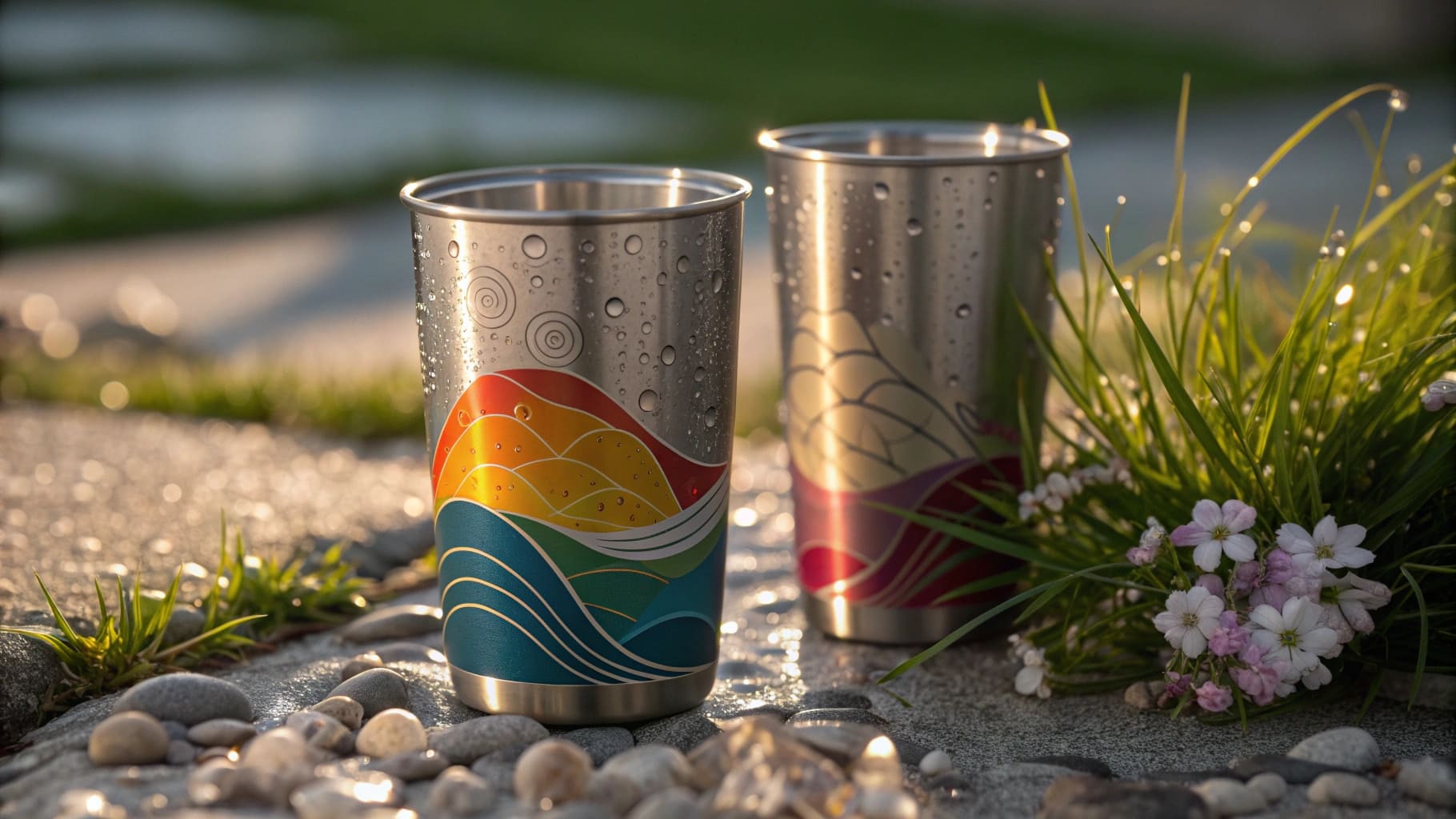
Most importers focus on price per unit. That is a good start, but it is not the whole picture. The real cost of a shipment includes freight, and freight is priced by space. If your cup sets are packed poorly, you are paying to ship air. This post breaks down what you need to know about product safety, pallet planning, and how to avoid microplastics — so you can sell a better product and protect your margin at the same time.
Are Stainless Steel Cups Better?
You have seen the options. Plastic cups are cheap. Glass cups break. Ceramic cups are heavy. So where does stainless steel actually stand?
Stainless steel cups outperform most alternatives in durability, temperature retention, and long-term cost.1 They do not crack, shatter, or absorb odors. For brands selling into retail or corporate gifting channels, stainless steel holds a clear premium positioning.

Let me give you a direct comparison. I work with buyers across North America and Europe, and the feedback is consistent. Stainless steel cups survive shipping, survive retail handling, and survive daily use far longer than plastic or glass. That matters for your end customer, and it matters for your brand reputation.
Here is how stainless steel compares against common alternatives:
| Feature | Stainless Steel | Plastic | Glass | Ceramic |
|---|---|---|---|---|
| Durability | Very high | Medium | Low | Medium |
| Temperature retention | High | Low | Medium | Medium |
| Odor absorption | None | High | None | Low |
| Break risk in transit | Very low | Low | High | Medium |
| Premium retail positioning | Strong | Weak | Medium | Medium |
| Weight per unit | Medium | Low | High | High |
| Reusability lifespan | 10+ years | 1–3 years | 3–5 years | 3–5 years |
The durability column is where most buyers make their decision. A product that survives transit, stays on shelves longer, and gets fewer returns is a better product by any business measure. Stainless steel wins that comparison in almost every category. The only trade-off is weight per unit, which feeds directly into your freight planning — something I will cover later in the palletization section.
For brands that want to charge a premium and back it up with real product quality, stainless steel is the stronger choice. The numbers support it, and the consumer demand is already there.
Is Stainless Steel Safe for Cups?
Some buyers ask me this question, and I understand why. Not all metals are the same. Some react with acidic drinks. Some release compounds over time.
Food-grade stainless steel, specifically 304 and 316 grades, is safe for direct food and beverage contact.2 It does not react with acidic liquids, does not leach chemicals, and does not change the taste of drinks. It is used in hospital equipment, food processing facilities, and cookware worldwide.
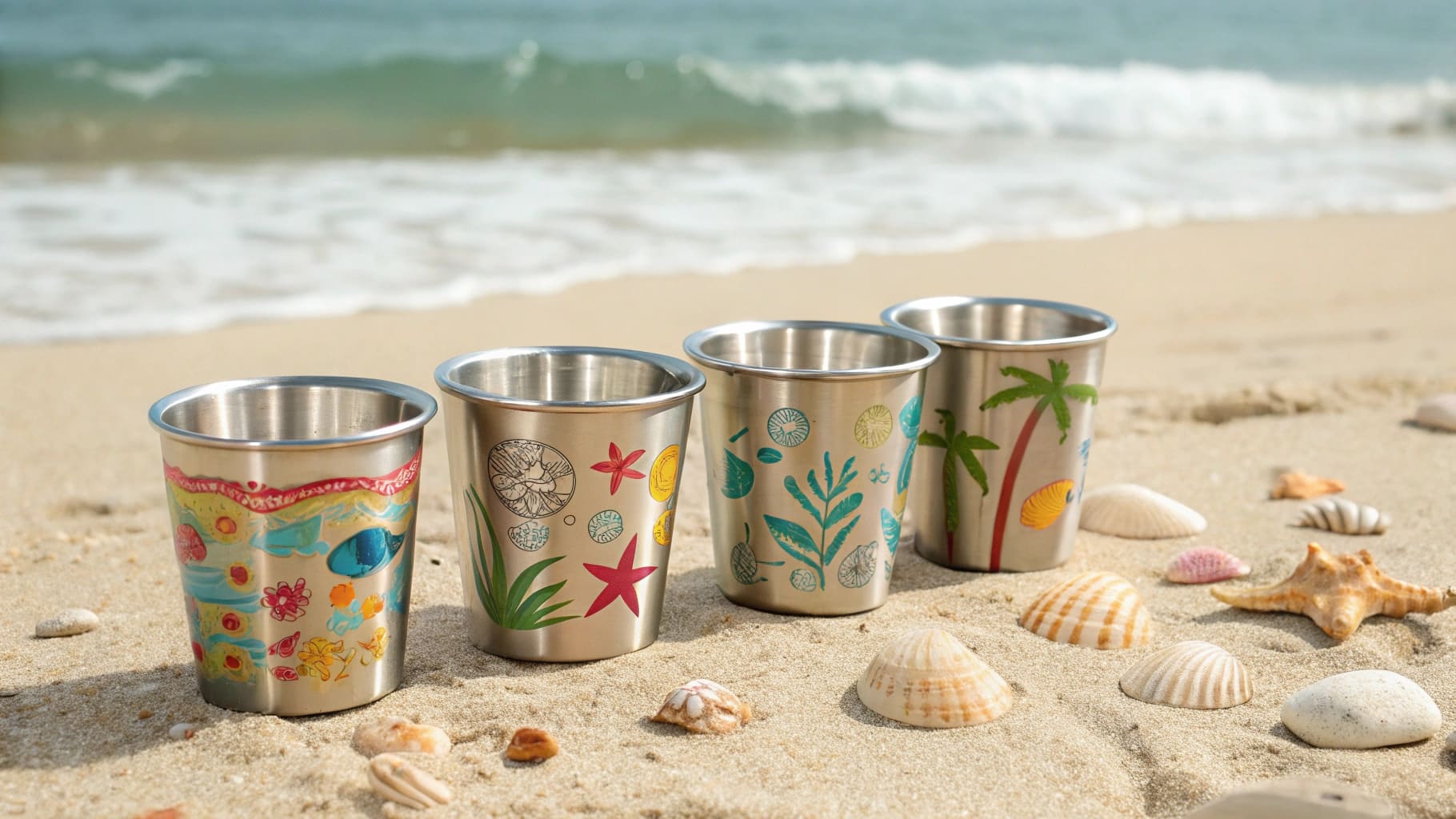
Here is what the grades actually mean in practice. Grade 304 contains 18% chromium and 8% nickel. It is corrosion-resistant and suitable for most food and beverage applications. Grade 316 adds molybdenum, which makes it even more resistant to acids and salt.3 For most cup applications, 304 is the standard. For buyers targeting premium or medical-adjacent markets, 316 is the upgrade option.
The key documents you should request before placing any order are:
| Certificate | What It Confirms | Required For |
|---|---|---|
| FDA compliance | Safe for food contact in the US market | North American retail |
| LFGB testing | Safe for food contact in the EU market | European retail |
| SGS or Bureau Veritas test report | Third-party verification of material grade | All serious buyers |
| ISO 9001 | Quality management system | Large volume orders |
I have seen cases where suppliers claim 304 grade but ship 201 grade stainless steel. Grade 201 has less nickel and more manganese.4 It is cheaper, but it is more prone to rust and less resistant to corrosion. That is a real problem when your end customer fills the cup with orange juice or coffee every day.
The way to protect yourself is simple. Ask for a third-party material test report, not just a supplier declaration. Companies like SGS or Bureau Veritas will test the actual steel composition. That report is your proof. It also gives you something to show retail buyers or corporate clients who ask about material safety. Never skip this step.
What Cups to Use to Avoid Microplastics?
This is the question your end customers are already asking. The microplastics conversation has moved from research papers into mainstream consumer awareness, and it is driving real purchasing decisions.
Stainless steel cups are the most practical option for avoiding microplastics entirely. Unlike plastic cups, they do not shed particles into beverages, especially under heat.5 This makes them a strong choice for hot drinks like coffee and tea, where plastic degradation is fastest.
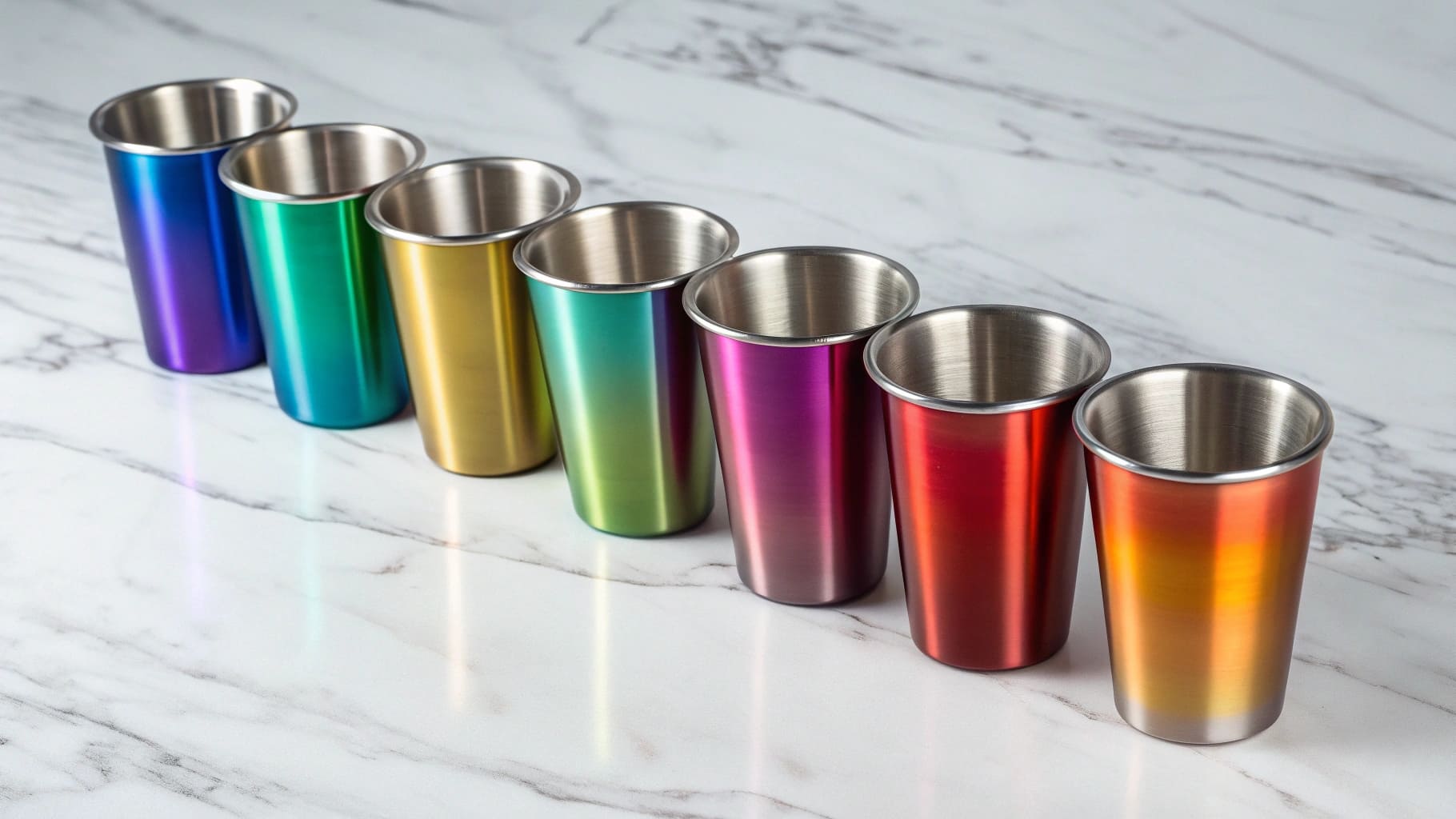
Let me explain why this matters to you as a buyer. You are not just sourcing a cup. You are sourcing a product story. "Plastic-free" and "microplastic-free" are now marketing claims that move product in North America and Europe. I have spoken with procurement officers at health-focused brands who specifically require suppliers to provide documentation proving no plastic contact surfaces are used in the product or packaging.
Here is a breakdown of how common cup materials perform on the microplastics question:
| Cup Material | Microplastic Risk | Risk Increases with Heat | Suitable for Hot Drinks |
|---|---|---|---|
| Plastic (standard) | High | Yes, significantly | No |
| Plastic (BPA-free) | Medium | Yes | Marginal |
| Stainless steel | None | No | Yes |
| Glass | None | No | Yes |
| Ceramic (uncoated) | None | No | Yes |
| Ceramic (coated) | Low to medium | Possible | With caution |
Stainless steel and glass both score well here. But glass breaks during transit and in daily use. Stainless steel does not. For importers shipping large volumes across the Pacific or Atlantic, that difference matters a lot. One broken shipment can erase the margin from an entire order.
The cube efficiency angle connects directly to this point. Stainless steel cups can be nested inside each other. A set of six cups stacked together takes up a fraction of the space that six individual plastic or ceramic cups would require in a carton. This nesting ability is a real packaging advantage. When I review pallet loading plans with suppliers, nested configurations consistently deliver 15 to 20 percent better container utilization than non-nested alternatives. For a 40-foot container, that difference can mean hundreds of additional sets per shipment.
When you brief your supplier on packaging specs, always ask for a pallet loading diagram. It should show inner carton dimensions, units per carton, cartons per pallet layer, layers per pallet, and total sets per container. If your supplier cannot provide this document, that is a sign they have not optimized the packaging for your market's freight conditions.
Conclusion
Stainless steel cup sets are safer, more durable, and better positioned than plastic. But margin comes from smart palletization, certified materials, and packaging that maximizes every container you ship.
-
"Stainless steel - Wikipedia", https://en.wikipedia.org/wiki/Stainless_steel. Materials references describe stainless steel as corrosion-resistant, mechanically durable, and commonly used in reusable food-service goods; these properties provide contextual support for comparative durability and service-life claims. Evidence role: general_support; source type: encyclopedia. Supports: Stainless steel cups are generally more durable and longer-lived than common alternatives.. Scope note: A general materials source will not directly prove that every stainless steel cup has lower lifetime cost than every plastic, glass, or ceramic alternative. ↩
-
"[PDF] Stainless Steel (SS) Safety Profile - FDA", https://www.fda.gov/media/165146/download. Food-contact regulations and technical guidance list stainless steel alloys such as 304 and 316 among materials commonly used for food-contact equipment, supporting their suitability when composition and migration limits are met. Evidence role: expert_consensus; source type: government. Supports: 304 and 316 stainless steels are generally accepted as food-contact materials for beverage and food applications.. Scope note: Regulatory suitability depends on compliance with applicable migration, composition, and manufacturing requirements in the target jurisdiction. ↩
-
"Effects of Mo Particles Addition on the Microstructure and Properties ...", https://pmc.ncbi.nlm.nih.gov/articles/PMC10343816/. Metallurgical references explain that Type 316 stainless steel contains molybdenum and has improved resistance to pitting and corrosion, especially in chloride-containing environments, compared with Type 304. Evidence role: mechanism; source type: education. Supports: 316 stainless steel includes molybdenum and offers greater corrosion resistance than 304 in salt or chloride environments.. Scope note: The improvement is most clearly established for chloride and pitting corrosion; resistance to all acids varies by concentration, temperature, and exposure time. ↩
-
"Stainless steel - Wikipedia", https://en.wikipedia.org/wiki/Stainless_steel. Alloy composition references describe Type 201 stainless steel as a lower-nickel, higher-manganese austenitic stainless steel developed as a substitute for 300-series grades, supporting the composition comparison. Evidence role: definition; source type: encyclopedia. Supports: 201 stainless steel generally contains less nickel and more manganese than 304 stainless steel.. Scope note: Composition varies within standard ranges, and corrosion performance also depends on chromium content, processing, and surface finish. ↩
-
"Microplastic Release from Single-Use Plastic Beverage Cups - PMC", https://pmc.ncbi.nlm.nih.gov/articles/PMC11121293/. Experimental studies have found that plastic food and beverage containers can release microplastic or nanoplastic particles, with release affected by heating or hot liquids, providing support for the contrast with non-plastic contact surfaces. Evidence role: mechanism; source type: paper. Supports: Plastic cups can release microplastic particles into beverages, particularly when exposed to heat, whereas stainless steel avoids plastic contact surfaces.. Scope note: The evidence directly supports particle release from plastics under tested conditions; it does not prove that every stainless steel cup is entirely particle-free or that all plastics shed at the same rate. ↩
