
Are You Sourcing Bottle Cleaning Brushes the Wrong Way?
You added cleaning brushes to your product line as an afterthought. Now chargebacks are piling up. Customers are unhappy. Your brand takes the hit.
Bottle cleaning brushes are no longer a small add-on. They affect customer satisfaction, repeat purchases, and your brand's reputation. Choosing the right brush means knowing the HS code, the bristle type, the MOQ, and the carton spec before you place an order.
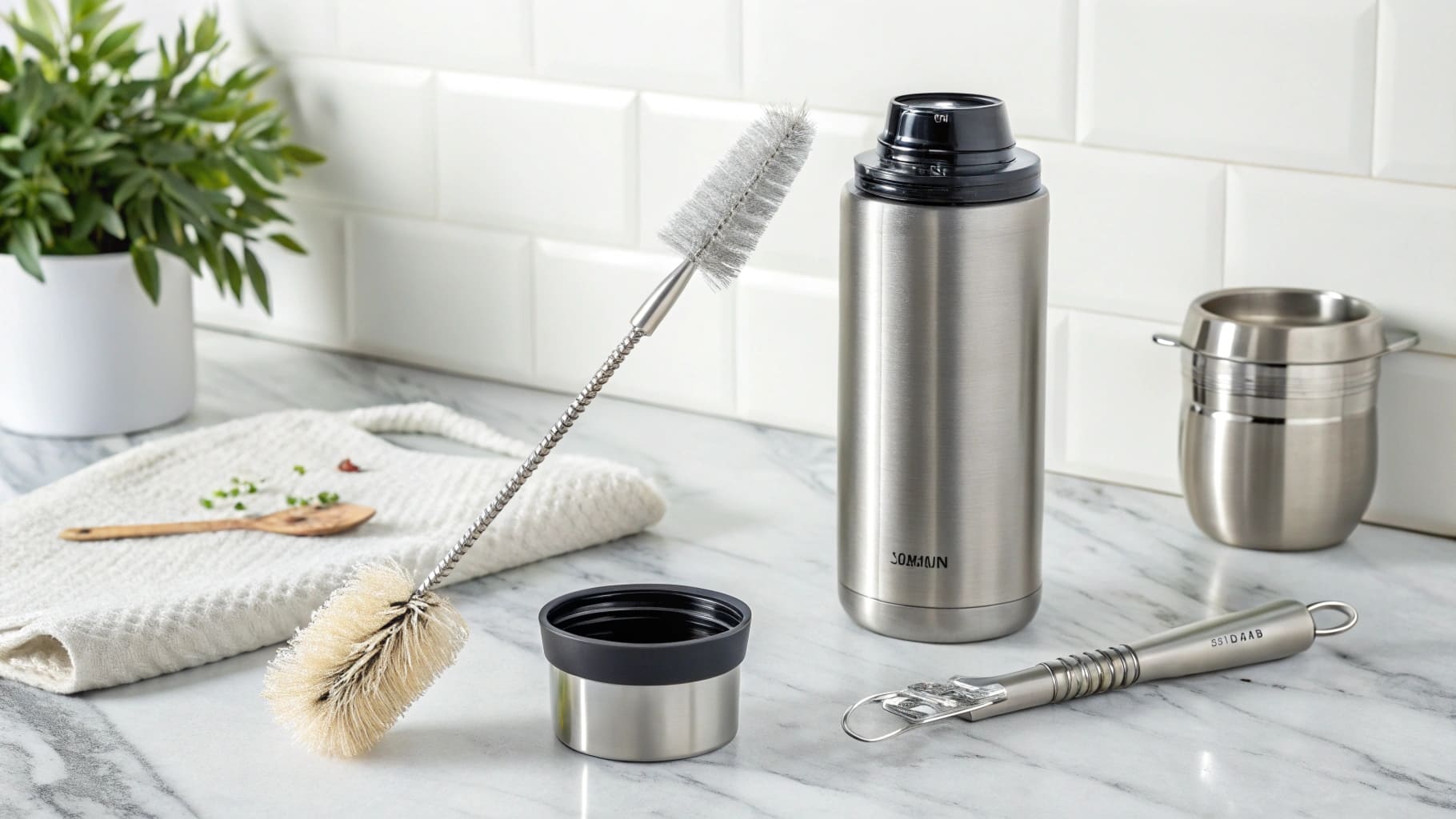
I have been sourcing stainless steel bottles and accessories from China for years. Early on, I made the same mistake most buyers make. I picked a brush based on price alone. The bristles bent after two weeks. Customers blamed the bottle, not the brush. That experience changed how I think about accessories entirely. If you are sourcing brushes for your bottle line right now, this article will help you avoid the same problems I ran into.
What Is the HSN Code for a Bottle Cleaning Brush?
You are at customs. The paperwork is unclear. Your shipment is held. You lose a week of peak sales time just because the HS code was wrong.
Bottle cleaning brushes most commonly fall under HS code 9603.29 or 9603.90.1 The right code depends on the brush's construction and materials. Declaring the wrong code can lead to delays, penalties, or higher-than-expected duty costs.2
The difference between 9603.29 and 9603.90 is not just a number. It changes how customs treats your shipment. Code 9603.29 covers brushes that are similar to toothbrushes in structure. Code 9603.90 covers other brooms and brushes that do not fit the first group. Most bottle cleaning brushes with long handles and replaceable heads tend to fall under 9603.90, but this is not always the case.3
Here is why this matters for B2B buyers specifically:
| Factor | Why It Matters |
|---|---|
| Import duty rate | Different codes carry different tariff rates in the US, EU, and Canada |
| Landed cost calculation | Wrong code leads to wrong cost forecasting |
| Customs compliance | Incorrect declarations can trigger audits or fines |
| Bundled shipments | Brushes shipped with bottles may need separate line items per code |
When I source brushes alongside bottles, I always ask my supplier for the HS code documentation separately. I do not let the supplier bundle everything under one code without checking. Some suppliers default to the code that looks simplest on their end. That may not be the best code for your import market.
My advice is simple. Before you confirm any order, ask your supplier to provide the HS code in writing. Then cross-check that code with your customs broker or freight forwarder. A five-minute check can save you from a five-figure problem.
What Is the HS Code for a Bottle Brush?
You just asked your supplier for the HS code. They sent you three different answers. Now you do not know which one to trust.
The most common HS code used for bottle brushes in export documentation is 9603.90. This code applies to brushes not classified elsewhere in the 9603 heading. Some suppliers may also use 9603.29 depending on brush design.
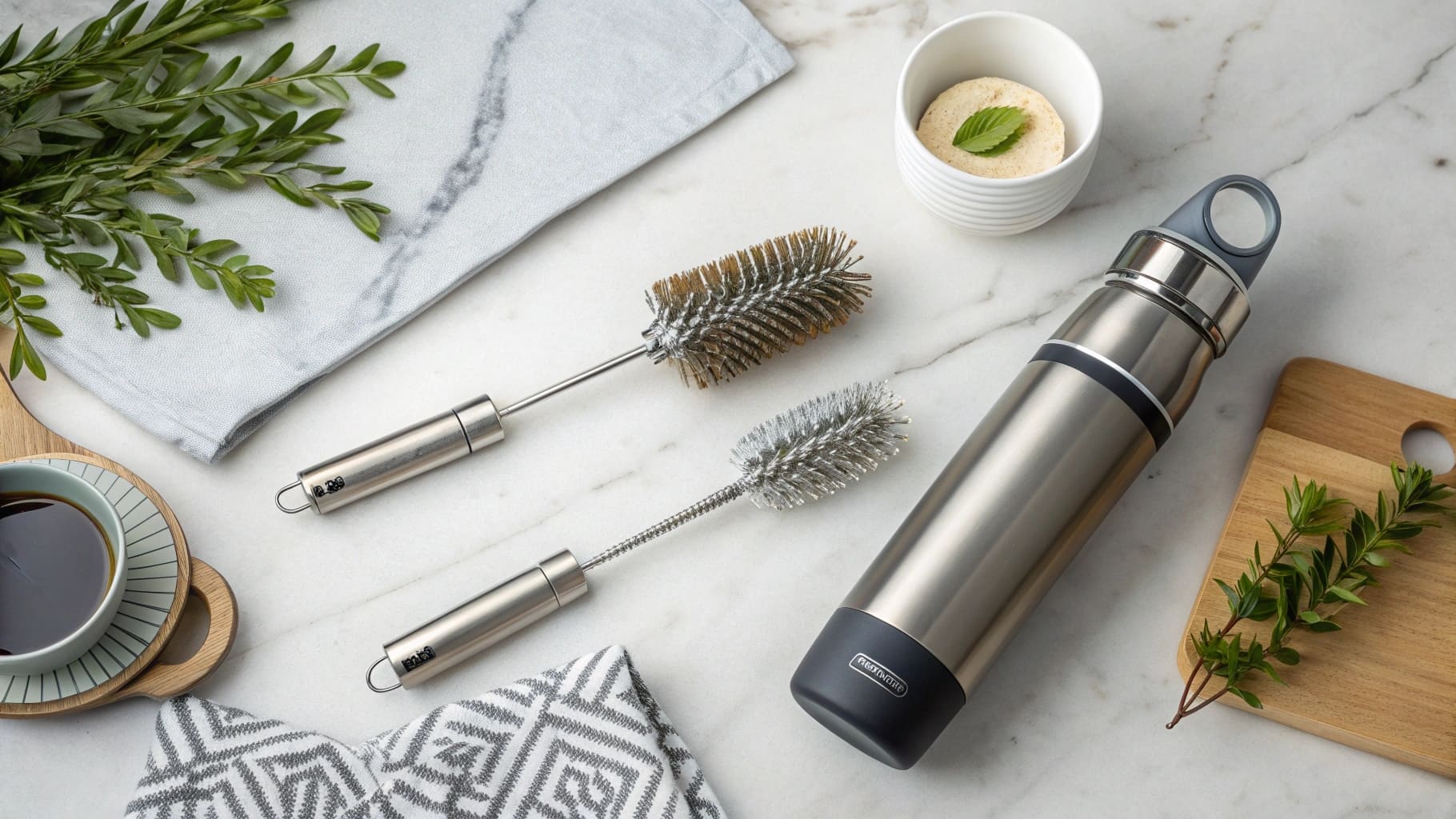
The confusion around bottle brush HS codes is real. I have seen suppliers list the same product under three different codes depending on which country they are shipping to. This is not always dishonest. Trade classification genuinely varies by market.4 But as the buyer, you carry the import risk, not the supplier.
Here is a breakdown of how the classification typically works:
| HS Code | Description | When It Applies to Bottle Brushes |
|---|---|---|
| 9603.29 | Other toothbrushes and similar brushes | Brushes with small heads, short handles, plastic spine |
| 9603.90 | Other brooms and brushes | Long-handle bottle brushes, general cleaning brushes |
| 3924.90 | Plastic household articles | Sometimes used for all-plastic brush sets |
For most stainless steel bottle cleaning brushes with a long twisted-wire handle and nylon bristles, 9603.90 is the most commonly accepted classification. But I always recommend working with a licensed customs broker in your import country to confirm. Rules differ between Canada, the US, and European markets.
One more thing. When you are sourcing brushes as part of a branded accessory kit, the bundled product's classification may differ from the individual brush. A kit that includes a bottle, brush, and straw could fall under a different heading entirely.5 Get this confirmed before you print any packaging or submit any import declarations.
How Often Should I Change My Bottle Cleaning Brush?
Your customer has been using the same brush for six months. It smells. The bristles are splayed. They blame your bottle for being hard to clean.
Bottle cleaning brushes should be replaced every 30 to 45 days with regular daily use. Visible bristle splaying, discoloration, or odor are signs the brush needs to go immediately6, regardless of age.
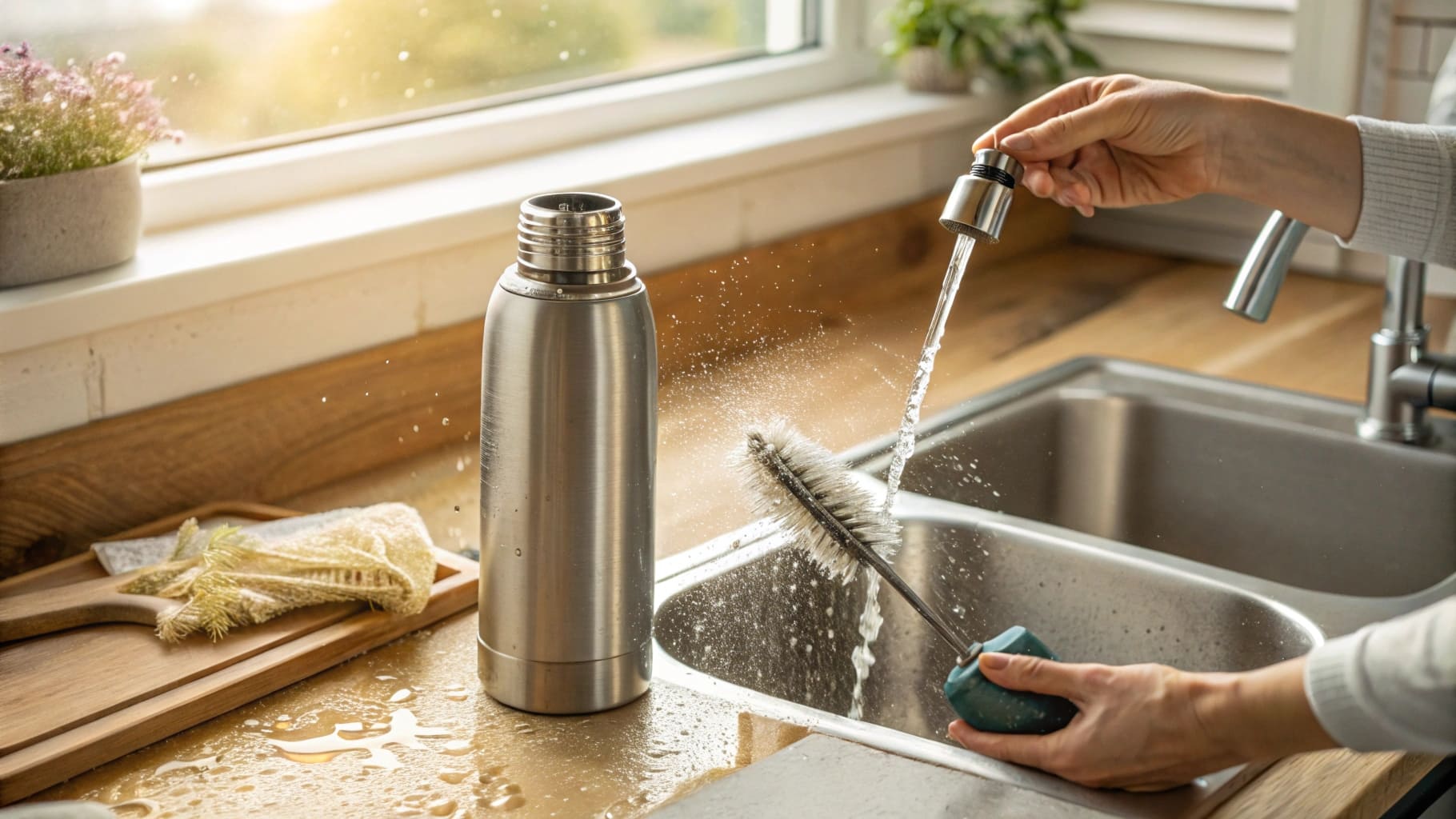
Most end customers do not know this. They assume a brush lasts as long as the bottle. That gap in knowledge is a problem for brands, because a degraded brush leads to a dirty bottle, and a dirty bottle leads to a complaint, a return, or a bad review.
From a B2B perspective, this replacement cycle is actually an opportunity. Here is how I think about it:
Bristle degradation affects more than hygiene
When nylon bristles splay, they lose contact with the bottle's inner wall. Cleaning becomes less effective. Bacteria can accumulate in areas the brush can no longer reach.7 For brands selling premium stainless steel bottles, this is a direct threat to the product experience.
| Bristle Type | Typical Lifespan | Key Failure Sign |
|---|---|---|
| Virgin nylon | 60 to 90 days | Gradual softening at tips |
| Recycled nylon | 20 to 30 days | Rapid splaying, color bleed |
| Silicone | 90 to 120 days | Tearing or deformation at base |
Virgin nylon costs more than recycled nylon. The price gap is real. But the performance gap is bigger. I learned this after receiving a bulk order of economy brushes that started falling apart within three weeks. The cost saving on the brush itself was wiped out entirely by the complaints and replacements that followed.
Silicone tip guards matter more than most buyers realize
A silicone tip guard sits at the end of the brush's wire spine. Without it, the bare wire tip scratches powder-coated bottle interiors and narrow-mouth openings.8 This is a small feature with a big impact. When I spec a brush for any bottle that has a powder coat finish, a silicone tip guard is non-negotiable.
The replacement cycle creates a recurring revenue model
Brands that educate their customers about brush replacement build a second revenue stream. Multi-pack brush sets, subscription bundles, and accessory refill programs all align with the 30 to 45 day replacement cycle. I have seen small bottle brands in North America grow their accessory revenue by simply sending a replacement reminder email at the 30-day mark. The product is already trusted. The customer just needs the prompt.
If you are building a bottle brand and not yet thinking about brush replacement as a product strategy, this is the place to start.
MOQ and Export Carton Specs: What Should I Know Before I Order?
You placed an order for 5,000 brushes. When the cartons arrived, half the handles were bent. The bristles were crushed. You had to rework the entire shipment before your launch date.
Bottle brush MOQs typically range from 1,000 to 5,000 pieces. Export cartons usually hold 200 to 300 brushes. Poor carton specs lead to damage in transit. Always request a packaging sample before confirming large orders.
MOQ and carton specs are two of the most overlooked parts of a brush sourcing conversation. Most buyers focus on price and bristle type, then assume the logistics side will sort itself out. It does not always sort itself out.
Here is what I pay attention to when I source brushes in bulk:
MOQ alignment with bottle orders
Bottle MOQs are usually 3,000 to 5,000 units. Brush MOQs are often lower, starting at 1,000 pieces. This gives you flexibility to test a brush SKU before committing to the same volume as your bottle order. I use this gap strategically. I start with a smaller brush order alongside a full bottle order, test the market response, then scale the brush volume on the next run.
| Product | Typical MOQ | Notes |
|---|---|---|
| Stainless steel bottle | 3,000 to 5,000 units | Higher due to manufacturing cost |
| Bottle cleaning brush | 1,000 to 3,000 units | Lower, easier to test |
| Bundled set (bottle + brush) | Matches bottle MOQ | Brush MOQ absorbed into set |
Carton strength and brush protection
Brushes are long and rigid. A carton that is too shallow will bend the handles. A carton that is too loosely packed allows the brushes to shift during ocean freight. Shifting leads to bent bristles and scratched handles. I always request the export carton dimensions and the packing method before I approve a sample.
Standard specs I look for: carton wall thickness of at least 5-ply for ocean freight, brushes packed head-to-tail in alternating rows, and a cardboard divider between every two layers. These are not premium requests. They are basic specs that any experienced supplier should already be using.
Labeling and customs documentation per carton
Each export carton should carry the correct HS code on the outer label. If brushes are shipped with bottles in a mixed carton, both product HS codes need to appear on the shipping documentation. This seems like a minor point, but it prevents customs queries that can delay your entire shipment.
Conclusion
Cleaning brushes are a strategic product decision. The right bristle, HS code, MOQ, and carton spec protect your brand, your margins, and your customers.
-
"9603.90.80.10 - Harmonized Tariff Schedule", https://hts.usitc.gov/search?query=9603908010. Official customs nomenclatures place toothbrush-type brushes and other brushes within heading 9603, including subheadings 9603.29 and 9603.90; this supports the classification range but does not determine the correct subheading for every bottle-brush design. Evidence role: definition; source type: government. Supports: Bottle cleaning brushes are commonly classified under HS 9603.29 or 9603.90 depending on construction and materials.. Scope note: HS classification is product- and jurisdiction-specific, so the source would support the likely heading range rather than a universal classification. ↩
-
"[PDF] Tariff Classification - U.S. Customs and Border Protection", https://www.cbp.gov/sites/default/files/documents/icp017r2_3.pdf. Customs guidance on tariff classification and importer responsibility supports that incorrect classification can affect duty assessment and may expose importers to enforcement actions; the source documents the compliance risk generally, not a specific bottle-brush case. Evidence role: general_support; source type: government. Supports: Wrong HS code declarations can cause customs delays, penalties, or unexpected duty costs.. Scope note: The evidence would establish general customs consequences of misclassification, not the frequency or dollar amount of penalties for bottle brushes specifically. ↩
-
"9603.90.8050 - Customs Rulings Online Search System", https://rulings.cbp.gov/search?term=9603.90.8050. Customs classification rulings for bottle or cleaning brushes can show that long-handled cleaning brushes are often classified under 9603.90, while emphasizing that rulings turn on the precise article described. Evidence role: case_reference; source type: government. Supports: Long-handled bottle cleaning brushes are often classified under HS 9603.90, but classification depends on design details.. Scope note: Classification rulings are fact-specific and jurisdiction-specific, so they provide contextual support rather than a binding rule for all long-handled bottle brushes. ↩
-
"Tariff rate, most favored nation, simple mean ... - Glossary | DataBank", https://databank.worldbank.org/metadataglossary/world-development-indicators/series/TM.TAX.MANF.SM.FN.ZS. The Harmonized System is internationally standardized mainly at the six-digit level, while national tariff schedules and legal interpretations can add distinctions or apply rules differently, supporting the claim that classification outcomes may vary by market. Evidence role: mechanism; source type: institution. Supports: HS classification can vary by import market despite the international Harmonized System framework.. Scope note: The source explains why variation can occur; it does not show that a specific bottle brush was classified differently in named markets. ↩
-
"Harmonized System (HS) Codes - International Trade Administration", https://www.trade.gov/harmonized-system-hs-codes. The General Rules of Interpretation for tariff classification address composite goods and goods put up in sets for retail sale, supporting that a kit may be classified differently from its individual components. Evidence role: definition; source type: institution. Supports: A bottle, brush, and straw sold as a kit may be classified differently from the individual brush.. Scope note: The source supports the classification principle for sets, but the actual heading would require analysis of the kit’s components, use, and jurisdictional rulings. ↩
-
"Cleaning Supplies and Equipment | HAIs - CDC", https://www.cdc.gov/healthcare-associated-infections/hcp/cleaning-global/supplies-and-equipment.html. Food-safety guidance requiring utensils and cleaning implements to be maintained in clean, good repair supports discarding tools that are worn, discolored, or odorous as hygiene risks. Evidence role: expert_consensus; source type: government. Supports: Splayed bristles, discoloration, or odor are reasonable signs that a bottle brush should be replaced immediately.. Scope note: The source would support the general discard criteria for cleaning implements, not necessarily a bottle-brush-specific inspection checklist. ↩
-
"Daily Use Water Bottles as a Hub for Microbial Population - PMC", https://pmc.ncbi.nlm.nih.gov/articles/PMC11174293/. Research on microbial biofilms and reusable drinking containers supports that bacteria can persist on interior surfaces and in hard-to-clean areas, providing a mechanism for reduced cleaning effectiveness when a brush no longer contacts the surface. Evidence role: mechanism; source type: paper. Supports: If bristles no longer reach bottle surfaces, bacteria may accumulate in poorly cleaned areas.. Scope note: The evidence would support the microbial mechanism generally; it may not directly test splayed bottle-brush bristles against stainless steel bottles. ↩
-
"Fundamentals and characterizations of scratch resistance on ... - PMC", https://pmc.ncbi.nlm.nih.gov/articles/PMC7539636/. Coatings literature and abrasion-testing standards support that powder-coated surfaces can be damaged by mechanical abrasion or scratching, which provides contextual support for using a soft tip guard where a metal wire end may contact the coating. Evidence role: mechanism; source type: research. Supports: An exposed wire tip can plausibly scratch powder-coated bottle interiors or openings, while a silicone guard reduces direct metal contact.. Scope note: The source would support abrasion susceptibility of powder coatings generally, not prove that every unguarded bottle brush will scratch every powder-coated bottle. ↩
