
What AQL Applies to Polish Defects on Stainless Steel Cup Sets for OEMs?
You ordered a full container of stainless steel cups. They arrive. The finish is patchy, scratched, and inconsistent. Your client rejects the shipment.
For stainless steel cup sets, OEMs typically apply AQL 1.5 to 2.5 for major polish defects like deep scratches or uneven finishes. Minor surface imperfections usually fall under AQL 4.01. Premium brands often push for AQL 1.0 or zero-tolerance on visible surfaces.
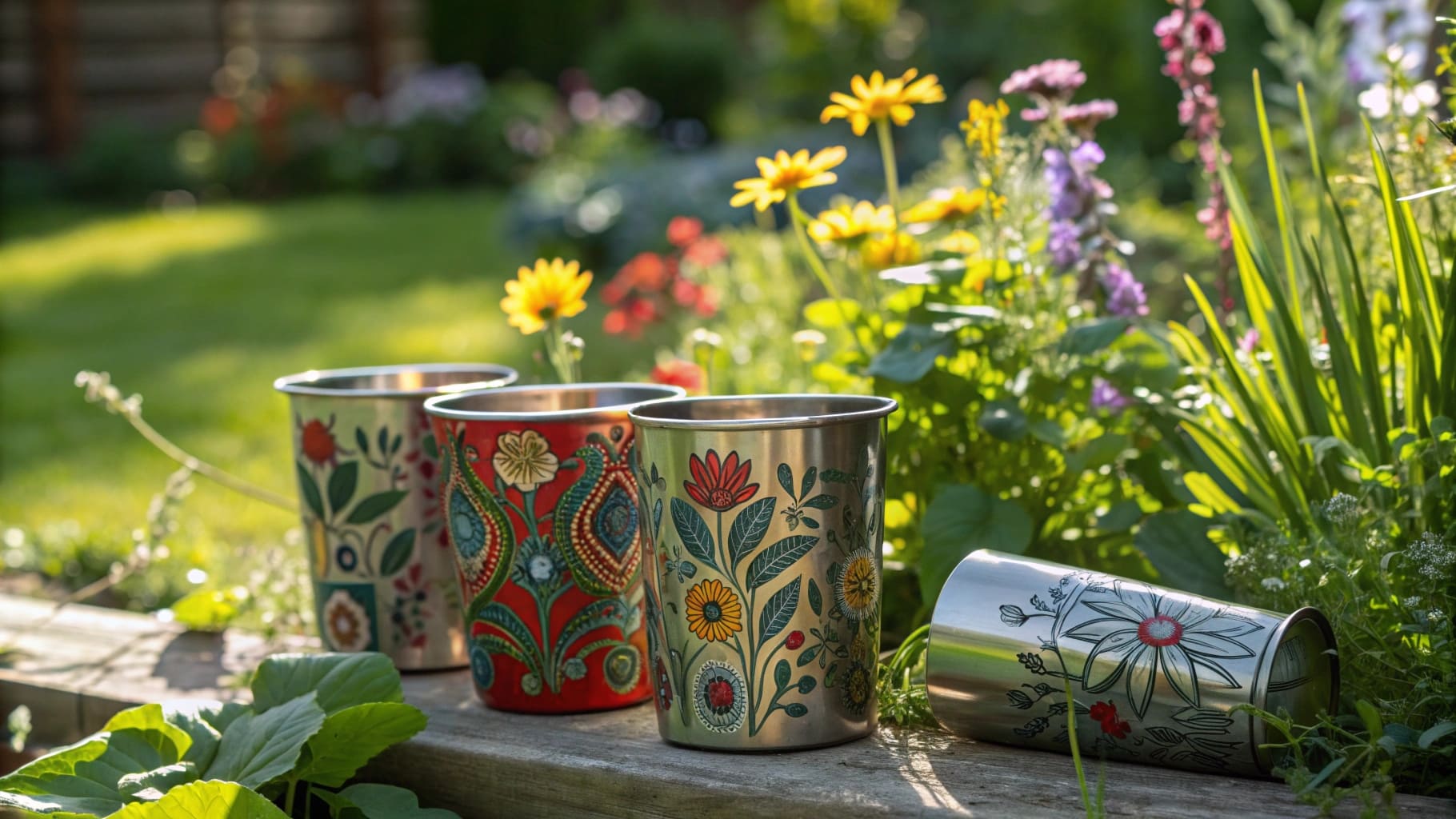
This is a question I hear often from buyers who have been burned before. And it makes sense — AQL levels look simple on paper, but the real damage happens when you do not know what they mean in practice. Let me break this down the way I wish someone had explained it to me.
What to Look for in Stainless Steel Cups?
You inspect a batch of cups. Some look fine. Others have faint lines, dull patches, or rough edges. How do you decide what passes and what fails?
When checking stainless steel cups, focus on surface consistency, finish uniformity, edge smoothness, and weld quality. These four areas account for most rejection cases. A cup that passes on all four will hold up in your customer's hands — and your client's quality audit.
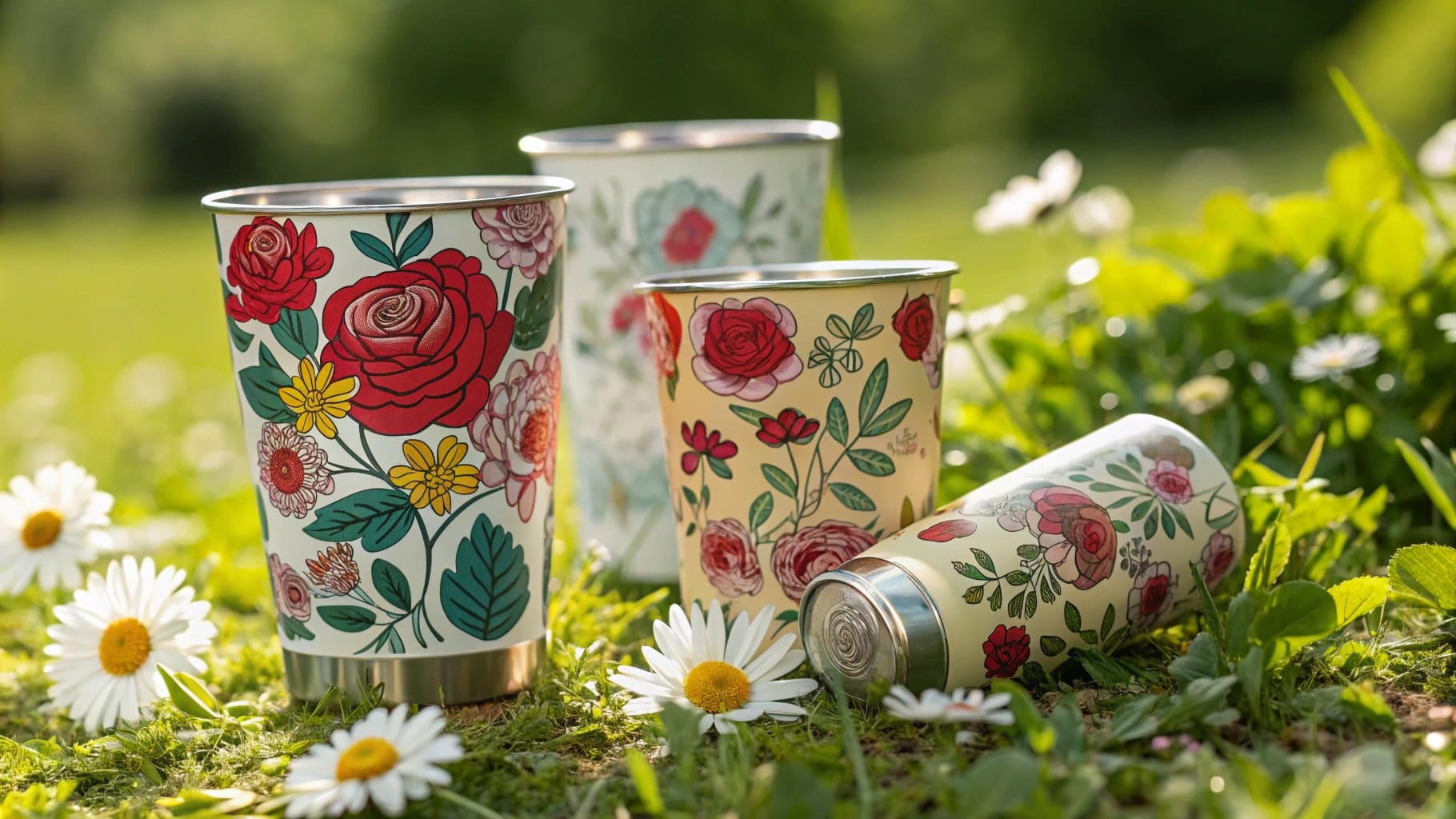
Polish defects fall into two clear groups: major and minor. Major defects are visible from a normal viewing distance — roughly 30 cm — under standard lighting. Minor defects are only visible under close inspection or angled light. The AQL you apply should match the defect type, not just the product category.
Here is how I break down the key inspection points:
| Inspection Area | What to Check | Typical AQL |
|---|---|---|
| Outer surface | Scratches, dull spots, oxidation marks | 1.5 – 2.5 |
| Inner surface | Pitting, weld marks, uneven polish | 1.5 – 2.5 |
| Rim and edges | Burrs, rough edges, micro-cracks | 1.0 – 1.5 |
| Base | Dents, uneven grinding marks | 2.5 – 4.0 |
| Weld seam | Incomplete fusion, visible gaps | 0 – 1.0 |
The weld seam gets the tightest standard because it is both a structural and a visual issue2. A bad weld on the inner surface is a food safety concern, not just an aesthetic one.
One thing I have learned from working with factories over the years is that the inspection checklist matters more than the AQL number alone. A supplier can quote AQL 1.5 and still ship poor product if their inspectors are not checking the right things. Get the checklist in writing before production starts.
Automated polishing lines produce far more consistent results than manual buffing3. When I visit a factory, I always check whether the polishing step is machine-driven or hand-done. Manual polishing depends entirely on the worker's attention and fatigue level. A machine does not get tired on the fourth hour of a shift. If your order volume is large, a factory with automated buffing equipment is worth the extra sourcing effort. Suppliers who also pre-inspect raw material for surface flaws before forming and polishing tend to deliver lower defect rates across the board. That single step — checking the steel before it ever touches a buffing wheel — removes a large share of the problems before they start.
What Grade of Stainless Steel for Tumblers?
You see two tumblers priced two dollars apart. Both look the same. The supplier says both are stainless steel. So why the price gap?
For tumblers, 304 stainless steel is the standard choice. It offers good corrosion resistance, polishes well, and keeps costs reasonable. For coastal markets or premium lines, 316 stainless steel adds better salt resistance but costs 20–30% more.

The grade of stainless steel you choose has a direct effect on how the product polishes and how many defects appear in the finished batch.
Here is a direct comparison:
| Property | 304 Stainless Steel | 316 Stainless Steel |
|---|---|---|
| Chromium content | 18% | 16% |
| Nickel content | 8% | 10% |
| Molybdenum | None | 2% |
| Corrosion resistance | Good | Superior |
| Polishability | High | High |
| Cost premium | Baseline | +20–30% |
| Best use case | General drinkware | Coastal or premium markets |
The chromium content in both grades is what makes the polish work. Chromium forms a thin layer on the surface that holds the shine and resists staining4. When this layer is disrupted during forming or welding, you get the dull patches and inconsistent finishes that show up in inspection.
This is something many buyers do not think about until they see it in person. The defect rate is not just a factory problem. It is partly a material problem. A lower-quality steel coil with inconsistent chromium distribution will produce surface issues no matter how skilled the polishing team is. I always ask suppliers to share their raw material mill certificates before I place a large order. A legitimate factory will have these on file. If they hesitate or delay, that tells me something important about how they operate.
304 is the right choice for most OEM orders targeting the North American or European general market. 316 makes sense when your client is positioning the product at a premium price point or selling into coastal regions where salt air exposure is a real factor.
What Is the Best Stainless Steel for Drinkware?
Your client wants a product that looks premium, lasts for years, and does not rust near the ocean. You need to pick a steel grade. Where do you start?
For most drinkware applications, 304 stainless steel is the best all-round choice. It is food-safe, durable, takes polish well, and fits most price points. For premium or coastal-use products, 316 stainless steel is worth the added cost.

The word "best" depends entirely on what your product needs to do and who is buying it. There is no single correct answer for every OEM situation.
Here is how I think about it based on the end market:
| Market Positioning | Recommended Grade | AQL Standard | Key Reason |
|---|---|---|---|
| Budget / mass market | 201 stainless steel | AQL 2.5 – 4.0 | Lower cost, acceptable finish |
| Mid-range general market | 304 stainless steel | AQL 1.5 – 2.5 | Best balance of cost and quality |
| Premium branded products | 304 or 316 stainless steel | AQL 1.0 – 1.5 | Tighter finish and durability standards |
| Coastal or marine use | 316 stainless steel | AQL 1.0 | Superior salt resistance |
I want to flag something about 201 stainless steel. Some factories quote it without telling buyers, because it looks the same as 304 in finished form. The difference only shows up over time — in rust spots, pitting, or discoloration. This is one of the more common issues I see with first-time sourcing from low-cost factories. Always request a material test report and check the nickel content. 304 has at least 8% nickel. 201 has 1–3%.5 That number tells you everything.
The polish quality and the defect rate are downstream effects of the material grade. A factory working with premium 304 coil on an automated polishing line will consistently hit AQL 1.5. The same factory, if pushed to cut costs on raw material, will struggle to hold that standard even with the same equipment and team. When you are sourcing at scale, the material decision is the quality decision. Everything else follows from it.
Conclusion
Match your AQL standard to your defect type, choose your steel grade based on your market, and always verify material quality before production starts. That is how you protect your shipment.
-
"Acceptable Quality Level, AQL Sampling Chart and Calculator - QIMA", https://www.qima.com/aql-acceptable-quality-limit. Quality-inspection guidance based on AQL sampling commonly distinguishes critical, major, and minor defects and applies looser acceptance limits to minor defects than to major defects; this supports the classification logic, though not a mandatory AQL 4.0 rule for all drinkware. Evidence role: general_support; source type: institution. Supports: Minor surface imperfections are commonly inspected under a looser AQL, such as AQL 4.0.. Scope note: Supports the relative use of looser AQLs for minor defects, not a universal requirement that minor stainless-steel cup defects use AQL 4.0. ↩
-
"What Are Welding Discontinuities? - Tulsa Welding School", https://www.tws.edu/blog/welding/what-are-welding-discontinuities/. Welding-quality references treat weld discontinuities as relevant to both appearance and structural integrity, supporting stricter inspection of weld seams; the source would not by itself establish a specific AQL value for cup seams. Evidence role: expert_consensus; source type: institution. Supports: Weld seams warrant tighter inspection because weld defects can affect both structural performance and appearance.. Scope note: Supports why weld seams deserve stricter scrutiny, not the precise AQL range assigned in the article. ↩
-
"Experimental Study on Surface Polishing of SLM-316L Stainless ...", https://pmc.ncbi.nlm.nih.gov/articles/PMC12194992/. Manufacturing and surface-finishing research reports that automated or robotic polishing can improve repeatability and process consistency compared with manual polishing, although outcomes depend on equipment, tooling, and process control. Evidence role: mechanism; source type: paper. Supports: Automated polishing generally produces more consistent surface finishes than manual buffing.. Scope note: Supports the general consistency advantage of automation, not every automated polishing line or every stainless-steel cup factory. ↩
-
"Case Study: How Chromium Protects Steel", https://mse.engin.umich.edu/internal/demos/case-study-how-chromium-protects-steel. Corrosion-science references describe stainless steel’s passive chromium-rich oxide film as the basis for its corrosion and staining resistance; this supports the mechanism behind stainless steel surface durability, though shine also depends on mechanical polishing. Evidence role: mechanism; source type: education. Supports: Chromium in stainless steel forms a passive surface layer that helps resist staining and corrosion.. Scope note: Supports corrosion and staining resistance from passivation; does not fully explain gloss, which is also affected by surface roughness and polishing process. ↩
-
"Stainless Steel - AISI 304 (Fe/Cr18/Ni10) - Material Information", https://www.goodfellow.com/global/resources/stainless-steel-aisi-304-fe-cr18-ni10-material-information/. Standards-based composition summaries for AISI 304 and AISI 201 list 304 with about 8–10.5% nickel and 201 with substantially lower nickel, supporting nickel content as a distinguishing material indicator. Evidence role: definition; source type: encyclopedia. Supports: 304 stainless steel contains significantly more nickel than 201 stainless steel, with 304 around at least 8% nickel and 201 commonly around 1–3% nickel.. Scope note: Exact composition ranges vary by national standard and product specification, so the cited range should be matched to the applicable standard where possible. ↩