
What Tariff and HS Codes Apply to Flasks? Duty Rates, COO, and DDP Math
I remember when Mark first reached out to me about importing flasks. He was confused about duties and worried about hidden costs. Many buyers feel the same way when they start importing.
The main HS code for stainless steel vacuum flasks is 7323.93.00, with duty rates from 3.4% to 8.7% depending on origin. You calculate DDP by adding FOB cost, freight, duties, and inland transport together.
Tariffs can make or break your profit margins. I have seen buyers lose money because they miscalculated duties. Let me walk you through everything you need to know.
What Is the Tariff Code for Flasks?
Customs officers need a code to identify your product. You might think this is simple, but I have seen many buyers get it wrong. The wrong code means you pay too much or face delays.
The tariff code for stainless steel flasks is 7323.93.00 under the Harmonized System. This code covers table, kitchen, and household articles made of stainless steel. The duty rate varies by country of origin.

Understanding HS Code 7323.93.00 in Detail
I work with this code every day at Icobottle. The code 7323.93.00 applies specifically to stainless steel items for household use. Your flask falls here if it has stainless steel as the main material. The first two digits (73) represent iron and steel products. The next two (23) narrow it down to tableware and kitchenware. The final digits (93.00) specify stainless steel items.1
I need to tell you something important. Customs officers look at the material composition first. If your flask is 201 stainless steel or 304 stainless steel, the code stays the same. But if you add plastic parts that change the product's essential character, the code might shift. I have seen buyers argue with customs because they added too much plastic to their flasks.
The General Rate of Duty for this code is 3.4% for most countries.2 But some countries get better rates through trade agreements. China pays 3.4% because of Most Favored Nation status. Vietnam might get 0% under USMCA if they meet origin rules. I always check the current rates on the USITS website before I quote prices to buyers.
Here is a breakdown of how different features affect classification:
| Flask Feature | HS Code | Typical Duty Rate |
|---|---|---|
| Pure stainless steel body | 7323.93.00 | 3.4% |
| With plastic lid and body steel | 7323.93.00 | 3.4% |
| Plastic body with steel cap | 3924.10.40 | 3.4% |
| Glass inner with steel case | 9617.00.10 | 8.7% |
I tell all my buyers to get a binding ruling from customs if they have doubts. This costs nothing but saves you from surprises at the port.
What Is the Difference Between a Thermos and a Flask?
People use these words like they mean the same thing. I get emails asking for a "thermos flask" or "vacuum flask." The confusion costs buyers money when customs classifies their product differently than expected.
A thermos has double-wall vacuum insulation for temperature control.3 A flask can be single-wall or double-wall, insulated or not. The term "flask" covers a broader range of stainless steel containers.
Breaking Down Thermos vs Flask for Customs Purposes
Customs does not care what you call your product in marketing materials. I learned this the hard way years ago. They look at the physical construction and intended use. A thermos is technically a vacuum flask with specific insulation properties. The gap between walls contains a vacuum or minimal air to prevent heat transfer.
When I manufacture products at Icobottle, I think about how customs will see them. A true vacuum flask has two walls with vacuum insulation. This keeps hot drinks hot for 12 hours and cold drinks cold for 24 hours. The vacuum stops heat from moving through conduction.4 I test every batch to make sure they meet this standard.
A flask without vacuum insulation is just a container. Some buyers call their single-wall bottles "flasks" but they are really just stainless steel bottles. The HS code stays 7323.93.00 either way, but the product description matters for FDA compliance and customer expectations.
Here is what matters for classification:
| Feature | Vacuum Thermos | Regular Flask | Impact on Classification |
|---|---|---|---|
| Wall construction | Double-wall | Single or double | No change in HS code |
| Insulation | Vacuum sealed | Air or none | No change in HS code |
| Temperature retention | 12+ hours | 2-4 hours | Not relevant for customs |
| Price range | Higher | Lower | Not relevant for customs |
I had a buyer named Mark who wanted to import both types. He thought he needed different codes. I explained that both use 7323.93.00 as long as the primary material is stainless steel. The marketing terms do not change the tariff. What changes your duty rate is the country of origin, not whether you call it a thermos or flask.
Are Flasks Legal in the US?
I get this question more than you might think. Some buyers worry because they heard stories about customs rejecting shipments. Others confuse hip flasks for alcohol with water bottles. Let me clear this up.
Stainless steel flasks are completely legal to import and sell in the US. You must meet FDA requirements for food-contact materials and provide proper certifications. California's Prop 65 may require warning labels for certain materials.5
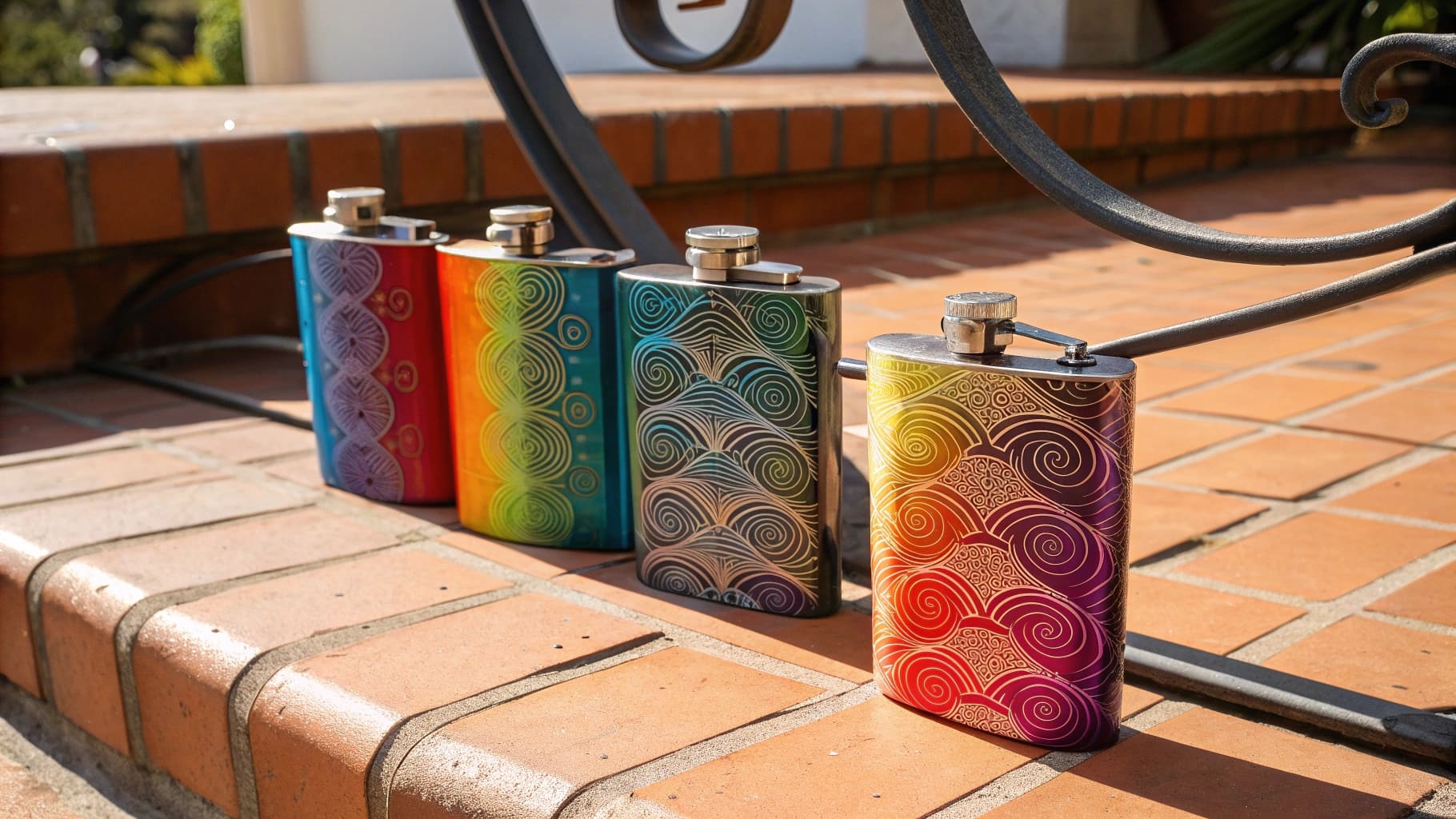
The legality question comes up because of confusion about different flask types. Hip flasks designed for alcohol are legal. Water bottles are legal. Vacuum flasks are legal. All of them. What matters is compliance with safety regulations.
I deal with FDA compliance every week at Icobottle. The FDA regulates any item that touches food or beverages.6 Your stainless steel must be food-grade, which means 304 or 316 grade stainless steel. I include material certifications with every shipment. These certificates prove the steel meets FDA standards. Customs can hold your shipment if you lack these documents.
California adds another layer with Proposition 65. This law requires warning labels if your product contains chemicals that cause cancer or reproductive harm. Lead is the main concern with cheap stainless steel. I test every batch for lead content. If levels exceed 0.5 micrograms per day, you need a Prop 65 warning.7 I have never had a batch fail this test because I source quality materials.
BPA-free certification matters even though stainless steel does not contain BPA. Some flasks have plastic lids or gaskets. These parts might contain BPA if your supplier cuts corners. I use silicone gaskets and PP5 plastic for lids. Both are BPA-free and I provide test reports to prove it.
Here is your compliance checklist:
| Requirement | Document Needed | Who Issues It | When You Need It |
|---|---|---|---|
| Food-grade steel | Material certification | Steel mill | Every shipment |
| FDA compliance | FDA registration | Supplier | First shipment |
| Prop 65 testing | Lead test report | Third-party lab | If selling in California |
| BPA-free | Test report for plastic parts | Third-party lab | If product has plastic |
I always tell buyers like Mark to ask for these documents before they place an order. Some suppliers claim they have certifications but cannot produce them when you need them at customs. I keep digital copies of all certificates and can send them immediately. This has saved my buyers from customs holds many times.
One more thing about legality. Some states restrict certain flask designs or capacities for alcohol. But these laws target the sale, not the import. You can legally import hip flasks. You just need to follow state laws when you sell them. I do not deal with these restrictions because I focus on water bottles, but you should check your state laws if you plan to sell hip flasks.
How Do You Calculate DDP Costs for Flask Imports?
Mark once told me he thought DDP meant "deliver directly please." Many buyers struggle with this calculation. They get surprised by costs they did not expect. I walk every buyer through the math before they commit to an order.
DDP means Delivered Duty Paid.8 You calculate it by adding FOB cost, ocean freight, import duties, customs clearance fees, and inland transport. This gives you the true landed cost at your warehouse door.

Breaking Down Every Component of DDP Pricing
I will use a real example from a recent order. Mark wanted to import 10,000 stainless steel water bottles from my facility in China. The FOB price was 5.00 USD per bottle, which means 50,000 USD total. This is what you pay me at the Chinese port before the goods leave.
Ocean freight depends on your destination and shipping method. A 20-foot container to Los Angeles costs about 2,000 USD these days. Freight rates change weekly, so I always get fresh quotes. The freight adds 0.20 USD per bottle in this case. Your total is now 52,000 USD.
Import duties hit you when the container arrives in the US. Customs calculates duties on the FOB value plus freight. So they take 52,000 USD and multiply by the duty rate. For China-origin flasks under HS code 7323.93.00, the rate is 3.4%. That means 1,768 USD in duties. Your running total is 53,768 USD.
Customs clearance fees cover the broker who processes your paperwork. I recommend buyers work with a good customs broker. They charge 150 to 300 USD per shipment. Let me use 200 USD for this example. Total is now 53,968 USD.
Inland transport moves your container from the port to your warehouse. This varies wildly by distance. From LA port to a warehouse in California might cost 300 USD. To the East Coast could be 3,000 USD. I will use 500 USD for a mid-range example. Your final DDP cost is 54,468 USD.
Here is the complete breakdown:
| Cost Component | Calculation | Amount |
|---|---|---|
| FOB Cost | 10,000 units × 5.00 USD | 50,000 USD |
| Ocean Freight | 1 × 20ft container | 2,000 USD |
| Import Duty | 52,000 × 3.4% | 1,768 USD |
| Customs Clearance | Per shipment fee | 200 USD |
| Inland Transport | Port to warehouse | 500 USD |
| Total DDP Cost | Sum of all components | 54,468 USD |
| Cost Per Unit | 54,468 ÷ 10,000 | 5.45 USD |
I want you to notice something important. The DDP cost per unit is 5.45 USD, but the FOB cost was 5.00 USD. You pay 0.45 USD extra per bottle in duties and logistics. Many buyers forget this and price their products too low. They lose money before they make their first sale.
Country of origin changes everything in this calculation. If I source the same flask from Vietnam, the duty might be 0% under certain trade agreements. That saves you 1,768 USD immediately. But Vietnam FOB prices might be 0.20 USD higher per unit, adding 2,000 USD to your cost. You save 1,768 USD on duties but spend 2,000 USD more on product cost. The math does not work in your favor here.
I help buyers like Mark run these calculations for different scenarios. We compare China, Vietnam, and India sourcing. Each country has different FOB costs, duty rates, and freight costs. I send Mark a spreadsheet that shows all the options. He can see exactly where his money goes and make smart decisions.
Conclusion
Understanding HS codes, duties, and DDP calculations protects your profit margins. I have shown you the exact codes, rates, and formulas you need. Use this knowledge to negotiate better terms and avoid customs surprises.
-
"7323.93.00.80 - Harmonized Tariff Schedule", https://hts.usitc.gov/search?query=732393. Official tariff nomenclature materials explain that HS codes are hierarchical, with chapter 73 covering iron and steel articles, heading 7323 covering table, kitchen, or household articles, and subheading 7323.93 covering stainless-steel articles. Evidence role: definition; source type: institution. Supports: The digits in 7323.93.00 identify iron or steel articles, then table/kitchen/household articles, then stainless-steel items.. Scope note: National tariff schedules may add country-specific digits beyond the internationally harmonized six-digit level. ↩
-
"7323.93.00.80 - Harmonized Tariff Schedule", https://hts.usitc.gov/search?query=732393. The USITC Harmonized Tariff Schedule entry for subheading 7323.93.00 states the general duty rate applicable under the U.S. tariff schedule, supporting the cited 3.4 percent rate for entries eligible for that column. Evidence role: statistic; source type: government. Supports: The General Rate of Duty for HS code 7323.93.00 is 3.4% for many U.S. imports.. Scope note: The applicable rate can change with trade-remedy duties, preference programs, country of origin, and HTS updates. ↩
-
"Vacuum flask - Wikipedia", https://en.wikipedia.org/wiki/Vacuum_flask. Reference works describe a vacuum flask as a vessel with double walls and an evacuated space between them to reduce heat transfer, supporting the distinction between vacuum-insulated thermos-type containers and ordinary flasks. Evidence role: definition; source type: encyclopedia. Supports: A thermos has double-wall vacuum insulation for temperature control.. Scope note: “Thermos” is also a trademarked term in some contexts and is often used generically in consumer language. ↩
-
"Chapter 8 Transfer of Thermal Energy Part 4 - The Vacuum Flask", https://www.youtube.com/watch?v=fG60os0EnPg. Physics education sources explain that an evacuated gap in a vacuum flask greatly reduces heat transfer by conduction and convection because few particles remain to carry thermal energy across the gap. Evidence role: mechanism; source type: education. Supports: The vacuum in a double-wall flask prevents or greatly reduces conductive heat transfer.. Scope note: A vacuum does not eliminate all heat transfer; radiation and heat transfer through supports, lids, and walls can still occur. ↩
-
"Proposition 65 - OEHHA - CA.gov", https://oehha.ca.gov/proposition-65. California OEHHA explains that Proposition 65 requires businesses to provide warnings before exposing Californians to listed chemicals known to cause cancer, birth defects, or reproductive harm, supporting the warning-label statement for products containing listed substances. Evidence role: general_support; source type: government. Supports: California Proposition 65 may require warning labels for flasks made with or containing certain listed chemicals.. Scope note: Whether a warning is required depends on exposure level, listed chemical, safe-harbor levels, and applicable exemptions. ↩
-
"Packaging & Food Contact Substances (FCS) - FDA", https://www.fda.gov/food/food-ingredients-packaging/packaging-food-contact-substances-fcs. FDA guidance and regulations treat food-contact articles and substances used in food-contact materials as subject to the Federal Food, Drug, and Cosmetic Act, supporting the relevance of FDA rules for beverage containers. Evidence role: general_support; source type: government. Supports: Items that contact food or beverages, including flask components, are subject to FDA food-contact requirements.. Scope note: FDA oversight generally concerns food-contact substances and safety requirements, not necessarily premarket approval of every finished container. ↩
-
"Proposition 65 No Significant Risk Levels (NSRLs ... - OEHHA", https://oehha.ca.gov/proposition-65/general-info/proposition-65-no-significant-risk-levels-nsrls-and-maximum-allowable-dose-levels-madls. California OEHHA identifies 0.5 micrograms per day as the maximum allowable dose level for lead as a reproductive toxicant under Proposition 65, supporting the cited threshold for reproductive-toxicity warnings. Evidence role: statistic; source type: government. Supports: A lead exposure exceeding 0.5 micrograms per day can trigger a Proposition 65 warning requirement.. Scope note: This threshold concerns lead reproductive toxicity; other Prop 65 endpoints, chemicals, or exposure calculations may use different limits. ↩
-
"Know Your Incoterms - International Trade Administration", https://www.trade.gov/know-your-incoterms. The International Chamber of Commerce defines DDP as Delivered Duty Paid, an Incoterms rule under which the seller delivers goods to the named destination with import clearance and duties handled as specified by the rule. Evidence role: definition; source type: institution. Supports: DDP means Delivered Duty Paid.. Scope note: Incoterms allocate responsibilities between buyer and seller but do not by themselves determine customs valuation, tax law, or every local fee. ↩