
Marine stainless cup holders: 316 steel, drain holes, and salt spray AQL
Saltwater destroys the wrong materials fast. One bad spec decision and your entire product line fails in the field, returns pile up, and your brand takes the hit.
Marine cup holders built for saltwater use require three things above all else: the right steel grade, smart drain design, and a supplier who can prove quality with real AQL data. Get all three right and you protect your customers and your margins at the same time.
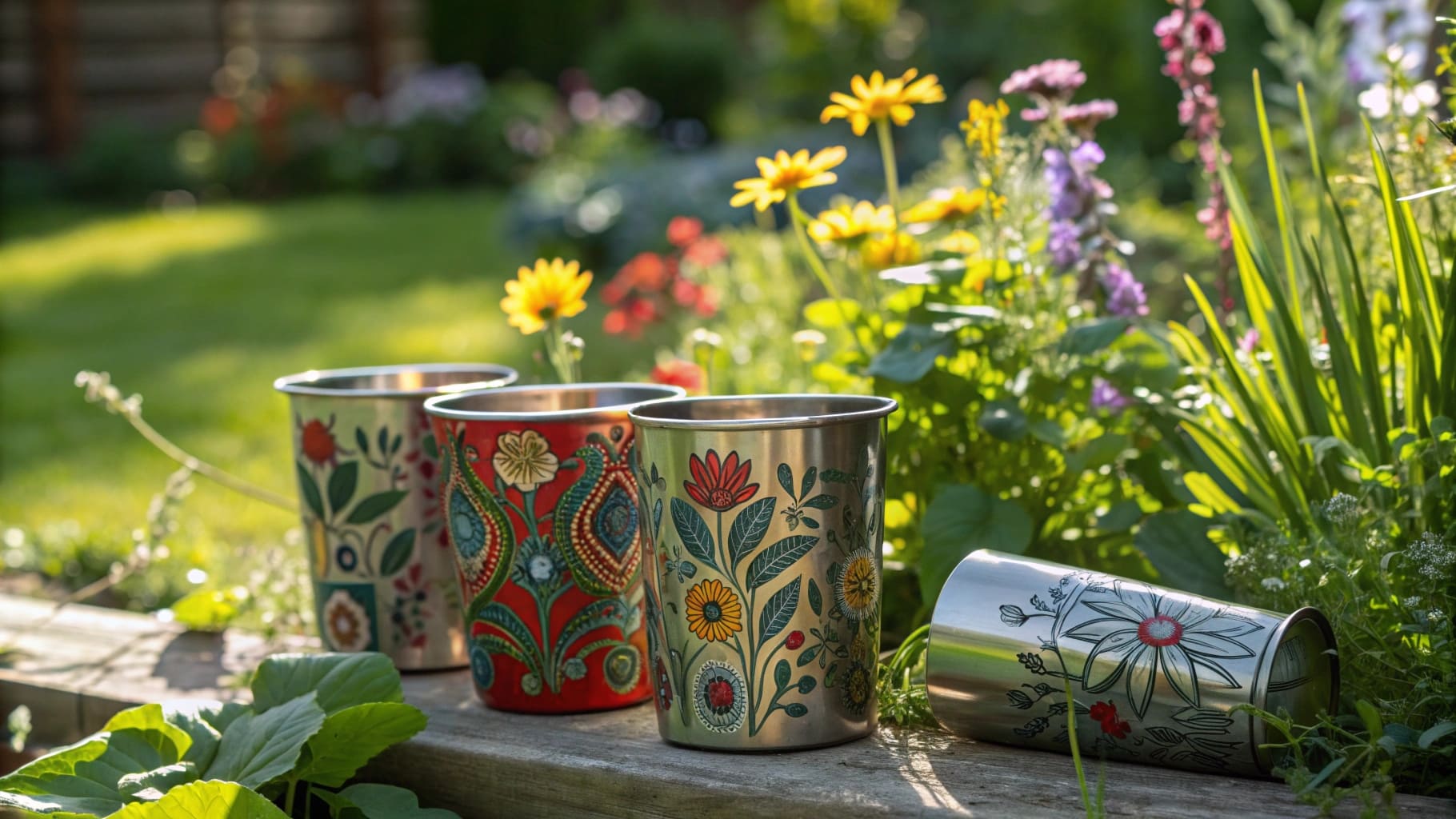
I have worked with buyers who thought any stainless steel cup holder would survive on a boat. They were wrong. The difference between a product that lasts one season and one that lasts ten years comes down to the details most buyers skip. Let me walk you through what actually matters.
What Are the Dimensions of a Cup Holder?
You pick a cup holder that looks right online, order a container load, and then your customers call to say the holder is too loose for their bottles or too tight to pull them out with wet hands.
Marine cup holders typically measure 3.5 to 4 inches in inner diameter at the top opening. The depth runs between 2.5 and 3.5 inches.1 These sizes fit most standard bottles and cans used on boats. The mounting flange is usually 4 to 5 inches in diameter to give enough surface area for bolt installation.

The diameter range covers most standard beverage containers, but the shape matters just as much as the number. A flat-bottom cup holder with straight walls sounds simple. In practice, it fails on moving boats. Here is what smart dimensional design looks like in marine applications.
Why Taper Matters More Than You Think
A tapered interior — where the bottom is slightly narrower than the top — does two things at once. It grips the bottle so it does not rattle when the boat hits a wave.2 It also makes it easy to pull the bottle out with one hand, even if your hand is wet. A straight-wall design grips too little or too much depending on bottle size. Taper solves both problems.
Drain Holes Are a Dimension Decision Too
Drain holes are not just a feature. They are part of the dimensional spec. Most marine cup holders include two to four drain holes at the base, typically 6 to 8 mm in diameter. These holes let water escape instead of pooling at the bottom. Pooled water, especially salt water, is the fastest way to corrode even a quality stainless steel cup holder from the inside out.3 When I review a factory sample, I check the drain hole diameter and placement before I check anything else.
Mounting Flange Spec for Vibration Resistance
The flange is the part that sits flat on the boat surface. It needs to be wide enough to spread the load across the mounting surface. A flange that is too narrow concentrates stress at the bolt holes. Over time, constant engine vibration and wave impact crack the material around those holes.4 I recommend a minimum flange width of 4 inches and a thickness of at least 1.2 mm for the flange itself. Buyers who skip this spec often get warranty claims six months after delivery.
| Dimension | Recommended Range | Why It Matters |
|---|---|---|
| Inner diameter (top) | 3.5 – 4 inches | Fits standard bottles and cans |
| Depth | 2.5 – 3.5 inches | Secures container, prevents tipping |
| Mounting flange diameter | 4 – 5 inches | Distributes load across surface |
| Drain hole diameter | 6 – 8 mm | Prevents water and salt pooling |
| Flange thickness | Min 1.2 mm | Resists vibration cracking |
What Is the Hardness of 316 Stainless Steel?
You order 304 stainless cup holders because the price is better. Six months later, your marine customers report rust spots forming around the rim. You lose the account and spend more fixing the problem than you saved on material.
316 stainless steel typically measures between 70 and 90 HRB on the Rockwell B scale. On the Brinell scale, that is roughly 150 to 200 HB.5 These numbers make it hard enough to resist denting and surface damage during normal use while staying workable enough to form into cup holder shapes.

Hardness tells you how the material handles physical stress. It does not tell you how it handles salt. That part comes from the chemistry of 316 steel, and understanding it is what separates buyers who specify correctly from buyers who guess.
The Molybdenum Difference
304 stainless steel contains chromium and nickel. 316 stainless steel adds molybdenum, typically around 2 to 3 percent. That one addition changes everything in a marine environment. Molybdenum blocks the process called pitting corrosion. Pitting is what happens when chloride ions from salt water eat into the metal surface, starting as tiny invisible holes and growing into visible rust damage.
304 steel resists general oxidation well. It fails in chloride-rich environments. 316 steel resists both.6 For any product that will sit on a boat, 316 is not optional. It is the baseline.
What Salt Spray AQL Testing Actually Checks
AQL stands for Acceptable Quality Level. It is a sampling method used to decide whether a batch of products meets a quality standard.7 In marine applications, salt spray testing runs alongside AQL to give buyers a clear picture of corrosion resistance.
Salt spray testing exposes sample units to a 5 percent sodium chloride mist at 35 degrees Celsius.8 The standard test period for marine-grade stainless products runs from 200 to 500 hours. After testing, inspectors check for pitting, rust spots, and surface degradation. A supplier who cannot show you salt spray test results for their 316 cup holders is a supplier you should question.
| Property | 304 Stainless Steel | 316 Stainless Steel |
|---|---|---|
| Chromium content | 18 – 20% | 16 – 18% |
| Nickel content | 8 – 10.5% | 10 – 14% |
| Molybdenum content | None | 2 – 3% |
| Rockwell B hardness | 70 – 90 HRB | 70 – 90 HRB |
| Chloride resistance | Moderate | High |
| Recommended for marine use | No | Yes |
How Do You Clean a Cup Holder?
Your customer buys a premium marine cup holder. They never clean it. A year later it looks terrible, they blame the product, and you lose a repeat order. The product was fine. The maintenance was not.
Clean marine cup holders by rinsing them with fresh water after every saltwater exposure. Use mild soap and a soft cloth for weekly cleaning.9 For stains and discoloration, a paste of baking soda and water works well without scratching the surface. Clean weekly during active use to prevent corrosive buildup.
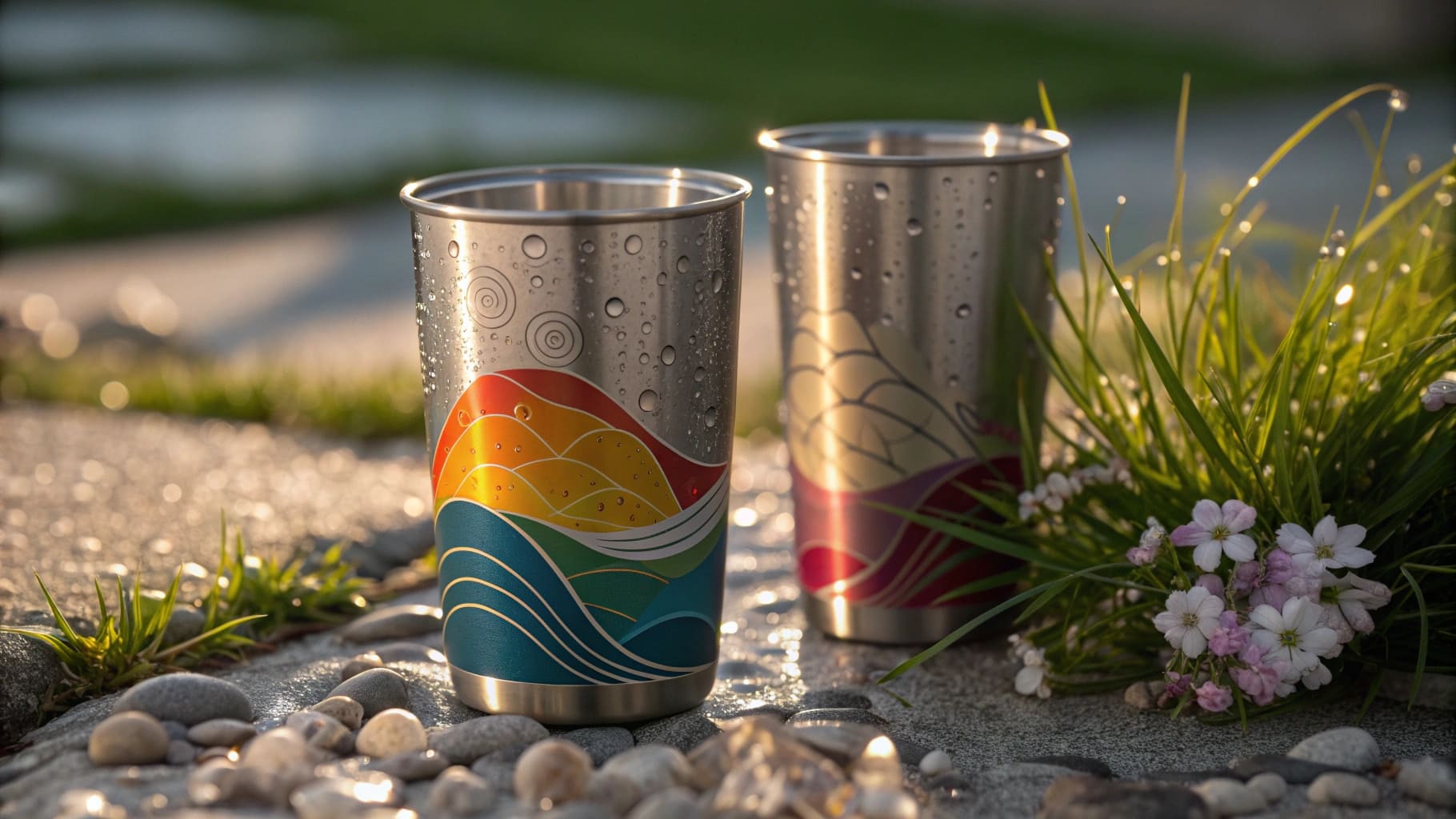
Most buyers in the B2B space think about product specs and ignore maintenance. That is a mistake. When you sell a marine product, your customer's maintenance habits directly affect whether they come back to buy more. Giving them clear cleaning guidance protects your product's reputation in the field.
The Frequency Problem
The biggest cleaning mistake is not using the wrong product. It is waiting too long between cleans. Salt deposits left on stainless steel for weeks begin to break down the passive oxide layer that protects the metal. Even 316 stainless is not fully immune to this. Weekly cleaning during active use is the minimum for saltwater environments. I tell every buyer I work with to include a cleaning frequency recommendation in their product documentation.
Cleaning Products to Use and Avoid
Not all cleaners are safe for stainless steel. Bleach-based products contain chlorine, which attacks stainless steel the same way salt does. Steel wool scratches the surface and creates small grooves where salt and moisture collect. Both are common mistakes that end up creating the rust spots customers blame on the product.
| Cleaning Method | Safe to Use | Notes |
|---|---|---|
| Fresh water rinse | Yes | After every saltwater exposure |
| Mild dish soap and soft cloth | Yes | Weekly routine cleaning |
| Baking soda paste | Yes | For stains and light discoloration |
| Stainless steel cleaner spray | Yes | Follow product instructions |
| Bleach-based cleaners | No | Contains chlorine, damages steel |
| Steel wool or abrasive pads | No | Scratches surface, increases corrosion risk |
| Vinegar solution (diluted) | Use with caution | Rinse thoroughly after use |
Why Drain Holes Matter for Cleaning Too
I mentioned drain holes in the dimension section. They matter for cleaning as well. A cup holder with no drain holes collects water at the bottom after rinsing. That water sits there. In a saltwater environment, even fresh rinse water can carry enough residual salt to cause problems over time. Good drain hole placement lets the holder dry completely after every clean. I always check that drain holes are large enough to drain fast, not just present on the drawing.
Conclusion
Get the dimensions right, specify 316 steel, verify with salt spray AQL data, and tell your customers how to clean it. That is how you build a marine product that lasts.
-
"DEEP BLUE MARINE PRODUCTS Recessed Cup Holder", https://www.westmarine.com/deep-blue-marine-products-recessed-cup-holder-13554092.html?srsltid=AfmBOoqdcJ1Qffay58Qz5R7dYwsIlxodMXi_v19z4gxMYjUOLBHbtOEv. A marine hardware catalog or dimensional specification can document common cup-holder opening diameters and depths used for boat installations; this supports typical sizing rather than establishing a universal industry standard. Evidence role: general_support; source type: institution. Supports: Marine cup holders commonly have top inner diameters of about 3.5 to 4 inches and depths of about 2.5 to 3.5 inches.. Scope note: Product dimensions vary by manufacturer and by intended container type, so the source would support typical ranges rather than mandatory specifications. ↩
-
"design of cup holder retention test equipment and testing on it", https://www.academia.edu/33566970/DESIGN_OF_CUP_HOLDER_RETENTION_TEST_EQUIPMENT_AND_TESTING_ON_IT. An engineering or marine hardware design source can explain that tapered receptacles improve retention by increasing contact with inserted containers; this supports the mechanical rationale but may not directly test cup-holder rattle on boats. Evidence role: mechanism; source type: education. Supports: A tapered cup-holder interior can help retain beverage containers and reduce rattling in moving marine conditions.. Scope note: The evidence is likely to be contextual engineering support unless it specifically tests tapered marine cup holders under vibration or wave motion. ↩
-
"[PDF] 2686: Investigation of Stress Corrosion Cracking Susceptibility of ...", http://www.eng.usf.edu/~sagues/Documents/Nace%2013%202686%20SCC%20SS%20Strand.pdf. Corrosion references describe stagnant chloride-containing water as a condition that promotes localized corrosion of stainless steels; this supports the corrosion mechanism, though it does not rank pooled salt water as the single fastest cause for every cup-holder design. Evidence role: mechanism; source type: education. Supports: Pooled salt water can accelerate localized corrosion in stainless steel cup holders.. Scope note: The source would support the general corrosion mechanism, not necessarily the comparative phrase “fastest way” for all stainless cup holders. ↩
-
"[PDF] Mechanisms of Fatigue Crack Initiation and Growth", https://fcp.mechse.illinois.edu/files/2014/07/2-Mechanisms.pdf. Fatigue and vibration references explain that cyclic loading and stress concentrations around holes can initiate cracks in metal components; this supports the mechanism, although it is not specific to marine cup-holder flanges unless a direct case study is found. Evidence role: mechanism; source type: education. Supports: Vibration and wave-induced cyclic loads can cause cracking around bolt holes where stress is concentrated.. Scope note: The evidence is likely general fatigue-mechanics support rather than a product-specific study of cup holders. ↩
-
"316 Stainless Steel - ASM Material Data Sheet - MatWeb", https://asm.matweb.com/search/specificmaterial.asp?bassnum=mq316j. Material property tables for AISI 316 stainless steel report hardness values in Rockwell B and Brinell units, supporting the stated approximate range; actual values depend on condition, processing, and heat treatment. Evidence role: statistic; source type: institution. Supports: 316 stainless steel commonly has hardness values around 70–90 HRB and roughly 150–200 HB.. Scope note: Hardness varies by product form, cold work, and material condition, so the cited range should be treated as typical rather than absolute. ↩
-
"[PDF] Stainless Steel - Office of Research Facilities", https://orf.od.nih.gov/TechnicalResources/Documents/Technical%20Bulletins/16TB/Stainless%20Steel%20October%202016%20Technical%20Bulletin_508.pdf. Stainless steel selection guidance commonly states that Type 316 has better resistance than Type 304 in chloride-bearing environments because of its molybdenum content; this supports the comparative recommendation, though 304 does not necessarily fail in every chloride exposure. Evidence role: expert_consensus; source type: institution. Supports: 316 stainless steel generally provides better chloride-environment corrosion resistance than 304 stainless steel.. Scope note: The evidence supports relative chloride resistance, not an absolute guarantee that 304 will always fail or 316 will always resist corrosion. ↩
-
"Acceptable quality limit - Wikipedia", https://en.wikipedia.org/wiki/Acceptable_quality_limit. ISO 2859 or related quality-control references define acceptance quality limit and sampling inspection procedures for lot acceptance, supporting the description of AQL as a statistical sampling method. Evidence role: definition; source type: institution. Supports: AQL is a sampling-based quality-control method used to evaluate whether a production batch meets specified acceptance criteria.. Scope note: AQL determines lot acceptance by sampling and does not by itself measure corrosion resistance or product durability. ↩
-
"Salt spray test - Wikipedia", https://en.wikipedia.org/wiki/Salt_spray_test. ASTM B117 describes neutral salt spray exposure using a 5% sodium chloride solution and a chamber temperature around 35°C, supporting the stated test conditions. Evidence role: definition; source type: institution. Supports: Standard neutral salt spray testing commonly uses a 5% sodium chloride mist at about 35°C.. Scope note: ASTM B117 specifies test conditions but cautions that salt spray duration does not directly predict service life in all real environments. ↩
-
"Clean stainless steel with mild detergent - The Columbus Dispatch", https://www.dispatch.com/story/lifestyle/2009/02/22/clean-stainless-steel-with-mild/23829396007/. Stainless steel maintenance guidance recommends fresh-water rinsing after chloride exposure and cleaning with mild detergent and soft cloths, supporting the maintenance advice for marine cup holders; the weekly interval is a practical recommendation rather than a universal standard. Evidence role: expert_consensus; source type: institution. Supports: Fresh-water rinsing and mild-soap cleaning are appropriate maintenance practices for stainless steel exposed to saltwater.. Scope note: The source may support the cleaning methods directly while only contextually supporting the exact weekly frequency. ↩
