
Paracord Handles and Cloth Bags: What Stitch Strength and Load Tests for 2026?
Most buyers never think about handle strength until a bottle drops. By then, the damage — to your product and your reputation — is already done.
For paracord handles on stainless steel water bottles, the working load limit depends on cord type. Standard Type III 550 paracord breaks at 550 pounds1, but the safe carrying load should stay between 55 and 110 pounds. For most bottle applications, the cord itself is rarely the weak point — the stitching and attachment points are.
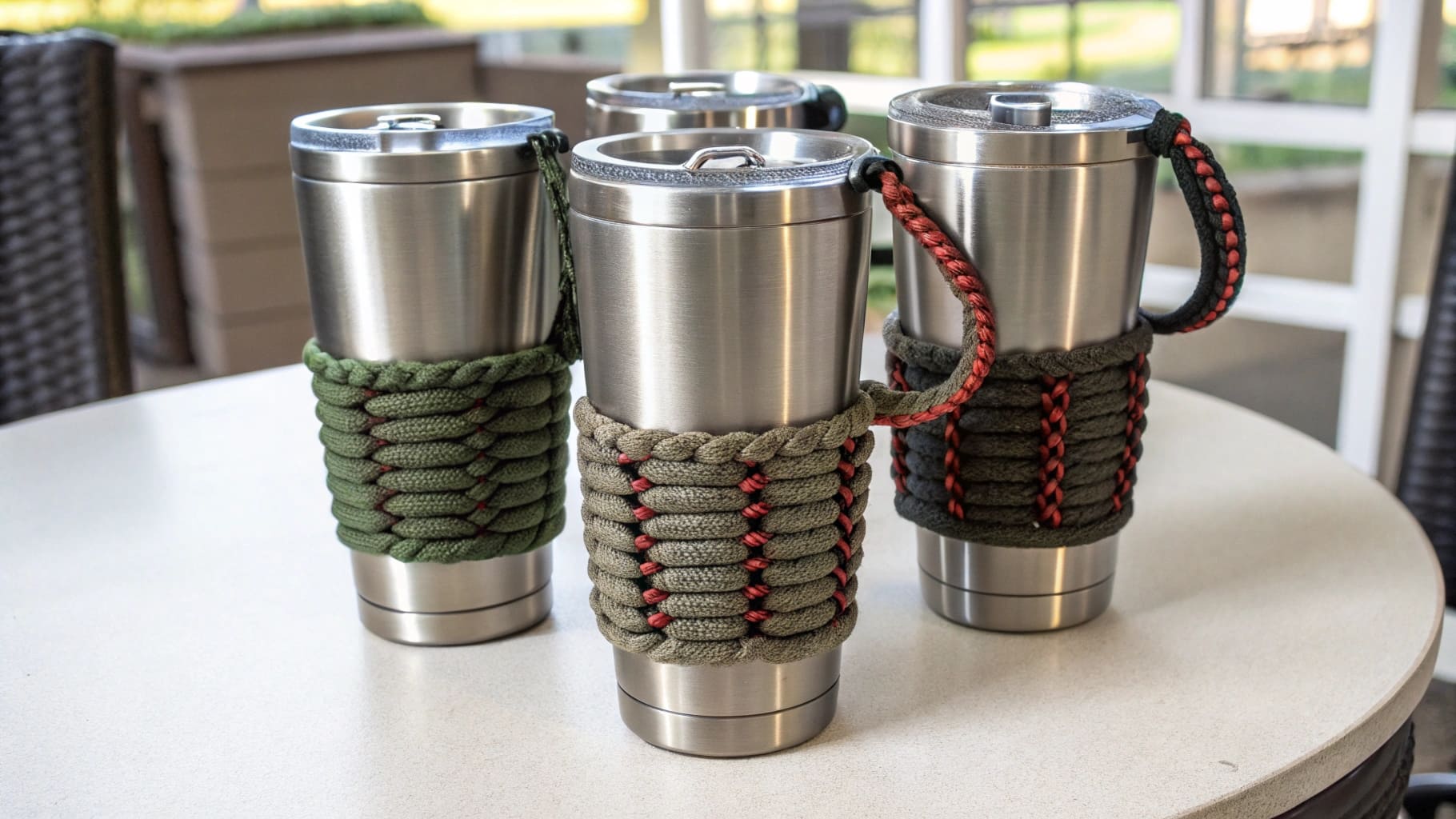
Here is something I see often in B2B sourcing: buyers spend weeks comparing bottle wall thickness and lid seals, then approve a paracord handle without asking a single question about how it was attached. That gap is getting more expensive to ignore. European and North American markets are pushing harder every year for documented load testing on all carrying accessories2. If you are sourcing stainless steel water bottles with paracord handles or cloth bags for 2026, this guide will walk you through what actually matters.
What Is the Working Load Limit for Paracord?
You ask your supplier for a paracord handle. They say it is strong. But strong enough for what, exactly?
The working load limit for Type III 550 paracord sits at roughly 55 to 110 pounds under dynamic load conditions. This is 10 to 20 percent of its 550-pound breaking strength — which is the standard safety margin used across most load-bearing applications.
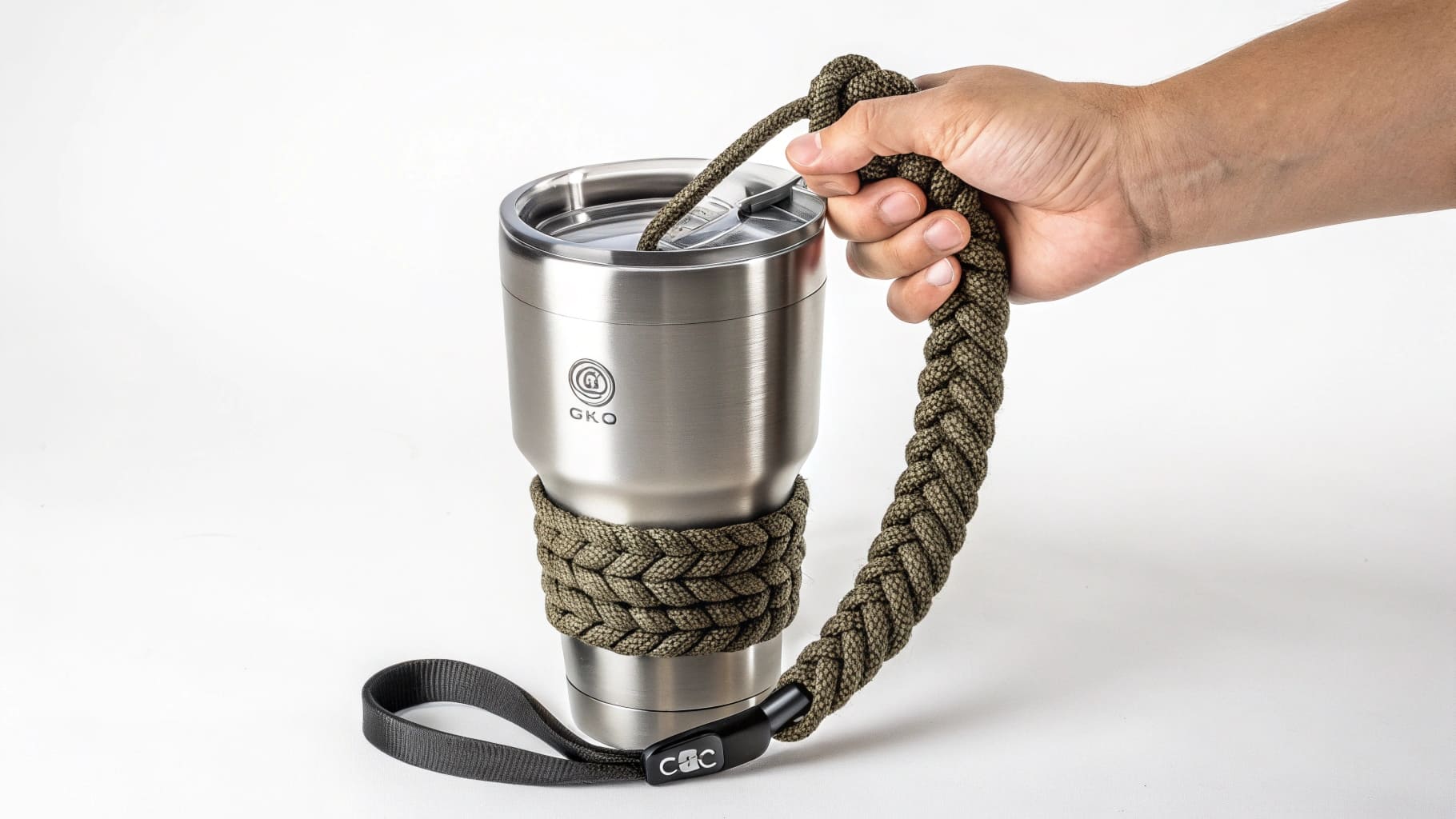
Understanding the difference between breaking strength and working load limit is not just a technical detail. It is a liability question. Breaking strength is the point where the cord snaps under a single, controlled pull in a lab. Working load limit is the weight the cord can handle repeatedly, in real conditions, without degrading3. For a water bottle handle that gets grabbed, swung, and tossed into bags hundreds of times a year, the working load limit is the number that actually matters.
Here is how the math works for a typical water bottle application:
| Bottle Size | Filled Weight | Recommended Handle WLL | Safety Margin Applied |
|---|---|---|---|
| 20 oz | ~1.8 lbs | 10 lbs minimum | ~5.5x filled weight |
| 32 oz | ~2.8 lbs | 15 lbs minimum | ~5.4x filled weight |
| 40 oz | ~4.0 lbs | 20 lbs minimum | ~5x filled weight |
| 64 oz | ~6.0 lbs | 30 lbs minimum | ~5x filled weight |
The cord itself almost always clears these numbers easily. The problem shows up at the seams, knots, and attachment points — especially after repeated use. This is why buyers heading into 2026 should be requesting cycle testing data, not just a cord specification sheet. A handle that passes a single pull test but fails after 2,000 repetitions is a return waiting to happen.
What Strengths Does Paracord Come In?
Not all paracord is the same, and buying on cord name alone can lead to real problems.
Paracord is made in several military-spec types, each with a different breaking strength4. For water bottle handles and cloth bag attachments, the types buyers most commonly encounter are Type III, Type IV, and commercial-grade cord that does not meet any military specification.
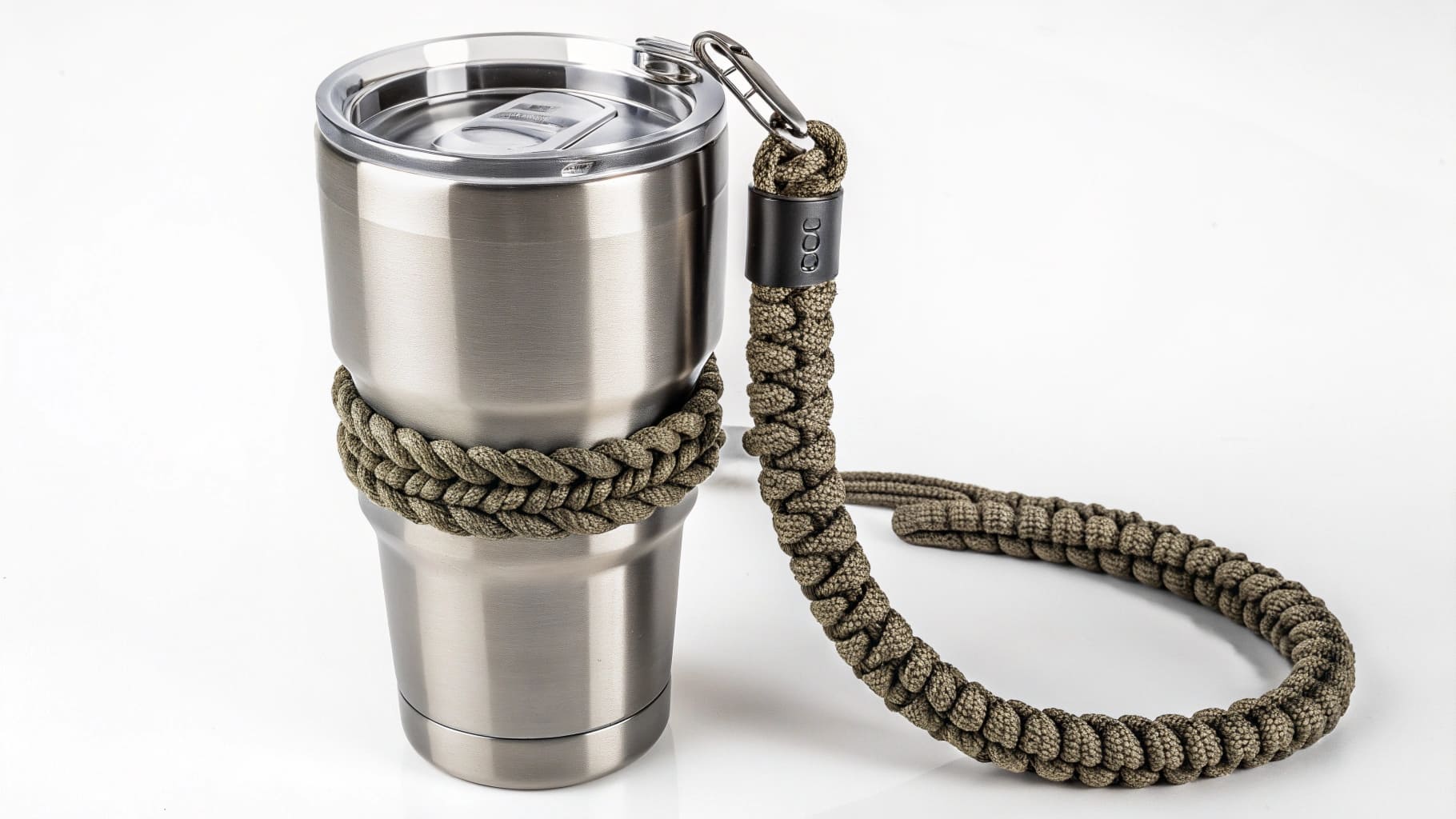
This is one of the areas where I see the most confusion among procurement teams. A supplier quotes "550 paracord" and the buyer assumes it is genuine Type III. But commercial paracord sold under the same name can have significantly lower strand counts and breaking strengths. The only way to confirm what you are actually getting is to request material certification alongside your sample review.
Here is a clear breakdown of the main paracord types relevant to bottle and bag accessories:
| Type | Breaking Strength | Inner Strands | Best Use Case |
|---|---|---|---|
| Type I | 95 lbs | 1 strand | Decorative only, not structural |
| Type II | 400 lbs | 4–7 strands | Light-duty handles, thin bags |
| Type III (550) | 550 lbs | 7 strands | Standard bottle handles, single-bottle bags |
| Type IV (750) | 750 lbs | 11 strands | Large format bottles, multi-bottle carriers |
| Commercial Grade | Varies, often unlabeled | Varies | Unpredictable — avoid for structural use |
For most single-bottle stainless steel water bottle applications, Type III is sufficient. If you are sourcing for a 64-ounce bottle, a hydration carrier, or any product where multiple filled bottles may share one handle system, move to Type IV. The cost difference between Type III and Type IV cord is small. The liability difference if a handle fails under a heavier load is not.
One more thing worth knowing: cord diameter and sheath construction also affect real-world strength. A Type III cord with a tight, even sheath distributes load more evenly across all inner strands. A loosely constructed cord of the same nominal type can fail well below its rated strength. When reviewing samples, look at the sheath consistency and ask your supplier how the cord is manufactured — not just what type it is labeled as.
What Is the Best Paracord for Strength?
Picking the strongest cord sounds simple. But strength in the cord does not equal strength in the finished handle.
For stainless steel water bottle applications, Type IV 750 paracord gives you the highest breaking strength in a standard paracord format5. But the best paracord for your product is the one that performs as a complete system — cord, stitching, attachment point, and hardware all working together.
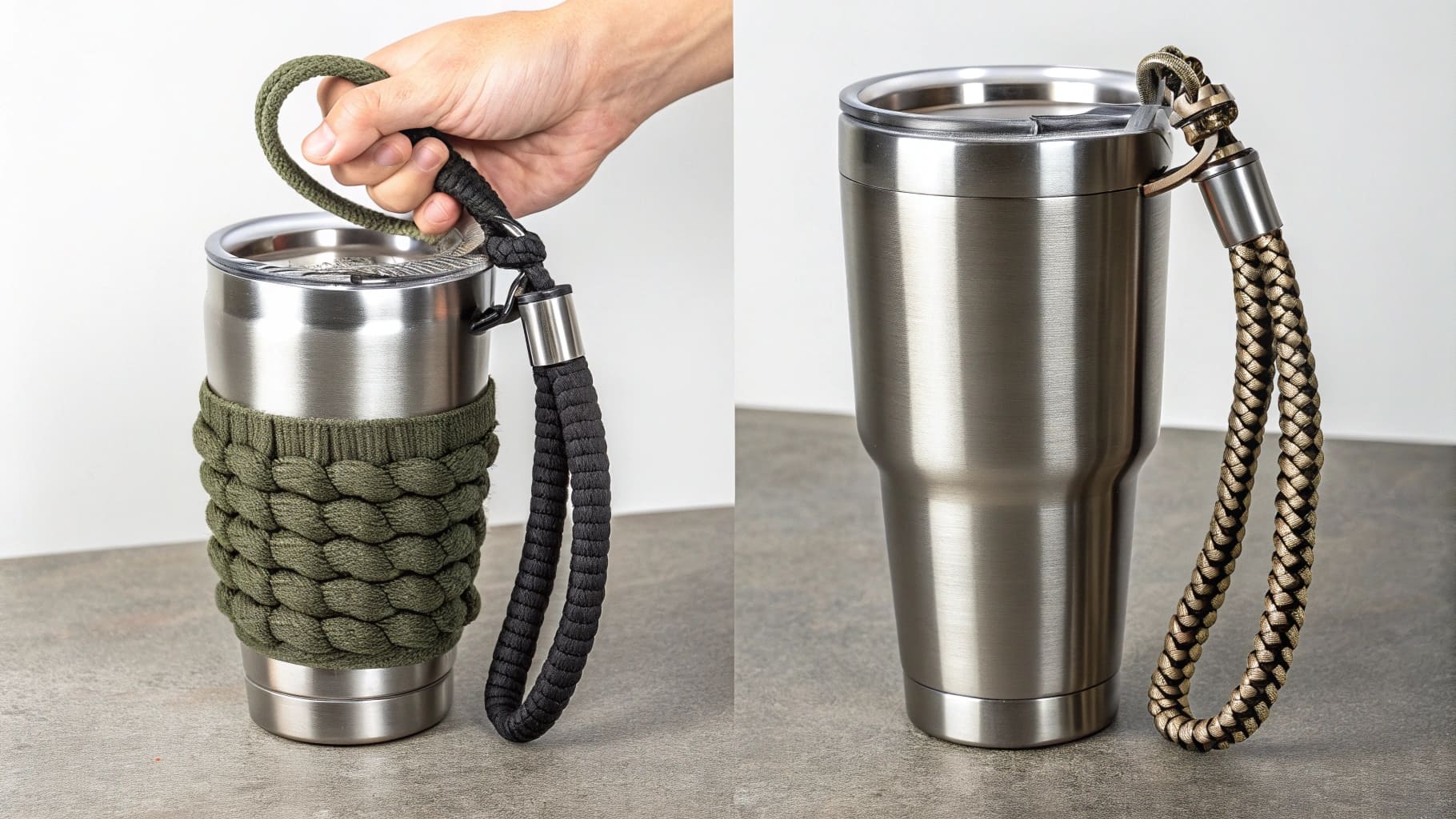
This is the piece most buyers miss. I have reviewed products where the paracord itself was genuine Type IV, but the handle still failed under moderate load because the stitching at the terminal end used standard polyester thread with no UV resistance. After a few months of outdoor exposure, the thread degraded and the attachment point pulled free — while the cord itself remained completely intact.
A high-performance paracord handle system for 2026 needs to pass tests across every component, not just the cord. Here is what a complete system specification should cover:
| Component | Minimum Requirement | Why It Matters |
|---|---|---|
| Cord type | Type III (550 lb) or Type IV (750 lb) | Baseline structural capacity |
| Terminal sealing | Heat-sealed or back-stitched ends | Prevents fraying and slippage under load |
| Stitching thread | UV-resistant, minimum 40-weight | Prevents thread degradation outdoors |
| Stitch pattern | Box-X or bar-tack at attachment points | Distributes load across multiple stitch lines |
| D-rings / hardware | Rated minimum 200 lbs | Weak metal rings are a common failure point |
| Cycle test standard | 5,000+ repetitions at 150% of expected load | Simulates real-world repeated use |
| Cloth bag panel | Reinforced at handle insertion points | Prevents tearing at high-stress zones |
The 5,000-cycle test at 150 percent of expected load is becoming a baseline expectation in European and North American retail channels. For a 40-ounce bottle filled to capacity — roughly 4 pounds — this means the handle needs to pass repeated testing at 6 pounds minimum. That is not a high bar for good-quality cord, but it is a bar that eliminates poor stitching and weak attachment hardware quickly.
If your supplier cannot provide a third-party test report covering both material specs and cycle performance, that is a signal worth taking seriously. As product liability standards tighten across North American and European markets, buyers who have documentation will be protected. Buyers who do not will be exposed.
Conclusion
For 2026, paracord handle strength is a system question, not just a cord question. Know your load limits, specify Type III or IV cord, and always ask for cycle test documentation before approving accessories.
-
"Tan 550 Type III MIL-C-5040H Paracord - Spools", https://www.paracordplanet.com/tan-550-type-iii-mil-c-5040h-paracord-spools/?srsltid=AfmBOormuMCole19hXpPagGaJgF_3bKvZH_idYIPzsqCctd3wcS5g-oh. MIL-C-5040H specifies Type III nylon parachute cord with a minimum breaking strength of 550 pounds, supporting the stated nominal strength for genuine military-spec Type III cord. Evidence role: definition; source type: government. Supports: Standard Type III 550 paracord has a 550-pound breaking strength.. Scope note: This supports the cord specification only, not the strength of a finished bottle handle assembly. ↩
-
"General Use Products: Certification and Testing | CPSC.gov", https://www.cpsc.gov/Business--Manufacturing/Testing-Certification/General-Use-Products-Certification-and-Testing. Consumer product safety frameworks in the EU and North America increasingly emphasize risk assessment, technical documentation, and evidence of conformity for consumer goods, giving contextual support to the claim that buyers face growing documentation expectations. Evidence role: historical_context; source type: government. Supports: European and North American buyers are increasingly expected to document safety and performance testing for carrying accessories.. Scope note: Such sources may not specifically mandate load testing for every bottle handle or carrying accessory. ↩
-
"1919.21 - Marking and posting of safe working loads. - OSHA", http://www.osha.gov/laws-regs/regulations/standardnumber/1919/1919.21. Rigging safety guidance defines working load limit as the maximum load that equipment should support in service, typically below breaking strength by a design or safety factor; this supports the article’s distinction between service load and ultimate failure load. Evidence role: definition; source type: government. Supports: Working load limit refers to the maximum load intended for repeated service rather than the ultimate breaking load.. Scope note: Industrial WLL definitions are an analogy for consumer handle design and may not prescribe a paracord-specific consumer standard. ↩
-
"Parachute cord - Wikipedia", https://en.wikipedia.org/wiki/Parachute_cord. MIL-C-5040H classifies nylon parachute cord into multiple types and assigns minimum breaking-strength requirements to each, supporting the claim that military-spec paracord types differ by strength rating. Evidence role: definition; source type: government. Supports: Military-spec paracord is categorized into several types with different minimum breaking strengths.. Scope note: This supports military-spec cord categories and does not characterize commercial cords sold outside the specification. ↩
-
"Genuine Mil-Spec Type IV 750lb Parachute Cord (MIL-C-5040-H ...", https://www.amazon.com/MEGACord-750lb-Paracord-Parachute-MIL-C-5040-H/dp/B01605GJ3U. MIL-C-5040H assigns Type IV nylon parachute cord a 750-pound minimum breaking strength, higher than the listed Type I, Type IA, Type II, Type IIA, and Type III categories, supporting its status as the strongest standard type in that specification. Evidence role: definition; source type: government. Supports: Type IV 750 paracord has the highest breaking strength among the standard MIL-C-5040H paracord types.. Scope note: This applies to the military specification’s standard categories and not to specialty commercial cords outside the specification. ↩
