
Are insulated water bottles safe for hot and cold under LFGB for OEM buyers?
Last month, a Canadian buyer asked me if our bottles could handle minus 20 degrees Celsius. He worried about product liability claims. I realized many OEM buyers face this same uncertainty about temperature safety standards.
LFGB-certified insulated bottles using 304 or 316 stainless steel can safely hold both hot and cold liquids.1 The certification tests the inner vessel, coating materials, and gaskets under extreme thermal conditions to ensure no harmful substance migration occurs.
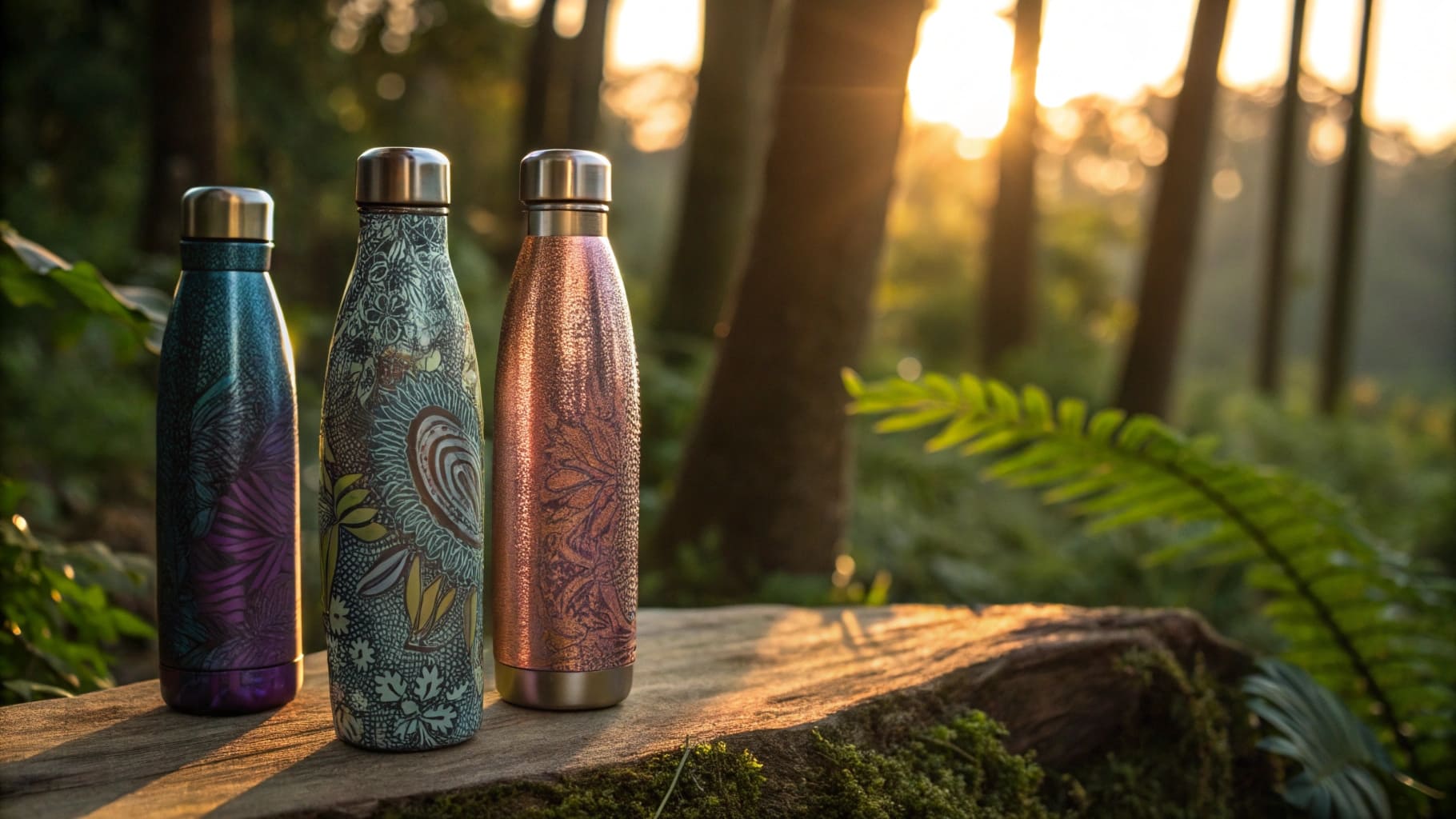
I have been manufacturing stainless steel water bottles for over ten years. During this time, I have seen buyers lose money because they did not understand LFGB requirements properly. Temperature safety is not just about the steel itself. It involves the vacuum seal, gasket materials, and coating composition. When you source bottles for European markets, especially German-speaking regions, this knowledge protects your business from product recalls and legal issues.
Can I put my insulated water bottle in the freezer?
You bought premium insulated bottles for your brand. Your customer puts one in the freezer overnight. The next morning, the bottle sweats constantly and loses insulation power. Now you face angry emails and potential returns.
Yes, you can put LFGB-certified insulated bottles in the freezer if they pass thermal shock testing. The stainless steel stays stable at sub-zero temperatures, but the vacuum seal and coating require special manufacturing standards to prevent condensation damage.
What happens inside a frozen insulated bottle
The stainless steel itself handles freezing without problems. I use 304 or 316 grade steel in all Icobottle products. These grades maintain their structure even at minus 40 degrees Celsius.2 The real challenge comes from the vacuum layer between the inner and outer walls.
When you freeze a poorly made bottle, tiny amounts of moisture trapped during manufacturing can condense. This condensation gradually destroys the vacuum seal. The bottle still looks fine from outside, but it stops keeping drinks cold or hot effectively.
We conduct thermal shock tests on every product line. Our bottles go from minus 20 degrees Celsius to 100 degrees Celsius repeatedly. This process reveals weak points in the vacuum seal before the bottles reach your customers.
Material considerations for freezer safety
Different components react differently to freezing:
| Component | Freezer Behavior | Quality Indicator |
|---|---|---|
| 304 Stainless Steel | Remains stable | No brittleness at minus 20°C |
| Vacuum Layer | Critical point | Zero condensation after thermal shock |
| Powder Coating | May crack if low quality | Maintains adhesion after freeze cycles |
| Silicone Gasket | Stays flexible | No hardening below minus 10°C |
I learned this the hard way five years ago. A buyer ordered 5000 bottles without specifying freezer-safe requirements. His customers in Norway started complaining after three months. The powder coating cracked in freezing conditions. We had to remake the entire order with upgraded coating materials. That cost taught me to always discuss temperature specifications upfront with OEM buyers.
How do I know if my hot water bottle is safe?
Your product passes basic food safety tests. You feel confident. Then a European customs inspection flags your shipment because the migration test results look questionable. Your containers sit in a warehouse while you scramble to provide additional documentation.
A hot water bottle is safe when it has LFGB migration testing documentation3 showing no harmful substance release when filled with boiling water or acidic solutions for extended periods. The certification must cover the steel grade, gasket material, and any coating used.
Understanding LFGB migration testing requirements
LFGB standards require more than just material certificates. The testing process fills bottles with hot water at 95 degrees Celsius or acidic solutions like three percent acetic acid4. The bottles sit filled for two hours or sometimes 24 hours. Then laboratory analysis checks if any substances migrated from the bottle into the liquid.
For Icobottle products, I provide three critical documents to OEM buyers:
Material specifications you need:
- Exact stainless steel grade with mill certificate
- Food-grade silicone gasket composition
- Powder coating ingredient list if applicable
- Test reports showing temperature resistance limits
Temperature limits for different components
Many buyers ask me what temperature their bottles can actually handle. Here is what I tell them based on our manufacturing standards:
| Material Type | Safe Temperature Range | Key Concern |
|---|---|---|
| 304 Stainless Steel | Minus 20°C to 200°C | Maintains structure |
| 316 Stainless Steel | Minus 40°C to 300°C | Superior for acidic drinks |
| Food-grade Silicone | Minus 40°C to 200°C | No harmful substance release |
| Standard Powder Coating | Minus 10°C to 80°C | May fail outside range |
| Premium Powder Coating | Minus 20°C to 120°C | Thermal shock tested |
Last year, Mark from Canada contacted me. He sells bottles to construction companies. Workers fill bottles with coffee at 90 degrees Celsius every morning. After six months, some gaskets started leaking. We discovered his previous supplier used inferior silicone rated only to 150 degrees Celsius. We switched him to our premium gaskets rated to 200 degrees Celsius. He has had zero complaints since then.
Can I put my Stanley tumbler in the freezer?
You see competitors promoting freezer-safe tumblers. You want to offer the same feature. But you worry about making false claims that could damage your brand reputation or trigger customer complaints.
Stanley-style tumblers with vacuum insulation can go in the freezer only if manufactured with freezer-grade powder coating and tested vacuum seals. The stainless steel tolerates freezing, but standard powder coating and vacuum seals may fail, causing insulation loss and coating damage.

Why standard tumblers fail freezer tests
The Stanley tumbler design became popular worldwide. Many manufacturers copy the design but skip the thermal testing. I see this problem constantly with new OEM buyers who want the lowest possible price.
Standard manufacturing for tumblers focuses on room temperature to hot beverage performance. The powder coating adheres well enough for normal use. But freezing temperatures make inferior coatings brittle5. When you take a frozen tumbler and immediately fill it with hot coffee, the rapid temperature change causes microscopic cracks. After several freeze-thaw cycles, the coating starts peeling.
The vacuum seal faces similar stress. During manufacturing, even tiny amounts of residual moisture or air pockets can hide in the vacuum layer. Freezing amplifies these defects. The moisture expands, creating pressure that weakens the seal over time.
Cost implications of freezer-safe certification
When buyers specify freezer-safe requirements during OEM negotiations, I adjust the manufacturing process and materials. This affects the unit cost:
Additional requirements for freezer-safe products:
- Premium powder coating formulation
- Extended vacuum pump time to remove all moisture
- Thermal shock testing between minus 20°C and 100°C
- Upgraded quality control inspection points
- Additional material testing documentation
These improvements typically increase unit costs by eight to fifteen percent. Some buyers resist this increase initially. I explain that one product recall costs more than the upgrade for 10000 units. Most buyers choose the safer option after understanding the risk.
Three months ago, a buyer from Germany insisted on the cheapest price. I warned him about freezer safety. He went with another supplier who offered twenty percent lower pricing. Two months later, he came back. His customers reported coating failures after freezing. He lost his retail account. Now he orders from Icobottle with full freezer-safe specifications.
Marketing freezer capability correctly
If your bottles pass freezer-safe testing, this becomes a strong selling point for European markets. Health-conscious consumers want versatile products. But you need proper documentation to make these claims.
I provide buyers with:
- LFGB certification showing temperature range
- Thermal shock test reports
- Material composition documents
- Usage instruction templates for your customers
You can then market bottles as suitable for freezing water, making ice coffee, or storing in cold environments. This differentiates your product in competitive markets where consumers scrutinize quality claims carefully.
Conclusion
LFGB certification combined with proper thermal testing protects your OEM business from costly product failures. Understanding temperature limits for each component helps you source bottles that truly meet your market requirements safely.
-
"German food contact material testing", https://www.ntek.org.cn/en/310/174-645.html. German and EU food-contact rules assess whether materials intended to contact food release substances under foreseeable use conditions, including migration testing with relevant food simulants and temperatures; this supports the safety framework behind LFGB-compliant bottles rather than proving any individual bottle model is safe. Evidence role: general_support; source type: government. Supports: LFGB-certified insulated bottles using 304 or 316 stainless steel can safely hold both hot and cold liquids when properly tested.. Scope note: Contextual support only; actual safety depends on product-specific laboratory reports and test conditions. ↩
-
"[PDF] A Historical Review of Cryogenic Mechanical Testing on Type 304 ...", https://tsapps.nist.gov/publication/get_pdf.cfm?pub_id=959555. Metallurgical references on austenitic stainless steels report that grades such as 304 and 316 retain toughness at low and cryogenic temperatures, supporting the claim that the steel itself is not the main failure point at ordinary freezer temperatures. Evidence role: mechanism; source type: education. Supports: 304 and 316 stainless steels can maintain structural integrity at temperatures as low as minus 40 degrees Celsius.. Scope note: Mechanical performance depends on alloy condition, fabrication, weld quality, and exact service environment. ↩
-
"Legislation - Food Safety - European Commission", https://food.ec.europa.eu/food-safety/chemical-safety/food-contact-materials/legislation_en. Food-contact compliance documentation in the EU is based on evidence that materials meet migration and composition requirements under specified test conditions, supporting the need for migration test reports rather than only material certificates. Evidence role: expert_consensus; source type: government. Supports: Hot-water bottle safety for European buyers should be supported by LFGB/EU migration testing documentation.. Scope note: The documentary requirements differ by material type and jurisdiction; LFGB compliance is usually demonstrated through product-specific test reports and declarations rather than a single universal certificate. ↩
-
"Chemistry Recommendations for Submissions of Food Contact ...", https://www.fda.gov/regulatory-information/search-fda-guidance-documents/guidance-industry-preparation-premarket-submissions-food-contact-substances-chemistry. EU food-contact testing uses food simulants, including acetic-acid solutions for acidic foods, and prescribes time-temperature conditions intended to represent foreseeable contact, supporting the article’s description of hot and acidic migration testing in principle. Evidence role: definition; source type: government. Supports: Migration testing may use hot-water conditions and acidic food simulants such as 3% acetic acid to evaluate substance release from bottle materials.. Scope note: The exact temperature and duration vary by material, intended use, and test standard; a source may not confirm the specific 95°C, two-hour, or 24-hour values for every bottle. ↩
-
"Polymer-Based Thermal Protective Composites: The Role of ... - PMC", https://pmc.ncbi.nlm.nih.gov/articles/PMC12114836/. Coatings literature on thermal cycling and low-temperature exposure shows that polymer coatings can lose flexibility, experience thermal stress, and develop adhesion or cracking failures, supporting the mechanism described for low-quality powder coatings. Evidence role: mechanism; source type: paper. Supports: Inferior powder coatings may become brittle or crack under freezing and rapid temperature-change conditions.. Scope note: The evidence would support the general coating-failure mechanism; actual bottle coating performance depends on formulation, substrate preparation, cure conditions, and test results. ↩