
Bottle cleaning brushes: bristles, tip guards, MOQ, and export cartons
Every year, I receive dozens of questions about bottle accessories. Most buyers focus on the bottles themselves. But they miss a key detail. The cleaning brush often determines whether customers love or hate their purchase.
The best bottle cleaning brush has soft bristles that reach the bottom, a flexible stem for curved bottles, and a protective tip guard. For B2B buyers, understanding MOQ typically ranges from 1,000 to 3,000 pieces, with export cartons holding 100-200 brushes for efficient container loading.
I learned this lesson the hard way three years ago. A Canadian distributor ordered 5,000 stainless steel water bottles from me. He was thrilled with the quality. But six months later, he called with a problem. His customers complained about cleaning difficulties. He lost repeat orders. Since then, I always discuss cleaning solutions1 with my clients before they place bottle orders.
What is the best thing to clean bottles with?
You need the right tool for the job. Many people try sponges or regular dish brushes. These tools fail because they cannot reach the bottle bottom. The result is bacteria buildup and bad odors.
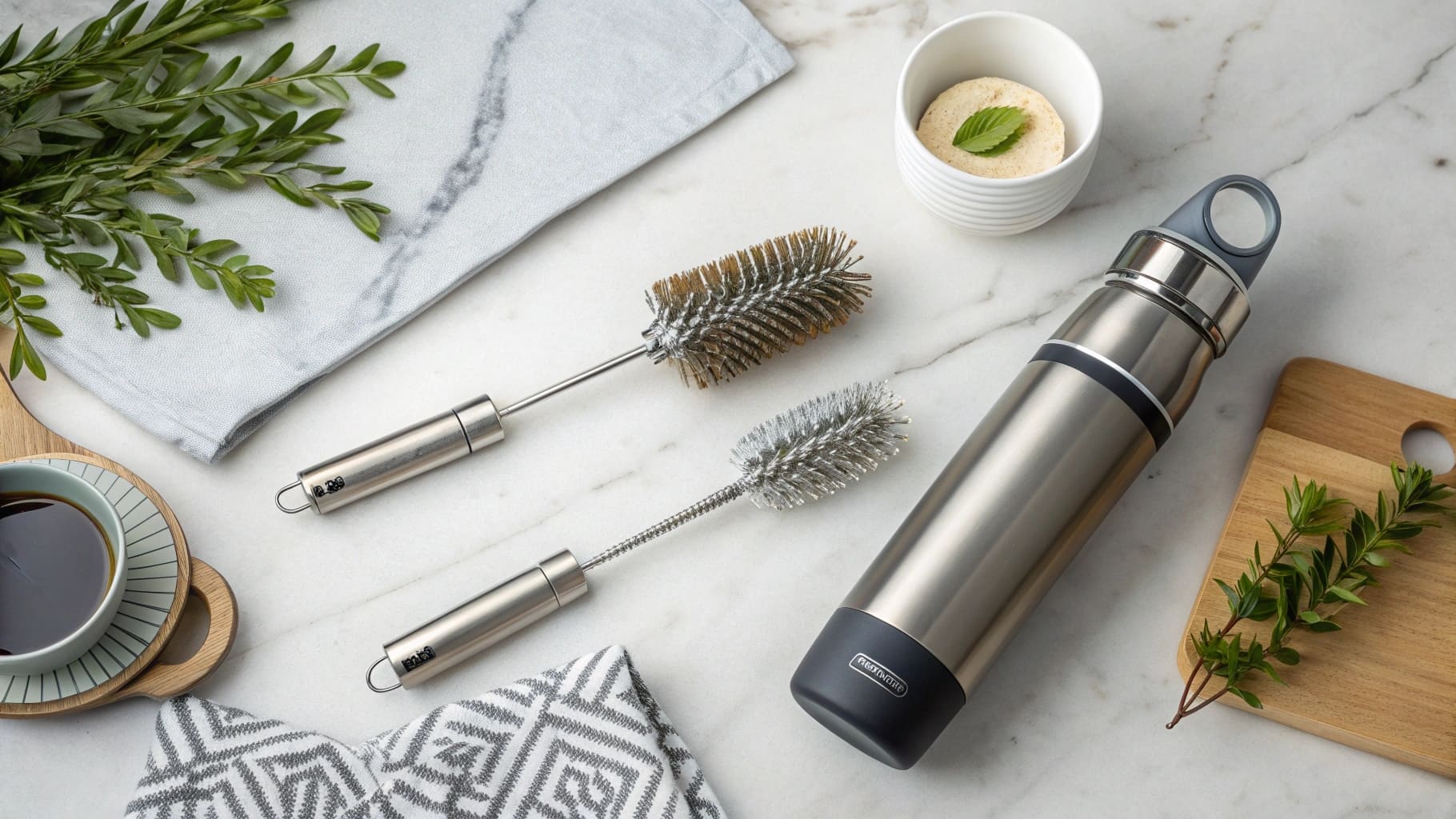
A dedicated bottle brush with long, flexible bristles works best for cleaning stainless steel water bottles. The brush must reach all interior surfaces, especially the bottom corners where residue accumulates. Pair it with warm soapy water for daily cleaning and occasional vinegar solution for deep cleaning.
Why Standard Cleaning Tools Fail
Standard kitchen sponges are too short. They reach maybe halfway down a standard water bottle. The bottom half remains dirty. I have seen bottles returned to distributors because customers could not clean them properly.
Dish brushes face similar problems. Their handles are rigid. They cannot bend to reach bottle curves. The bristles are often too soft. They fail to scrub stuck-on residue from protein shakes or coffee.
The Anatomy of an Effective Bottle Brush
A proper bottle brush has three critical components. First, the bristles must be 6-8 inches long for standard bottles. Second, the handle needs flexibility. It should bend without breaking. Third, the bristle density matters. Too sparse and cleaning takes forever. Too dense and the brush cannot fit through narrow openings.
| Component | Standard Specification | Purpose |
|---|---|---|
| Bristle Length | 6-8 inches | Reaches bottle bottom |
| Handle Material | Flexible nylon or steel wire | Allows bending for curves |
| Bristle Density | 30-40 bristles per cm² | Balances cleaning power and fit |
| Tip Guard | Silicone or plastic cap | Protects bottle bottom from scratches |
I once helped a startup founder in Seattle. She ordered 2,000 bottles for her gym business. I included matching brushes in her package. Her customers loved the complete solution. She reordered three times that year.
Is a silicone bottle brush better?
This question comes up in almost every client meeting. The answer depends on your customer base. Silicone offers benefits for certain users. But traditional nylon works better for others. You need to understand the trade-offs.
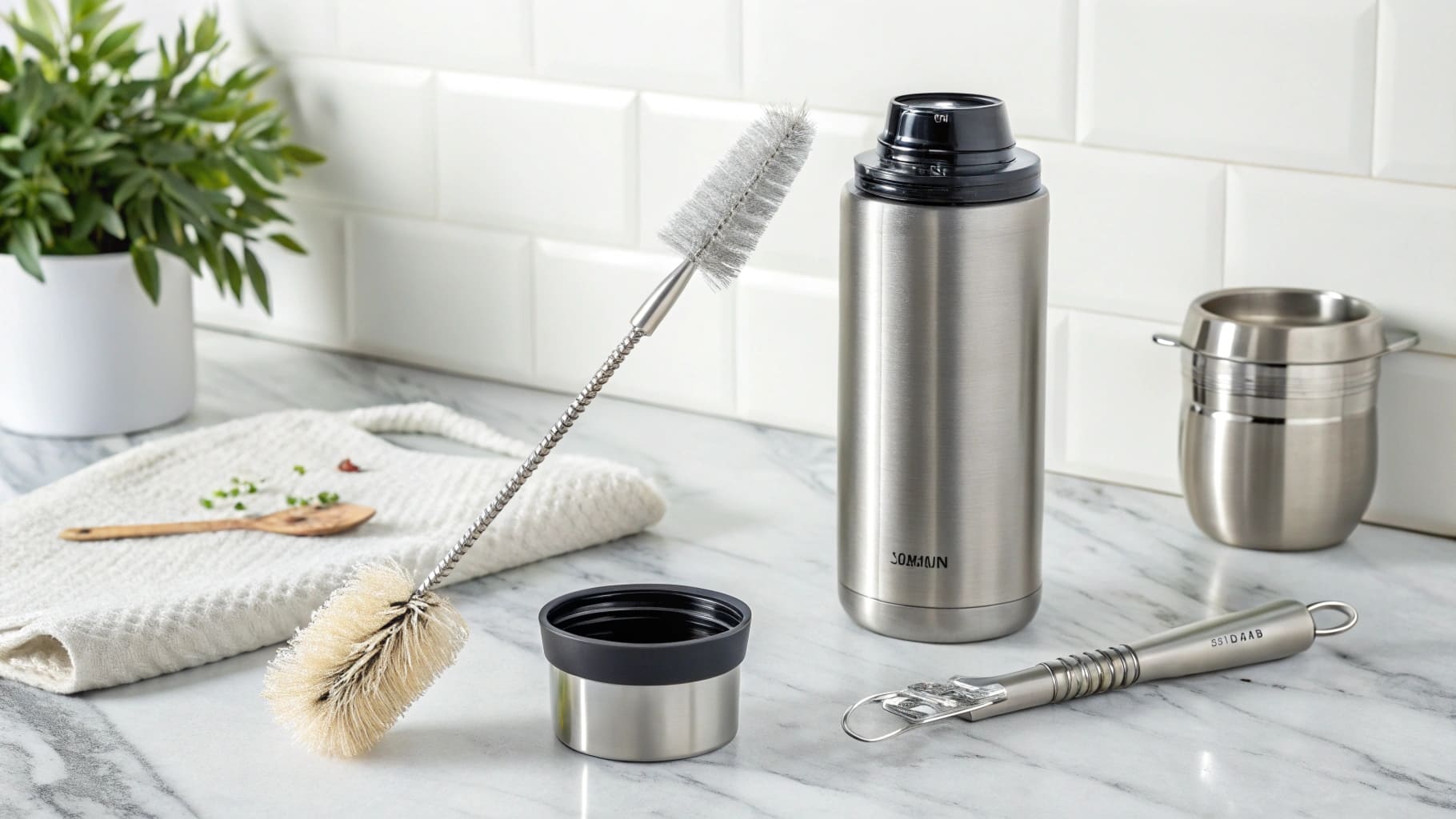
Silicone bottle brushes excel at protecting premium bottle interiors from scratches. They are gentler, dry faster, and resist bacteria growth better than nylon. However, they provide less aggressive scrubbing power for stubborn residue like dried coffee or protein shake buildup.
Material Comparison: Silicone vs Nylon
Silicone brushes cost more to manufacture. The MOQ from most Chinese suppliers starts at 3,000 pieces. Nylon brushes have lower MOQs, sometimes as low as 1,000 pieces. This matters when you are testing a new market.
One of my European clients sells premium double-wall bottles at $45 retail. His customers expect luxury. I recommended silicone brushes. The soft material matches his brand positioning. Another client sells budget bottles at $12. I suggested nylon brushes. His customers want cleaning power over aesthetics.
Performance Differences in Real Use
Silicone bristles are softer. They bend easily under pressure. This makes them poor at removing dried or sticky residue. But they excel at daily maintenance cleaning. Your customers who rinse bottles after each use will love silicone.
Nylon bristles are stiffer. They scrub harder. They remove coffee stains and protein buildup effectively. But they can scratch lower-quality stainless steel. For bottles without proper interior polishing, nylon might create fine scratches over time.
| Feature | Silicone Brushes | Nylon Brushes |
|---|---|---|
| Scratch Resistance | Excellent | Good |
| Cleaning Power | Moderate | Strong |
| Drying Time | Fast (1-2 hours) | Slower (3-4 hours) |
| Bacteria Resistance | High | Moderate |
| Cost per Unit | $1.20-$2.00 | $0.60-$1.20 |
| Typical MOQ | 3,000+ pieces | 1,000+ pieces |
Making the Right Choice for Your Market
I recommend offering both types if your order volume allows. Create a basic cleaning kit with nylon brushes2. Offer a premium kit with silicone brushes. This strategy lets customers choose based on their needs and budget.
What brush type is best for cleaning?
The bottle opening size determines the optimal brush type. Standard mouth bottles need slim brushes. Wide mouth bottles need larger diameter brushes. Matching brush to bottle design is not optional. It is essential for effective cleaning.
For standard mouth openings (2.5-3cm), choose slim brushes with angled bristles that reach corners. For wide mouth bottles and tumblers (5-8cm), use brushes with 4-5cm diameter heads and straight bristles. The brush diameter should be 80-90% of the bottle opening for effective scrubbing without forcing.
Standard Mouth Bottle Brushes
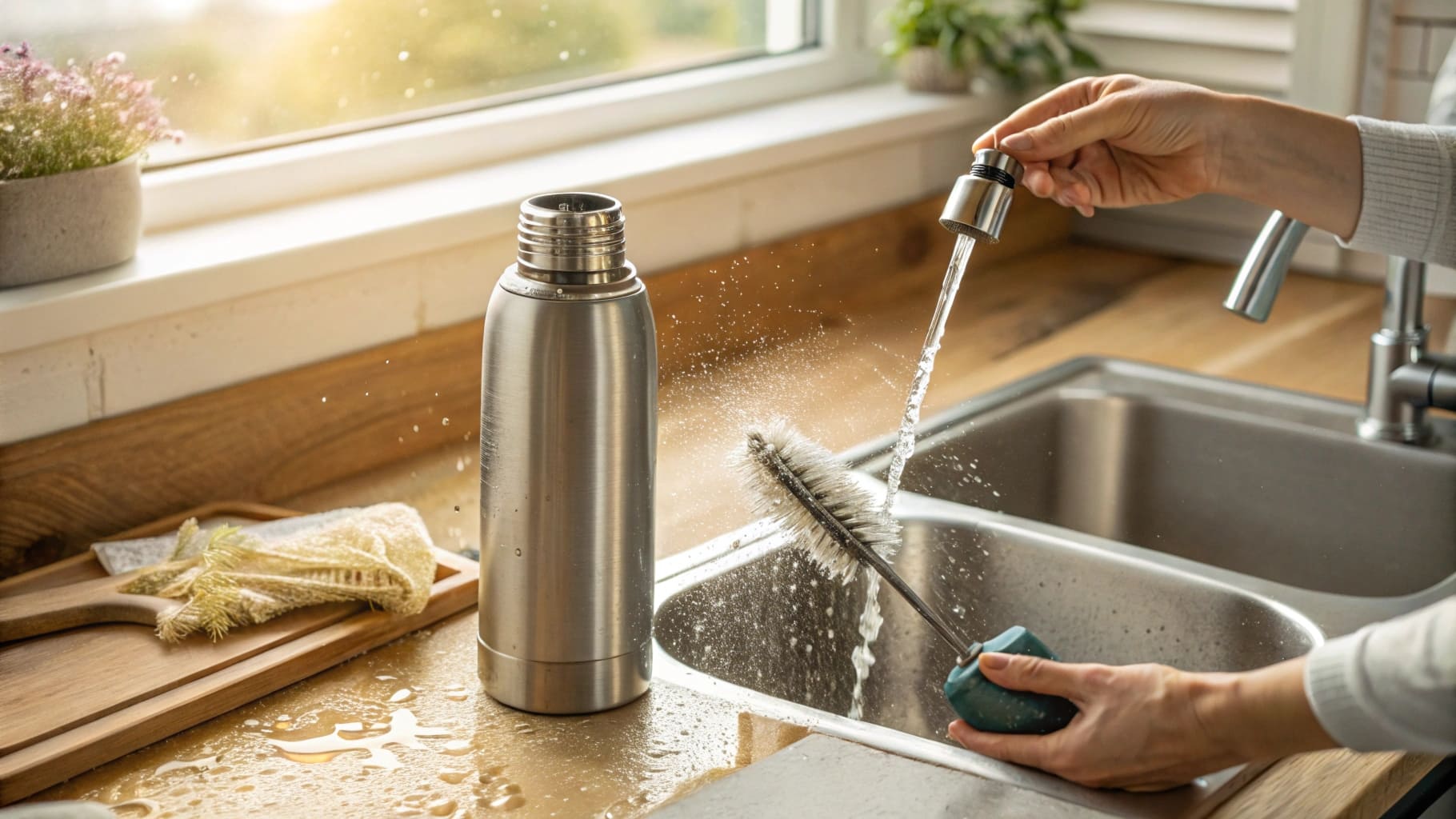
Most water bottles have standard mouth openings. These measure 2.5 to 3 centimeters across. The brush head must fit through easily. But it also needs enough bristle spread to contact the walls during cleaning.
I use a simple rule. The brush head should be 2 to 2.5 centimeters when compressed. When inside the bottle, the bristles expand to 4 to 5 centimeters. This creates the scrubbing action needed for effective cleaning.
The handle length matters too. Standard bottles are 20 to 25 centimeters tall. The brush needs to be at least 25 centimeters long. This ensures reaching the bottom without your hand getting wet.
Wide Mouth Bottle Brushes
Wide mouth bottles have openings of 5 to 8 centimeters. These bottles are popular for smoothies and meal replacement shakes. The larger opening allows thicker liquids. But it also requires a different brush design.
For wide mouth bottles, I recommend brushes with 4 to 5 centimeter diameter heads. The bristles should be straight rather than angled. This allows even pressure across the entire interior surface. Some suppliers offer dual-ended brushes3. One end for the bottle body. One end for the lid and threads.
Specialized Brushes for Specific Bottles
Sports bottles with straws need straw cleaning brushes. These are thin, wire-based brushes that fit inside 6-8mm diameter straws. Coffee tumblers with lids need small detail brushes for gasket grooves. I always ask clients about their bottle features before recommending brush combinations.
| Bottle Type | Opening Size | Recommended Brush Head | Handle Length | Special Features |
|---|---|---|---|---|
| Standard Water Bottle | 2.5-3cm | 2-2.5cm compressed | 25-30cm | Angled bristles |
| Wide Mouth Bottle | 5-8cm | 4-5cm diameter | 25-30cm | Straight bristles |
| Sports Bottle with Straw | 2.5-3cm | 2cm + straw brush | 25cm + 15cm straw brush | Two-piece set |
| Coffee Tumbler | 5-7cm | 4cm + detail brush | 20-25cm | Includes lid brush |
Export Packaging Considerations
Export cartons for bottle brushes require careful planning. Standard cartons measure 40cm x 30cm x 30cm. These hold approximately 100 to 200 brushes depending on the design. Brushes with tip guards pack more efficiently. The guards prevent bristles from bending during shipping.
I always recommend inner poly bags. They protect brushes from moisture during ocean freight. Group brushes in sets of 10 or 20 per bag. This makes unpacking easier for your warehouse team. For retail-ready packaging, use individual clear plastic tubes. These add cost but eliminate repackaging labor.
One Australian client learned this the expensive way. He ordered 5,000 brushes without tip guards. The brushes arrived with bent bristles. We had to sort through every piece. Only 3,000 were sellable. Now he always specifies tip guards in his purchase orders.
Conclusion
The right bottle brush combines proper materials, correct sizing, and practical MOQ for your business needs. I have seen too many distributors lose customers over poor cleaning accessories. Your bottle quality means nothing if customers cannot maintain it properly.