
How to Price Insulated Tumblers in 2026: MOQ Tiers, EXW/FOB, and Margins?
Pricing insulated tumblers wrong costs you profits or customers. Many buyers struggle with MOQ structures and freight terms. Getting this right separates successful brands from failed product launches.
In 2026, insulated tumbler pricing follows MOQ tiers1. Bulk orders get lower unit costs. EXW pricing starts at the factory. FOB pricing includes local transport to the port. Margins depend on your volume commitment.
I have seen buyers lose thousands because they misunderstood pricing structures. Some ordered too little and paid premium rates. Others committed to volumes they could not sell. The pricing model for insulated tumblers in 2026 requires understanding three core elements. You need to know MOQ breakpoints. You need to grasp freight terms. You need to calculate realistic margins based on your market position.
How Much Do Sublimation Tumblers Sell For?
Sublimation tumbler pricing confuses new buyers. You see prices ranging from $2 to $15 per unit. The gap seems huge. Understanding the factors behind these prices saves you from costly mistakes.
Sublimation tumblers sell for $3 to $8 per unit at wholesale level. Retail prices range from $15 to $35. The price depends on material grade2, size, coating quality, and order volume.
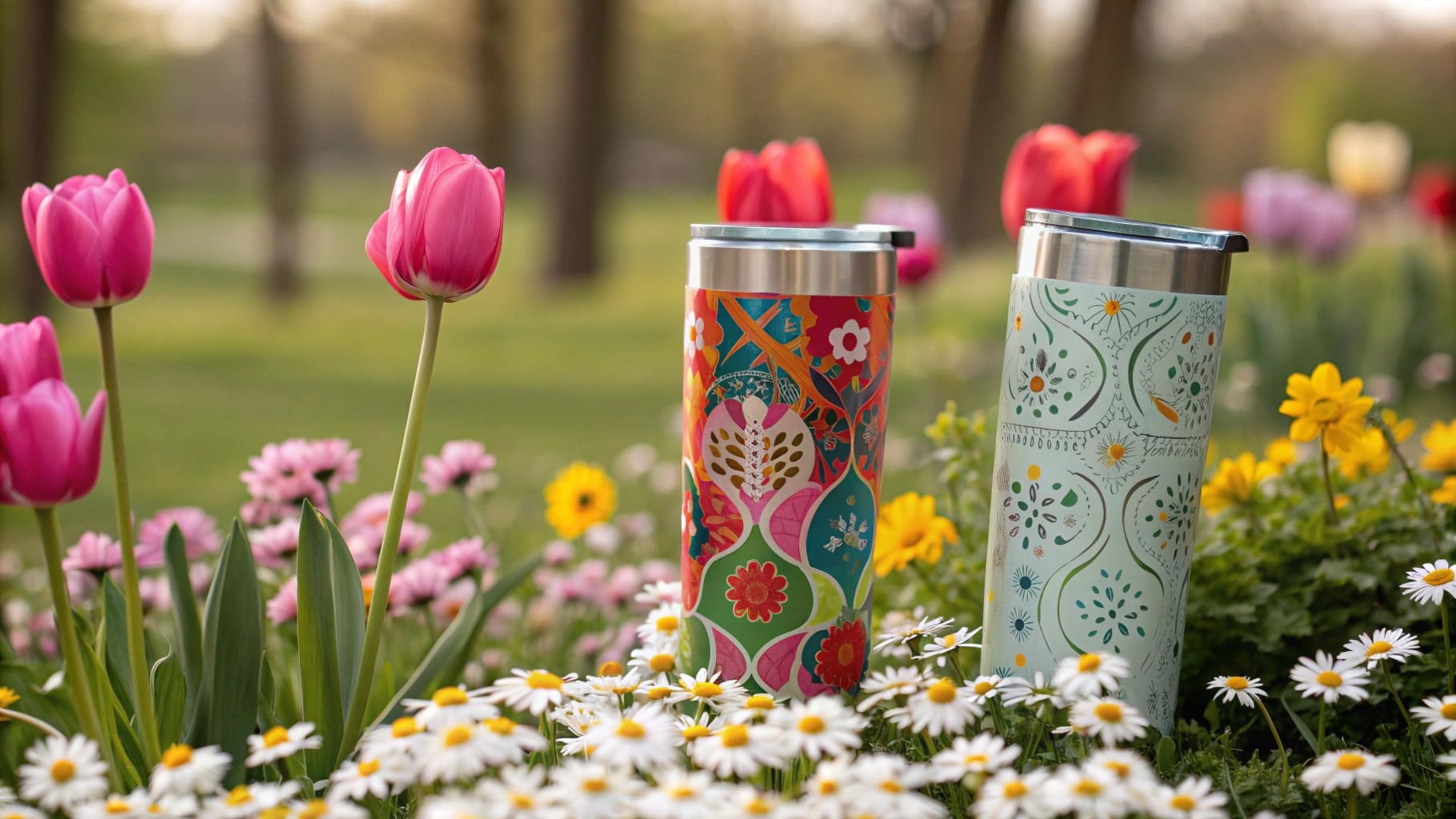
I work with buyers who sell sublimation tumblers3 through different channels. The pricing structure depends on where you source and where you sell. A 20oz stainless steel sublimation tumbler with basic white coating costs around $3.50 at 1,000 pieces. The same tumbler drops to $2.80 at 5,000 pieces. At 10,000 pieces, you can negotiate down to $2.40.
Material quality drives the base cost. True 18/8 food-grade stainless steel costs more than lower-grade alternatives. Some suppliers use 201 stainless steel and call it food-grade. This cuts their cost by 30%. You need to verify the material specification through third-party testing.
The sublimation coating adds another cost layer. Quality polymer coating withstands 400°F heat during transfer without yellowing. Cheap coatings fail after a few wash cycles. I have tested both types. The quality coating adds $0.40 to $0.60 per unit. This investment prevents customer complaints and returns.
Order volume creates the biggest price difference. I structure our MOQ tiers to reward commitment while allowing smaller test orders.
| Order Quantity | Unit Price (EXW) | Total Investment | Unit Price (FOB) |
|---|---|---|---|
| 500 pcs | $4.20 | $2,100 | $4.45 |
| 1,000 pcs | $3.50 | $3,500 | $3.70 |
| 3,000 pcs | $3.00 | $9,000 | $3.15 |
| 5,000 pcs | $2.80 | $14,000 | $2.92 |
| 10,000 pcs | $2.40 | $24,000 | $2.48 |
These numbers show why volume matters. A buyer ordering 10,000 pieces pays 43% less per unit than someone ordering 500 pieces. Your retail margin expands significantly at higher volumes. Selling each tumbler at $20 retail gives you different profits. At $4.20 cost per unit, you make $15.80 gross profit. At $2.40 cost per unit, you make $17.60 gross profit. That extra $1.80 per unit adds $18,000 in profit on 10,000 pieces.
Customization costs add to the base price. Logo printing through sublimation transfer is included if you buy blank sublimation tumblers. Laser engraving adds $0.30 to $0.50 per unit. Embossing or debossing adds $0.60 to $0.80. Color changes from standard white coating to other colors add $0.20 to $0.40 per unit. Custom packaging beyond standard white boxes adds $0.50 to $1.50 per unit.
Payment terms affect your total cost too. I offer standard terms of 30% deposit and 70% against Bill of Lading copy. Some buyers want extended terms. Net 30 or Net 60 payment terms add 5% to 8% to the unit price. This covers our capital cost and risk exposure.
Shipping method changes your landed cost significantly. Sea freight from China to Los Angeles takes 18 to 25 days. Air freight takes 3 to 5 days. Sea freight costs around $0.15 per unit for 10,000 pieces. Air freight costs $2.50 to $3.00 per unit. Express courier costs $8 to $12 per unit. Choose based on your timeline and cash flow situation.
What's Better Than a Yeti Tumbler?
Buyers ask me this question constantly. They want Yeti quality without the Yeti price. The answer depends on what "better" means to your specific customers.
Better than Yeti means matching or exceeding insulation performance at a lower price point. Quality manufacturers achieve this through similar double-wall vacuum technology. Some add innovations like better lid design4s or additional accessories.
I manufacture tumblers that match Yeti's core performance metrics. Our production capacity exceeds 1.2 million units monthly. This scale allows us to invest in the same vacuum sealing technology that Yeti uses. The insulation performance comes down to three technical factors.
First, the vacuum seal quality5 determines temperature retention. We achieve 99.8% vacuum in the space between walls. Yeti achieves similar numbers. Lesser manufacturers only reach 95% to 97% vacuum. This 2% to 3% difference cuts insulation time by 40%. A proper vacuum seal keeps drinks cold for 24 hours and hot for 12 hours. Poor vacuum reduces this to 14 hours cold and 6 hours hot.
Second, the stainless steel gauge affects durability and heat transfer. We use 0.4mm to 0.5mm wall thickness for the inner and outer walls. Thinner steel (0.3mm) dents easily and conducts more heat. Thicker steel (0.6mm) adds unnecessary weight and cost. Yeti uses similar gauge steel. The sweet spot balances durability with weight and insulation.
Third, the copper lining6 inside the vacuum space boosts insulation by 15% to 20%. Not all manufacturers add this feature. Yeti includes it in their premium models. We offer it as standard on orders above 3,000 pieces. Below that volume, it is optional at $0.35 per unit additional cost.
Beyond insulation, lid design separates good tumblers from great ones. I have refined our lid design over six iterations. The current version uses a three-seal system. A silicone ring seals against the tumbler rim. A second seal prevents leaks at the drinking port. A third seal on the sliding closure stops spills during transport. Yeti's lid uses a similar approach. Many cheaper alternatives only have one seal point. These leak within weeks of regular use.
Certification proves quality claims. We hold FDA certification for food contact. We have LFGB certification for European markets. We maintain BPA-free certification7 on all plastic components. These certifications cost $15,000 to $25,000 annually to maintain. Manufacturers without these certifications cannot legally sell into regulated markets. Always verify certification documents before placing orders.
Customization capability makes a product better for brand-building buyers. We offer powder coating in any Pantone color at 1,000 piece minimum. Laser engraving creates permanent logos that never wear off. Hydro-dipping applies complex patterns like wood grain or camouflage. UV printing allows full-color graphics on the tumbler exterior. These options let you create a product that stands out from Yeti's standard offerings.
Production consistency matters for repeat orders. Our automated production lines ensure each tumbler meets the same specifications. Manual production creates variations between batches. I have seen complaints from buyers whose second order did not match their first order in color or finish. Automated lines eliminate this problem.
What makes a tumbler truly better than Yeti? It matches the insulation performance. It costs 40% to 60% less. It offers more customization options. It comes from a manufacturer with certifications and production capacity to fulfill repeat orders. This combination gives you a product you can build a brand around.
What is the Difference Between Yeti and Stanley Tumblers?
The Yeti versus Stanley debate comes up in every pricing discussion. Understanding their differences helps you position your own branded tumblers.
Yeti tumblers use premium materials with a rugged outdoor focus. Stanley tumblers use 90% recycled steel8 with an environmental angle. Both deliver excellent insulation. The price difference reflects brand positioning and material sourcing philosophy.
I have manufactured tumblers similar to both styles. The material difference creates the first major distinction. Stanley sources recycled 18/8 stainless steel. This appeals to environmentally conscious buyers. The recycled content adds $0.15 to $0.25 per unit to material cost. Stanley passes this cost to customers through premium pricing. Their environmental marketing justifies the higher retail price.
Yeti uses virgin 18/8 stainless steel. This gives them more control over material consistency. Virgin steel shows fewer impurities and more uniform appearance after finishing. The performance difference between recycled and virgin stainless steel is minimal. Both achieve the same insulation and durability. The choice is mostly about brand story and buyer values.
The vacuum insulation technology is nearly identical. Both brands use double-wall construction with vacuum sealing. Both achieve similar temperature retention times. Stanley markets their tumblers as keeping drinks cold for 11 hours and hot for 7 hours. Yeti claims 24 hours cold and 12 hours hot. The difference comes from marketing interpretation and testing methods. In real-world use, the performance is comparable.
Powder coating finish differs slightly between brands. Yeti uses a slightly thicker powder coat. This adds durability but makes the tumbler feel heavier. Stanley uses a thinner, smoother finish. This creates a more elegant look. The coating thickness difference is only 20 to 30 microns. Both resist scratching and wear effectively.
Lid design shows more variation. Stanley's lid includes a rotating cover for the drinking port. This prevents splashing while driving. Yeti's MagSlider lid uses magnets to keep the port covered. Both approaches work well. The Stanley design costs slightly less to manufacture. The rotating mechanism is simpler than Yeti's magnetic system. As a manufacturer, I can produce either style. The Stanley-type lid costs $0.40 to $0.50 per unit. The Yeti-type magnetic lid costs $0.65 to $0.80 per unit.
Size offerings create another difference. Stanley offers larger capacity options up to 40oz. Yeti focuses on 20oz and 30oz sizes. Buyers wanting larger tumblers prefer Stanley. Buyers wanting compact tumblers choose Yeti. I manufacture sizes from 12oz to 40oz. The manufacturing cost scales linearly with size. A 40oz tumbler costs about 40% more than a 20oz tumbler in materials and production time.
The sustainability story gives Stanley a marketing advantage with certain buyer segments. Environmental claims resonate with younger buyers and corporate purchasers with ESG goals. If you plan to target these segments, using recycled steel makes sense. The added cost becomes a selling point rather than a burden. I can source recycled stainless steel for buyers who want this positioning. The lead time extends by 2 to 3 weeks due to limited suppliers of recycled material.
Brand positioning creates the largest price gap. Yeti positions as premium outdoor gear. Stanley positions as heritage quality with environmental responsibility. Both sell 20oz tumblers retail for $25 to $35. Your private label tumbler can match their quality at $12 to $18 retail. This pricing targets buyers who want quality without brand premium. The middle market between cheap $8 tumblers and premium $30+ tumblers offers significant opportunity.
Manufacturing specifications for Yeti-style versus Stanley-style tumblers differ mainly in material sourcing and lid design:
| Feature | Yeti Style | Stanley Style |
|---|---|---|
| Steel Type | Virgin 18/8 | Recycled 18/8 |
| Wall Thickness | 0.5mm | 0.4-0.5mm |
| Powder Coat | 60-80 microns | 40-60 microns |
| Lid Design | Magnetic slider | Rotating cover |
| Vacuum Level | 99.8% | 99.7-99.8% |
| MOQ for Custom | 1,000 pcs | 1,000 pcs |
| Unit Cost (5,000 pcs) | $3.20 | $3.35 |
The cost difference of $0.15 per unit for Stanley-style reflects the recycled steel premium. This small difference disappears in your margin when you market the environmental angle effectively. Buyers willing to pay for sustainability provide better margins than those shopping purely on price.
Conclusion
Pricing insulated tumblers right in 2026 requires understanding MOQ tiers, freight terms, and quality factors. Match your pricing strategy to your target market and volume capability.
-
Understanding MOQ tiers is crucial for optimizing your purchasing strategy and maximizing profits. ↩
-
Material grade is a major factor in pricing; knowing this can help you choose the right product. ↩
-
Explore the pricing structure of sublimation tumblers to avoid costly mistakes in your purchases. ↩
-
Lid design affects usability; knowing the options can help you choose the best product. ↩
-
Vacuum seal quality is crucial for insulation; learn how it impacts your tumbler's effectiveness. ↩
-
Copper lining enhances insulation; understanding its benefits can guide your purchasing decisions. ↩
-
BPA-free certification is crucial for health safety; explore its importance in product selection. ↩
-
Using recycled steel can appeal to eco-conscious consumers; explore its advantages. ↩