
Custom insulated tumbler programs: MOQ, Pantone, engrave depth, and AQL
Starting a custom tumbler program feels exciting until you face the technical details. MOQ requirements can lock up your budget. Color mismatches ruin your brand image. Poor quality control wastes your investment.
Custom tumbler programs require careful attention to four key specifications: minimum order quantities1, Pantone color matching, engraving depth standards, and AQL quality levels. These factors directly determine your pricing structure, product consistency, and market success rates.
I have worked with hundreds of B2B buyers over the years. The successful ones always master these technical specifications before placing orders. They know exactly what to ask. They understand how each parameter affects their bottom line. This knowledge saves them from costly mistakes and delays.
How Much Should You Charge for Etched Tumblers?
Your pricing strategy can make or break your tumbler business. Set prices too high and customers walk away. Price too low and you cannot cover costs. Finding the right balance requires understanding production variables.
Etched tumbler pricing depends on five main factors: engraving depth, design complexity2, surface coverage area, order volume, and machine time requirements. Deeper engravings cost more because they require longer production time and cause more tool wear.

Breaking Down Engraving Costs
I always tell my clients to think about engraving as a layered cost structure. Each element adds to the final price.
First, engraving depth matters significantly. Shallow engravings between 0.1mm and 0.15mm work for simple logos. They take less time and use less machine power. Deep engravings from 0.2mm to 0.3mm create dramatic visual effects. They require multiple passes and specialized tools. The deeper you go, the more you pay.
Second, design complexity changes everything. A simple text logo takes 2-3 minutes per tumbler. An intricate pattern with fine details might need 10-15 minutes. The machine operator must adjust settings carefully. Mistakes cost time and materials.
Third, surface area coverage directly impacts machine time. A small logo covering 5 square centimeters processes quickly. A full wrap design covering 50 square centimeters takes significantly longer. Calculate your coverage area before requesting quotes.
| Factor | Low Cost Range | High Cost Range | Impact on Price |
|---|---|---|---|
| Engraving Depth | 0.1-0.15mm | 0.2-0.3mm | +15-30% |
| Design Complexity | Simple text | Detailed patterns | +20-50% |
| Coverage Area | Under 10 sq cm | Over 40 sq cm | +25-60% |
| Order Volume | 1000+ units | Under 500 units | -20-35% |
I recommend requesting samples with your actual designs. These samples typically take 5-7 days to produce. Sometimes they take even longer for complex patterns. This waiting period frustrates buyers but provides crucial information. You can evaluate engraving quality, depth consistency, and visual appeal. Only after seeing samples can you set accurate retail prices.
Remember that volume discounts apply to engraving costs. An order of 500 tumblers costs more per unit than 2000 tumblers. The machine setup time gets distributed across more units. Skilled craftspeople work more efficiently on larger batches.
What is the Perfect Tumbler Size for Your Market?
Choosing the wrong tumbler size leads to poor sales and excess inventory. Your target audience determines the ideal capacity. Office workers need different sizes than outdoor enthusiasts.
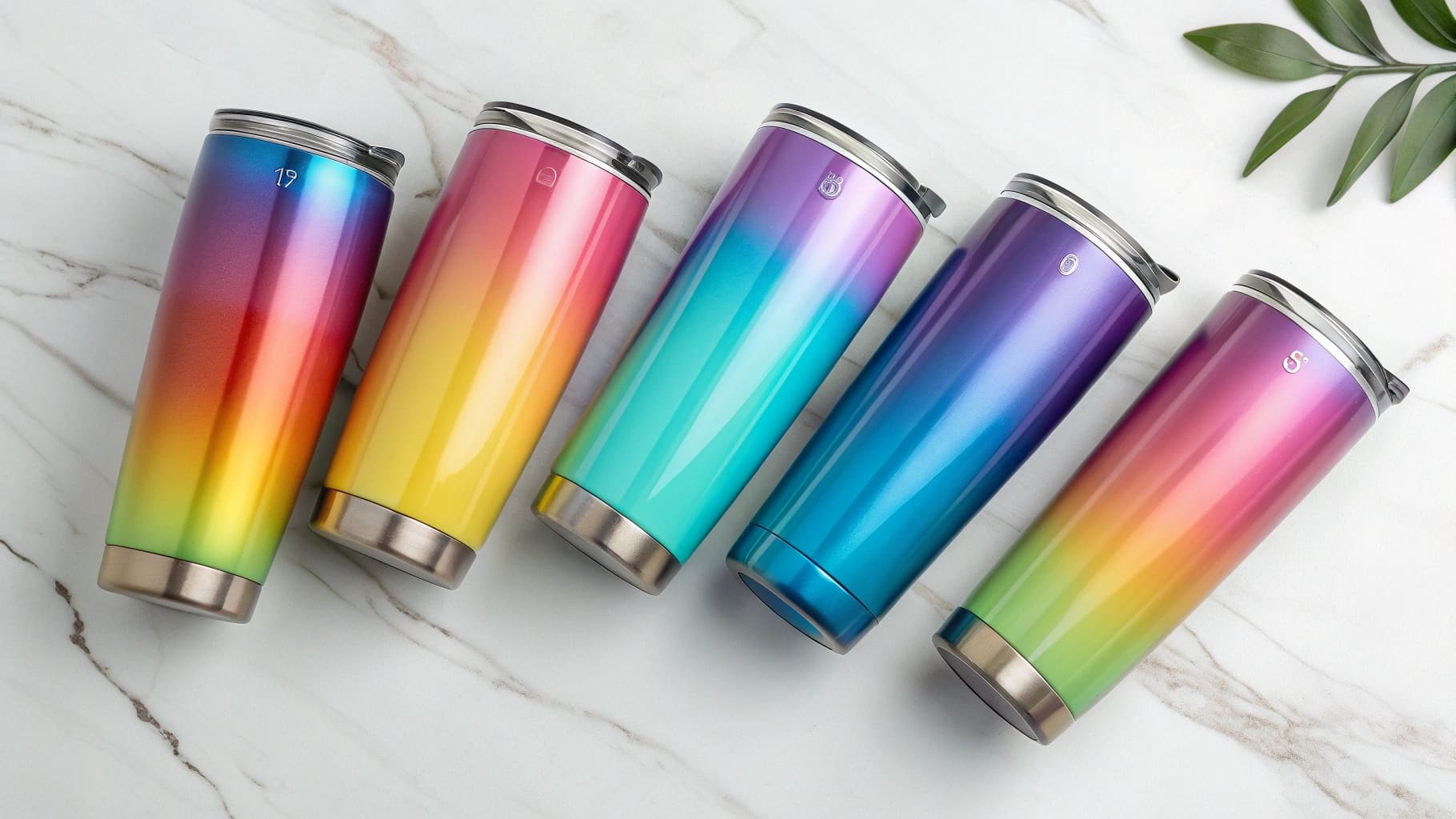
The perfect tumbler size depends entirely on your target market's daily beverage habits and usage scenarios. Popular sizes range from 12oz for concentrated drinks to 40oz for all-day hydration needs.
Analyzing Size Preferences by Customer Segment
I have noticed clear patterns in size preferences across different market segments. Understanding these patterns helps you stock the right inventory.
The 20oz and 30oz sizes dominate the promotional products market. They offer versatility for both hot coffee and cold beverages. Corporate buyers love these sizes for employee gifts and client appreciation programs. The 20oz fits standard car cup holders. The 30oz provides enough capacity for long meetings or commutes.
Office workers typically prefer 16oz to 20oz tumblers. These sizes sit comfortably on desks without taking too much space. They hold enough liquid for 2-3 hours of work. Employees refill them during natural breaks.
Outdoor enthusiasts and fitness customers gravitate toward 30oz to 40oz options. They need maximum capacity for long activities. Hikers want enough water for trail sections between refill points. Gym users need hydration throughout extended workout sessions.
The 12oz segment serves espresso lovers and specialty coffee drinkers. This size maintains optimal temperature for concentrated beverages. It suits premium gift programs and boutique coffee shops.
| Size | Primary Use Case | Target Customer | Price Point |
|---|---|---|---|
| 12oz | Espresso, specialty coffee | Coffee enthusiasts | Premium |
| 16oz | Desk beverage, short trips | Office workers | Mid-range |
| 20oz | Daily commute, meetings | General consumers | Popular |
| 30oz | All-day hydration | Active lifestyle | Mid-premium |
| 40oz | Extended activities | Outdoor enthusiasts | Premium |
I suggest analyzing your target audience's lifestyle patterns before selecting sizes. Ask yourself these questions: Where will they use the tumbler? How long between refills? What beverages do they prefer? Do they travel frequently? The answers guide your size selection.
Consider offering a size range rather than a single option. This approach lets customers self-select based on personal needs. A product line with 20oz, 30oz, and 40oz options covers most market segments effectively.
How Do You Accurately Measure the Perimeter of a Tumbler?
Incorrect perimeter measurements ruin custom artwork and waste production time. Your beautiful design arrives distorted or misaligned. The printing company blames you for wrong specifications.
Measure tumbler perimeter at the widest point using a flexible measuring tape wrapped flat around the body. For tapered designs, take measurements at multiple heights to create accurate artwork templates.
Step-by-Step Measurement Technique
I teach my clients a precise measurement method that prevents artwork problems. This technique works for all tumbler shapes and sizes.
Start by identifying the tumbler's widest point. Most tumblers have their maximum diameter at the rim or mid-body section. Place the tumbler on a flat surface for stability.
Take a flexible measuring tape or soft cloth tape measure. Rigid measuring tools do not work for curved surfaces. Wrap the tape around the widest point. Keep the tape perfectly horizontal and flat against the surface. Ensure no gaps exist between the tape and tumbler body. The tape should lie snug but not tight. Record this measurement as your primary perimeter.
For straight-walled tumblers, this single measurement suffices. For tapered designs with varying diameters, measure at three points: top rim, mid-body, and bottom base. These multiple measurements create an accurate template for artwork placement.
Mark each measurement point with painter's tape before measuring. This creates consistent reference points. Photograph each measurement for your records. These photos help resolve disputes with printing vendors later.
| Tumbler Type | Measurement Points | Key Considerations |
|---|---|---|
| Straight-walled | One at widest point | Simplest measurement |
| Slight taper | Top and mid-body | Common design type |
| Heavy taper | Top, middle, bottom | Requires careful artwork scaling |
| Irregular shape | Multiple sections | Most complex measurement |
After collecting measurements, add 2-3mm to your perimeter for artwork creation. This buffer accounts for measurement variations and printing tolerances. It prevents artwork from appearing stretched or compressed.
I recommend creating a physical paper template before finalizing artwork. Cut paper to your measured perimeter length. Wrap it around the tumbler. Check how the edges meet. If they overlap significantly, remeasure. If they gap, add more length.
Share detailed measurements with your graphic designer and printing vendor. Include photos of the measurement process. Specify which measurement corresponds to which tumbler height. This documentation prevents costly production errors.
For wrap designs covering the entire tumbler surface, create a scaled diagram showing perimeter measurements at 1-inch intervals along the tumbler height. This diagram provides complete dimensional information for complex artwork layouts.
What MOQ and AQL Standards Should You Expect?
Negotiating favorable terms protects your investment and ensures product quality. Inflexible MOQ requirements tie up excessive capital. Weak AQL standards result in defective products reaching customers.
Modern manufacturers offer flexible MOQ arrangements starting from 500-1000 units for custom designs. AQL standards typically range from 1.5 to 2.5, defining acceptable defect rates between 1.5% and 2.5% per production batch.
Understanding MOQ Flexibility and Quality Control
I have negotiated countless tumbler orders with manufacturers. The best suppliers understand that rigid terms hurt both parties. They offer reasonable flexibility while maintaining quality standards.
MOQ flexibility3 depends on customization complexity. Simple logo printing on stock colors allows lower MOQs, often starting at 500 units. Full custom color matching with complex engraving requires higher MOQs, typically 1000-2000 units. The manufacturer needs sufficient volume to justify custom color mixing and machine setup time.
I always recommend this MOQ negotiation strategy: start with a test order at slightly higher unit costs. Prove market demand with this initial batch. Then negotiate larger volume orders with better pricing. This approach minimizes risk while building supplier relationships.
For Pantone color matching4, experienced manufacturers maintain extensive color libraries. You simply provide the Pantone color code. The manufacturer handles the color matching process. This system ensures consistency across production batches. If you lack Pantone knowledge, good suppliers recommend popular colors based on current market trends.
AQL standards define quality expectations clearly. For promotional tumblers, I recommend AQL 1.5 to 2.5 levels. This means accepting 1.5 to 2.5 defective units per 100 tumblers produced. Lower AQL numbers indicate stricter quality requirements and higher inspection costs.
| Quality Factor | Standard Specification | Inspection Method |
|---|---|---|
| Coating adhesion | No peeling or bubbling | Tape test, visual check |
| Vacuum seal | Maintains temperature 6+ hours | Temperature retention test |
| Printing clarity | Sharp edges, accurate colors | Visual comparison to approved sample |
| Engraving depth | Consistent ±0.05mm | Depth gauge measurement |
Establish clear AQL requirements in your purchase agreement before production starts. Cover all critical quality factors: coating adhesion, vacuum seal integrity, printing clarity, and engraving depth consistency. Document acceptance criteria with photos and physical samples.
Most manufacturers provide existing samples for free. They charge a small fee for custom design samples, typically 50-100 USD per design variation. This sample charge gets refunded when your order reaches certain quantities, usually 1000 units or more.
I insist on receiving pre-production samples that match final production specifications exactly. These samples undergo the same processes as bulk production. They reveal potential quality issues before committing to large volumes. Approve these samples in writing before authorizing full production.
Request third-party inspection5 for orders exceeding 5000 units. Independent quality control companies verify AQL compliance objectively. They catch problems that factory internal inspections might miss. The inspection cost represents a small percentage of total order value but provides significant protection.
Build quality clauses into your payment terms. Hold 10-20% of payment until final inspection confirms AQL compliance. This financial leverage ensures manufacturers maintain quality standards throughout production.
Conclusion
Master these four specifications—flexible MOQ terms, accurate Pantone matching, precise engraving measurements, and strict AQL standards—to build successful custom tumbler programs that balance quality with competitive pricing.
-
Understanding MOQ helps you manage your budget and avoid excess inventory. ↩
-
Learn how intricate designs can impact your production costs significantly. ↩
-
Understanding MOQ flexibility can help you negotiate better terms with suppliers. ↩
-
Learn about Pantone matching to ensure your brand colors are accurately represented. ↩
-
Learn how third-party inspections can safeguard your product quality. ↩