
How should buyers choose 18-20oz mug sizes for commuters' handle clearance?
You grab your coffee mug, slide into your car, and the handle won't fit in the cupholder. Your morning routine just got complicated. This simple design oversight costs you time and frustration every single day.
Choose 18-20oz mugs with rotatable or foldable handles that allow cupholder placement. Test the mug in your vehicle's cupholder before purchasing. The handle should clear adjacent controls without interfering with gear shifts or driving functions.
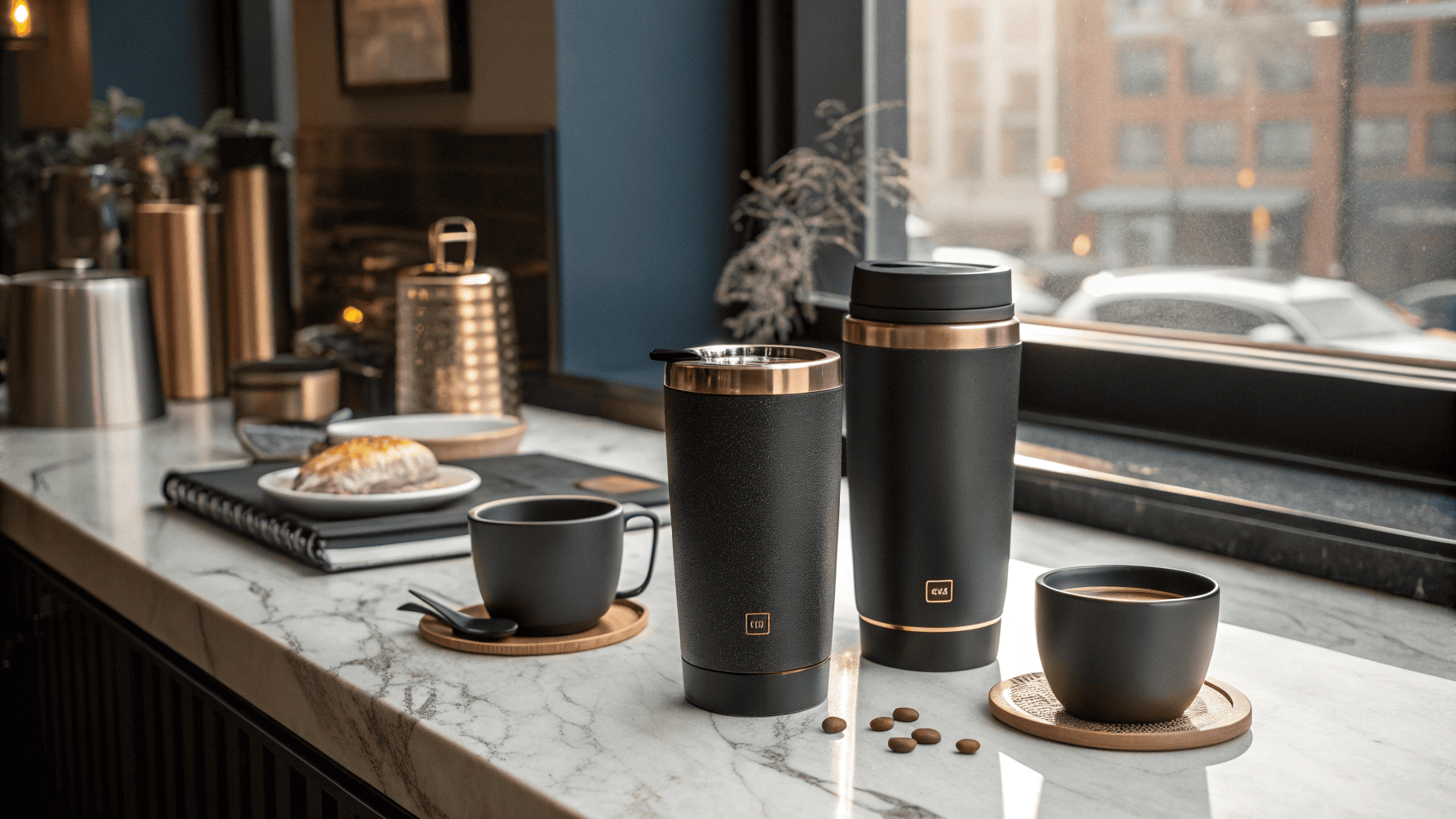
I've worked with thousands of buyers who order travel mugs for their companies. The handle clearance1 issue comes up more than any other design concern. Let me walk you through what I've learned from years of helping procurement officers select the right mugs.
What is the best size for a travel mug?
Your commute needs enough coffee to last. But a mug that's too big won't fit anywhere. You end up holding it between your knees at red lights. This creates a safety hazard.
The 18-20oz range gives you adequate capacity without sacrificing portability. This size fits most vehicle cupholders while providing enough beverage for typical commute durations. It strikes the right balance for daily use.

Why 18-20oz works for most commuters
I recommend the 18-20oz range to most of my B2B clients. Here's why this size performs well. A 12oz mug runs out too quickly. You finish your coffee before you reach the highway. A 24oz mug feels heavy. It doesn't fit in standard cupholders. The 18-20oz size sits in that sweet spot.
The capacity matches typical commute times. Most people drive 20-45 minutes to work. An 18-20oz mug keeps your beverage hot for this entire duration. You don't need more volume. You need better insulation.
| Mug Size | Typical Use Case | Cupholder Fit | Weight When Full |
|---|---|---|---|
| 12oz | Short trips | Excellent | Light |
| 18-20oz | Daily commutes | Good | Moderate |
| 24oz+ | All-day use | Poor | Heavy |
I've tested dozens of mugs in my own vehicles. The 18-20oz size never causes issues. Larger sizes create problems. They tip over easily. They block your view of dashboard controls. They crowd the center console area.
Handle positioning matters more than size alone
The handle placement determines whether your mug actually functions in a car. I've seen perfectly sized mugs fail because the handle hits the gearshift. The handle needs to clear adjacent controls. It should not interfere with your hand movements while driving.
Look for handles that rotate 180 degrees. This feature lets you position the handle away from obstacles. Some handles fold down 90 degrees. This design reduces the overall footprint. Your mug fits even in tight spaces.
How to choose a travel mug?
You walk into a store and see hundreds of travel mugs. They all look similar. You pick one based on color or price. Then you discover it leaks in your bag or burns your hand. You wasted money on the wrong product.
Test these features before buying: spill-resistant lids2 with leak-proof seals, one-handed operation mechanisms, handle clearance in your specific vehicle's cupholder, and insulation performance. The right mug combines all these elements seamlessly.
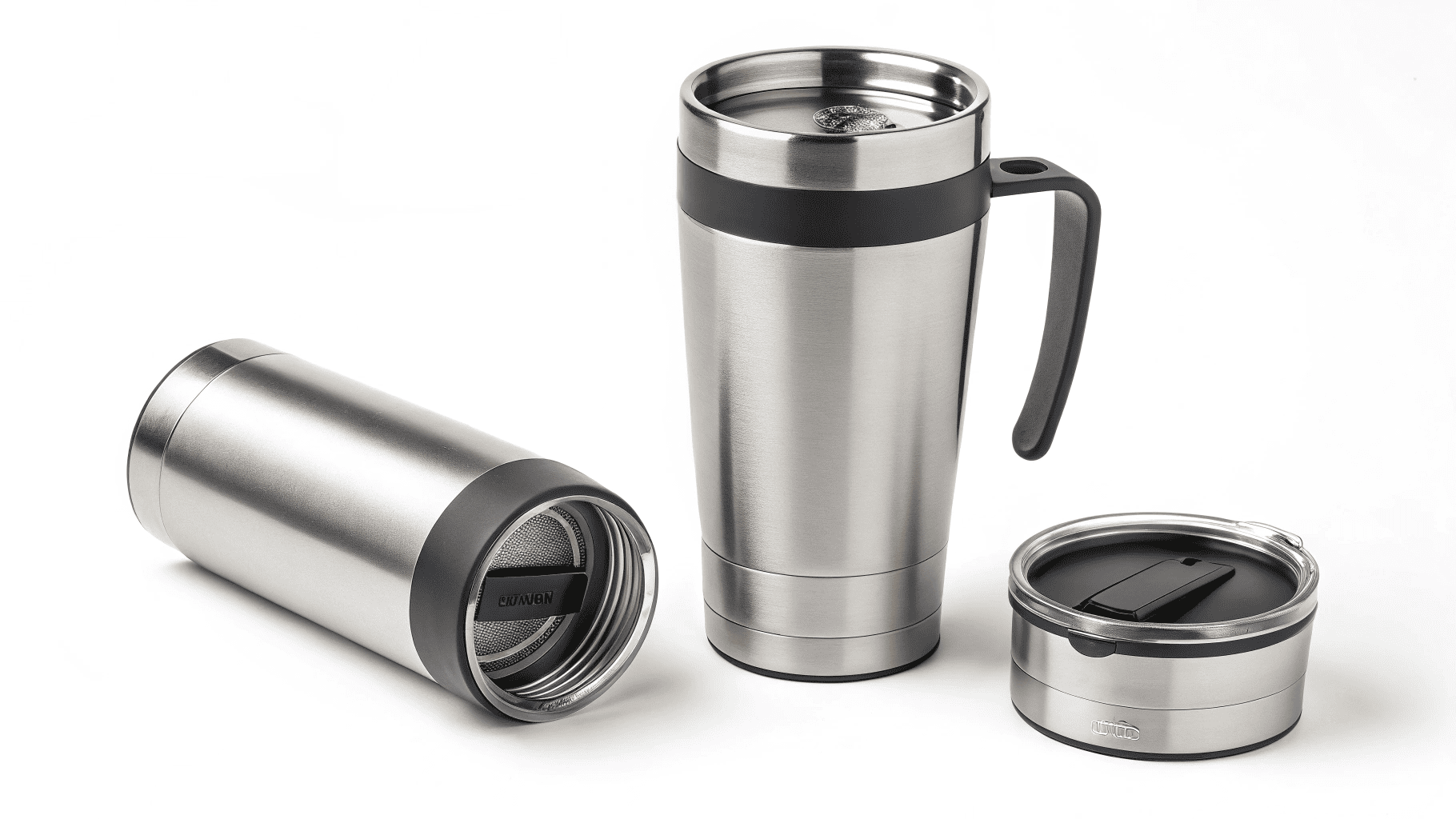
Handle design features you need
I work directly with manufacturers in China. I've seen every handle variation possible. The best designs share common characteristics. They use upgraded stainless steel construction. This material won't break under stress. Plastic handles crack after repeated use.
Ergonomic shapes accommodate different hand sizes. Your drivers have different grip preferences. Some prefer thick handles. Others want slim profiles. The handle should feel comfortable for at least 90% of users. This reduces complaints after distribution.
Here's what I tell buyers who source mugs for their companies:
Rotatable handles - These turn to any position. You place the mug in the cupholder. Then you rotate the handle to clear the gearshift. This flexibility solves most clearance problems.
Foldable handles - These collapse against the mug body. They create a compact profile. Your commuters can slide the mug into tight spaces. The handle extends when needed. This design works well for hybrid vehicles with smaller cupholders.
Tapered positioning - The handle attaches higher on the mug body. This keeps it above the cupholder rim. You can grip the handle even when the mug sits deep in the holder. This feature matters more than most buyers realize.
I once had a client reject an entire shipment because the handles interfered with their vehicle's center console buttons. They couldn't adjust the climate control with the mug in place. We redesigned the handle angle. Problem solved. This experience taught me to ask buyers about their specific vehicle models before finalizing designs.
Safety features for driving use
One-handed operation saves lives. You shouldn't need both hands to open your mug. Look for push-button flip lids. You press the button with your thumb. The lid opens. You drink. You press again. The lid closes. Your eyes never leave the road.
Some lids use threaded rotating mechanisms. You twist the lid a quarter turn. The drinking spout opens. This design prevents accidental spills. It requires slightly more attention than push-button lids. But it offers better seal performance.
What size is a standard travel coffee mug?
You need to order mugs for your company. You don't know what size employees actually want. You guess based on your own preferences. Half your team complains the mugs are too small. The other half says they're too big. Nobody's happy.
Standard travel coffee mugs range from 12oz to 20oz, with 16oz being the most common baseline size. The 18-20oz range has become increasingly popular for commuters who want extended capacity without sacrificing cupholder compatibility.
Industry standards vs. practical needs
I export thousands of mugs to America and Europe each month. The size preferences differ by region. American buyers typically request larger capacities. European buyers prefer more compact designs. This reflects different commuting patterns and vehicle types.
The "standard" size depends on your target market:
| Region | Preferred Size | Reason |
|---|---|---|
| North America | 18-20oz | Longer commutes, larger vehicles |
| Europe | 14-16oz | Shorter distances, smaller cars |
| Asia | 12-14oz | Public transport use, compact storage |
I suggest buyers consider their actual use case. Don't just follow trends. If your employees drive trucks or SUVs, the 20oz size works perfectly. If they drive compact cars or use public transport, stick with 16oz or smaller.
Testing mugs before bulk orders
I always recommend this process to my B2B clients. Order samples in multiple sizes. Distribute them to a small test group. Collect feedback after two weeks. This approach prevents costly mistakes.
Ask your test group specific questions:
- Does the mug fit in your vehicle's cupholder with the handle attached?
- Can you operate the lid with one hand while driving?
- Does the handle interfere with your gearshift or center console controls?
- Is the capacity sufficient for your commute duration?
I had a client who skipped the testing phase. They ordered 5,000 mugs at 24oz capacity. Their sales team couldn't use them in their company cars. The mugs were too tall. They hit the dashboard when placed in cupholders. The company had to reorder at 18oz. This cost them both time and money.
Matching size to cupholder dimensions
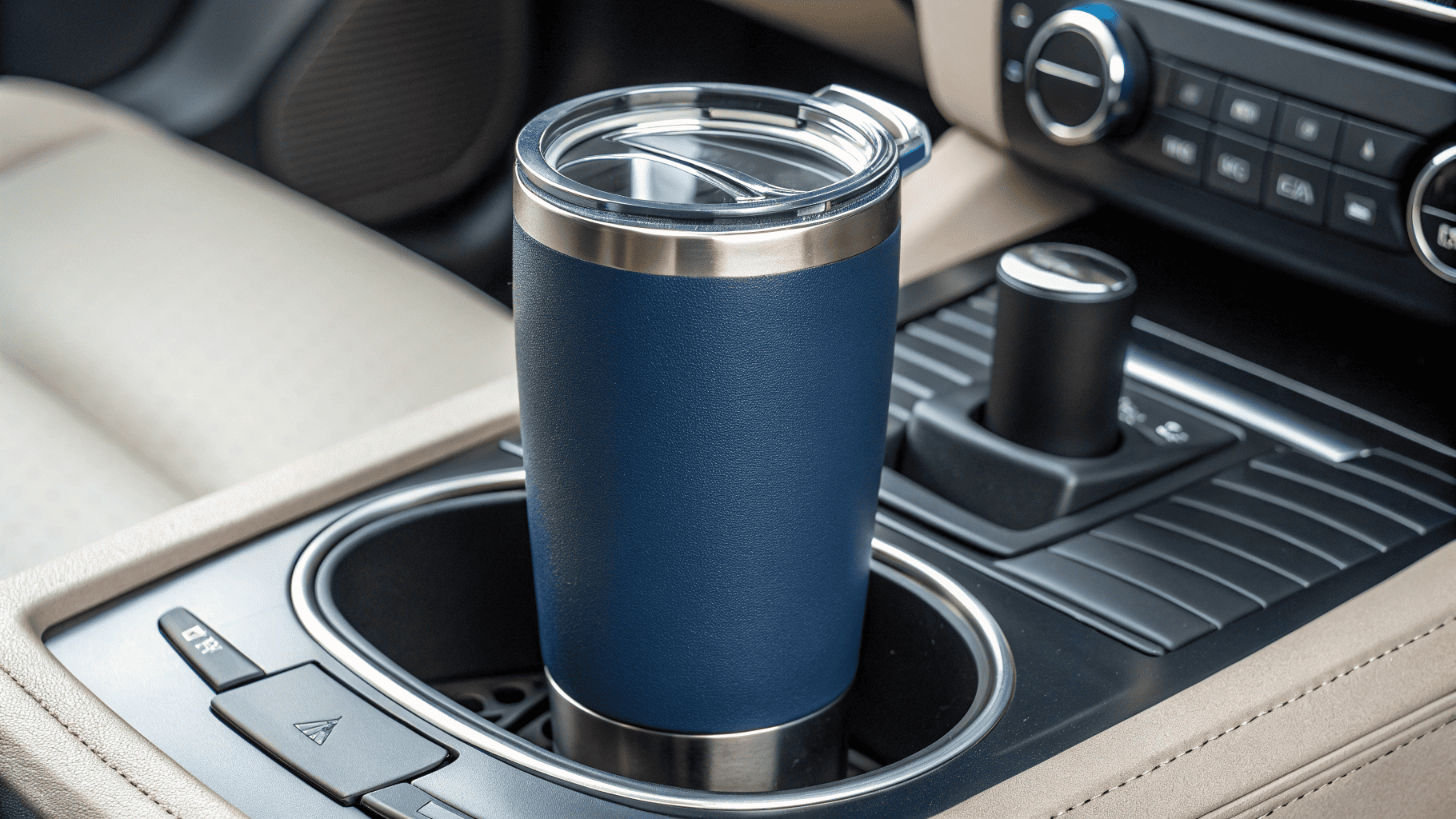
Standard vehicle cupholders measure 2.75-3.25 inches in diameter. Your mug needs to fit within this range at its widest point. The 18-20oz mugs I manufacture typically measure 3.0-3.1 inches at the base. This provides a snug fit without being too tight.
Tapered designs work best for commuters. The base fits securely in the cupholder. The body widens slightly toward the top. This shape prevents tipping while maximizing capacity. The handle attaches at the optimal height to clear the cupholder rim.
I tell buyers to consider the total width with the handle extended. A 3-inch diameter mug becomes 5-6 inches wide with a standard handle. This dimension determines whether the mug clears adjacent cupholders or console controls. Measure your vehicle's console space. Add two inches for clearance. This gives you the maximum allowable width.
Conclusion
Choose 18-20oz mugs with rotatable or foldable handles. Test samples in your actual vehicles. Prioritize safety features and handle clearance over aesthetic preferences. Your commuters will thank you.
