
How to forecast insulated bottle demand ahead of CNY lead times in 2026?
Every year, the same problem hits B2B buyers: Chinese New Year shuts down factories, and orders get stuck. You need bottles, but production stops for weeks.
Forecasting insulated bottle demand for CNY 2026 requires placing orders by mid-November 2025. You must account for mass production lead times, CNY factory closures1, and post-holiday capacity constraints. Build six to eight weeks of buffer inventory to protect against forecast errors and compressed lead times.

I learned this lesson the hard way in 2019. A Canadian distributor ordered 10,000 stainless steel water bottles in late December. He thought he had enough time. The factory closed for CNY before finishing his order. He missed his entire Q1 sales season. His competitors grabbed his market share. That mistake cost him over $50,000 in lost revenue. Since then, I help buyers understand the real timeline. CNY is not just a two-week holiday. The impact stretches six weeks when you count the rush before and the slow restart after.
What methods will you use to forecast the demand for the new products?
New product launches scare most importers. You have no sales history. You cannot predict customer response. One wrong forecast means dead inventory or lost sales.
For new insulated bottle designs, start with sample orders2 to test market response. Use a phased approach: order minimum quantities based on conservative estimates, then monitor early sales signals during the production window before committing to larger reorders.
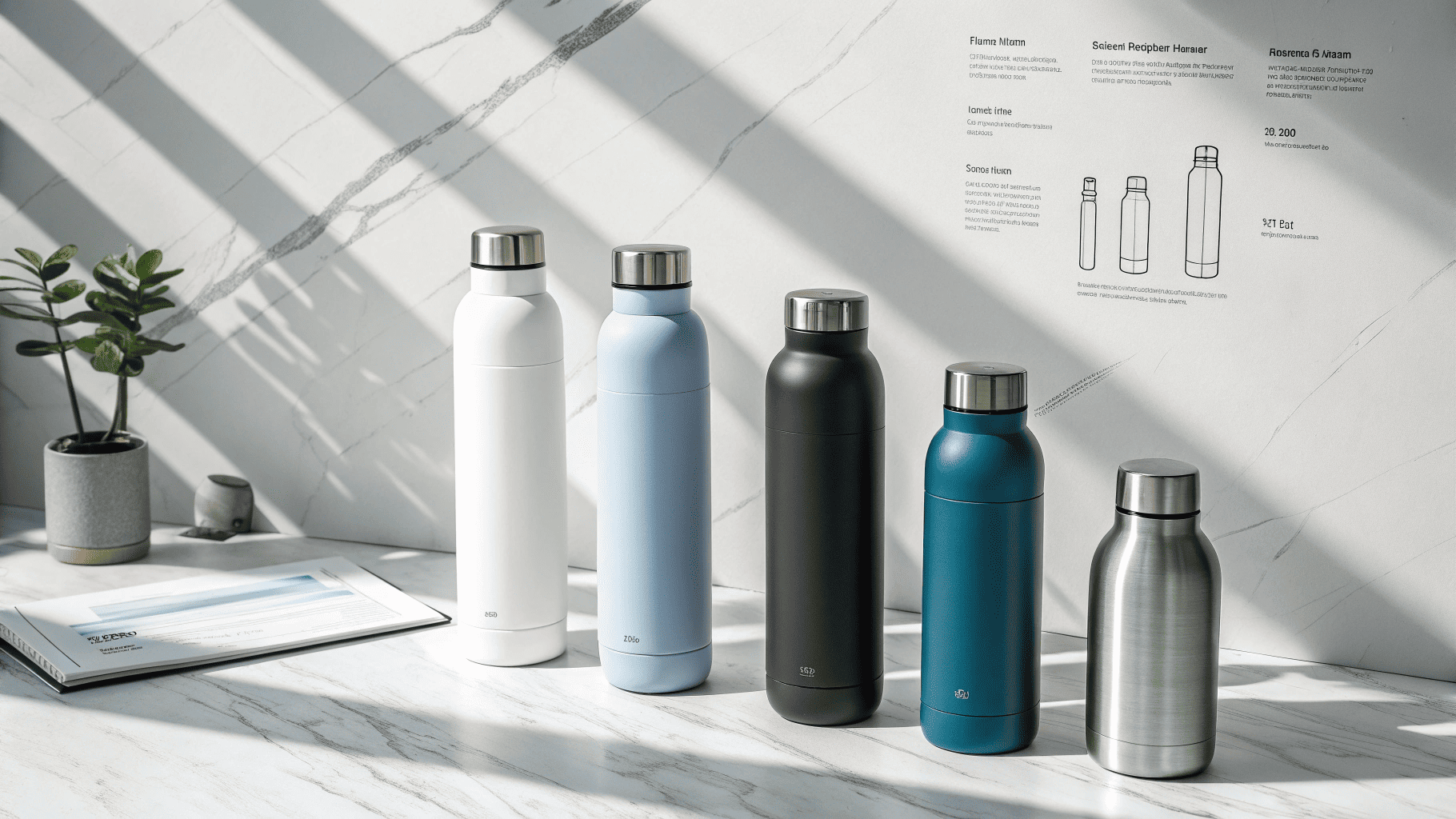
I work with buyers who launch new products every season. The successful ones follow a specific pattern. They do not guess. They test.
Testing before scaling
Sample production takes five to seven days for custom designs. This speed lets you test the market fast. Send samples to your top three customers. Ask for honest feedback. Track their response time. Quick responses mean strong interest. Slow responses mean weak demand.
One buyer tested three new tumbler colors last year. He ordered twenty samples of each color. His customers loved the matte black. They ignored the sage green. He placed his main order based on that signal. He sold out of black tumblers in six weeks. He avoided wasting money on green inventory.
Using existing product data as proxy
Your current product sales tell you something about new product potential. Look at your best-selling capacity sizes. If 750ml bottles outsell 500ml bottles by three to one, your new design in 750ml will likely follow the same pattern.
| Data Point | What It Tells You | How to Use It |
|---|---|---|
| Top capacity sizes | Customer preference patterns | Apply same ratio to new designs |
| Color performance | Market taste trends | Prioritize similar colors for new products |
| Q4 vs Q1 sales ratio | Seasonal demand shifts | Adjust new product launch timing |
| Reorder frequency | Product lifecycle speed | Estimate how fast new products will turn |
I saw this work with a US buyer. His classic stainless steel water bottles sold 60% in rose gold, 30% in silver, 10% in black. When he launched a new design, he used the same color split. His forecast was accurate within 5%. He did not overthink it. He used the data he already had.
How to find demand during lead time?
Lead time is not dead time. Your competitors are selling. Your market is moving. You cannot afford to wait passively for your order to arrive.
Track sales velocity, monitor competitor stock levels, and engage customers with pre-orders during the production lead time. These activities provide real-time demand signals that help you adjust inventory plans before products arrive.
Most buyers make the same mistake. They place an order, then forget about it until the container arrives. The smart ones stay active.
Sales velocity monitoring
Your current sales tell you what is coming. If your existing inventory is moving faster than expected, your incoming order might be too small. If sales slow down, you might have too much coming.
I track a simple metric: days of inventory remaining. Take your current stock level. Divide it by your average daily sales. That number tells you how many days until you run out. Check it every week during lead time.
Competitor intelligence
Your competitors reveal market trends. Visit their websites weekly. Check their stock status. If everyone is running low on 1000ml bottles, demand is strong. If everyone has full inventory, the market is slow.
Pre-order strategies
Pre-orders during lead time reduce risk. Offer your customers a small discount to commit early. This gives you guaranteed demand numbers. It also generates cash flow before your payment to the factory is due.
| Lead Time Activity | Frequency | Action Threshold |
|---|---|---|
| Check days of inventory | Weekly | Below 30 days: consider urgent reorder |
| Monitor competitor stock | Bi-weekly | Widespread stockouts: demand is high |
| Review customer inquiries | Daily | Spike in questions: interest is growing |
| Track pre-orders | Daily | Pre-orders exceed 40% of incoming: demand is strong |
One buyer I work with pre-sells 50% of every container before it arrives. He offers a 10% discount for customers who commit early. This strategy has saved him twice from overstock situations. When pre-orders came in slow, he knew demand was weak. He canceled part of his order before production finished. The factory charged him a small fee, but he avoided a big inventory problem.
What are the 7 steps of forecasting?
Forecasting feels complicated. Most buyers overthink it. They build complex spreadsheets. They waste hours on analysis. The process can be simple and effective.
Follow seven steps: collect historical data, identify patterns, adjust for known changes, calculate base forecast, add safety stock, validate with customers, and monitor actual performance against forecast.
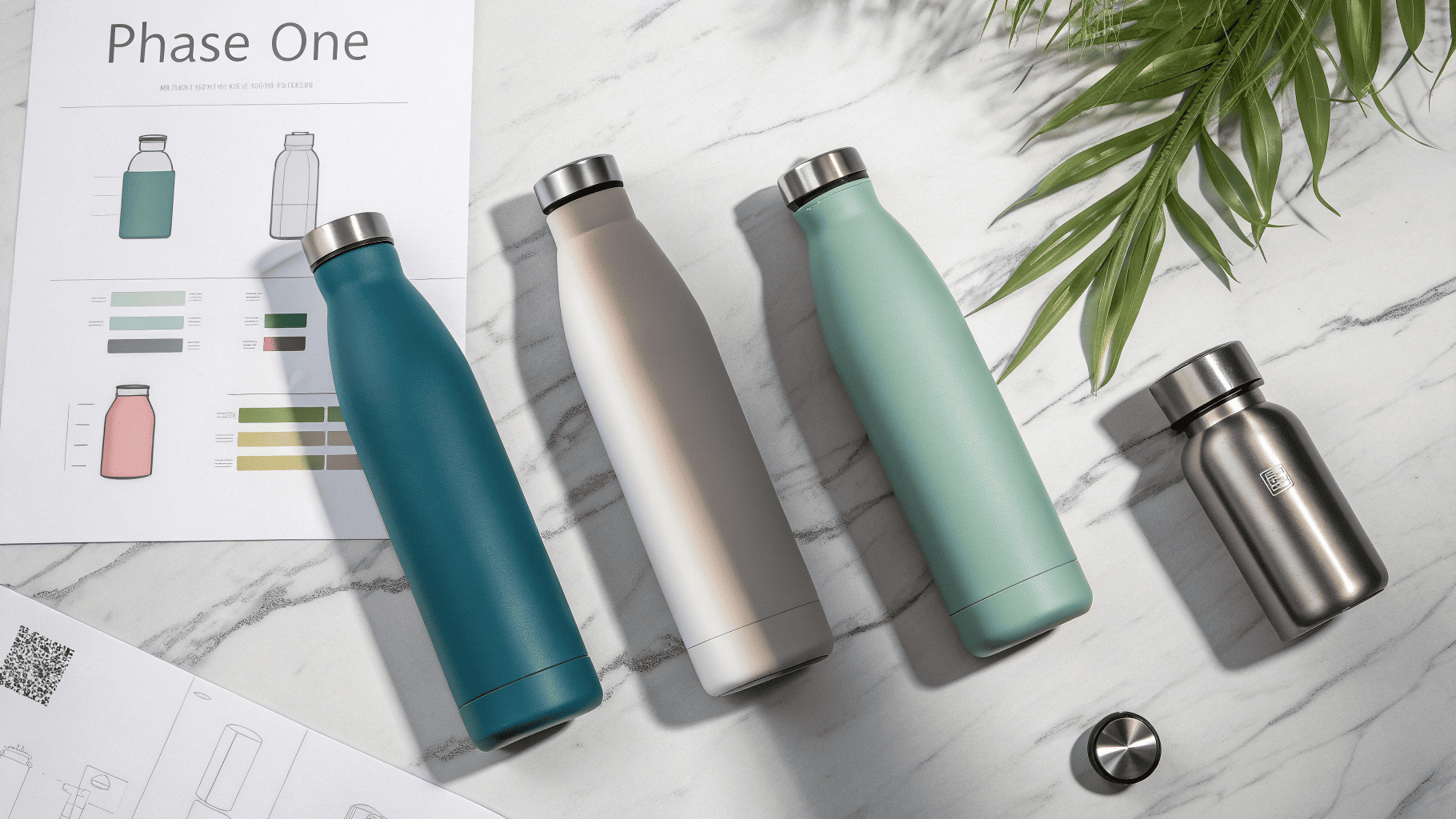
I teach this process to every new buyer I work with. It works for small orders and large orders. It works for new products and repeat orders.
The seven-step process breakdown
Step one: Collect historical data
Gather your sales data from the past twelve months. Focus on units sold, not revenue. Revenue changes with price adjustments. Units tell you real demand.
Step two: Identify patterns
Look for seasonal trends. Most B2B insulated bottle buyers see strong Q4 sales. Holiday promotions and corporate gift programs drive demand. Q1 usually drops 20-30% from Q4 peaks.
Step three: Adjust for known changes
What is different this year? Are you entering new markets? Did you lose a major customer? Is your marketing budget bigger? Adjust your baseline forecast for these changes.
Step four: Calculate base forecast
Use a simple formula: Average monthly sales from last year, multiplied by expected growth rate, multiplied by months of inventory needed.
Step five: Add safety stock
CNY disrupts everything. Add buffer inventory. I recommend six to eight weeks of demand as safety stock for CNY periods. For normal periods, three to four weeks is enough.
Step six: Validate with customers
Call your top five customers. Ask about their plans. Are they growing? Are they launching new products? Are they cutting back? Their answers matter more than your calculations.
Step seven: Monitor and adjust
Forecasting is not a one-time task. Check your actual sales against your forecast every month. If reality differs by more than 15%, investigate why. Update your next forecast based on what you learn.
| Forecast Step | Time Required | Key Output |
|---|---|---|
| Collect data | 1 hour | 12 months of sales by SKU |
| Identify patterns | 30 minutes | Seasonal trend percentages |
| Adjust for changes | 20 minutes | Growth rate estimate |
| Calculate base | 10 minutes | Base order quantity |
| Add safety stock | 5 minutes | Final order quantity |
| Validate | 2 hours | Customer commitment levels |
| Monitor | 15 min/week | Variance analysis |
I walked a startup founder through this process last month. He was ordering his first container. He had only six months of sales history. We used the process anyway. His forecast was rough, but it was better than guessing. He ordered 3,000 bottles. He sold through them in ten weeks. His forecast was within 10% of reality. He avoided both stockouts and overstock. For a first-time importer, that was a success.
The key to CNY 2026 planning is starting now. Mid-November 2025 is your deadline. That gives you time to collect data, validate with customers, and place orders with confidence. Missing this deadline means missing your season. The factories will be full, or they will be closed. Either way, you lose.
Conclusion
Forecasting for CNY 2026 requires action by November 2025. Use historical data, test new products carefully, monitor demand during lead time, and build enough safety stock.
