
Which markets favor 304 vs 201 stainless hip flasks, and why in 2026 wholesale?
Premium markets like North America and Europe demand 304 stainless steel hip flasks. Budget markets in Southeast Asia accept 201 for outer shells. The divide comes from safety regulations and pricing.
In 2026 wholesale, 304 stainless steel dominates North America, Western Europe, and Australia because it meets FDA compliance. 201 stainless steel serves price-sensitive markets in Southeast Asia and Latin America where regulations are less strict.
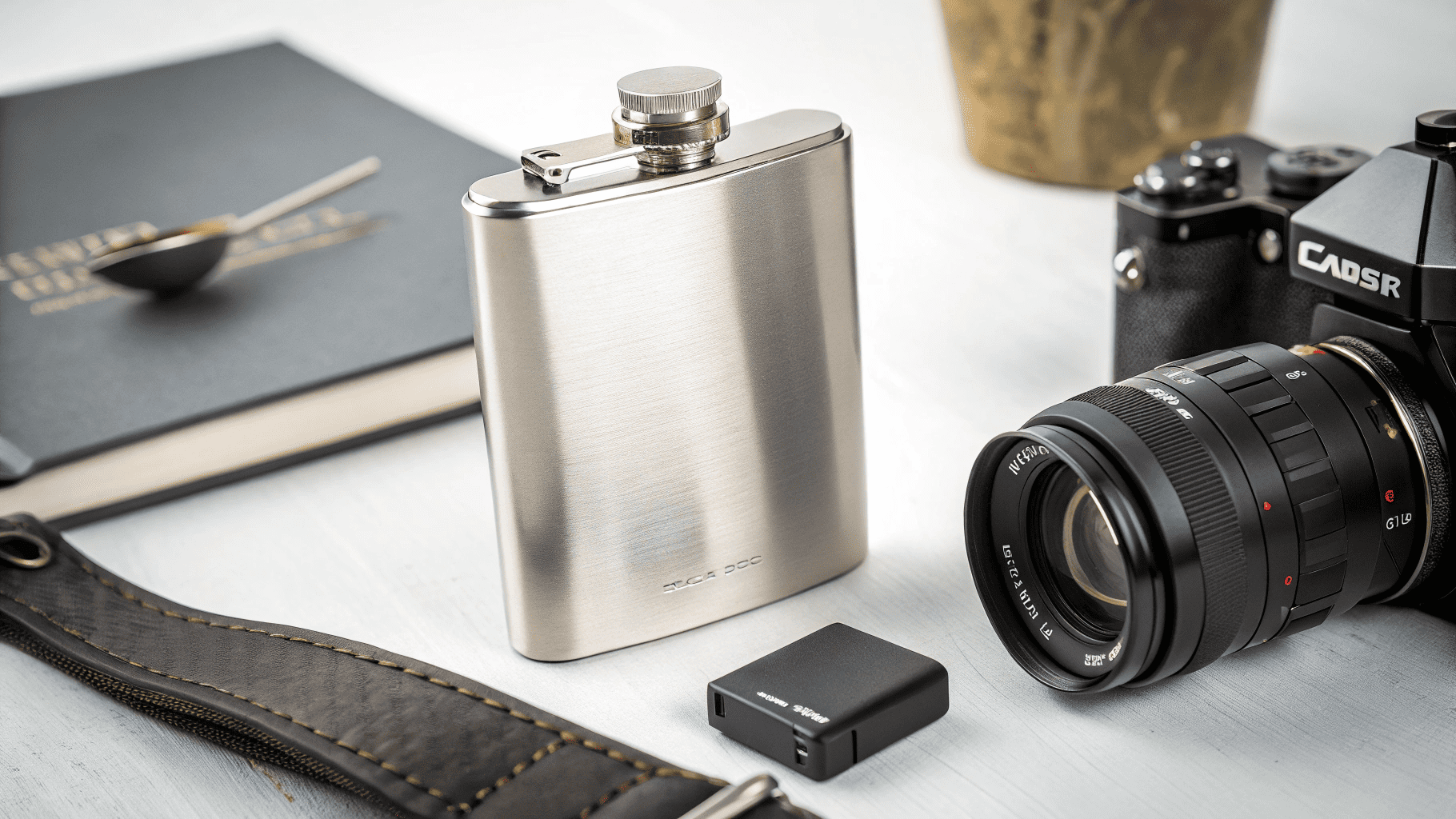
I've been in the hip flask business for years. The material question comes up in every conversation with buyers. Let me share what I've learned about these two materials and where each one sells best.
What are the disadvantages of 304 stainless steel?
You might think 304 is perfect because everyone recommends it. It's not. I learned this the hard way when a buyer complained about production delays and higher costs.
304 stainless steel has three main drawbacks: poor sulfur resistance, difficult processing, and higher material costs1. These issues affect your wholesale pricing and production timelines.

The sulfur resistance problem shows up in specific environments. 304 performs poorly when exposed to sulfuric compounds. This matters less for hip flasks than for industrial applications. The reduction resistance is also weak. I rarely see this affect drinkware products.
The processing difficulty is real. Our factory struggles more with 304 than with 201. The material is harder to shape. It requires more force during stamping. The welding process takes more time. Your production lead time increases by 10-15% when you choose 304 over 201.
The cost factor hits hardest. 304 contains 8% nickel. Nickel prices fluctuate wildly. I've seen material costs jump 20% in a single quarter. This makes pricing quotes tricky. You need to build in buffer room when you place orders for 304 hip flasks.
Here's a comparison table:
| Issue | Impact on Production | Impact on Pricing |
|---|---|---|
| Sulfur resistance | Minimal for hip flasks | No direct impact |
| Processing difficulty | 10-15% longer lead time | Higher labor costs |
| Material cost | Supply chain volatility | 20-40% price premium |
What are the pros and cons of 201 stainless steel?
201 stainless steel gets a bad reputation. Some of it is deserved. Some of it isn't. The truth sits somewhere in the middle.
201 offers easy formability, good weldability, and low cost. But it lacks FDA compliance, shows poor corrosion resistance, and can crack under stress. The trade-off is clear.

The advantages make 201 attractive for budget projects. The material bends easily during manufacturing. Our factory can produce 201 hip flasks 30% faster than 304 versions. The welding joins hold strong. I've never seen a properly welded 201 seam fail in normal use.
The cost savings are substantial. 201 uses manganese instead of nickel. Manganese costs a fraction of nickel prices. This translates to 40-50% lower material costs. For buyers working on tight margins, this difference matters.
The disadvantages are serious. 201 is not FDA compliant. The material releases metal ions when heated or exposed to acidic beverages. I've seen test reports showing elevated manganese migration. This creates health risks. Most developed markets ban 201 from food contact surfaces.
The corrosion resistance fails in humid environments. I once shipped 201 outer-shell hip flasks to a coastal region. The buyer reported rust spots within six months. The chromium content in 201 is too low. It cannot form a stable protective layer like 304 does.
The cracking tendency appears under stress. 201 has lower ductility than 304. Sharp corners or deep stamping can cause micro-cracks. These cracks grow over time. The product fails earlier than expected.
Here's what you need to know:
| Aspect | 201 Performance | Suitable Applications |
|---|---|---|
| Cost | 40-50% lower than 304 | Budget markets only |
| Formability | Excellent | Complex shapes |
| Corrosion resistance | Poor | Dry climates only |
| Food safety | Not FDA compliant | Outer shells only |
What is the difference between food-grade stainless steel 201 and 304?
The chemical composition separates these two materials. This affects everything from safety to performance to market acceptance.
304 contains 18% chromium and 8% nickel (18/8). 201 contains 17% chromium and 4.5% manganese. The nickel versus manganese difference determines food safety certification and corrosion behavior.

The chromium and nickel in 304 create a stable passive layer. This layer protects the underlying metal from oxidation. It prevents metal ions from leaching into beverages. The FDA recognizes 304 as food-grade because of this stability. I can sell 304 hip flasks anywhere in North America or Europe without safety concerns.
201 substitutes manganese for nickel to cut costs. Manganese is cheaper but less stable. The passive layer on 201 breaks down more easily. Acidic liquids like wine or juice accelerate this breakdown. Metal ions migrate into the beverage. Health authorities consider this unsafe.
The migration rate tells the story. I've reviewed lab tests comparing 201 and 304. When exposed to 4% acetic acid at 60°C for 24 hours, 201 releases 5-8 times more metal ions than 304. The difference is dramatic.
The corrosion resistance gap widens in real-world conditions. 304 hip flasks maintain their appearance after years of use. The surface stays bright. 201 hip flasks develop a dull patina. In humid environments, rust spots appear.
The temperature stability differs too. 304 handles both hot and cold beverages safely. The material properties remain consistent across temperature ranges. 201 performs acceptably at room temperature. Heat exposure accelerates degradation.
Market acceptance follows these technical differences. North American and European buyers require 304 for inner surfaces. They won't accept 201 for any beverage-contact application. Southeast Asian and Latin American buyers sometimes accept 201 for outer shells. They pair it with 304 inner linings to balance cost and safety.
The certification requirements block 201 from premium markets. FDA compliance, LFGB testing, and similar standards all specify 304 or better. I cannot export 201-lined hip flasks to the United States. The customs documentation must prove 304 composition for food-contact surfaces.
The price gap between materials creates a strategic choice. Budget-conscious buyers in emerging markets accept 201 outer shells. They understand the limitations. Quality-focused buyers in developed markets insist on 304 throughout. They refuse to risk their brand reputation.
The manufacturing implications matter for wholesale orders. 201 allows faster production and lower minimums. 304 requires higher investment but opens premium market channels. I guide buyers based on their target market and brand positioning.
Here's the complete comparison:
| Factor | 201 Stainless Steel | 304 Stainless Steel |
|---|---|---|
| Chromium content | 17% | 18% |
| Nickel/Manganese | 4.5% manganese | 8% nickel |
| FDA compliance | No | Yes |
| Migration rate | 5-8x higher | Low baseline |
| Corrosion resistance | Poor | Excellent |
| Market acceptance | Emerging markets only | Global |
| Cost difference | Baseline | 40-50% premium |
Conclusion
Choose 304 for premium markets and food contact. Accept 201 only for outer shells in budget markets. Your target market determines the right material specification.
-
Gain insights into the volatility of stainless steel prices and how it affects wholesale pricing strategies. ↩