
Insulated travel mugs with handles: MOQ, colorway, and Pantone control
I speak with B2B buyers daily who struggle with minimum order quantities. They want multiple colorways but face crushing MOQ barriers. Their brands suffer when color consistency fails across production batches.
Insulated travel mugs with handles typically require MOQ of 3,000 pieces for full customization, but stock configurations start at 500 pieces. Multiple colorways demand 1,000 pieces per color. Pantone matching ensures brand consistency across batches through powder coating and proper color approval samples.
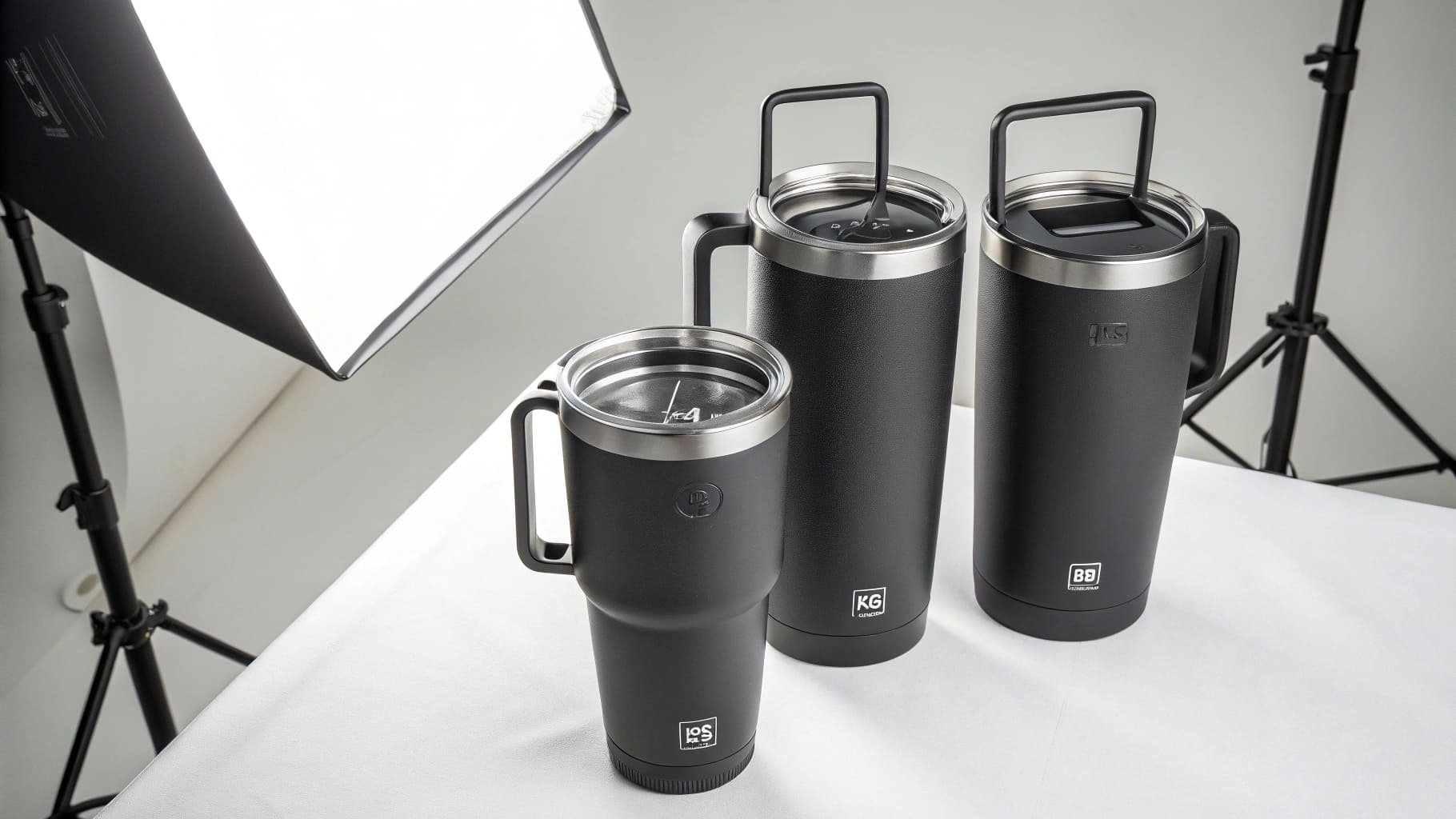
I remember my first international order years ago. The buyer wanted three colors. The total quantity shocked him. But I explained the economics behind surface treatment processes. Production line changeovers create real costs. Manufacturers must hit efficiency thresholds to keep pricing competitive. Once he understood this, we structured his order differently. We tested with stock colors first. Then we scaled to custom Pantone matches1.
What Are the Best Insulated Travel Mugs?
I see procurement officers waste money on wrong specifications. They chase trendy designs over proven performance metrics. Their customers complain about leaked coffee or lukewarm beverages within hours.
The best insulated travel mugs use 18/8 stainless steel construction with double-wall vacuum insulation, maintaining hot drinks for 12 hours and cold drinks for 24-48 hours. Seamless construction eliminates heat transfer points. Leak-proof threaded lids prevent spills during commutes.
Core Performance Specifications
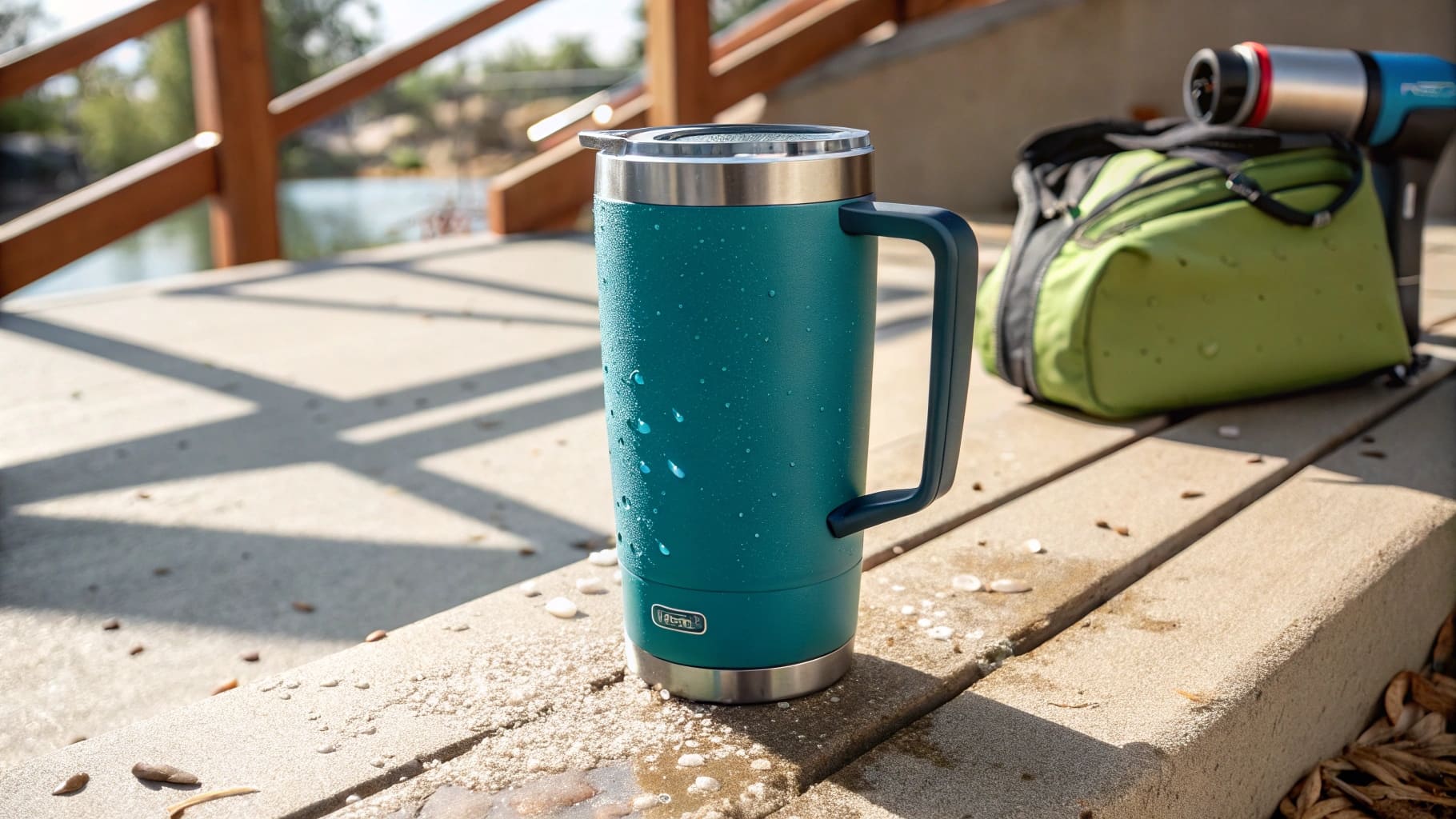
I evaluate hundreds of samples each year. The pattern is clear. Superior mugs share specific engineering features. Double-wall vacuum insulation creates an air barrier between inner and outer layers. This barrier stops heat transfer more effectively than any material mass approach. SUS304 stainless steel provides the foundation. Food-grade certification matters for health-conscious markets in America and Europe.
The handle design separates average products from excellent ones. Ergonomic shapes accommodate different hand sizes. Anti-scald construction protects users from hot exterior surfaces. I test this myself during factory visits. I fill mugs with boiling water and hold the handle for extended periods. Quality handles stay cool. Poor designs transfer heat within minutes.
Leak-proof performance depends on lid engineering. Threaded rotating lids with silicone gaskets create reliable seals. Push-button mechanisms add convenience but introduce potential failure points. I recommend simple threaded designs for B2B buyers prioritizing durability over features. Your customers care more about zero leaks than fancy opening mechanisms.
Customization Impact on Quality
| Feature | Standard Option | Premium Option | B2B Impact |
|---|---|---|---|
| Material | Single-wall steel | Double-wall vacuum | Temperature retention difference of 8+ hours |
| Lid Type | Basic screw cap | Threaded rotating with silicone seal | Reduced warranty claims |
| Handle | Basic plastic | Ergonomic anti-scald design | Higher customer satisfaction scores |
| Finish | Spray paint | Powder coating + Pantone match | Brand consistency across batches |
Which Is Better: Ceramic or Stainless Steel Travel Mugs?
I hear this question weekly from startup founders. They love ceramic aesthetics for Instagram marketing. But they ignore the warranty cost implications. Their return rates tell the real story.
Stainless steel travel mugs outperform ceramic in durability, temperature retention, and safety. 18/8 stainless steel resists dents and shatters while maintaining drinks hot for 12 hours versus ceramic's 2-3 hours. Shatter-proof construction eliminates breakage-related warranty claims that damage brand reputation.

Material Performance Comparison
I source both materials for different buyer segments. Ceramic serves specific niches. Coffee shops ordering for in-store use accept fragility trade-offs for aesthetic appeal. But travel applications demand stainless steel superiority.
Temperature retention reveals the fundamental difference. Double-wall vacuum insulation in stainless steel creates performance ceramic cannot match. The vacuum barrier stops heat transfer through convection and conduction. Ceramic relies on material thickness alone. This explains why ceramic mugs feel hot on the outside. The heat transfers through the material. Stainless steel vacuum construction keeps exteriors cool while contents stay hot.
Durability matters enormously in B2B contexts. I see the warranty data. Ceramic breakage generates 15-20% return rates in some markets. Dropped mugs shatter. Thermal shock from rapid temperature changes creates cracks. Stainless steel absorbs impacts. The material dents rather than shatters. Electropolishing treatments prevent rust even after surface scratches. Your brand reputation stays protected.
Handle safety represents another critical factor. Ceramic conducts heat directly to handles. Users burn their hands on hot handles. Stainless steel designs incorporate anti-scald features. The handle attachment points use insulating materials. Heat stays isolated in the drinking chamber.
Cost Analysis for B2B Buyers
| Factor | Ceramic | Stainless Steel | Decision Impact |
|---|---|---|---|
| Unit Cost | Lower initial | Higher initial | Total cost includes warranty replacements |
| Warranty Claims | 15-20% breakage rate | Under 2% defect rate | Stainless steel saves 13-18% on claims |
| Temperature Hold | 2-3 hours hot | 12 hours hot | Customer satisfaction drives repeat orders |
| Market Positioning | Gift/novelty segment | Premium performance category | Price point flexibility |
I recommend stainless steel for 95% of B2B applications. The exceptions are very specific. Museum gift shops wanting branded ceramic for aesthetic reasons. Corporate gifts where the mug stays on desks rather than traveling. Even then, I question the choice.
Which Travel Mug Keeps Drinks Warm the Longest?
I test temperature retention weekly in our facility. Buyers send competitor samples for comparison. The performance gap between good and excellent designs surprises many buyers.
Travel mugs with seamless double-wall vacuum construction using SUS304 stainless steel keep drinks warmest longest, maintaining hot beverages for 12 hours and cold drinks for 24-48 hours. Optimized vacuum sealing and leak-proof threaded lids minimize heat exchange, outperforming welded designs that create thermal bridges.

Engineering Factors That Determine Retention
I learned this through factory floor observation. The vacuum quality between walls makes all the difference. Poor vacuum sealing allows air molecules to transfer heat. Premium manufacturing evacuates air to near-perfect vacuum levels. This creates an insulation barrier that dramatically slows heat transfer.
Seamless construction eliminates weak points. Welded joints create microscopic gaps. These gaps become thermal bridges. Heat flows through these bridges faster than through the vacuum barrier. I verify this during quality inspections2. I use thermal imaging cameras. Welded areas show as hot spots on infrared scans. Seamless designs show uniform temperature distribution.
The interior finish quality affects performance over time. Rough surfaces accumulate residue. Residue layers degrade insulation properties. Smooth electropolished interiors stay cleaner. They maintain consistent performance through thousands of use cycles. I recommend this verification step for B2B buyers. Request interior finish specifications. Compare smoothness between suppliers.
Lid design contributes more than buyers expect. Cheap lids leak air. Each opening cycle exchanges interior air with room temperature air. This accelerates temperature loss. Quality threaded rotating lids with silicone gaskets seal tightly. Sealed drinking ports allow sipping without full lid removal. Less air exchange means longer temperature retention.
Verification Methods for Suppliers
I teach buyers my testing protocol. Fill the mug with boiling water. Measure temperature after 6 hours and 12 hours. Quality mugs maintain above 65°C at 6 hours and above 50°C at 12 hours. Inferior products drop below 50°C within 6 hours. Cold retention testing uses ice water. Premium mugs keep ice frozen for 24 hours minimum. Excellent designs maintain ice for 48 hours.
Request certifications during supplier evaluation. FDA approval for American markets. LFGB certification for European distribution. These certifications verify material safety and performance claims. I caught fraudulent certificates twice in my career. Always verify certificate authenticity directly with issuing bodies.
Conclusion
Successful handle-equipped travel mug sourcing balances MOQ flexibility, Pantone-matched color control, and verified stainless steel performance specifications. Start with 1,000 pieces per color for market testing. Scale to full production after validation.