
Tired of drinks losing their ideal temperature too quickly? This constant reheating or chilling is frustrating. Discover the science behind bottles keeping drinks perfect for hours.
Vacuum insulated bottles use a double-wall design. The air between these walls is removed during manufacturing. This creates a vacuum, which significantly reduces heat transfer, keeping your drinks hot or cold.
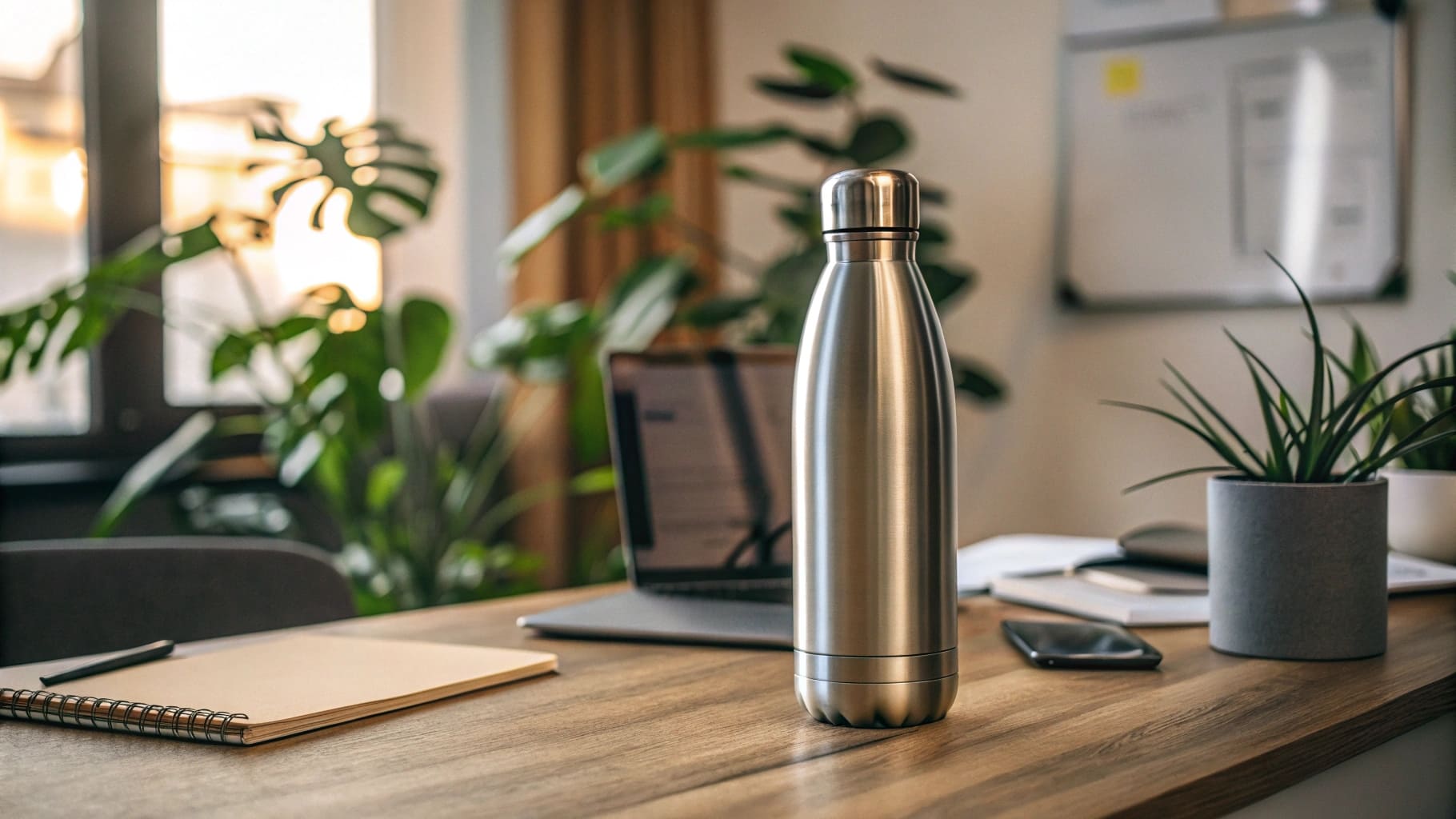
You now have a basic idea of how these impressive bottles function. But there is more to understand. Let's delve deeper to see why this technology is a true game-changer for your beverages and, if you're in the business, for your product line.
How Do Vacuum Insulated Water Bottles Really Keep Your Drinks at the Perfect Temperature?
Wondering about the science behind your insulated bottle's performance? It might seem complex, but the fundamental principle is quite straightforward. Let's uncover the smart design that maintains your drink's ideal temperature.
These bottles feature two distinct walls: an inner one and an outer one. During the manufacturing process, the air residing between these walls is meticulously pumped out. This resulting void, or vacuum, effectively stops most heat from moving either in or out.
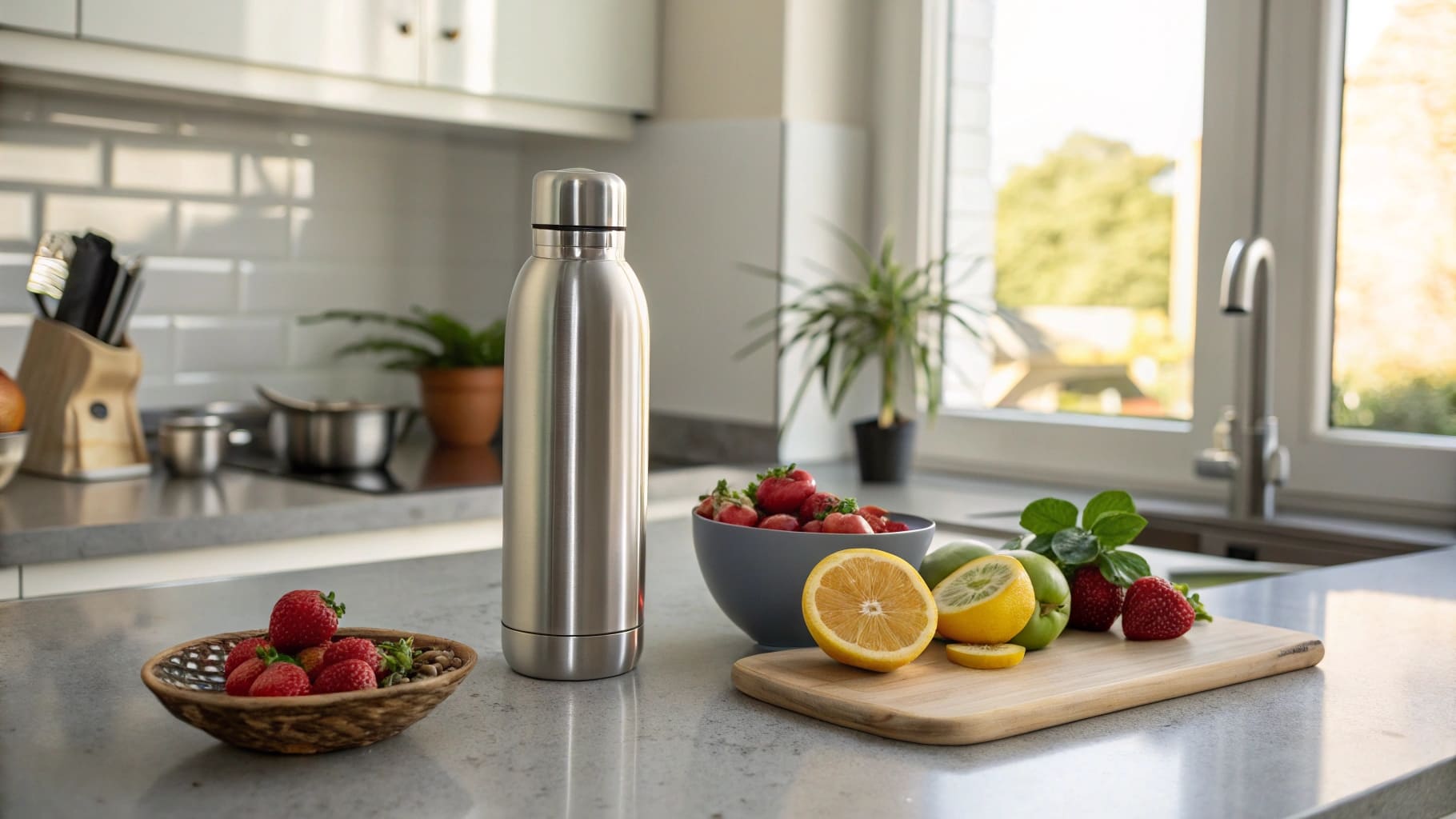
I remember when I first started in this business with Icobottle. Many of our B2B clients, especially sharp procurement officers like Mark Shenng from Canada, would ask for the details. They knew insulated bottles were popular. But they, rightly, wanted to understand the why behind the superior performance. It's all about minimizing heat transfer. Heat naturally tries to move in three primary ways.
Understanding Heat Transfer Mechanisms
Heat always seeks equilibrium. It moves from a warmer area to a cooler one. Your hot coffee naturally wants to cool down to match the room temperature. Similarly, your iced tea wants to warm up. Vacuum insulation is cleverly engineered to counteract this natural tendency.
-
Conduction: This is heat transfer through direct physical contact. Think of a metal spoon placed in a hot cup of soup. The spoon itself becomes hot. In a vacuum-insulated bottle, the inner and outer stainless steel walls are separated by the vacuum. With very little air, there are hardly any molecules to conduct heat efficiently from the inner wall (which holds your drink) to the outer wall (the one you touch). This dramatically slows down heat loss from a hot drink or heat gain for a cold one. For our stainless steel bottles, the material itself is also a relatively poor conductor of heat compared to something like copper, which adds a small extra benefit, but the vacuum does the heavy lifting.
-
Convection: This type of heat transfer occurs through the movement of fluids, which includes liquids and gases like air. Hot air rises, and cooler air sinks. If there were air trapped between the bottle's walls, the air heated by the inner wall (from a hot drink) would rise, transfer some of its heat to the cooler outer wall, cool down, and then sink. This creates a convection current, a cycle that efficiently transfers heat. By removing almost all the air to create a vacuum, we practically eliminate convection as a pathway for heat transfer. There's simply no medium to move the heat around in this way.
-
Radiation: This is heat transfer through electromagnetic waves, specifically infrared radiation. You feel this when you stand near a hot fire or in direct sunlight. All objects radiate heat. The inner wall of the bottle, warmed by your hot drink, radiates heat. To combat this, the outer surface of the inner wall, or sometimes the inner surface of the outer wall, is often coated with a reflective layer. Materials like copper or a silver-like coating are common. This layer acts like a mirror, reflecting the radiant heat back towards the contents if it's a hot drink, or reflecting external radiant heat away from the contents if it's a cold drink.
So, a well-made vacuum insulated bottle effectively tackles all three modes of heat transfer. The vacuum is the star, drastically reducing conduction and convection. Reflective layers play a supporting role in minimizing radiation. This powerful combination is what makes these bottles so incredibly effective at maintaining temperature. It’s a relatively simple concept in physics, but achieving a high-quality, durable vacuum in mass production requires precision manufacturing – something we focus on heavily at Icobottle. For B2B buyers, understanding and explaining these principles clearly helps them communicate the product's value to their end customers.
What's the Main Goal of Using Vacuum Insulation in Drinkware?
Is vacuum insulation just another fancy feature added to bottles? Or does it serve a truly vital and practical purpose for the user? Let's understand why this technology is absolutely essential for modern, high-performing drinkware.
The primary purpose of vacuum insulation is to keep your beverages at their desired temperature for a significantly extended period. It effectively stops heat from escaping your hot drinks and prevents external heat from warming up your cold drinks.
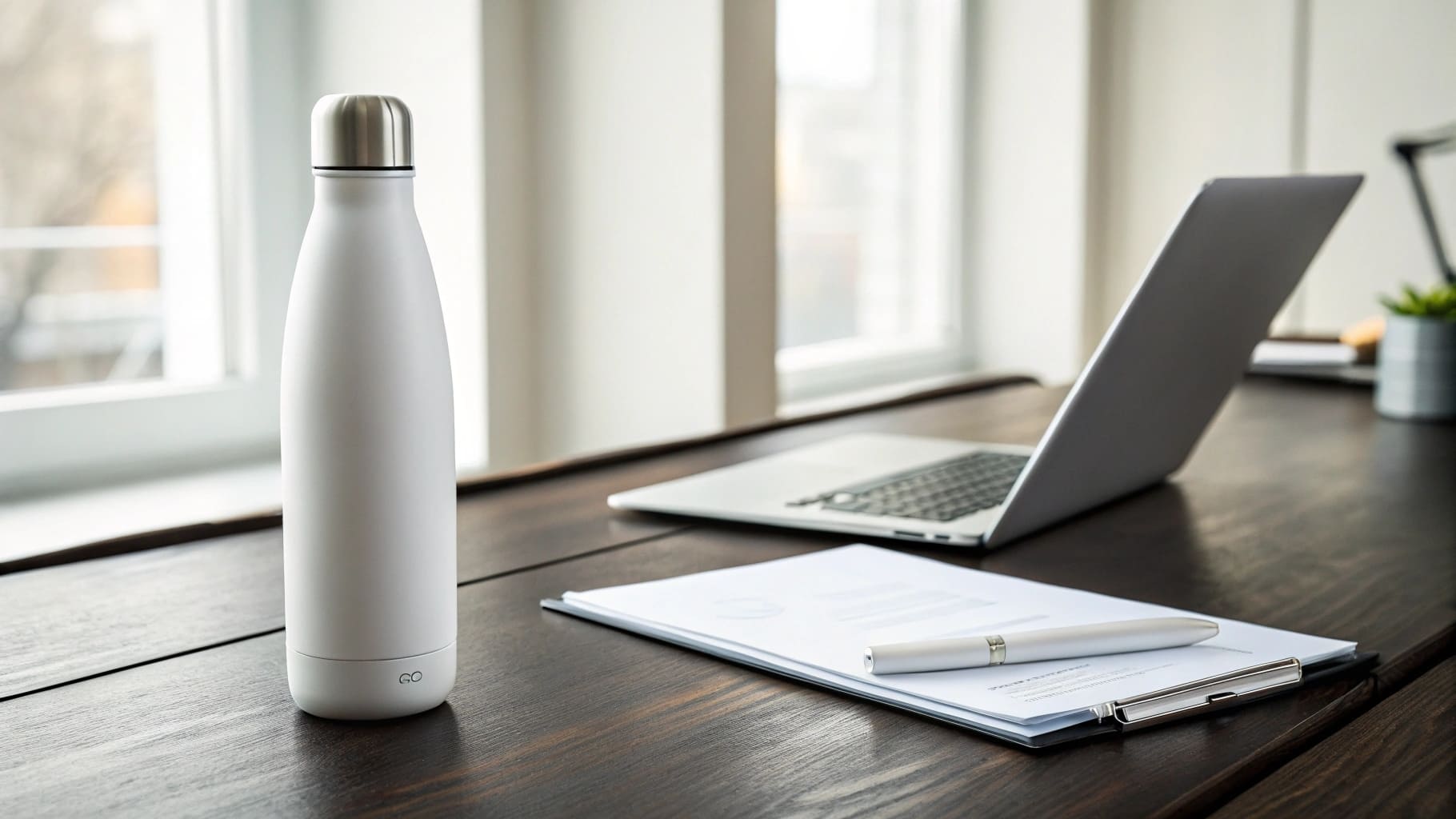
When I talk to B2B buyers – whether they are startup bosses looking to launch an innovative product line or experienced procurement officers from large companies – the purpose of vacuum insulation is always a key discussion point. It's not just about the physical bottle; it's about the enhanced experience it provides to the end-user. The absolute core purpose is extended temperature retention.
Why Temperature Retention is So Crucial
This isn't a minor detail or a "nice-to-have"; it's the fundamental reason consumers actively choose and pay a premium for these types of bottles.
- Unmatched Convenience: People lead busy lives. They want their morning coffee to stay genuinely hot through their entire commute and well into their workday at the office. They expect their water to remain refreshingly cold during a long hike, a session at the gym, or a relaxed day at the beach. Vacuum insulation reliably delivers this convenience. There's no need to rush to finish a drink before it becomes disappointingly tepid. This reliability is a major selling point.
- Enhanced Enjoyment: Let's be honest, a drink at the wrong temperature is just not as enjoyable. Imagine looking forward to a comforting hot chocolate only to find it lukewarm, or needing a cool sip of water on a scorching day and finding it warm. Vacuum insulation ensures that the last sip is almost as satisfying as the first. This directly and positively impacts customer satisfaction and brand loyalty.
- Potential for Reduced Waste: If a beverage stays at its optimal temperature for longer, people are naturally more inclined to finish it. This can translate to less coffee being poured down the drain or fewer half-empty plastic water bottles being discarded prematurely. It's a small but positive environmental consideration too.
- Year-Round Versatility: A significant advantage is that these high-quality insulated bottles can typically handle both hot and cold liquids effectively. This means one single product can serve multiple needs throughout the entire year, from hot tea in winter to iced lemonade in summer. This versatility adds considerable value for the consumer.
For my company, Icobottle, we consistently emphasize this core benefit. We export a large volume of our products to demanding markets like America and Europe. Consumers in these regions have high expectations for product performance. If a bottle is marketed as "insulated," it absolutely needs to deliver on that promise. When a business client, like a distributor or a brand owner, truly understands that the purpose of vacuum insulation is to deliver a significantly better and more reliable user experience, they clearly see the product's inherent value. They can then market this tangible benefit much more effectively to their own customer base. It's about selling not just a physical container, but the consistent promise of a perfectly tempered drink, anytime and anywhere. This is precisely why rigorous quality inspection and dependable manufacturing processes are so critically important to us. The vacuum has to be created perfectly and maintained for the life of the product.
How Exactly Do These Bottles Trap the Heat to Keep My Coffee Hot?
Are you curious about how your favorite insulated bottle manages to keep your coffee steaming hot for hours on end? It often feels like magic, but it's actually very clever applied science. Let's look specifically at how vacuum insulation works to retain heat.
Vacuum insulated bottles keep drinks warm by creating an exceptionally effective thermal barrier. The vacuum established between the two stainless steel walls significantly hinders the heat from your hot drink from easily transferring to the colder outside air.

Keeping drinks warm for an extended period is a primary reason people invest in good quality insulated bottles. Think about a client like Mark from Canada, who I mentioned earlier. He distributes these bottles to people who often face very cold weather conditions. In such environments, a reliably hot drink isn't just a preference; it's a genuine comfort, sometimes even a necessity. So, how does the bottle effectively fight against the cold and keep that precious heat locked inside?
The Battle Against Heat's Natural Escape
When you pour hot coffee, tea, or soup into an insulated bottle, that heat energy immediately wants to escape and equalize with the cooler surroundings. The bottle's entire design is geared towards making this escape as difficult and slow as possible.
-
Slowing Down Conduction: The hot liquid first heats the inner stainless steel wall through direct contact – that's conduction. However, because of the vacuum layer, this heat then struggles immensely to "jump" across to the outer wall. Why? Because there are very, very few air molecules in that vacuum space to carry the heat energy across. While stainless steel itself is not the best conductor of heat (which is good in this case, unlike if it were made of highly conductive copper), the vacuum is the real champion here in stopping conduction. It creates a major roadblock.
-
Eliminating Convection Currents: If there were air trapped between the two walls, a different problem would arise. The air molecules touching the hot inner wall would warm up, become less dense, and rise. As they reached the cooler outer wall, they would transfer some of their heat, cool down, become denser, and fall. This creates a continuous cycle, a convection current, that would efficiently siphon heat away from your drink. The vacuum, by removing almost all the air, completely stops this convection current from forming. There's no medium for the air to circulate and carry heat away. The heat stays largely trapped with the liquid.
-
Reflecting Radiant Heat: Hot liquids, and indeed the warm inner wall, give off heat in the form of infrared radiation. This is an invisible form of energy. To combat this, as mentioned before, the outer surface of the inner wall (or sometimes the inner surface of the outer wall) often has a special reflective coating. This is frequently a thin layer of copper or a silver-like material. This coating acts like a mirror specifically for this infrared heat radiation. Instead of allowing the heat to pass through to the outer wall and then escape into the environment, it reflects a significant portion of that radiant heat back towards your hot drink, helping to keep it warm. Some energy will still be absorbed and eventually lost, but a good portion is effectively bounced back.
I recall a specific batch of travel mugs we manufactured at Icobottle for a client specializing in outdoor gear. We conducted rigorous temperature retention tests. We would fill them with water heated to near-boiling point (around 95°C or 203°F) and then meticulously measure the temperature drop at set intervals – typically after 6 hours, 12 hours, and sometimes even 24 hours. The results consistently demonstrated just how effective this three-pronged approach (minimizing conduction, convection, and radiation) is. For B2B clients, particularly those who rebrand our products and sell them at a premium under their own label, understanding these specific heat-retention mechanisms is invaluable. It allows them to confidently and accurately explain to their customers exactly why their morning coffee or tea will stay enjoyably hot for so long. It's about providing them the knowledge that the vacuum acts as a powerful, multi-faceted insulator against the primary ways heat naturally tries to escape.
Conclusion
Vacuum insulation is a brilliant technology that keeps drinks at their ideal temperature. It works by creating a barrier that minimizes heat transfer. This makes these bottles a top choice for everyone.
