
30oz insulated tumbler profiles: straight vs tapered for cup-holder fit
Your customers complain their premium tumblers do not fit car cup holders. They stop buying your product. Your brand reputation takes a hit before you understand why.
The straight design maximizes capacity and branding space, while the tapered design ensures cup-holder compatibility1. Most successful brands now use hybrid profiles with tapered bases and straight upper bodies to balance both needs without compromising thermal performance or user experience.
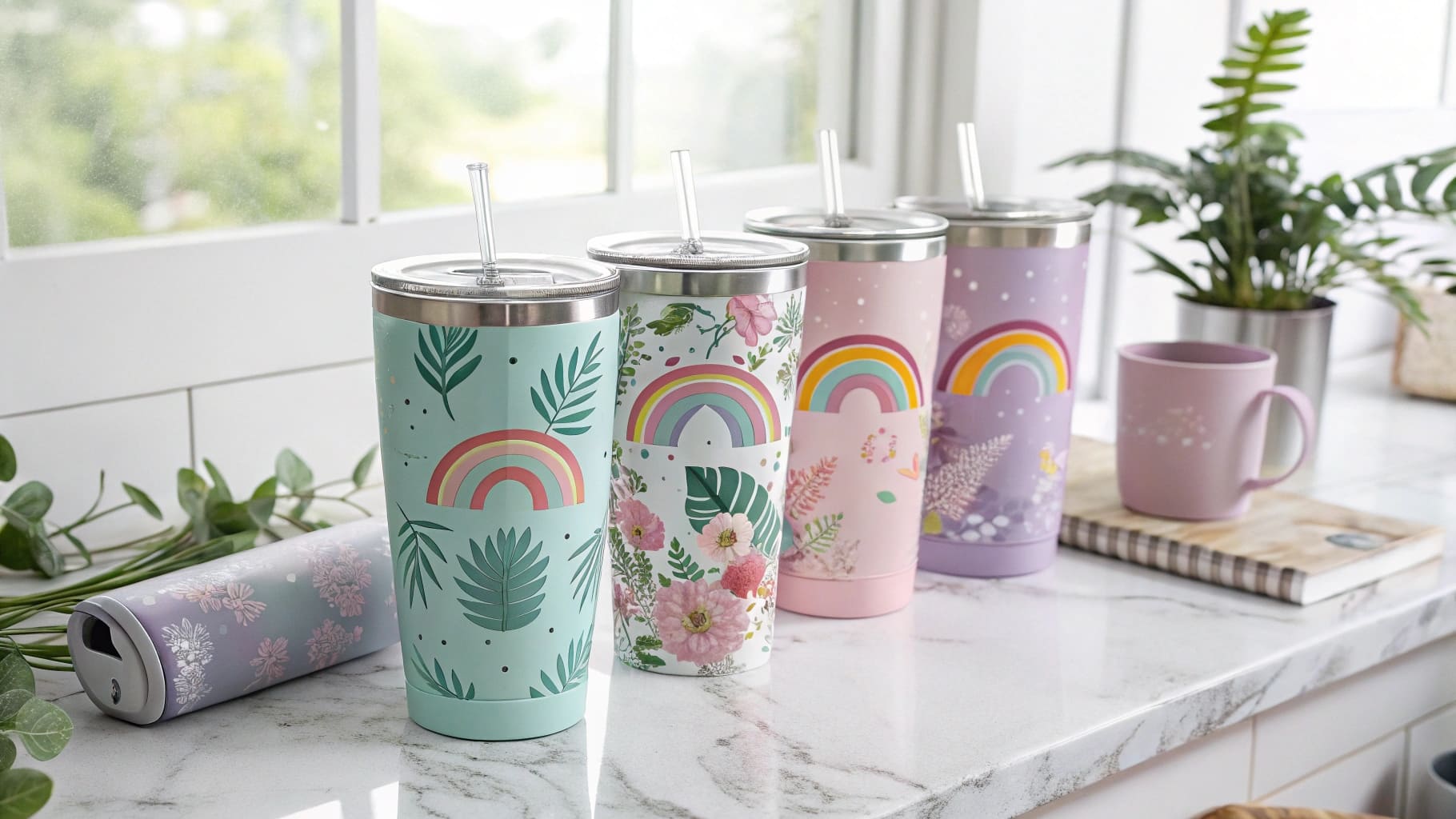
I learned this lesson the hard way when a Canadian distributor returned 500 units because drivers could not secure the tumblers in their vehicles. That experience taught me to prioritize the physical fit question before discussing insulation technology or custom printing options with my wholesale clients.
What Are the Dimensions of a 30oz Straight Tumbler?
Standard 30oz straight tumblers measure between 3.5 to 3.9 inches in diameter. This width exceeds most car cup holders designed for 3.0 to 3.5 inch openings. Customers face daily frustration.
A true straight-wall 30oz tumbler maintains uniform diameter from top to bottom, typically ranging from 3.5 to 3.9 inches with heights between 7.5 to 8.0 inches. However, most manufacturers now incorporate a subtle base taper to achieve practical cup-holder compatibility while preserving the straight aesthetic.
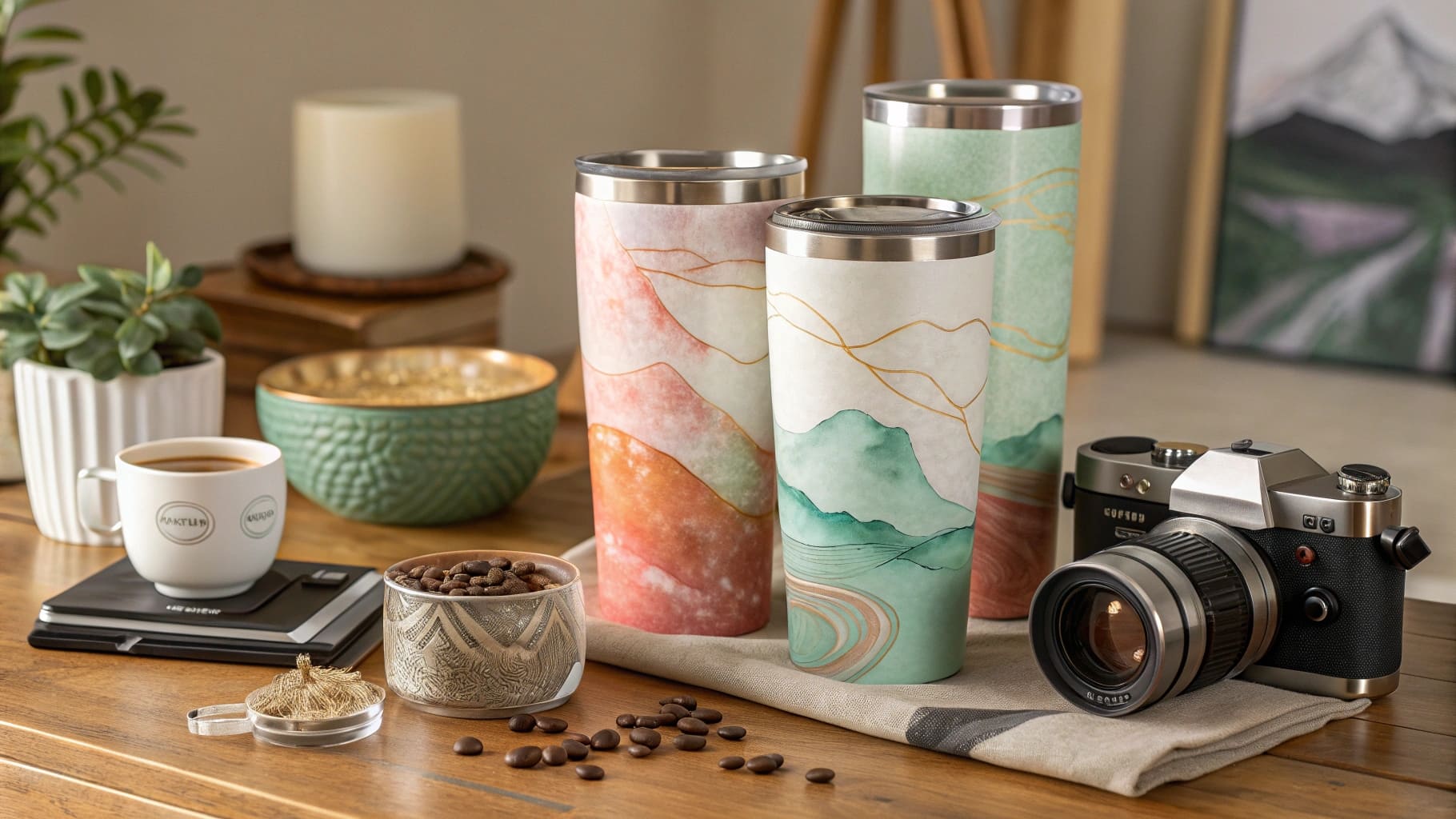
Understanding the Dimensional Trade-offs
The challenge with straight profiles comes from automotive industry standards. Most vehicle cup holders accommodate containers with 3.0 to 3.5 inch base diameters. When I measure our factory's straight tumbler production line, the base diameter must not exceed 3.2 inches to guarantee universal fit.
Here is how different profile choices affect key specifications:
| Profile Type | Top Diameter | Base Diameter | Height | Cup-Holder Fit |
|---|---|---|---|---|
| Pure Straight | 3.5-3.9 in | 3.5-3.9 in | 7.5-8.0 in | Limited |
| Hybrid Tapered | 3.5-3.9 in | 2.9-3.2 in | 7.5-8.0 in | Universal |
| Full Tapered | 3.5-3.9 in | 2.5-2.9 in | 7.5-8.0 in | Universal |
I always tell my clients to request technical drawings2 with precise measurements before placing orders. The difference between 3.2 and 3.5 inches determines whether your product sits securely in cup holders or tips during turns. One of my European clients learned this after importing 2,000 units that were too wide. We had to negotiate a discount and redesign for their next order.
The wall thickness also matters for final dimensions. Double-wall vacuum insulation requires 0.2 to 0.3 inches of total wall thickness. This means the exterior diameter will be larger than the interior capacity suggests. I review these specifications with every new wholesale buyer to avoid surprises during quality inspection.
What Size Do I Print for a 30oz Tumbler?
Your printable area depends on decoration method and tumbler shape. Straight walls offer 22 to 28 square inches. Tapered designs reduce this by 15 to 20 percent due to curved surfaces.
The maximum printable area on a 30oz tumbler spans approximately 8 inches in height and 9 to 10 inches in circumference. This calculation assumes you avoid the 0.5 inch zones near the top rim and bottom base where decoration quality deteriorates.
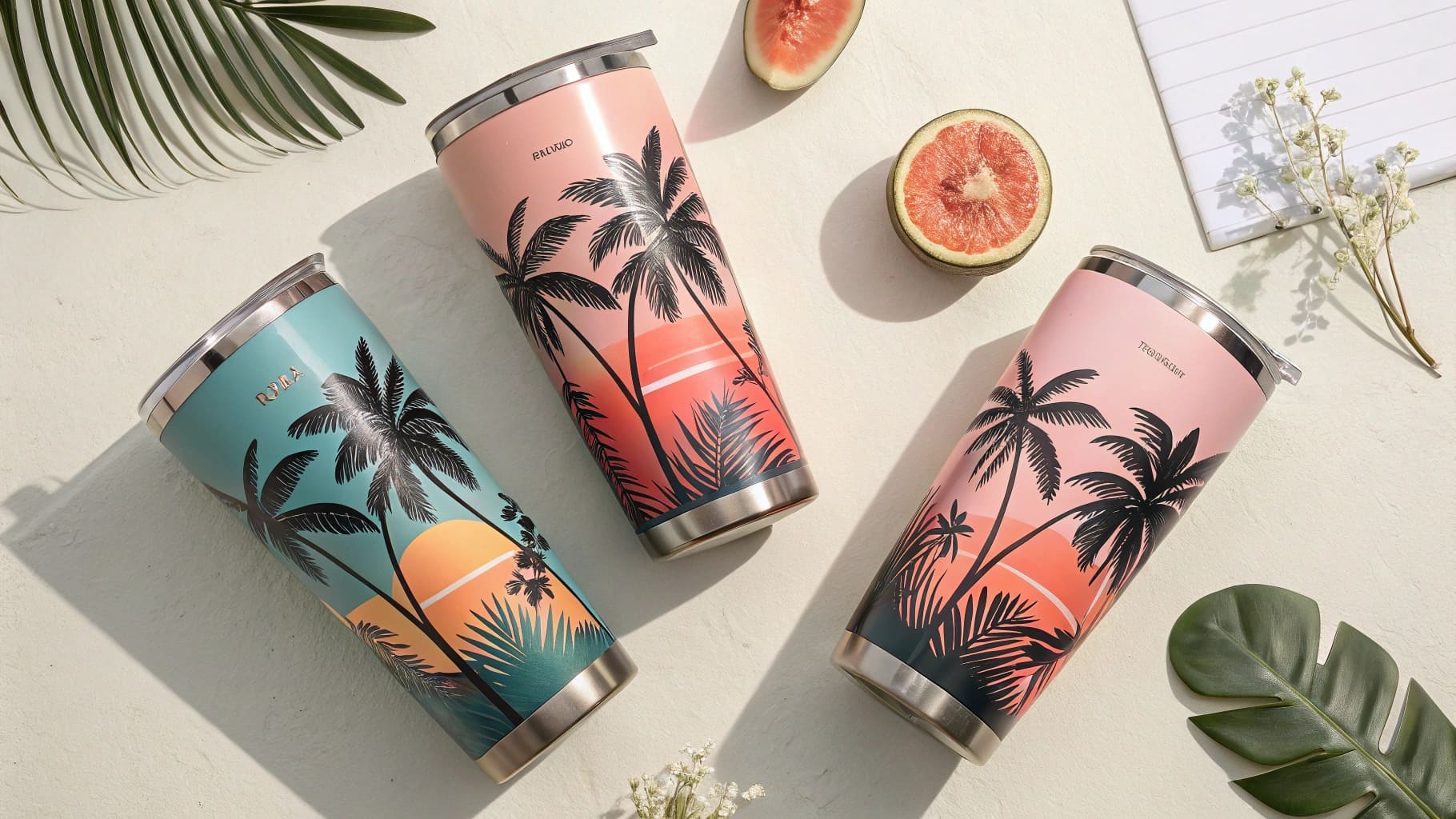
Matching Decoration Methods to Your Brand Goals
I work with clients using six primary decoration techniques. Each method offers different advantages for print size and durability.
Silkscreen printing works well for simple logos up to 4 colors. The print area maxes out around 8 x 4 inches on straight walls. I recommend this method for startups managing tight budgets because setup costs stay low.
Laser engraving creates permanent marks without size limitations. The entire tumbler surface becomes your canvas. However, the monochrome result suits certain brand aesthetics better than others. A tech company client chose this method to project precision and permanence.
Heat transfer allows full-color designs wrapping around the entire circumference. I have seen clients achieve photographic quality across 8 x 10 inch areas. The process requires skilled operators to avoid bubbles and wrinkles on curved surfaces.
Powder coating provides solid color finishes before secondary logo application. This two-step process lets you create distinctive base colors that set your product apart on retail shelves. One Australian brand used matte black powder coat with metallic gold laser engraving3 to target premium buyers.
Calculating Your Design Dimensions
I advise clients to create artwork at actual size plus 10 percent bleed area. For a 30oz tumbler, your design file should measure 8.5 inches tall by 11 inches wide if you want full wraparound coverage.
Here is my standard recommendation table for different branding approaches:
| Design Goal | Recommended Print Area | Best Method | Typical MOQ |
|---|---|---|---|
| Simple Logo | 4 x 4 inches | Silkscreen | 500 units |
| Full Brand Story | 8 x 10 inches | Heat Transfer | 1,000 units |
| Premium Minimalist | Any size | Laser Engraving | 300 units |
| Bold Color Blocking | Full surface | Powder Coat + Print | 1,000 units |
The MOQ varies because different decoration methods require different setup investments. I explain this clearly to wholesale buyers during our first conversation to set realistic expectations about order quantities and unit costs.
Is Ozark Trail Just as Good as Yeti?
Both brands use similar manufacturing technology and materials. The thermal performance gap closed years ago. Your customers pay for brand perception more than functional differences.
Ozark Trail and Yeti tumblers both utilize double-wall vacuum insulation4 with food-grade 18/8 stainless steel construction. Independent testing shows they maintain beverage temperatures within 2 to 3 degrees of each other over 6-hour periods. The manufacturing processes have converged as the same Chinese factories often produce for multiple brands.
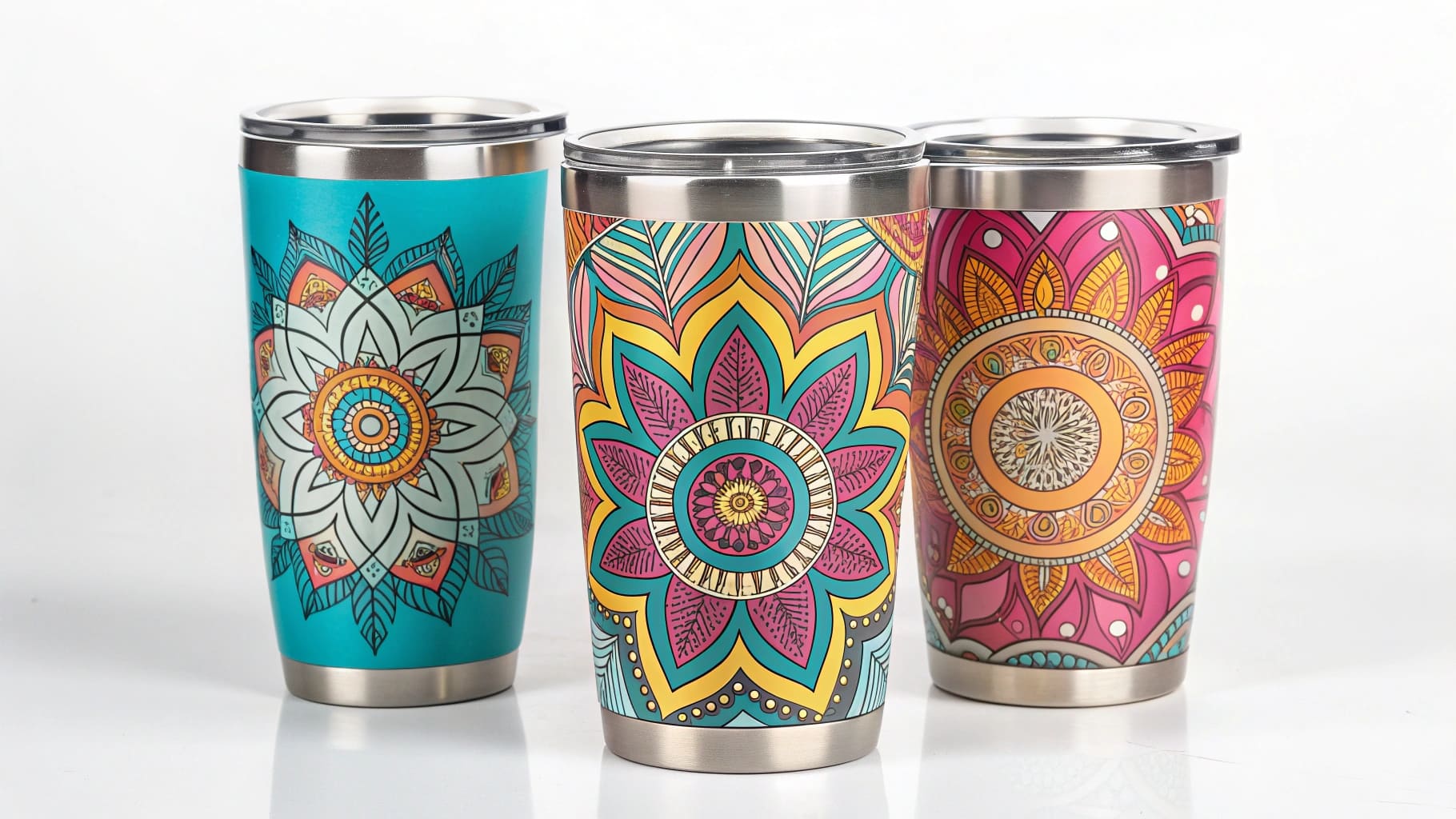
Breaking Down the Real Differences
I visit our production facilities quarterly and observe the same equipment producing tumblers for various brand labels. The meaningful differences emerge in three areas that matter for your sourcing decisions.
Quality control standards determine rejection rates during inspection. Premium brands enforce stricter tolerance levels for vacuum pressure, weld integrity, and surface finish. I measure vacuum retention on every production batch. Yeti-tier products must maintain below 0.01 Pa pressure. Budget lines accept up to 0.05 Pa. This difference affects ice retention by 2 to 4 hours over a full day.
Lid engineering represents the second gap. Yeti invested heavily in proprietary lid systems with precise seal mechanisms and splash resistance. Generic lids from standard molds work adequately but leak more easily during vehicle movement. I source premium lids that cost an extra dollar per unit. My clients targeting quality-conscious buyers consider this worthwhile.
Warranty and customer service create the final separation. Yeti offers lifetime warranties because their margin structure absorbs replacement costs. When you import directly from Chinese manufacturers, you control the warranty terms and handle customer issues through your own channels. This responsibility requires careful supplier selection and quality verification.
Positioning Your Private Label Against Established Brands
I help wholesale clients develop competitive positioning without directly copying premium brands. Your success depends on identifying underserved market segments and delivering specific value propositions.
Price-conscious consumers appreciate equivalent performance at 40 to 60 percent of premium pricing. You achieve this through direct importing while maintaining quality standards. One client targets outdoor enthusiasts who buy multiple tumblers for different activities. The lower price point enables collection building.
Customization opportunities let corporate buyers create unique employee gifts or event merchandise. We produce tumblers with company logos, event dates, and specific color combinations that premium brands cannot offer in small quantities. This flexibility attracts B2B customers.
Specialized features address niche requirements. I worked with a cycling brand to add a carabiner loop and narrower base for bike cage compatibility. Premium brands focus on mass market needs. You can serve specific communities better through targeted design modifications.
The comparison question matters less than your ability to deliver consistent quality and build trust with customers. I have watched numerous private label brands succeed by focusing on their unique value rather than competing directly with established names on their terms.
Conclusion
Choose hybrid tapered profiles for universal cup-holder fit. Maximize your printable area through method selection. Compete on value delivery rather than direct brand comparison. These decisions determine your market success.
-
Find out why ensuring cup-holder compatibility is crucial for customer satisfaction. ↩
-
Learn the importance of technical drawings in ensuring accurate product specifications. ↩
-
Understand the benefits of laser engraving for creating permanent and precise designs. ↩
-
Explore how double-wall vacuum insulation keeps beverages at the desired temperature. ↩
